Ever had a ranked match go sideways because one player turned comms into a flame war? That is toxicity in online gaming at its worst, and it can wreck a great multiplayer game faster than a bad patch.
Unity’s 2023 toxicity study found that more than 20% of players reported hearing or seeing verbal toxicity, and the ESA said in June 2026 that 212.3 million Americans play video games every week in the United States.
I want to show you the mix that works in a real online game: AI and machine learning for speed, human review for judgment, smarter chat and voice tools, and rewards that make being a good teammate feel worth it. Keep reading, I will walk through it step by step.
Using Advanced Moderation Tools to Combat Toxicity in Online Gaming
When I look at reducing toxic behavior in an online game, I start with one rule: move faster than the abuse. If moderation arrives after the match, the damage is already done.
I use AI and machine learning to spot likely problems early, then I hand the hard calls to people. That gives studios speed without turning every spicy moment into a false punishment.
How does AI Detect Toxic Behavior in Games?
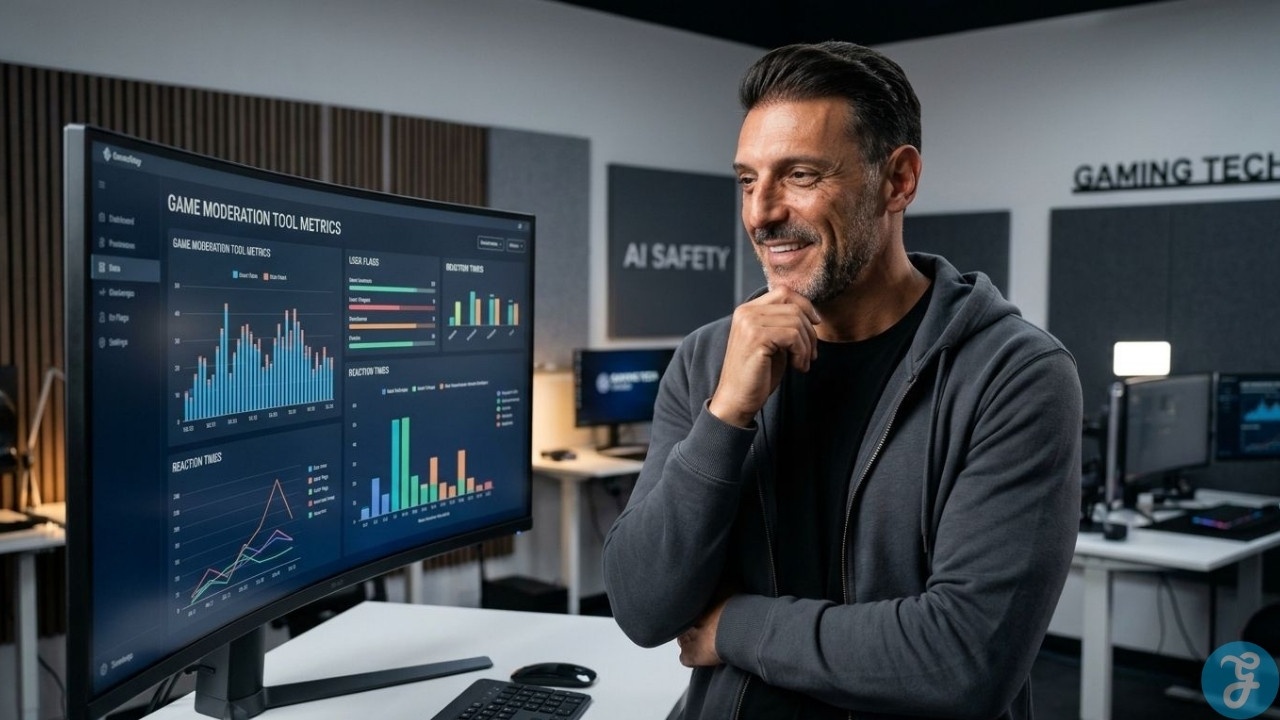
The best systems do more than scan for swear words. They watch four lanes at once: text chat, voice transcripts, gameplay patterns such as griefing or intentional feeding, and account level signals such as repeat reports or suspicious boosting behavior.
That wider view matters. A 2025 review in First Monday said toxic behavior in online multiplayer games appears across text, image, audio, and behavior, which is why a game developer that only filters typed chat will still miss harassment through usernames, voice, or disruptive gameplay.
Named examples make this easier to picture. Riot said in its 2024 impact report that Riot Voice Evaluation reached almost every Riot region for English voice chat in VALORANT across Xbox, PlayStation, and PC, while the ESA’s July 2026 Activision case study says Call of Duty uses text filtering across 14 languages plus global real-time voice moderation.
For me, that points to a practical build order: train one model family for obvious high-confidence abuse, a second for game-specific slang, and a third for behavioral patterns like AFK streaks, griefing, or rank manipulation. Riot also said Vanguard was expanded to League in Spring 2024 and will be used against account boosting, which is a good reminder that fair play and chat safety belong in the same trust and safety stack.
| Moderation layer | What it should catch | Named example | Why it helps |
|---|---|---|---|
| Text analysis | Slurs, threats, repeated blame spam, disguised toxic language | Discord AutoMod, Riot text evaluation | Stops obvious abuse before it spreads through the lobby |
| Voice review | Harassment, bullying, hate speech in live comms | Riot Voice Evaluation, Epic voice reporting | Protects players in matches where voice is the main channel |
| Gameplay behavior models | Griefing, AFK patterns, boosting, sabotage | Riot Vanguard, Activision moderation research | Targets toxic behavior that never appears in chat logs |
| Human review | Context, sarcasm, appeals, edge cases | Xbox Safety Team review flow | Keeps automated enforcement from feeling random or unfair |
A pro tip I always come back to is this: let AI sort, rank, and summarize, but keep penalties reversible. In a 2024 Activision paper, offensive text actions were followed by another verified report for the same reason in roughly 16% to 18% of cases the next month, which tells me punishment alone is not enough and perfect detection is not realistic.
What are Real-time Chat Filtering Systems and How Do They Work?
Real-time chat filtering systems sit inside the message flow. They compare a message, or a voice transcript, against keyword lists, pattern rules, reputation signals, and machine learning scores before the message reaches the rest of the team or seconds after it does.
The strongest versions are built for the tricks players actually use. Discord’s June 2026 AutoMod FAQ says custom keyword rules can detect words, symbols, punctuation, emojis, and links, so studios should train filters for masked slurs, stretched spellings, and copy-paste harassment rather than clean dictionary matches.
Voice needs a different setup because accuracy and privacy matter at the same time. Epic’s official voice reporting system for Fortnite stores a rolling five-minute buffer on device, and as of March 2025 the same technical approach is available in Rocket League and Fall Guys, which is a smart model for competitive online games that need evidence without constant cloud recording.
I also like transparent consequences. Xbox Community Standards say strikes stay on a player’s record for six months, and reports are reviewed by the safety team before enforcement, which makes the system easier for players to understand and harder for bad actors to dismiss as random moderation.
How Can Game Companies Encourage Positive Player Engagement?
Moderation removes bad moments. Positive systems shape what players do next.
That difference matters in a multiplayer video game, especially in ranked ladders where frustration snowballs fast. If studios only punish, they train people to fear penalties. If they also reward good teamwork, they teach players what the game actually wants from them.
How can Rewarding Constructive Behavior Reduce Toxicity?
I like reward systems that change social standing inside the game, because players notice those right away. Cosmetic rewards help, but visible status, queue benefits, and communication privileges tend to hit harder in competitive online play.
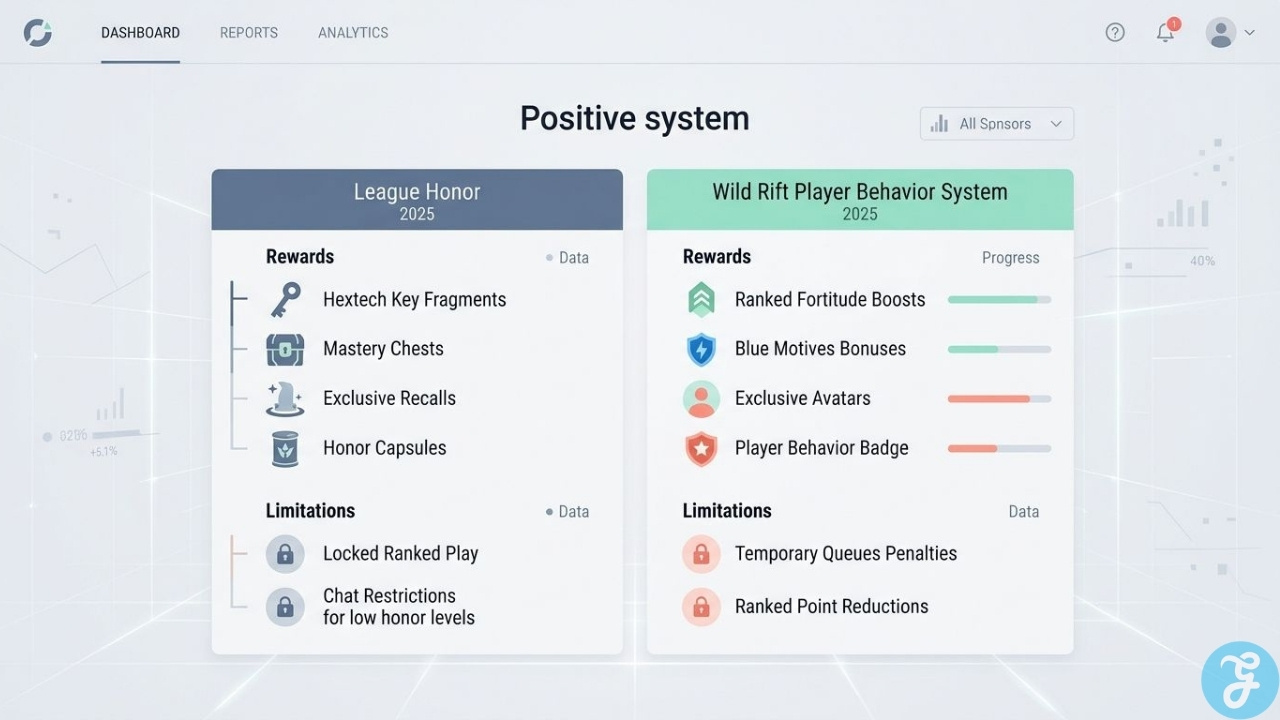
Riot’s 2025 Honor revamp is a strong example. Patch 25.04 made Honor reflect recent behavior instead of raw game volume, tied it to Battle Pass XP and visible Honor levels, and linked lower Honor to chat or social restrictions. That is much more useful than a once-a-season pat on the back.
Wild Rift pushed the same idea further in July 2025 with a Player Behavior System that includes a reward track and restrictions for low scores, including limits on ranked and PvP access. For game developers, that is the big lesson: the reward loop should live inside normal gameplay, not in a dusty menu most players forget exists.
| Positive system | What gets rewarded | What gets limited | Why it works |
|---|---|---|---|
| League Honor, 2025 | Recent positive behavior, visible Honor, extra pass value | Some chat and social features for low Honor | Keeps behavior tied to every session, not just season-end rewards |
| Wild Rift Player Behavior System, 2025 | Reward track, treasure chest style incentives, score progression | Ranked and PvP access for low-score players | Shows players that teamwork affects access, not just reputation |
This lines up with the social norm research the original article pointed to. Liu and Agur’s 2023 work on toxic behavior in online games argues that players copy cues from the environment around them, so rewards are useful because they change what looks normal in a match.
My advice is simple: reward players for specific behaviors you can measure, such as finishing matches without verified reports, receiving consistent teammate honors, or using team tools constructively. Vague badges for being “nice” are easy to ignore, but a system tied to your queue experience or social privileges changes behavior faster.
What are Effective Community-driven Initiatives to Promote Positivity?
Community projects work best when they are easy to join and hard to misuse. I would not leave them loose and informal, because the loudest people often fill that vacuum first.
A 2025 bystander intervention project focused on multiplayer online battle arena games found that players preferred direct, preset tools that let them call out toxic behavior or support the target quickly. That is a smart design clue for Dota, HotS, and similar team games where nobody has time to type a thoughtful paragraph in the middle of a fight.
Another reason to take community structure seriously is risk. ADL said in January 2025 that hate and harassment appeared in almost half of the multiplayer sessions it tested using identity-based usernames, so community programs should route identity-based abuse to faster review instead of treating it like ordinary trash talk.
- Create clear codes of conduct and surface them inside the game, at account creation, before the first ranked queue, and in the report flow. A code hidden on a website does little for players in the moment.
- Use one-click supportive messages for bystanders, such as preset team reminders or private encouragement for the targeted player. That gives players a safe way to help without starting a second argument.
- Train volunteer community moderation teams for official forums, Discord spaces, clans, and tournament hubs, then give them the same rule definitions staff moderators use so enforcement stays consistent.
- Offer simple recovery tools after a bad interaction, such as mute, block, report, and category-based reporting. Xbox and Epic both emphasize that players should be able to block or mute first, then report with the right evidence path.
- Build peer mentorship around reputation, not raw rank. High-skill players are not always the best culture carriers, so I would recruit from players with clean recent behavior and consistent team honors.
For esports players, I would add one more layer: public examples. When tournament operators show how a ruling was handled, what line was crossed, and what training or suspension followed, they stop the rumor mill and make the standard feel real.
Designing Games to Minimize Toxicity
I do not think moderation alone can solve toxic behavior. Some games quietly create the exact pressure, anonymity, and blame loops that make players snap.
That means game design has to carry part of the load. If the systems around the match keep pushing people into anger, the report button turns into a mop instead of a fix.
Why is Enforcing Clear Codes of Conduct Important in Games?
Clear rules matter because they tell players what the game will defend. If the code of conduct is vague, hidden, or enforced unevenly, players fill the gap with their own norms, and those norms often drift toward “this is just how online gaming is.”
The newest research is moving in the same direction. A 2026 paper in Frontiers in Public Health argues that codes of conduct work best as living community tools, not static legal text, which is exactly how I think studios should treat them.
The original article was right to mention group norms. More recent reporting on the same line of research notes that Hagger’s findings about norm effects differed between Chinese and British samples, which is a good reminder that game companies should localize examples, language, and enforcement copy instead of pasting one generic policy into every region.
- Define common offenses in plain language: harassment, hate speech, griefing, doxxing threats, boosting, account sharing for rank manipulation, and voice abuse.
- Show examples of what counts, especially for borderline cases like repeated blame, targeted spam pings, or “jokes” aimed at protected identity groups.
- Explain what happens next: warning, mute, feature lock, queue restriction, strike, suspension, or ban.
- Give players an appeal path for serious enforcement, because fair process improves trust even when the punishment stands.
Xbox is useful here because it makes consequences legible. Its standards say strikes stay on a record for six months, which helps players understand that bad behavior has a memory and that enforcement is cumulative, not random.
How Does Cooperative Gameplay Mechanics Help Reduce Toxic Behavior?
Cooperative mechanics lower toxicity when they move attention from blame to shared goals. Players flame less when the fastest path to winning is obvious, team oriented, and supported by the interface.
Yubo Kou’s 2020 work on League of Legends is still useful here because it described how toxic behavior often grows out of competitiveness, in-team conflict, perceived loss, powerlessness, and earlier toxic acts. In plain English, people tilt when the game makes them feel trapped and gives them an easy target.
Newer evidence shows why designers should care. A 2024 study using Call of Duty: Warzone data found that when all of a player’s teammates engaged in toxic speech, that player’s own likelihood of toxic speech jumped by roughly 26.1 to 30.3 times the average player’s likelihood. Toxicity spreads fast in team environments, so game mechanics should interrupt the spread.
I also pay attention to social self-efficacy, which the original article raised. A recent 2024 study on witnessed verbal aggression suggests players with stronger social skill confidence are less likely to turn exposure into their own toxic behavior. That gives game design a clear job: make helpful actions easier than hostile ones.
- Use quick strategy pings, objective reminders, and preset teamwork prompts so players can coordinate without opening a full argument in chat.
- Separate performance feedback from personal blame. Show death recap, cooldown status, or missed objective data in UI panels instead of letting players invent their own angry story in team chat.
- Reduce griefing leverage where possible, for example with smarter AFK detection, role clarity, and systems that limit the damage one sabotaging player can do to four teammates.
- Gate high-stakes competitive access behind behavior standing. Riot and Wild Rift both show that linking privileges to conduct is more effective than hoping players self-correct.
Turning Insight Into Action
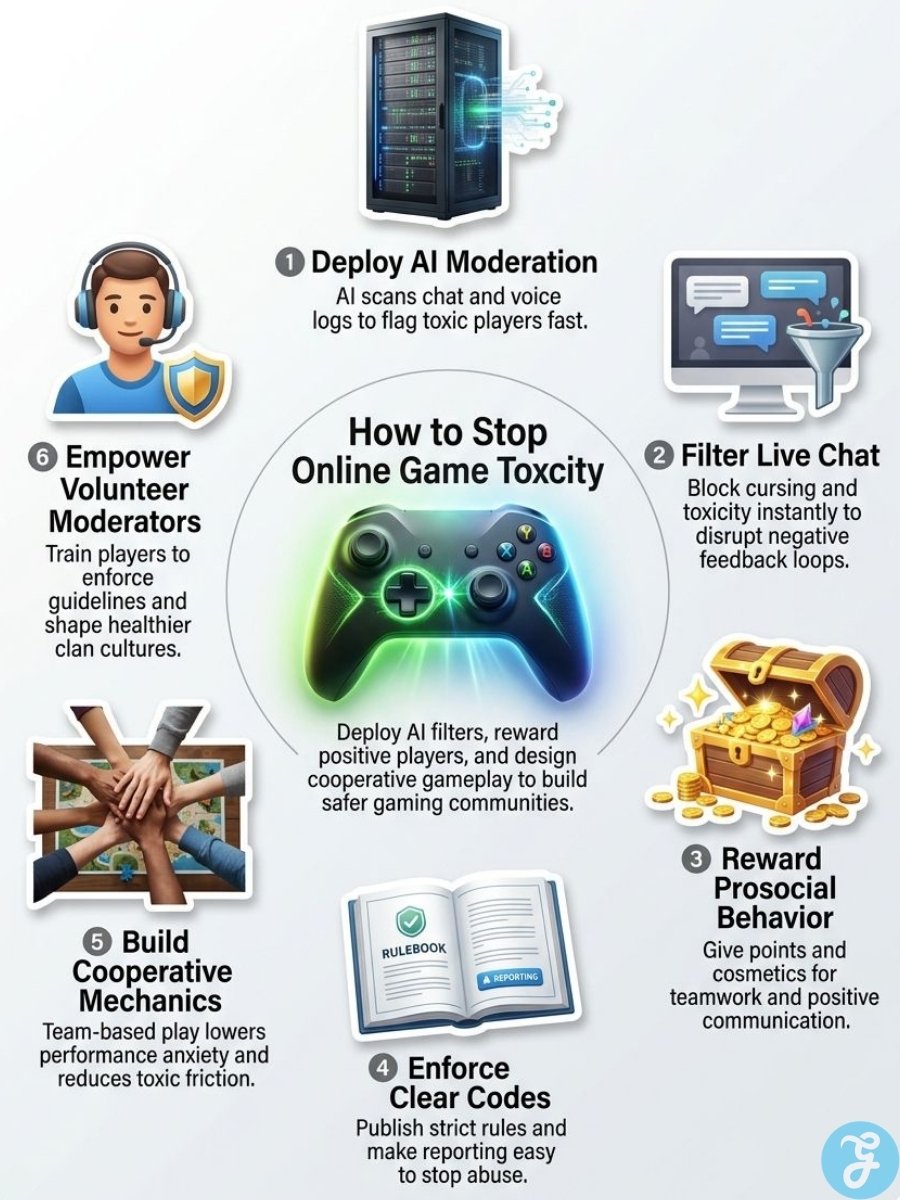
To reduce toxicity in online gaming, I would build a full stack: AI for speed, people for judgment, codes of conduct that players actually see, and reward systems that make positive behavior part of normal gameplay.
My bottom line is simple. Track exposure, repeat offenses, and player return rates, not just bans, then use those signals to make every online multiplayer game safer, fairer, and more fun.
Frequently Asked Questions(FAQs) on How to Reduce Toxicity in Online Gaming
1. What causes toxicity in online gaming?
Toxicity comes from human behavior, social pressure, and the normalization of toxicity in online spaces. Real-world stress and the proliferation of toxic speech make the effects of toxicity worse.
2. How can studios detect toxic behavior fast?
Use chat filters, player reports, and behavior metrics to track toxicity levels and harassment in online play. Game service logs help spot repeating disruptive behaviors.
3. What quick strategies combat toxicity?
Set a clear code of conduct, use fast punishment for abuse, and build rewards that encourage positive behavior. I also like using prompts and nudges from Behavior change (public health) to shape play.
4. How should game design and game service help?
Design systems to limit vents and griefing, and add tools that stop players who engage in harmful acts. Good matchmaking and clear communication cut conflict.
5. Can companies stop players from feeling alienate?
Yes, better communication, fast support, and visible action help stop alienate players and curb harassment in online play. The industry’s quick support keeps more gamers in the game.
6. Do bigger trends matter for toxicity?
Yes, things like the Pandemic, poor sleep or nutrition, and real-world events change gamer mood and how toxicity affects play. Research toward a unified theory of toxic behavior can guide long-term strategies to address toxicity within online environments.