

Being apart from family members feels like having a piece of your heart missing. Many U.S. citizens and green card holders face long waits, confusing paperwork, and complex immigration rules when trying to bring loved ones to America.
The process can stretch for months or even years, leaving families separated by thousands of miles.
Here’s something that might surprise you: green card law firms help over 1 million families reunite each year through family-based immigration petitions. These legal experts know exactly how to handle Form I-130 applications, consular processing, and adjustment of status cases.
They turn the maze of immigration law into a clear path forward for your family.
This guide shows you 12 specific ways immigration lawyers make family reunification faster and smoother. You’ll learn how they handle everything from document preparation to government interviews.
Ready to bring your family home?
Key Takeaways
- Green card law firms help over 1 million families reunite yearly through family-based immigration petitions and Form I-130 applications.
- U.S. citizens can sponsor parents for green cards, but green card holders cannot sponsor parents, siblings, or married children.
- Immigration lawyers handle all government communication, document preparation, and provide legal representation during interviews and appeals for families.
- Law firms assist with complex paperwork including Form I-864 Affidavit of Support, visa processing, and country-specific embassy requirements.
- Professional legal guidance becomes essential due to frequently changing immigration laws, extensive waiting periods, and visa backlogs affecting families.
How do green card law firms help with family-based green card applications?
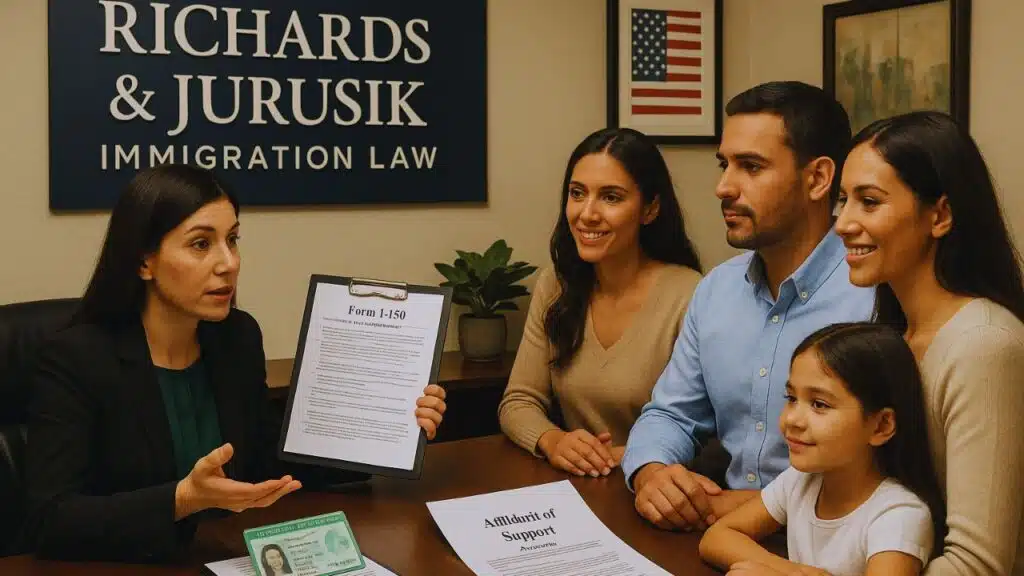
Green card law firms serve as your family’s bridge to permanent residency in America. These legal experts guide U.S. citizens and lawful permanent residents through the complex process of sponsoring their loved ones.
Immigration lawyers start by filing Form I-130, Petition for Alien Relative, which kicks off the entire family reunification process. They know which family preference categories apply to your situation, whether you’re sponsoring immediate relatives like spouses and children, or married children who fall into different priority categories.
Richards & Jurusik Immigration Law focuses specifically on helping families stay together, bringing decades of experience to each case they handle.
Legal professionals handle the mountain of paperwork that comes with family-based immigration applications. They gather birth certificates, marriage certificates, and other vital documents that prove family relationships.
Immigration attorneys also prepare the crucial Form I-864, Affidavit of Support, which shows you can financially support your relative. Justice For Immigrants, led by Board Certified Immigration & Nationality Law Attorney Denisse Ilabaca, tailors strategies to each family’s specific circumstances.
These firms track processing times, monitor visa availability, and communicate directly with the National Visa Center on your behalf. They also help families decide between adjustment of status and consular processing, depending on where your relative currently lives.
What should families know about immigration policies and regulations?
Immigration policies and regulations shape every step of the family reunification process. U.S. citizens can sponsor their parents to become lawful permanent residents, but green card holders cannot.
Legal permanent residents face more limits in their sponsorship options. They can sponsor their spouse and unmarried sons or daughters only. Parents, siblings, and married children fall outside their sponsorship abilities.
Form I-130 serves as the starting point for all family-based immigration applications. This petition for alien relative establishes the family relationship and begins the legal process.
Processing times vary widely based on several factors. The number of applicants, relationship type, and country of origin all affect wait times.
Family preference categories determine how long families wait for visa availability. Extensive waiting periods plague the family sponsorship system due to high demand. Certain countries face even longer delays because of per-country limits.
The total process stretches across several years for most families. Visa backlogs create frustration for families eager to reunite. Priority dates control when applications move forward in the system.
U.S. Citizenship and Immigration Services processes these petitions according to strict numerical limits. Immediate relatives of U.S. citizens receive priority treatment over other family categories.
Married children and siblings often wait the longest for their chance at permanent resident status. Immigration law changes frequently, making professional legal guidance essential for success.
How do law firms assist with preparing and reviewing required documents?
Green card law firms help families gather and organize all the paperwork needed for family-based immigration cases. These legal experts know exactly which documents work best for each type of petition.
- Law firms provide a detailed review and preparation of all required documents, including Form I-130, to make sure everything meets USCIS standards and requirements.
- Attorneys help clients collect birth certificates, marriage certificates, and other vital records from different countries, often dealing with translation and authentication needs.
- Legal teams assist with completing the Affidavit of Support Form I-864, calculating income requirements, and gathering financial documents to prove sponsorship ability.
- Immigration lawyers review all paperwork before submission, catching errors that could cause delays or denials in the green card process.
- Law firms help organize supporting evidence like photos, joint bank statements, and correspondence to strengthen family relationship claims for immediate relatives.
- Attorneys prepare clients for consular processing by gathering country-specific documents and ensuring all forms meet embassy requirements for immigrant visa applications.
- Legal experts assist with I-601A waiver applications when inadmissibility issues exist, preparing detailed hardship documentation and supporting evidence.
- Law firms coordinate document collection timelines with visa availability dates, especially important for married children and other family preference categories.
- Immigration attorneys help clients obtain police clearances, medical examinations, and other required certifications from multiple jurisdictions and countries.
- Legal teams review petition responses and requests for evidence from USCIS, preparing comprehensive replies with additional documentation as needed.
How do law firms communicate with government agencies for clients?
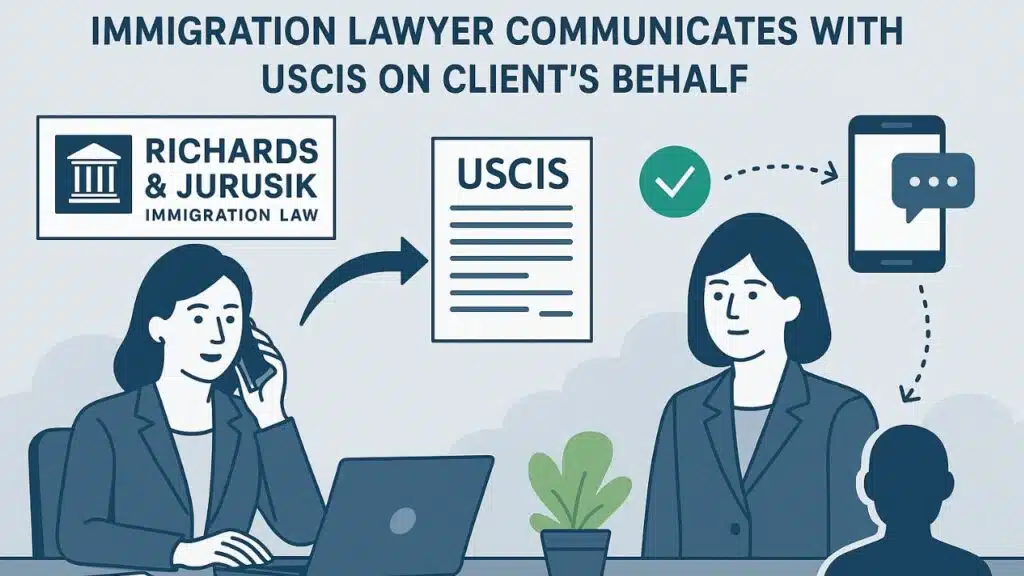
Immigration lawyers act as your voice with U.S. Citizenship and Immigration Services (USCIS). They handle all contact with government offices on your behalf. Your attorney submits forms, answers questions, and responds to requests.
This saves you time and stress. Richards & Jurusik Immigration Law shows how this works in practice. They coordinate closely with U.S. immigration agencies throughout the process. Their team gets praise for being professional, patient, and organized when talking to agencies.
Legal support makes sure all talks and papers go to the right place at the right time. Lawyers know which office to call and what forms to use. They track your case and give you updates through SMS messages with your consent.
The firm’s experience helps with the long and complex talks that government agencies require. Clients stay informed about progress and any new requests from immigration authorities.
This system works across all 50 states, including Florida, Texas, California, New York, Illinois, Georgia, and Louisiana. Client reviews on Trustindex show scores over 4.5, which reflects how well this communication system works.
How do law firms provide legal representation during interviews and appeals?
Law firms stand by your side during government interviews and appeals. Experienced immigration attorneys attend these meetings with you, not paralegals or assistants. They speak for you when questions get tricky.
Legal representation maximizes your chances of success for family reunification cases. Your lawyer knows immigration law inside and out. They prepare you for what to expect. Immigration attorneys handle all communication with government officials during the process.
Appeals become much easier with professional help. Law firms specialize in complex waivers and appeals if your initial application gets denied. They know exactly what paperwork to file.
Attorneys understand which arguments work best in court. Legal guidance helps families avoid costly mistakes during removal proceedings. Your immigration lawyer fights for your family’s future.
They provide comprehensive legal support through every step of the appeals process.
Takeaways
Family reunification doesn’t have to feel like climbing Mount Everest. Immigration lawyers bring expertise, patience, and heart to every case they handle. These legal professionals turn paperwork nightmares into success stories, helping U.S. citizens and lawful permanent residents bring their loved ones home.
Your family’s American dream is just one phone call away from becoming reality.
FAQs
1. How do green card law firms help with family-based immigration petitions?
Immigration lawyers guide families through filing Form I-130, the petition for alien relative. They help U.S. citizens and lawful permanent residents navigate complex paperwork. These legal experts know which family preference categories apply to your situation.
2. What documents do green card law firms help families prepare for reunification?
Law firms assist with gathering birth certificates, marriage certificates, and other vital records. They prepare the affidavit of support using Form I-864. Immigration expertise helps families avoid common mistakes that delay processing times.
3. Can green card holders sponsor their married children for permanent residency?
Yes, but it’s not always straightforward. Green card holders can petition for unmarried children, but married children face longer visa backlogs. Immigration lawyers explain these family preference categories clearly.
4. How do law firms handle consular processing for family reunification?
Legal representation guides families through consulate interviews and document preparation. Immigration services include preparing relatives for questions about their relationship. Lawyers coordinate between U.S. offices and overseas consulates.
5. What happens when family members have inadmissibility issues?
Immigration law firms file waivers like the I-601A waiver for certain problems. They handle cases involving tourist visas overstays or other immigration violations. Legal guidance helps families understand their options for lawful permanent resident status.
6. How long does the immigration process take for reuniting families?
Processing times vary wildly depending on your relationship and country. Immediate relatives of U.S. citizens move faster than other categories. Immigration applications can take months or years, but lawyers help track visa availability and filing dates.