Farming in Australia is a unique and demanding business. Producers deal with vast geographical distances, highly variable climates, and some of the toughest soil profiles in the world. On top of this, the modern Australian farmer acts as a mechanic, weather analyst, commodities trader, and administrator all at once.
Technology constantly helps local agriculture stay competitive globally. Now, artificial intelligence steps in to lift the heavy administrative burden. The introduction of generative AI models gives farmers new ways to analyze data and improve farm gate margins. Understanding how GPT in Australian agriculture works is the first step toward building a more resilient, profitable farm.
| Theme | Description | Real-World Impact |
| Core Challenge | High input costs and climate volatility. | Forces farmers to look beyond traditional yield growth. |
| AI Solution | Generative AI and machine learning tools. | Focuses on cost control, quality consistency, and pricing. |
| Adoption Rate | Rapid uptake across Australian enterprises. | Australia ranks fourth globally in enterprise Gen AI usage. |
| Future Goal | $100 billion agricultural sector by 2030. | Driven heavily by AgTech and data-led farm management. |
The Current Landscape of Australian Farming
The agricultural sector faces rising input costs, labor shortages, and unpredictable weather events. Traditional methods of just pushing for higher crop yields no longer guarantee better profits. Today, farm gate economics rule the industry. Australian agribusinesses need tools that reduce input wastage and provide more predictable quality outcomes.
Farmers across broadacre, horticulture, and livestock sectors are actively seeking ways to stabilize their income across volatile seasons. You see a clear shift toward precision agriculture, where every dollar spent on fertilizer or diesel needs to show a direct return on investment.
What is GPT and How Does it Fit into Agriculture?
Generative Pre-trained Transformers are advanced AI models designed to understand text, analyze data, and summarize complex information. You will not see a chatbot driving a tractor anytime soon. Instead, this technology acts as a tireless digital farmhand. It processes massive amounts of historical weather data, local climate reports, and financial records.
This helps producers make faster, more accurate decisions without spending hours staring at spreadsheets in the farm office. It translates the overwhelming flood of farm data into simple, actionable daily tasks.
15 Must-Know Facts About GPT in Australian agriculture
Generative AI does more than just write emails. It fundamentally changes how farmers interact with their own data. From managing heavy compliance paperwork to tracking international commodity markets, this technology offers practical solutions for everyday farming problems. By combining local farm data with advanced language models, producers gain insights that directly influence their bottom line. Here are fifteen ways this technology is reshaping the industry right now.
1. Enhancing Climate and Weather Resilience
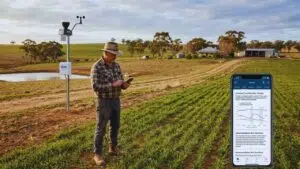
Australia swings rapidly from severe floods to prolonged droughts, making weather prediction a high-stakes game. Keeping up with these changes requires constant vigilance and a solid understanding of meteorological data. GPT models process historical weather data, local climate reports, and predictive models from agencies like the Bureau of Meteorology. Farmers use AI to generate plain-English summaries of how an upcoming dry spell impacts a specific winter crop.
This clear breakdown allows for proactive decisions around planting times, destocking rates, and fertilizer application. Instead of guessing based on a generic regional forecast, producers get a personalized risk assessment for their exact location.
| Weather Input | AI Processing | Farm Output Action |
| BOM rainfall forecast | Cross-references with local soil moisture data | Suggests delaying top-dressing fertilizer |
| Extreme heat warning | Analyzes livestock shade availability | Generates a heat stress management alert |
| Frost risk maps | Checks crop growth stage vulnerability | Recommends running frost fans overnight |
2. Streamlining Farm Compliance and Heavy Paperwork
The administrative burden on producers is incredibly heavy and often takes them away from actual farming. Chemical application records, safe work method statements, and environmental reports eat up hours of valuable time each week. You notice a massive difference when using generative AI to draft standard operating procedures.
The AI quickly generates compliance reports based on rough dot-point notes you type into your phone. It formats everything into standard government or industry templates instantly. This automation keeps farmers out of the office and out on the land where their expertise matters most, while keeping the auditors happy.
| Compliance Task | Traditional Method | AI-Assisted Method |
| Spray Diaries | Manual data entry into logbooks | Voice-to-text generation of records |
| Safe Work Methods | Writing documents from scratch | AI drafts templates based on task notes |
| Audit Preparation | Digging through filing cabinets | AI summarizes digital records instantly |
3. Advancing Precision Irrigation Management
Water remains the most precious resource in regional areas, especially across the Murray-Darling Basin. Allocations are strict and water trading prices fluctuate, meaning inefficiency costs real money. AI helps manage water allocations with extreme precision. When you feed data from soil moisture probes and local evaporation rates into an AI prompt, it provides conversational insights on optimal watering schedules.
This ensures every drop goes exactly where the plants need it most, cutting down high energy costs from running pumps unnecessarily. It takes the guesswork out of irrigation scheduling and maximizes crop water use efficiency.
| Irrigation Variable | AI Analysis Focus | Result for Farmer |
| Soil Moisture Probes | Identifies active root zone uptake | Prevents deep drainage water loss |
| Evapotranspiration | Calculates daily water loss | Adjusts watering run times automatically |
| Pump Energy Tariffs | Cross-checks off-peak power rates | Schedules watering when power is cheapest |
4. Speeding Up Pest and Disease Identification
Time is critical when an unfamiliar weed or fungal infection appears in a paddock. A delay of just a few days can ruin an entire crop. Multimodal generative models analyze uploaded images of affected plants directly from a smartphone. A farmer snaps a photo of a diseased wheat leaf, uploads it, and asks the AI for a list of potential local pathogens.
It provides immediate standard treatment protocols and active chemical ingredient suggestions. While it does not replace a trained agronomist, it gives the farmer a fast, reliable starting point to manage the outbreak before it spreads further.
| Threat Type | AI Identification Method | Next Step Generated |
| Broadleaf Weeds | Image recognition of leaf structure | Suggests compatible herbicide rates |
| Fungal Infections | Visual analysis of rust or blight | Recommends preventative fungicide |
| Insect Pests | Identifying crop damage patterns | Lists local pest management strategies |
5. Optimizing Livestock Health and Welfare
Running massive cattle or sheep operations makes individual animal monitoring a logistical nightmare. It is easy for a sick animal to go unnoticed in a mob of thousands. Modern farms use smart tags and GPS collars to track livestock movement and pasture intake. AI integrates with this raw sensor data to flag behavioral anomalies.
If a group of cattle shows a sudden drop in feeding behavior or unusual movement patterns, the system generates a text alert suggesting potential heat stress, water trough failure, or illness. Managers intervene earlier, protecting animal welfare and reducing mortality rates.
| Sensor Data | AI Interpretation | Management Action |
| GPS Movement | Detects reduced walking distances | Flags potential lameness or injury |
| Rumen Sensors | Monitors internal temperature spikes | Alerts to early signs of infection |
| Watering Frequency | Notes absence from water points | Prompts inspection of trough infrastructure |
6. Helping to Bridge the Rural Labor Shortage
Finding and retaining skilled labor in regional towns is a constant struggle for the agricultural sector. Backpackers and seasonal workers help, but the turnover rate means constant retraining. AI eases this pressure by taking over repetitive administrative tasks that normally require extra office staff.
Farm owners use the technology to draft job advertisements, write employment contracts, and create step-by-step training manuals for new station hands. By acting as a digital administrative assistant, the AI frees up the existing human workforce to focus entirely on high-value physical labor and machinery operation.
| HR Challenge | AI Application | Time Saved |
| Hiring Workers | Drafting targeted job ads | Hours spent writing and posting |
| Onboarding | Creating customized training manuals | Days of repetitive verbal instruction |
| Scheduling | Generating weekly roster templates | Hours of organizing shift swaps |
7. Seamless Integration with Existing Farm Software
Farmers get tired of downloading new standalone apps that do not communicate with their existing systems. Data silos make farm management harder, not easier. Developers now focus on integrating generative models directly into popular agricultural platforms via APIs. Financial accounting platforms, farm management software, and logistics trackers now feature embedded AI digital assistants.
Farmers ask natural questions about their operational data, like asking for a summary of last month’s diesel expenses, and receive custom reports instantly. This avoids the steep learning curve of navigating complex software menus.
| Software Type | AI Integration Feature | User Benefit |
| Farm Management | Natural language database queries | Instant access to historical yield data |
| Financial Apps | Automated expense categorization | Faster tax preparation and budgeting |
| Logistics Trackers | Predictive delivery time summaries | Better coordination with transport crews |
8. Boosting Supply Chain and Logistics Efficiency
Moving produce from a remote property to domestic supermarkets or export ports involves massive logistical planning. A single delay in transport can result in spoiled produce and lost income. Generative AI analyzes transport schedules, fluctuating fuel costs, and route data to suggest the most efficient freight plans.
It helps farm managers quickly draft emails to transport companies to update buyers on harvest delays. The technology also simplifies the complex customs documentation required for international agricultural exports, ensuring nothing gets held up unnecessarily at the border.
| Logistics Area | AI Optimization | Supply Chain Benefit |
| Route Planning | Analyzes road closures and fuel stops | Reduces freight costs and travel time |
| Buyer Updates | Drafts automated status emails | Maintains strong buyer relationships |
| Export Docs | Summarizes customs requirements | Prevents costly port delays |
9. Assisting with Carbon Farming Initiatives
Carbon farming offers a lucrative alternative income stream for landholders looking to diversify. However, the main barrier to entry is the dense bureaucracy and strict reporting standards. AI helps farmers navigate the complicated documentation of the Emissions Reduction Fund.
It summarizes the eligibility criteria for different soil carbon methodologies and helps draft initial project proposals. The system also structures the mandatory progress reports required to generate Australian Carbon Credit Units, making participation much more accessible for the average farmer.
| Carbon Task | AI Assistance | Outcome |
| Methodology Review | Summarizes 100-page government docs | Clear understanding of eligibility |
| Project Drafting | Generates required proposal templates | Faster submission to regulators |
| Progress Reporting | Organizes soil testing data into reports | Timely issuance of carbon credits |
10. Providing Real-Time Commodity Market Insights
Agricultural commodity prices fluctuate wildly based on global events, weather patterns abroad, and currency shifts. Staying on top of wheat, beef, or wool prices requires hours of reading market analysis. AI tools quickly summarize global market news, daily commodity reports, and trade journal articles into easily digestible formats.
A farmer asks their digital assistant for a brief overview of how overnight market movements in Chicago might affect local grain pricing. They get an immediate, easy-to-read brief before they even start the tractor, allowing for smarter grain marketing decisions.
| Market Data | AI Processing | Marketing Advantage |
| Global News | Scans for geopolitical trade impacts | Early warning on price drops |
| Futures Markets | Summarizes overnight trading activity | Better timing for selling grain |
| Currency Shifts | Calculates impact on export parity | Clearer picture of actual profit margins |
11. Overcoming Language Barriers with Seasonal Workers
During harvest season, Australian farms rely heavily on international backpackers and seasonal workers from the Pacific Islands. Communication hurdles often cause safety risks or operational delays when instructions are misunderstood. AI provides instant, highly accurate translation services tailored to agricultural terminology.
Managers write out daily task lists, machinery operation guides, or safety instructions in English. The AI instantly generates translated versions in multiple languages, ensuring every worker understands their duties perfectly and stays safe around heavy machinery.
| Translation Need | AI Function | Safety and Efficiency Impact |
| Daily Task Lists | Translates English to Tongan/Spanish | Eliminates confusion on job sites |
| Safety Manuals | Converts complex OHS terms accurately | Reduces workplace injury risks |
| Verbal Prompts | Real-time speech-to-text translation | Smooths out daily team meetings |
12. Strengthening National Biosecurity Measures
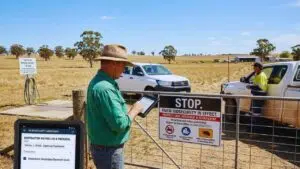
Australia enforces strict biosecurity laws to protect its isolated ecosystem from devastating diseases like Foot and Mouth Disease or Varroa mite. Staying compliant requires constant education on new quarantine regulations. Farmers use AI to search through dense government biosecurity databases quickly.
The system summarizes new threats and instantly drafts customized farm visitor logs and biosecurity protocols for contractors entering the property. This proactive approach keeps the farm safe from external contamination and ensures compliance with national tracking requirements.
| Biosecurity Risk | AI Preventative Action | Farm Protection Level |
| Contractor Entry | Generates custom visitor declaration forms | Tracks all vehicle movements |
| Disease Outbreaks | Summarizes local government alerts | Rapid implementation of lockdowns |
| Equipment Hygiene | Drafts wash-down procedure manuals | Prevents weed seed spread |
13. Democratizing Basic Agronomic Advice
Smaller farms or those in highly remote areas often cannot afford regular visits from independent agronomists. Access to specialized knowledge is usually limited by distance and budget. While AI should never be the sole source of critical farming decisions, its true value lies in its role as an always-on sounding board.
Farmers ask about standard fertilizer application rates for specific soil types, the life cycle of certain pests, or the typical growth stages of a new crop variety. It acts as an instantly accessible agricultural encyclopedia, leveling the playing field for smaller operators.
| Query Type | AI Knowledge Base Application | Value to Farmer |
| Crop Nutrition | Explains standard NPK ratios | Guides baseline fertilizer planning |
| Soil Science | Defines complex soil test metrics | Better understanding of pH balance |
| Rotation Planning | Suggests complementary cover crops | Improves long-term soil health |
14. The Ongoing Challenge of Rural Connectivity
This technology faces physical limitations in the outback. Cloud-based language models require a stable, reasonably fast internet connection to process queries and return answers. Many producers still deal with mobile black spots and unreliable regional broadband. Accessing advanced AI in the middle of a remote paddock remains difficult.
The full realization of artificial intelligence in farming depends heavily on the continued rollout of low-earth orbit satellite internet, like Starlink, and improved rural telecommunications infrastructure to bring the cloud directly to the tractor cab.
| Connectivity Option | AI Usability | Location Constraint |
| Farm Office Wi-Fi | Excellent for desktop AI tools | Restricted to the house or shed |
| 4G/5G Mobile | Good for smartphone apps | Fails in rural black spots |
| LEO Satellites | Enables whole-farm cloud access | High initial hardware costs |
AI systems need massive amounts of data to provide accurate answers, and this brings up serious concerns. Questions around data ownership remain a hot topic in the agricultural sector. When a farmer inputs specific yield data or financial records into an AI prompt, they need absolute assurance regarding where that data goes.
The industry pushes for localized, enterprise-level tools that protect proprietary operational data. Farmers must ensure their competitive advantage, built up over generations, is not used to train public models without their explicit consent.
| Privacy Concern | Public AI Risk | Enterprise AI Solution |
| Yield Data | May be used to train external models | Data is siloed and encrypted |
| Financials | Open to platform data breaches | Strict enterprise security protocols |
| Intellectual Property | Loss of competitive farming secrets | User retains full data ownership |
How Australian Farmers Can Start Using GPT Today
Adopting new technology always feels overwhelming at first, especially when it sounds as complex as artificial intelligence. The trick is to start small and focus on tasks that cause the most daily frustration. You do not need to overhaul your entire farm management system overnight to see the benefits of GPT in Australian agriculture.
Begin by automating simple communication and gradually move toward complex data analysis as your confidence grows. Partnering with the right technology providers ensures you get tools built specifically for the realities of rural business.
| Step | Action Required | Expected Outcome |
| 1 | Identify Bottlenecks | Pinpoint which administrative tasks take up the most time. |
| 2 | Start with Text Generation | Use AI to draft standard emails, job descriptions, and policies. |
| 3 | Evaluate Current Software | Check if your existing farm management apps offer AI integrations. |
| 4 | Review Privacy Policies | Ensure the chosen AI tool does not share your farm data publicly. |
| 5 | Expand to Data Analysis | Begin feeding local weather and yield data into secure AI models. |
Start Small with Administrative Tasks
The easiest way to introduce generative technology to a farming business is to target low-risk tasks that eat up the clock. Farm owners start by using basic text models to write emails to suppliers, draft job descriptions for harvest casuals, or create daily to-do lists for the team.
You can ask it to reword a difficult email to a difficult contractor to sound more professional. Getting comfortable with prompting the system on simple tasks builds the confidence needed to eventually use it for more complex operational analysis and financial forecasting.
Partner with Reputable AgTech Providers
Trying to build custom AI solutions from scratch costs too much time and money for a standard farming business. The best approach involves finding established agricultural technology companies that already build these features into their platforms.
Many popular farm management apps now release updates that include digital assistants designed specifically for the agricultural sector. These reputable providers ensure the tool understands industry-specific language and maintains proper data privacy measures to protect your historical farm records.
Final Thoughts
Technology constantly pushes the boundaries of what is possible on the land, from the first mechanical tractors to today’s GPS-guided headers. The adoption of GPT in Australian agriculture represents the next major shift in farm management, offering unprecedented ways to handle data, reduce paperwork, and improve decision-making.
As internet connectivity improves across regional areas and tech companies build more specialized, secure models, the future looks highly efficient. It will never replace the hard-earned intuition of the local farmer, but it will undoubtedly become an essential tool for running a profitable, modern agribusiness.