

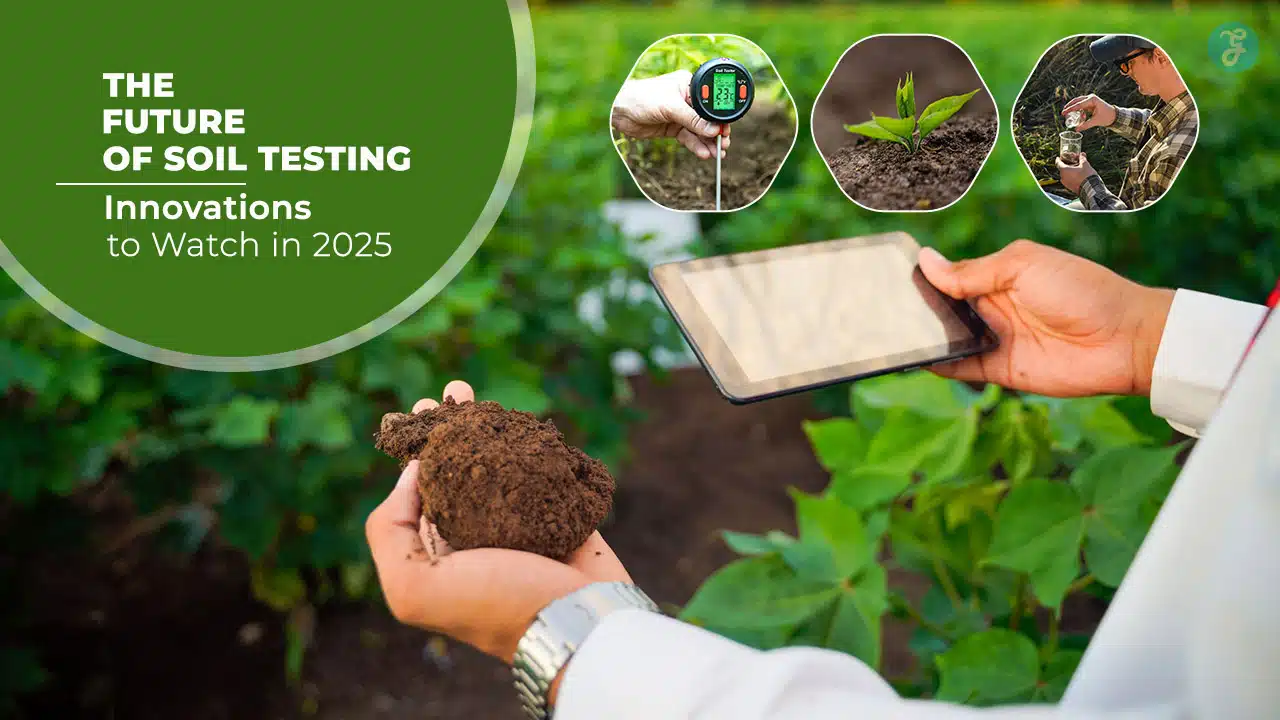
As the global demand for sustainable agriculture continues to rise, soil health remains a cornerstone of food security and environmental preservation. Soil testing is evolving to meet the challenges of modern agriculture, from climate change to increasing global food demand.
Traditional soil testing methods, while reliable, are being complemented and, in some cases, replaced by innovative technologies that promise faster, more accurate, and cost-effective results.
In this article, we’ll explore the top 10 innovations revolutionizing soil testing in 2025. These advancements are set to redefine how farmers, scientists, and policymakers approach soil health management.
Why Soil Testing is Essential?
Soil testing plays a crucial role in sustainable agriculture. By analyzing soil properties, farmers can determine nutrient deficiencies, pH levels, and organic matter content. This information helps optimize fertilizer use, reduce waste, and enhance crop yields. However, traditional methods often require significant time and resources. The future of soil testing lies in innovations that provide real-time data, greater accuracy, and actionable insights.
Key Benefits of Modern Soil Testing Innovations
| Benefit | Impact on Agriculture |
| Real-time data | Enables immediate decision-making. |
| Improved accuracy | Reduces overuse of fertilizers and resources. |
| Cost-effectiveness | Makes advanced soil testing accessible to all. |
| Sustainability | Promotes eco-friendly farming practices. |
Top 10 Innovations Shaping the Future of Soil Testing
Let’s get straight into it!
1. Smart Sensors for Real-Time Soil Monitoring
Smart sensors represent a groundbreaking advancement in soil testing. These small, high-tech devices are installed directly into the soil to continuously monitor its health. By collecting real-time data on factors like moisture levels, temperature, pH balance, and nutrient content, these sensors provide farmers with invaluable insights.
The data is transmitted wirelessly to a smartphone or cloud-based platform, enabling farmers to make timely and informed decisions about irrigation, fertilization, and planting schedules. Unlike traditional soil testing methods that require physical sampling and laboratory analysis, smart sensors work round the clock, delivering instant updates.
Their ability to integrate with other precision agriculture tools further enhances farm productivity and sustainability. For farmers looking to optimize yields while conserving resources, smart sensors are a vital tool.
Benefits
- Continuous data collection.
- Reduces the need for manual sampling.
- Helps farmers make timely irrigation and fertilization decisions.
Why It Matters
Smart sensors empower farmers with precise, actionable insights. They are particularly beneficial in precision agriculture, where real-time monitoring is essential for maximizing efficiency and sustainability.
2. Portable Soil Testing Kits
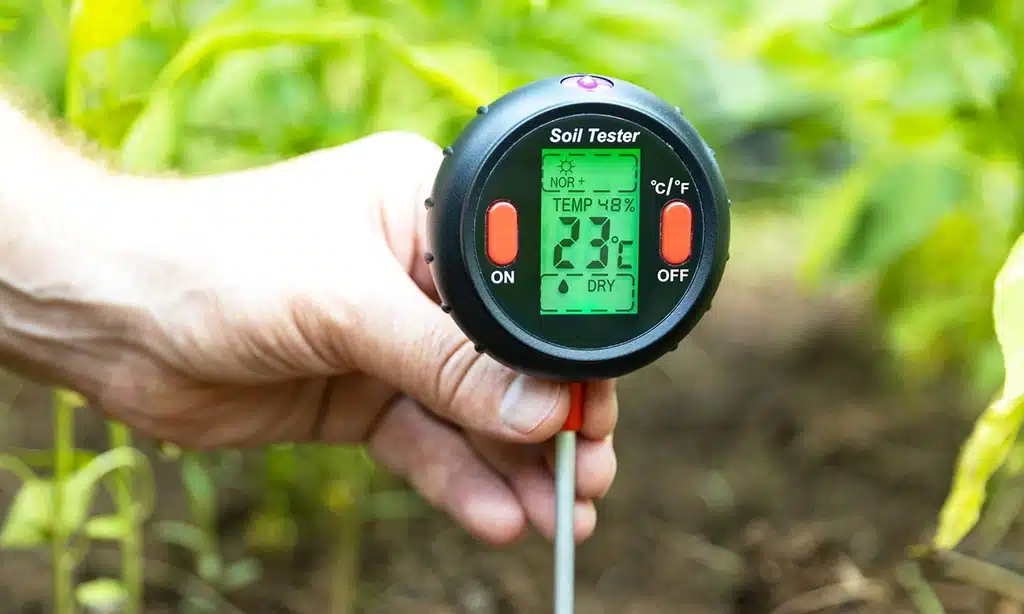
Portable soil testing kits are revolutionizing soil analysis by offering farmers the ability to conduct tests on-site without the need for laboratory facilities.
These compact and user-friendly kits come equipped with tools to measure soil pH, moisture, nutrient levels, and even salinity. Farmers can obtain accurate readings within minutes, allowing them to address soil deficiencies immediately. The portability and affordability of these kits make them particularly beneficial for small-scale farmers who may not have access to sophisticated lab services.
Additionally, these kits are designed to be easy to use, ensuring that even those with minimal technical knowledge can perform soil tests effectively. By providing quick and reliable results, portable soil testing kits empower farmers to make better decisions for soil management and crop health.
Benefits
- Convenient and user-friendly.
- Reduces dependency on external labs.
- Cost-effective for small-scale farmers.
Why It Matters
Portable kits democratize soil testing by making it accessible to farmers in remote areas, ensuring everyone benefits from accurate data.
3. Artificial Intelligence (AI) in Soil Analysis
Artificial Intelligence (AI) is transforming soil analysis by offering predictive and prescriptive insights that go beyond traditional soil testing methods. By processing large datasets, AI-powered platforms can analyze soil composition, detect patterns, and forecast future soil conditions.
These systems use machine learning algorithms to integrate real-time sensor data, historical soil records, and environmental factors, providing farmers with actionable recommendations for improving soil health.
For example, AI can predict nutrient depletion trends or identify areas prone to erosion. Farmers can then take preventive measures to address these issues before they impact crop yields. The scalability and accuracy of AI make it a powerful tool for enhancing soil management strategies and promoting sustainable farming practices.
Benefits
- Enhanced decision-making with predictive analytics.
- Identifies patterns and trends in soil health.
- Saves time by automating data analysis.
Why It Matters
AI reduces guesswork in soil management, helping farmers implement targeted interventions that improve soil fertility and crop yields.
4. Satellite Imaging for Soil Mapping
Satellite imaging has emerged as an indispensable tool for large-scale soil mapping and analysis. Using remote sensing technology, satellites capture high-resolution images that reveal critical soil properties, including moisture levels, organic matter, and nutrient content.
These images are analyzed using Geographic Information Systems (GIS) to create detailed soil maps, enabling farmers to identify areas that require specific interventions. Unlike traditional soil testing, which is labor-intensive and limited to small areas, satellite imaging provides a comprehensive view of entire farms or regions.
This technology is especially beneficial for large-scale agricultural operations, where precision and efficiency are crucial. With its ability to monitor soil conditions over time, satellite imaging helps farmers optimize resource allocation and improve land management practices.
Benefits
- Covers vast agricultural lands efficiently.
- Provides high-resolution soil maps.
- Integrates with GIS (Geographic Information Systems) for better planning.
Why It Matters
Satellite imaging offers a bird’s-eye view of soil health, enabling farmers to prioritize areas needing attention and optimize resource allocation.
5. Lab-on-a-Chip Technology

Lab-on-a-chip technology is a revolutionary innovation that miniaturizes complex laboratory processes onto a single microchip. This portable device can analyze soil samples for multiple parameters simultaneously, including nutrient levels, pH, and organic matter.
The compact size and rapid testing capabilities make it an ideal solution for farmers who need quick and accurate soil analyses. Unlike traditional laboratory testing, which can take days, lab-on-a-chip devices deliver results within minutes, saving valuable time during planting and harvesting seasons.
These devices are also cost-effective, reducing the expenses associated with outsourcing soil testing to specialized labs. For farmers seeking a versatile and efficient soil analysis tool, lab-on-a-chip technology is a game-changer.
Benefits
- Compact and portable.
- Provides quick and accurate results.
- Reduces the cost of traditional lab testing.
Why It Matters
Lab-on-a-chip devices are a game-changer for small-scale farmers, offering them access to advanced soil analysis at an affordable price.
6. DNA-Based Soil Testing
DNA-based soil testing is an advanced method that examines the microbial communities within the soil to provide a deeper understanding of soil health. By analyzing the DNA of microorganisms, this technology can identify beneficial microbes that promote plant growth as well as harmful pathogens that could damage crops.
This type of testing offers insights into the biological processes happening in the soil, such as nutrient cycling and organic matter decomposition. Farmers can use this information to adopt sustainable practices like crop rotation or organic fertilization to enhance soil fertility.
DNA-based soil testing is particularly valuable for organic farmers and those practicing regenerative agriculture, as it helps them manage soil biodiversity effectively.
Benefits
- Detects beneficial and harmful microbes.
- Supports sustainable farming practices.
- Enhances soil fertility management.
Why It Matters
Understanding soil microbiology allows farmers to adopt regenerative agricultural practices that boost productivity while maintaining ecological balance.
7. Blockchain Technology for Soil Data Management
Blockchain technology is transforming how soil data is recorded and shared. By creating a secure and tamper-proof ledger, blockchain ensures that soil data is accurate and transparent.
This technology is particularly useful for organic farmers who need to verify soil quality for certification purposes. Blockchain can also streamline compliance with agricultural regulations by providing a traceable record of soil health metrics.
Additionally, the decentralized nature of blockchain allows multiple stakeholders—such as farmers, agronomists, and buyers—to access soil data securely. This fosters trust and collaboration in the agricultural supply chain, making blockchain a valuable tool for promoting transparency and accountability in soil management.
Benefits
- Builds trust with consumers and stakeholders.
- Streamlines compliance with agricultural standards.
- Enhances data accuracy and security.
Why It Matters
Blockchain fosters transparency in the agricultural supply chain, giving consumers confidence in sustainably grown produce.
8. Automated Soil Sampling Robots
Automated soil sampling robots are revolutionizing the way soil samples are collected. Equipped with advanced sensors and GPS technology, these robots can navigate fields autonomously to collect samples at predefined locations.
The samples are then analyzed using on-board sensors or sent to a lab for further testing. This automation eliminates the labor-intensive and time-consuming aspects of traditional soil sampling. Moreover, robots ensure uniform and consistent sampling, which is crucial for accurate soil analysis.
These machines are particularly beneficial for large-scale farms, where manual sampling may not be feasible. By streamlining the sampling process, automated robots save time and labor while improving the accuracy of soil data.
Benefits
- Improves efficiency in large-scale farming.
- Collects uniform and accurate samples.
- Reduces human error in soil testing.
Why It Matters
Automation addresses labor shortages and ensures consistent sampling, which is critical for reliable soil analysis.
9. Advanced Spectroscopy Techniques
Advanced spectroscopy techniques, such as Near-Infrared (NIR) and X-Ray Fluorescence (XRF), are revolutionizing soil testing by providing rapid and non-destructive analysis.
These methods use light or radiation to measure soil properties like nutrient content, moisture levels, and organic matter. Unlike traditional chemical testing, spectroscopy requires no reagents, making it an eco-friendly option.
These techniques are also highly accurate, delivering results within seconds. Spectroscopy tools are portable and can be used directly in the field, providing immediate feedback to farmers. With their ability to analyze multiple soil parameters simultaneously, advanced spectroscopy techniques are setting new standards for soil testing efficiency and sustainability.
Benefits
- Provides rapid analysis of multiple parameters.
- Eliminates the use of harmful chemicals.
- Supports eco-friendly farming initiatives.
Why It Matters
Spectroscopy offers a sustainable alternative to traditional soil testing, aligning with global efforts to reduce agricultural waste.
10. Cloud-Based Soil Health Platforms
Cloud-based platforms are transforming soil health management by providing a centralized system to monitor, analyze, and store soil data. These platforms integrate data from various sources, including smart sensors, satellite imaging, and lab tests, to create a comprehensive picture of soil conditions.
Farmers can access these platforms from any device to track soil health trends, identify problem areas, and receive actionable recommendations. The use of artificial intelligence and machine learning further enhances these platforms by offering predictive analytics and customized solutions. Cloud-based platforms also facilitate data sharing among stakeholders, promoting collaboration and informed decision-making in agriculture.
Benefits
- Facilitates data sharing and collaboration.
- Provides long-term soil health trends.
- Integrates with other precision agriculture tools.
Why It Matters
Cloud-based platforms simplify soil management by consolidating data, enabling farmers to make informed decisions with minimal effort.
How These Innovations Impact Agriculture?
The innovations in soil testing are transforming the agricultural landscape. They address critical challenges such as soil degradation, resource scarcity, and the need for sustainable practices. By adopting these advancements, farmers can improve productivity, reduce environmental impact, and meet the growing demand for food.
Comparison Table of Soil Testing Innovations
| Innovation | Key Benefit | Target User |
| Smart Sensors | Real-time data collection | Large and small-scale farmers |
| Portable Kits | On-site testing | Small-scale farmers |
| AI in Soil Analysis | Predictive analytics | Tech-savvy farmers |
| Satellite Imaging | Large-scale mapping | Corporate agriculture |
| Lab-on-a-Chip | Rapid multi-parameter testing | All farmers |
| DNA-Based Testing | Microbial analysis | Sustainable farming advocates |
| Blockchain | Data security and traceability | Organic farmers |
| Soil Sampling Robots | Automated sampling | Large-scale operations |
| Advanced Spectroscopy | Non-destructive analysis | Eco-conscious farmers |
| Cloud-Based Platforms | Centralized data management | Precision agriculture users |
Takeaways
The future of soil testing lies in innovation. From real-time sensors to blockchain technology, these advancements offer a glimpse into a more efficient, sustainable, and productive agricultural sector.
By embracing these tools, farmers can optimize soil health management and pave the way for a greener future.
Incorporating these innovations isn’t just about improving yields; it’s about ensuring the long-term viability of farming in a changing world. Whether you’re a small-scale farmer or a large agricultural enterprise, these soil testing technologies are worth exploring in 2025.
























