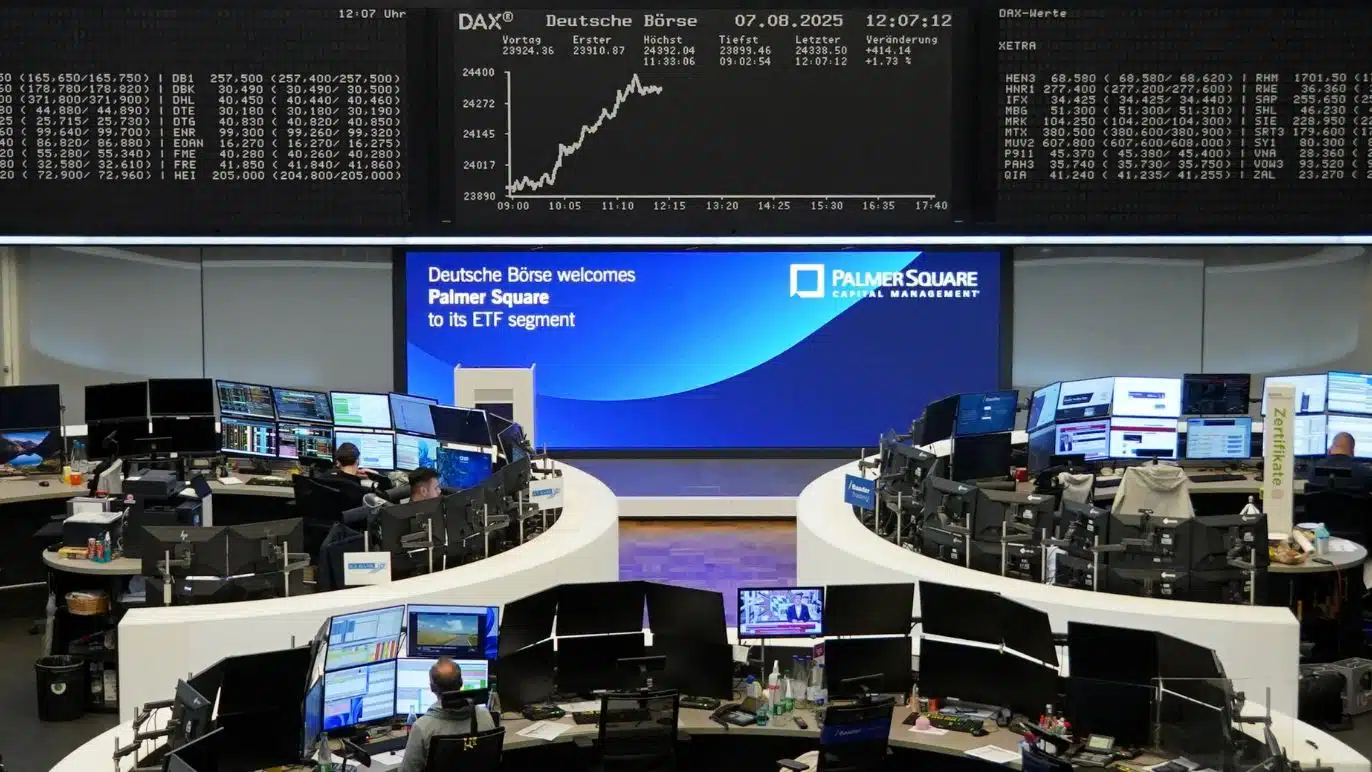
European stocks closed at fresh record highs as a powerful rally in mining and banking shares lifted major benchmarks across the region in thin, year-end trading, underscoring how 2025 has turned into one of the strongest years for European equity markets since the pandemic era. Gains in heavyweight miners such as Anglo American, Glencore, Antofagasta, Rio Tinto and precious-metals producer Fresnillo helped propel indices like the STOXX 600 and FTSE 100 to new peaks, buoyed by surging prices for gold, silver and copper and growing optimism about interest-rate cuts in 2026.
Record highs for European benchmarks
The pan-European STOXX 600 index climbed to a fresh all-time closing high around the 593 level, extending a record-breaking run that has seen the benchmark rise roughly 17% so far in 2025, its strongest annual performance since 2021. The blue-chip STOXX 50 similarly set a new record near 5,796 points, leaving it up about 19% for the year, supported by broad-based gains in banks, commodity producers and industrials.
London’s FTSE 100 also hit a historic high close to the 9,940 mark, with the index ending around 0.8% higher on the session as mining and financial stocks once again did the “heavy lifting” in a low-volume, holiday-shortened trading week. In Paris and Frankfurt, the CAC 40 and DAX added around 0.6%–0.7% on the day, contributing to what has been one of the best years since 2019 for Germany’s main benchmark and another strong year for France’s equity market.
Miners at the forefront of the rally
Mining companies were the standout performers across Europe, mirroring a powerful rally in precious and industrial metals that has intensified in December. In London, Fresnillo surged between about 3.5% and nearly 7% in recent sessions, while diversified miners Anglo American, Antofagasta, Glencore and Rio Tinto posted gains typically ranging from roughly 1.8% to more than 3% as investors piled into the sector.
Indices tracking precious-metals and industrial-metals miners have hit record levels, with one basket of precious-miner stocks jumping more than 4% in a single day and industrial miners advancing around 2%, making basic resources one of the best-performing groups in Europe this year. The STOXX Global Copper Miners index, for example, has risen about 55% in 2025, outpacing the broader basic-resources benchmark and marking its strongest year in data going back to 2018.
Metals surge: gold, silver and copper
The sector’s outperformance has been underpinned by a blistering rally in metals. Gold futures are trading near record highs above 4,300 dollars per ounce, with recent moves showing gains of around 1% on the day as lower bond yields, expectations of easier monetary policy and geopolitical uncertainty fuel demand for the traditional safe-haven asset. Silver has been even more volatile, hitting successive all-time highs above 70 dollars per ounce in recent weeks, with daily swings of more than 5% as investors and industrial users contend with tight supplies and robust demand from solar and electronics.
Copper prices have also smashed records, briefly crossing the 12,000 dollars per tonne threshold and approaching levels near 12,960 dollars in some trading, driven by structural demand from electrification, electric vehicles and grid upgrades, alongside supply disruptions at key mines. This backdrop has significantly improved earnings expectations for miners, prompting analysts to highlight copper-focused giants like Glencore and Rio Tinto as top picks for 2026 as they ramp up production and advance large-scale projects such as Simandou in Guinea.
Banks and cyclicals add to gains
While miners grabbed most of the headlines, financial stocks also contributed meaningfully to the advance in European indices. In the UK, major lenders including HSBC, Barclays, Lloyds Banking Group and Standard Chartered gained roughly 0.8%–1.6% on the day, benefiting from a combination of resilient earnings, still-healthy net interest margins and hopes that an orderly rate-cut cycle will support credit demand rather than signal a sharp deterioration in growth.
Across the continent, bank-heavy markets such as Italy’s FTSE MIB also outperformed, rising about 0.7% as investors rotated back into value-oriented sectors that had lagged during the era of ultra-low rates and US tech dominance. Industrials, defence and selected energy names added further support, with oil majors like Shell and BP advancing nearly 1% as crude prices firmed, and defence contractors benefiting from continued elevated spending in the wake of ongoing geopolitical tensions.
Macro backdrop: easing rates and US tech rotation
The advance in European equities has unfolded against a macro backdrop that has turned increasingly supportive as 2025 progressed. Inflation across the euro area and the UK has gradually cooled, allowing central banks to shift away from aggressive tightening and toward a more dovish stance, while investors now anticipate multiple rate cuts in 2026 from both the European Central Bank and the Bank of England.
Lower bond yields have eased pressure on equity valuations, especially in high-dividend and cyclical sectors like banks, insurers and miners, which had previously been weighed down by fears of prolonged restrictive policy. At the same time, stretched valuations and periodic volatility in US mega-cap technology stocks have encouraged global investors to diversify, leading to a rotation into cheaper European markets with strong earnings leverage to commodities, manufacturing and trade.
Thin volumes and year-end dynamics
Despite the strong price action, trading volumes remained relatively subdued, typical of the final week of the year when many market participants are away and exchanges operate on shortened schedules. In London, both the FTSE 100 and FTSE 250 saw lighter-than-average turnover, with markets scheduled for early closure ahead of public holidays, contributing to outsized moves in some individual names as modest flows met reduced liquidity.
Holiday-thinned conditions also heightened day-to-day volatility in metals and mining shares, with silver, in particular, experiencing a dramatic intraday spike to fresh records followed by one of its sharpest daily pullbacks since 2021 before recovering again, a pattern that fed through to producers’ share prices. Nonetheless, the bias remained clearly positive, with investors keen to lock in gains but hesitant to aggressively de-risk ahead of key catalysts early in the new year, such as Federal Reserve meeting minutes and updates on Ukraine peace efforts.
National markets: UK, Germany, France and Italy
In the UK, the FTSE 100’s run to nearly 9,940 points capped a year in which the index has gained about 16%, propelled by its heavy exposure to energy, mining and financials. A record-high reading for a sub-index of precious-metals miners, plus strong advances in diversified mining houses and oil majors, helped offset pockets of weakness in consumer staples and some domestically focused names.
Germany’s DAX, which added about 0.6% in the latest session, is on track for its biggest calendar-year advance since 2019, helped by a rebound in industrial exports, robust auto-sector earnings and Berlin’s commitment to large-scale fiscal expansion to support green investment and infrastructure. France’s CAC 40 rose around 0.7% on the day, leaving it near its own record levels after a year in which luxury groups, industrial champions and banks delivered strong performance despite intermittent political tensions and protests. In Italy, the FTSE MIB’s 0.7% rise underlined investors’ appetite for high-yielding banking stocks and energy names, which have benefited from higher rates, solid profits and government incentives.
Investor sentiment: optimism with caution
Sentiment across European markets appears cautiously optimistic as 2025 draws to a close. On one hand, the combination of easing inflation, a likely pivot toward lower interest rates, strong commodity prices and better-than-expected corporate earnings has encouraged investors to embrace risk, propelling equities to record levels and compressing risk premia.
On the other hand, lingering uncertainties—including the durability of the global economic expansion, the trajectory of US monetary policy, ongoing conflicts in Ukraine and the Middle East, and the possibility of renewed energy shocks—continue to temper enthusiasm, leading many portfolio managers to maintain hedges and avoid overly concentrated bets. The heightened volatility in metals and miners, where price swings remain large even amid a strong uptrend, also serves as a reminder that the rally is sensitive to shifts in macro data, policy signals and supply-side developments.
Outlook for mining and European equities in 2026
Looking ahead to 2026, many analysts expect the mining sector to remain a key driver of European equity performance, provided that the underlying commodity story stays intact. Structural demand for copper, silver and other critical minerals tied to electrification, renewable energy, data centers and electric vehicles is likely to keep markets tight, especially if supply disruptions, permitting challenges and underinvestment in new projects persist.
Brokerage research points to Glencore, Rio Tinto and other diversified miners as potential beneficiaries of another year of elevated metals prices, with some forecasts suggesting double-digit upside if copper continues to trade near or above its recent record highs and if cost pressures remain manageable. However, any sharp reversal in metals—triggered by slower global growth, policy missteps or rapid supply responses—could quickly cool enthusiasm and reverse some of the outsized gains seen in 2025, making stock selection and risk management crucial.
Policy, geopolitics and central banks
Central-bank policy will remain central to the European market narrative in 2026. Investors are closely watching upcoming minutes and meetings from the Federal Reserve, ECB and Bank of England for confirmation that policymakers are comfortable shifting toward more accommodative stances without reigniting inflation pressures.
A smoother disinflation path combined with carefully telegraphed rate cuts could extend the equity rally by supporting both valuation multiples and economic activity, especially in interest-sensitive sectors like housing, autos and capital goods. Conversely, any indication that inflation is re-accelerating, forcing central banks to delay or reduce planned easing, could weigh disproportionately on high-beta segments like miners and banks that have thrived on the prospect of cheaper money and stronger growth. Geopolitical developments—including negotiations over Ukraine, evolving US–China relations and energy-market disruptions—will also shape investor appetite for risk and safe-haven assets like gold.
What the record close means for investors
For retail and institutional investors alike, the record close for European stocks driven by miners offers both opportunities and risks. On the opportunity side, the outperformance of commodities and value-oriented sectors has helped diversify portfolios that had been heavily skewed toward US technology for much of the past decade, while high dividend yields and relatively modest valuations in Europe continue to attract income-focused buyers.
On the risk side, parts of the mining complex now trade on elevated expectations for sustained high metals prices and uninterrupted demand growth, leaving them vulnerable to disappointments in macro data, policy or supply conditions. Furthermore, thin year-end liquidity and rapid price moves in underlying commodities, particularly silver and copper, mean that short-term pullbacks or sharp corrections cannot be ruled out even within a longer-term bullish narrative. Investors are therefore likely to balance exposure to mining and cyclical sectors with defensive holdings in healthcare, consumer staples and utilities, as well as maintaining some allocation to cash and bonds as hedges.
European markets at an inflection point
The latest record close underscores that European markets are at a potential inflection point after years of underperformance relative to US equities. With strong annual gains for the STOXX 600, STOXX 50, FTSE 100, DAX and other regional indices in 2025, the narrative of Europe as a structurally lagging market is being reassessed—particularly as the region’s traditional strengths in industrials, energy, financials and basic resources align with the new investment cycle in infrastructure, energy transition and reindustrialization.
Whether this year’s mining-fuelled surge marks the start of a more durable re-rating of European equities or simply a late-stage spurt in a commodity upcycle will hinge on how growth, inflation and policy evolve in 2026. For now, the combination of record stock-market closes, booming mining shares and surging metals prices offers a striking snapshot of a continent’s markets riding a powerful, if potentially volatile, wave into the new year.