
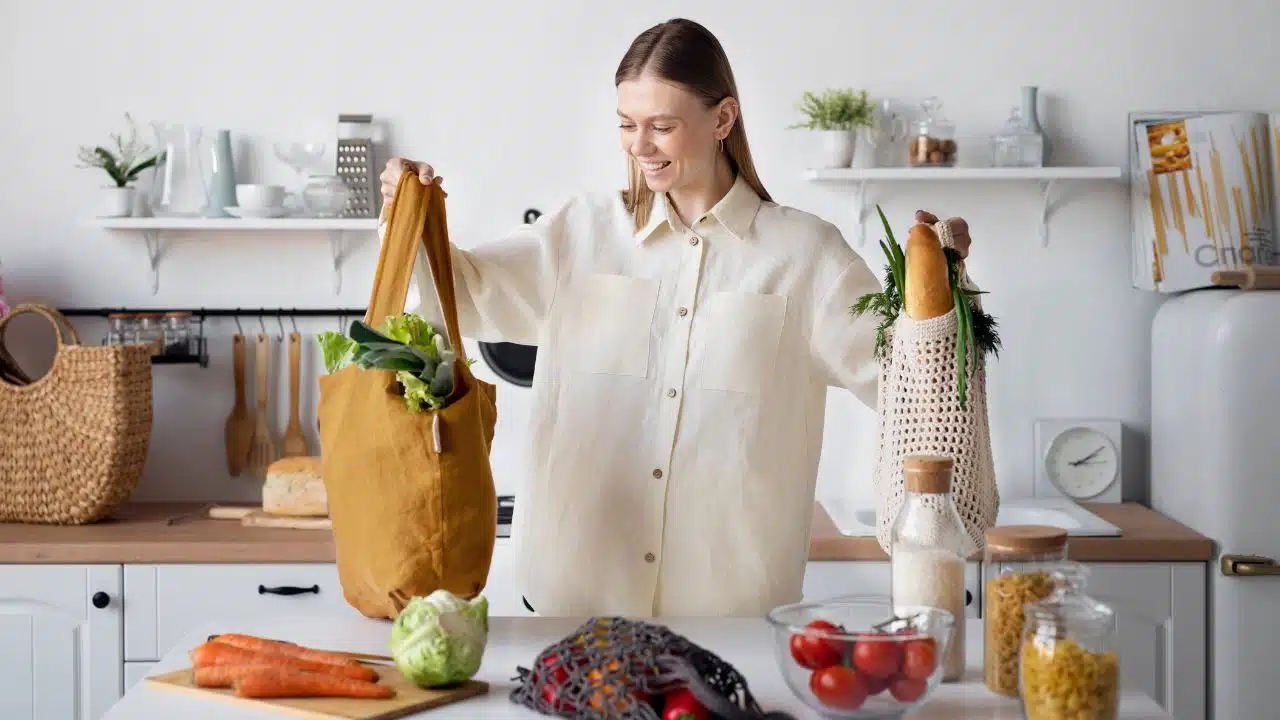
Most grocery waste does not feel like waste when it enters the basket. A thin produce bag, a multipack of snacks, a plastic tray of vegetables, a “just in case” loaf of bread, a bundle of herbs with no plan behind it — each one looks harmless on its own. The problem becomes visible later, when the bin fills quickly and food leaves the kitchen uneaten.
A Zero-Waste Grocery Shopping Habit is not about turning every shopping trip into a purity test. That approach usually fails. Most households need something more durable: fewer unnecessary packages, less spoiled food, smarter buying, and reusable habits that still work on a busy week.
The practical version is also more honest. Not everyone has a bulk store nearby. Not every supermarket accepts reusable containers. Some foods need protective packaging for hygiene, shelf life, or transport. Some families have children’s lunchboxes, medical needs, tight budgets, limited storage, or long commutes. A useful zero-waste routine has to survive those realities.
Start there. Not with a perfect pantry. Not with a row of matching jars. Start with the waste your household already creates.
Look at the Bin Before You Change the Basket
Before buying anything new, spend a week noticing what repeatedly enters your trash, recycling, or compost.
Do not make this complicated. A note on your phone is enough. Write down patterns such as:
- Too many plastic produce bags
- Bread going stale
- Herbs wilting before use
- Individually wrapped snacks
- Half-used sauces or condiments
- Leftovers forgotten after two days
- Plastic bottles bought during errands
This quick audit matters because different households waste in different ways. One family may have a packaging problem. Another may have a meal-planning problem. A single person living alone may struggle with large supermarket pack sizes. A household with children may deal with snack wrappers, school lunches, and half-eaten fruit.
A zero-waste habit based on someone else’s kitchen can easily solve the wrong problem. Your own waste pattern gives better instructions.
Build the Shopping List Around Food Already at Home
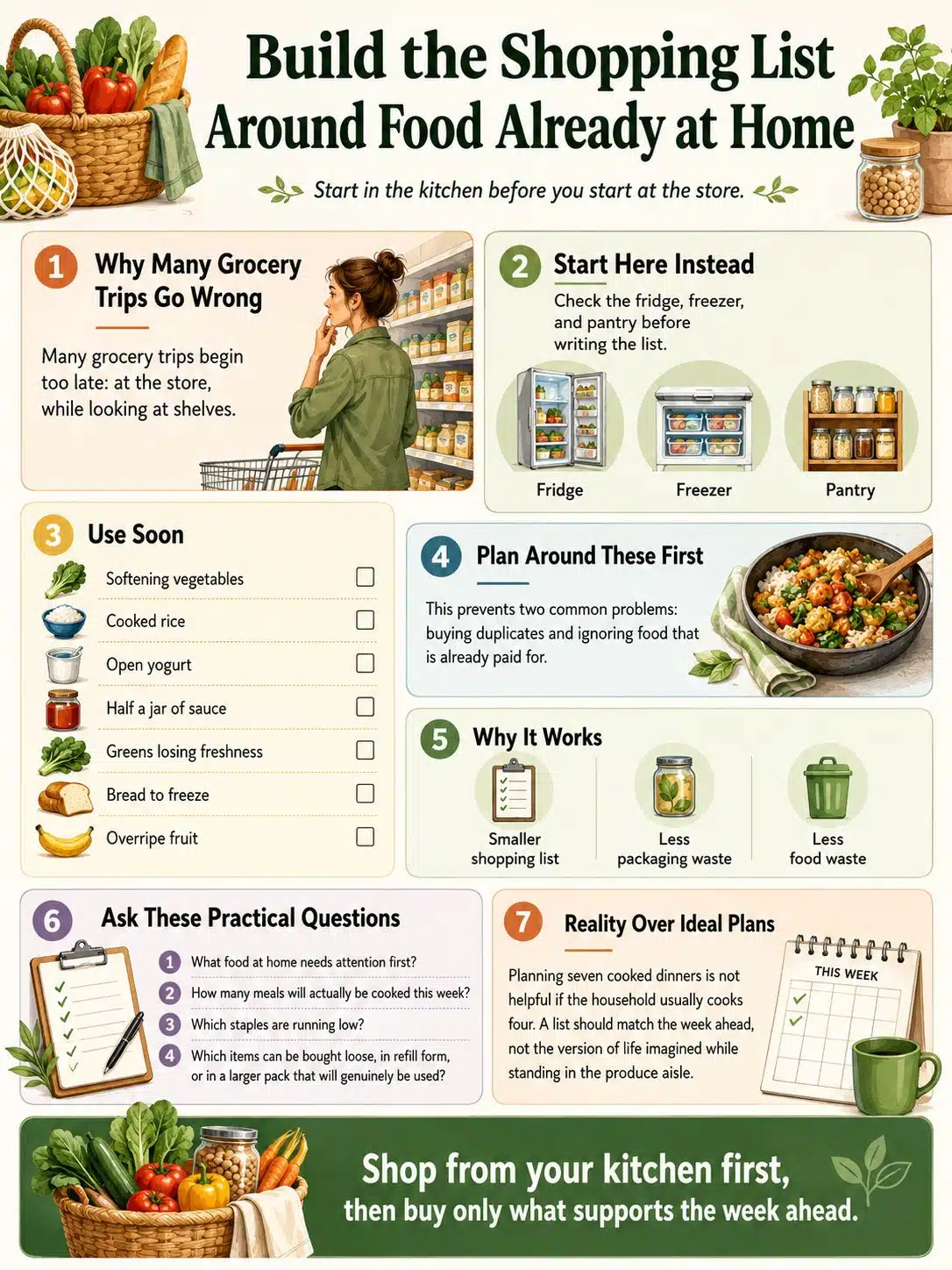
Many grocery trips begin too late: at the store, while looking at shelves.
A better trip starts in the kitchen. Check the fridge, freezer, and pantry before writing the list. Look for food that needs to be used soon: softening vegetables, cooked rice, open yogurt, half a jar of sauce, greens losing freshness, bread that should be frozen, fruit that is close to overripe.
Then plan around those items first.
This one step prevents two common problems: buying duplicates and ignoring food that is already paid for. It also makes the shopping list smaller, which is often the simplest way to reduce both packaging waste and food waste.
A useful grocery list does not need to be long. It should answer a few practical questions:
- What food at home needs attention first?
- How many meals will actually be cooked this week?
- Which staples are running low?
- Which items can be bought loose, in refill form, or in a larger pack that will genuinely be used?
The word “actually” does a lot of work here. Planning seven cooked dinners is not helpful if the household usually cooks four. A list should match the week ahead, not the version of life imagined while standing in the produce aisle.
Build a Zero-Waste Grocery Shopping Habit Slowly
A Zero-Waste Grocery Shopping Habit becomes easier when it is built in layers. Trying to fix bags, packaging, meal planning, leftovers, storage, composting, bulk buying, and cleaning refills in one week is too much for most people.
Start with the highest-friction problem first.
If food spoils often, focus on meal planning and fridge visibility. If packaging fills the bin, focus on loose produce, larger packs, and reusable bags. If impulse buying is the issue, shop with a list and avoid browsing while hungry. If the household forgets reusables, fix where the bags are stored.
Small systems beat big intentions. A folded tote in a work bag is more useful than ten reusable bags stored in a cupboard. A visible “eat first” shelf in the fridge is more useful than a complicated meal plan nobody checks.
Reusable Bags Are Simple, But Only If They Are Where You Need Them
Reusable shopping bags are one of the easiest first steps. They are also one of the easiest to forget.
The solution is not always buying more bags. It is putting them near the moment of decision. Keep some by the front door, in the car, inside a backpack, or near the place where the shopping list is written. If different people shop at different times, split the bags across more than one location.
Produce bags can help too, especially for apples, potatoes, onions, citrus, eggplants, carrots, and similar items. Lightweight mesh or cloth bags are usually enough for dry produce. They are less useful for wet herbs, fish, meat, or items that may leak.
Store policies vary. Some shops are comfortable with reusable produce bags or containers. Others require specific bags for weighing or hygiene. A good habit respects the store’s system rather than turning checkout into a negotiation every time.
If the bags are forgotten, do not treat the trip as a failure. Reuse the store bag at home and reset the system for the next shop.
Buy Loose Produce Where It Makes Sense
Loose produce is often the most practical low-waste choice in ordinary grocery shopping. Many fruits and vegetables do not need a separate plastic bag for the journey home.
Apples, bananas, lemons, potatoes, onions, garlic, oranges, cucumbers, cabbages, carrots, and many root vegetables can usually travel loose or in a reusable produce bag. That is an easy win when quality and price are reasonable.
But loose is not always better in every situation. Delicate greens may wilt faster. Berries may need protection. Some stores price packaged produce lower than loose produce. In some countries, supermarkets still require plastic bags for weighing. In other places, small vendors may be more flexible than large chains.
The better rule is this: avoid packaging that adds no real value. If packaging protects fragile food, prevents leakage, or extends usable life, the decision may be more complicated. If it only wraps something that could travel safely without it, it is a better target for reduction.
Be Careful With Bulk Buying
Bulk buying sounds like the natural home of zero-waste shopping. Sometimes it is. Rice, oats, lentils, beans, flour, nuts, spices, tea, coffee, and cleaning refills can all be good candidates when stores offer them responsibly.
The problem is overbuying.
Beginners often buy unfamiliar dry goods in large amounts because the setup feels sustainable. Then the food sits untouched for months. A pantry full of unused bulk food is not a success.
Bulk works best for items the household already eats. If lentils are cooked every week, buying them with less packaging makes sense. If dried chickpeas are aspirational but rarely cooked, start with a small amount. The same applies to spices. A small refill of a spice used often is useful. A large jar of a spice used once a year may go stale before it is finished.
Containers do not need to be expensive. Clean jars, reused tubs, old food containers, and sturdy tins can work. The container should seal properly, fit the shelf, and make the contents visible enough that they do not disappear into the back of the cupboard.
One practical detail matters: check the store’s weighing system before filling your own container. Some stores need to record the container’s empty weight first. Others do not accept outside containers. Ask first and avoid an awkward checkout problem.
Recycling Labels Are Not a Waste Strategy
Recycling matters, but it is not a magic exit door for packaging.
A package marked recyclable may not be accepted by local recycling services. Compostable packaging may need industrial composting facilities rather than a home compost bin. Multi-layer pouches, thin films, black plastic trays, and mixed-material packaging can be difficult or impossible to process in many local systems.
This is why “choose recyclable packaging” is incomplete advice. The real question is whether that packaging can be recycled where the reader lives.
Before choosing a product mainly because of its packaging claim, check:
- Is this packaging accepted locally?
- Does it need to be cleaned first?
- Is it a single material or a mixed-material pack?
- Can the container be reused at home?
- Is there a refill or return option nearby?
- Would a larger pack reduce repeated small wrappers?
Glass, metal, paper, cartons, and plastic all have trade-offs. Weight, transport, breakage, contamination, food protection, and local recycling infrastructure matter. The best choice is often the one that avoids unnecessary packaging first and uses local recovery systems second.
Food Waste Belongs at the Center of the Habit
A zero-waste grocery routine that ignores food waste is incomplete.
When food is thrown away, the waste includes more than the food itself. It also includes the land, water, labor, energy, transport, refrigeration, and packaging used to get it to the kitchen.
This creates an uncomfortable but useful point: the lowest-packaging option is not always the lowest-waste option in real life. If loose greens wilt before anyone uses them, the result is not better. If a packaged item prevents spoilage and is actually eaten, the trade-off may be reasonable.
That does not make excessive packaging harmless. It means grocery decisions should consider both packaging and whether the food will be consumed.
A practical order helps:
Use fragile food first. Leafy greens, herbs, berries, fresh seafood, and cut fruit should not be saved for the end of the week.
Save sturdy food for later. Potatoes, onions, carrots, cabbage, apples, dried beans, rice, pasta, oats, and frozen vegetables are more forgiving.
Freeze before food becomes a rescue mission. Bread, cooked grains, sauces, soup, chopped fruit, and some leftovers freeze well when portioned properly.
Keep one flexible meal in the week. Fried rice, soup, omelets, pasta, wraps, curry, or a grain bowl can absorb small leftovers without making the meal feel like punishment.
Make the Fridge Easier to Read
A crowded fridge quietly creates waste. People forget what they cannot see.
Use one shelf, box, or tray for food that should be eaten first. Place it at eye level if possible. This can include leftovers, opened jars, cut fruit, cooked vegetables, or dairy close to its date.
Clear containers help, but they are not required. The bigger issue is visibility. If leftovers are stored in opaque containers, label them with a date. If several people use the kitchen, a small “eat first” note can prevent good food from being ignored.
Avoid overfilling the fridge. Packed shelves block visibility and can make cooking feel harder than ordering or snacking. A fridge does not need to look minimal. It needs to be usable.
The freezer needs the same discipline. Freeze food in portions that match real meals. A giant frozen block of sauce is less useful than two or three smaller portions. If freezer items often disappear, keep a short list on the door or in a shared note.
Do Not Buy a New Lifestyle Before Fixing the Routine
Zero-waste shopping is sometimes marketed as a shopping category of its own: jars, labels, beeswax wraps, silicone bags, stainless containers, bamboo brushes, cotton sacks, refill bottles, and matching pantry systems.
Some of these products are useful. Many are optional.
A reused pasta sauce jar is still a jar. A plastic container already in the kitchen should be used until it no longer works. Old tote bags are fine. A clean food tub can store dry goods. A lunchbox can carry snacks.
The most wasteful version of zero-waste shopping is replacing functional items mainly for appearance.
Buy reusable products when they solve a repeated problem. Produce bags make sense if loose produce is available. A durable lunch container makes sense if packed meals are common. Reusable snack bags help if the household otherwise buys small packaged snacks every day. If the item has no clear job, wait.
Meat, Fish, Dairy, and Prepared Foods Need a Practical Standard
Some grocery categories are harder to make low-waste.
Meat, fish, dairy, tofu, deli foods, and prepared meals often come with packaging because of hygiene, leakage, shelf life, and store handling rules. In some places, counters may allow customer containers. In others, they will not. Some stores use paper wrapping. Others rely on plastic trays, film, or sealed packs.
Do not compromise food safety to avoid packaging. Leaking fish or meat in a reusable bag is not a win. Neither is arguing with staff who are following store policy.
If these foods are part of the household diet, reduce waste in realistic ways. Buy only what will be cooked or frozen. Choose pack sizes that match actual meals. Portion and freeze larger packs only if they will be used. Avoid prepared foods that come with multiple small sauce cups, cutlery packs, and extra wrapping unless convenience is genuinely needed.
Plant-based foods are not automatically packaging-free either. Dairy alternatives, tofu, vegan snacks, and meat substitutes often come in cartons, tubs, films, or trays. Choose them for the right reasons, not because they appear automatically low-waste.
Online Grocery Shopping Has Different Waste Traps
Online grocery shopping can reduce impulse purchases because it is easier to stick to a saved list. It can also create other kinds of waste.
Substitutions may arrive in smaller packages than expected. Fresh produce may come bagged even when loose options were preferred. Delivery may include extra bags, insulation, ice packs, or packaging for fragile items. Minimum-order thresholds can also push people to buy more than they need.
If ordering online, check whether the retailer offers bag return, packaging preferences, refill delivery, or notes for loose produce. Use saved lists for staples and avoid adding extra items only to meet a delivery minimum unless they are shelf-stable foods the household already uses.
Online shopping is not automatically better or worse. It depends on the retailer, delivery system, packaging choices, and whether the order prevents or encourages overbuying.
Make It Easy for the Whole Household
A zero-waste grocery routine is fragile when only one person understands it.
Household rules should be simple enough for everyone to follow without a lecture. For example:
- Check the eat-first shelf before opening something new.
- Add finished staples to the list immediately.
- Freeze bread before buying more.
- Pack snacks from larger containers when possible.
- Choose loose produce when price and quality are reasonable.
- Use leftovers before cooking another full meal.
Not everyone in the home will care about plastic pollution, food systems, or composting. That does not have to stop progress. Lower grocery bills, fewer overflowing bins, easier meal planning, and less spoiled food are practical benefits people can understand quickly.
The tone matters too. If the system feels like blame, it will fail. If it makes daily food decisions easier, it has a chance.
What to Ignore at the Beginning
Some zero-waste advice is too advanced, too expensive, or too dependent on local access.
Newcomers can safely ignore:
- Matching pantry jars
- Large bulk purchases of unfamiliar food
- Complicated weekly meal plans
- Specialty reusable products without a clear use
- Guilt over unavoidable packaging
- Social media “trash jar” comparisons
- Store routines that do not fit local rules
The trash-jar version of zero waste can be misleading. It may hide recycling, composting, waste created outside the home, or the time and access needed to shop that way. Most households need a less photogenic system: plan better, waste less food, avoid obvious packaging, reuse bags, and repeat.
That may not look impressive online. It works better in real kitchens.
A Four-Week Starting Plan
A month is enough time to build a basic routine without turning grocery shopping into a second job.
Week 1: Notice the pattern.
Track what gets thrown away. Separate food waste from packaging waste. Look for repeat offenders.
Week 2: Fix the list.
Check the kitchen before shopping. Plan meals around food already at home. Buy for the week you are actually going to have.
Week 3: Add the easiest reusables.
Put shopping bags where they will be remembered. Add produce bags if loose produce is available. Carry one container only if your stores accept it.
Week 4: Improve packaging choices.
Choose loose produce where practical. Compare larger packs against single-serve packs. Look for refill, return, or easier-to-recycle options only where they are locally available.
At the end of the month, keep the changes that felt easy and useful. Adjust or drop the ones that created too much friction. A smaller habit that lasts is better than a strict system that disappears after two shopping trips.
Final Thoughts
A Zero-Waste Grocery Shopping Habit is built through ordinary decisions repeated often: checking the fridge before shopping, buying food with a plan, carrying bags that are actually available, choosing loose or lower-waste packaging when practical, and using leftovers before they become waste.
The strongest starting point is not perfection. It is the most obvious waste in your own home.
Fix that first. Then fix the next thing. Over time, the grocery trip becomes less automatic, the bin fills more slowly, and the kitchen starts working with your routine instead of against it.