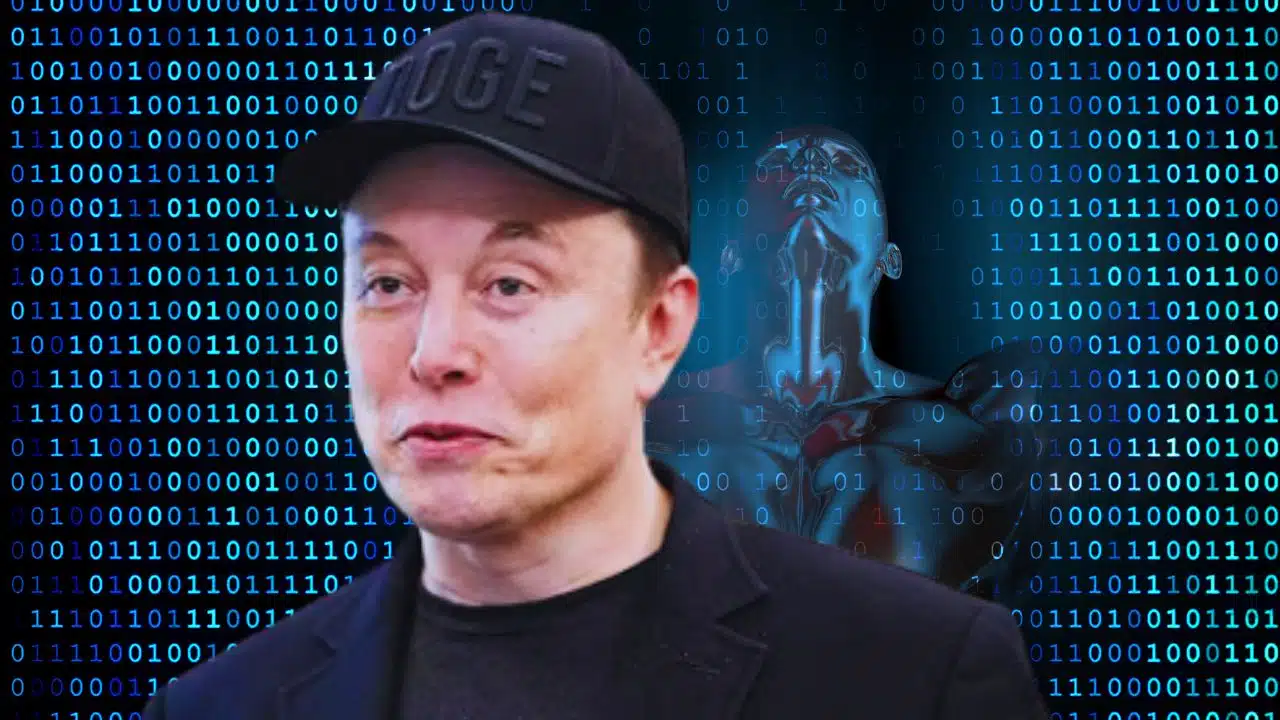
Elon Musk, the CEO of xAI and owner of social media platform X (formerly Twitter), has made a bold prediction about the future of tech jobs—particularly those related to software development. According to Musk, artificial intelligence (AI) is quickly reducing the need for traditional coding roles by automating much of the hard work that once made software engineering a highly technical and demanding field.
He believes that in the near future, coding will no longer be a career necessity, but rather a creative or recreational pursuit for those who enjoy it.
This forecast comes at a time when AI-powered tools like OpenAI’s Codex, GitHub Copilot, xAI’s Grok, and others are revolutionizing how software is written, tested, and deployed. With these tools becoming more powerful and accessible, many industry leaders, including Musk, are asking: Are we approaching a time when anyone can code, and professional developers may no longer be needed at scale?
Musk Compares Future Coding to Artistic Painting
Musk made these comments while responding to a post by OpenAI President Greg Brockman on the platform X. In his post, Musk shared a thought-provoking analogy:
more fun than ever to be a koder pic.twitter.com/maBZ1g9tT3
— Alistair McLeay (@alistairmcleay) August 3, 2025
“AI has taken a lot of the drudgery out of writing software. But, in the fairly near future, writing software will be like being a painter… In the old days, you needed a professional painter to spend many days just to make one selfie (formerly a portrait), just so people could know what you looked like. Now, you can make a video selfie instantly and effortlessly. There are still people who paint, of course, but it’s recreational, rather than functional.”
By comparing software engineering to the traditional art of painting, Musk emphasized the idea that just as cameras and smartphones made portrait art obsolete for everyday purposes, AI is making routine coding unnecessary.
The key takeaway? While professional painters still exist today, most people don’t need one for everyday use. Similarly, in the future, people might not need software engineers to perform basic coding tasks—they’ll simply rely on AI tools to get the job done.
The Evolution of Elon Musk’s Role in the AI Space
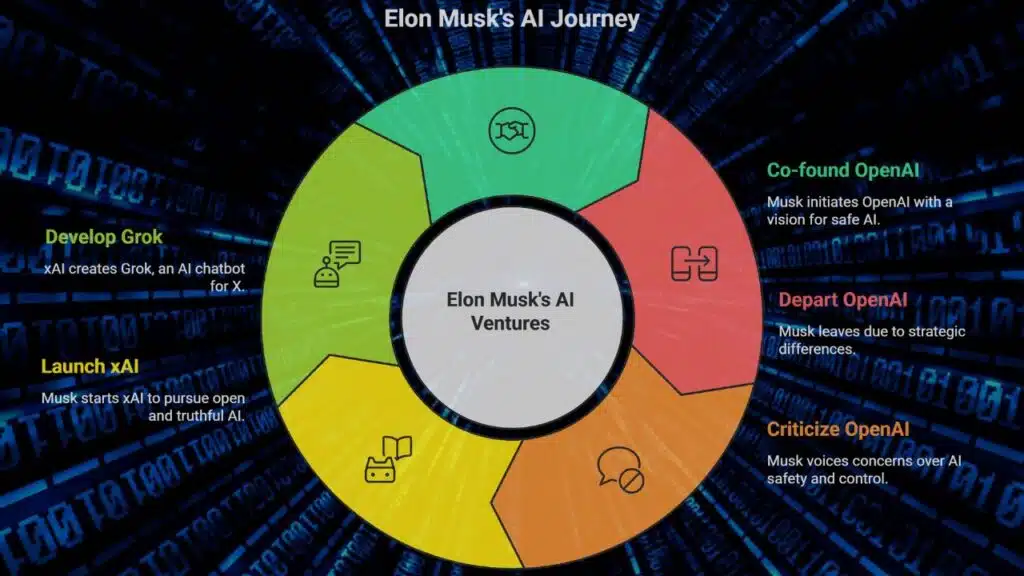
Elon Musk is no stranger to the AI world. In fact, he was one of the original co-founders of OpenAI, the research company behind the widely used ChatGPT platform. Founded in 2015, OpenAI was created with the vision of building safe and transparent AI systems that benefit humanity.
However, Musk parted ways with the organization in 2018 due to differences with other executives—particularly over the direction and pace of AI development. Since then, he has been an outspoken critic of OpenAI’s strategies, especially around issues of AI safety, closed-source development, and corporate control.
In 2023, Musk officially launched his own AI venture, xAI, with a mission to develop “maximum truth-seeking” AI. Unlike OpenAI, which now has close partnerships with Microsoft and operates on a commercial model, Musk claims xAI aims to be more open and aligned with the public interest.
His new company xAI powers Grok, an AI chatbot now embedded into X (formerly Twitter), providing conversational and utility features similar to ChatGPT, Google’s Gemini, and Anthropic’s Claude.
The Rise of AI Coding Assistants: A New Era for Developers
Musk’s comments arrive at a time when the AI landscape is experiencing explosive growth—especially in the area of developer productivity. Coding tools powered by large language models (LLMs) are helping programmers write code faster, fix bugs automatically, explain complex logic, and even build entire applications from scratch.
Here’s a closer look at what major AI companies are offering:
OpenAI Codex
- Codex is the foundational model behind GitHub Copilot, one of the most popular coding assistants today.
- It enables developers to write code using natural language prompts and supports dozens of programming languages.
- OpenAI recently announced plans for a more advanced “software engineering agent in the cloud” that can write, test, and deploy software with minimal human input.
Microsoft GitHub Spark AI
- Microsoft, which has invested billions into OpenAI, launched Spark AI as a next-generation coding assistant.
- Spark AI can generate working applications from plain English prompts, providing a no-code/low-code development platform for individuals with limited technical skills.
- This is seen as part of Microsoft’s broader effort to make software development more accessible through natural language interfaces.
xAI’s Grok 4
- xAI’s latest model, Grok 4, includes powerful features tailored for developers.
- It supports 20+ programming languages like Python, JavaScript, TypeScript, Go, and more.
- Integrated with code editors, it allows users to write, debug, and explain code using conversational prompts.
- Grok 4 also assists with code generation, real-time bug analysis, and documentation, significantly improving development speed and accuracy.
Other AI Tools in the Coding Space
| Tool Name | Company | Features | Status |
| Amazon CodeWhisperer | Amazon AWS | Context-aware code suggestions with built-in security checks | Live & integrated |
| Gemini AI | Google DeepMind | Multimodal support for coding, images, and documents | In development |
| Claude | Anthropic | Constitutional AI approach with safe and helpful coding outputs | Competitive model |
Will AI Replace Software Developers?
While Musk’s statement may sound extreme to some, many experts agree that AI is transforming—not necessarily replacing—software development.
According to a recent McKinsey Global Institute report, AI could automate up to 30% to 45% of developer tasks by 2030. These tasks include:
- Writing boilerplate code
- Running tests and debugging
- Generating documentation
- Reviewing pull requests
- Refactoring outdated code
However, other core responsibilities will still require human oversight, including:
- Designing complex system architecture
- Ensuring security and data privacy
- Making ethical decisions in development
- Managing and integrating with external APIs and legacy systems
- Innovating new products and features
In short, while AI tools can make developers more efficient, human intelligence and creativity will remain essential, especially in high-stakes projects or large-scale enterprise systems.
What Does This Mean for Future Coders and Students?
For those currently studying computer science or just beginning their tech careers, Elon Musk’s prediction might be confusing or even discouraging. But here’s the good news: the demand for problem solvers, system designers, and AI-literate developers is growing—not shrinking.
As AI handles more of the manual labor in software creation, humans will take on new roles like:
- Prompt engineers: Experts who craft precise instructions to guide AI models.
- AI supervisors: Professionals who audit, monitor, and train AI systems.
- Hybrid developers: Individuals who combine creative thinking with tech tools to build unique applications.
- Ethical technologists: Experts who focus on AI fairness, bias reduction, and compliance.
Musk’s Comments Reflect Broader Changes in the Tech Industry
Elon Musk’s remarks are part of a much larger conversation happening in the tech world: What will jobs look like in the age of AI?
As automation improves and AI takes over more repetitive work, all industries—not just software—are facing rapid changes. From graphic design to customer service, tasks that once required skilled professionals are now being performed (or at least assisted) by AI tools.
Musk’s prediction isn’t just about code—it’s about the creative democratization of technology. In the same way that smartphones let anyone become a photographer or video creator, AI may soon allow anyone to become a “coder” without formal training.
Coding’s Future Is Still Human-Centric
Elon Musk’s vision of coding becoming recreational may sound like the end of programming as a career, but in reality, it’s more likely a shift in how software is built. Instead of removing developers, AI will enable faster innovation, better collaboration, and more creative experimentation.
In this future, the question won’t be “Can you write code?” but rather, “Can you solve problems with technology?”
The power to code will be more accessible, but the power to create meaningful solutions will remain in the hands of people who can think critically, ethically, and strategically.
The Information is Collected from Live Mint and The Economic Times.