

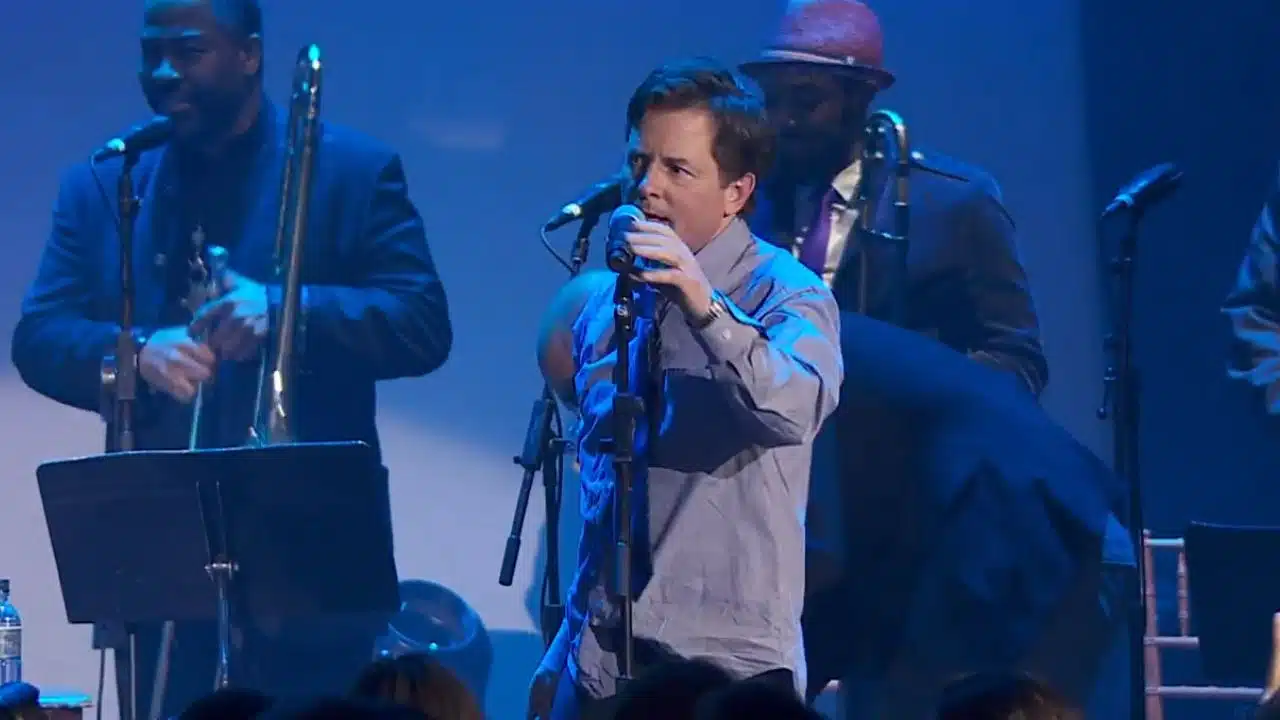
Fans still ask one big question: did Michael J Fox play guitar in back to the future? They adore the Johnny B. Goode solo at the Enchantment Under the Sea dance. They wonder if Marty McFly really played that riff.
He did learn guitar as a teen. But the on-screen solo comes from session player Paul Hanson. I will show you behind-the-scenes clips, notes from Tim May, and wisdom from Mark Campbell.
You will see who really played those strings. Keep reading.
Key Takeaways
- Back to the Future premiered on July 3, 1985, and Michael J. Fox’s Marty McFly only mimed the “Johnny B. Goode” solo on screen.
- Session guitarist Paul Hanson played the actual guitar riffs in a studio, and singer Mark Campbell supplied the Chuck Berry–style vocals.
- Guitar coach Tim May taught Fox how to hold and move the guitar so his air-playing looked real for the Enchantment Under the Sea dance scene.
- Fox first picked up guitar at age 14 and later battled Parkinson’s yet still jammed live with Joan Jett in 2012 and Coldplay in 2017.
- The sound team used Dolby Stereo tape, a multitrack recorder, and crowd foley to sync Hanson’s riffs and Campbell’s vocals with Fox’s performance.
Did Michael J. Fox Really Play Guitar in Back to the Future?
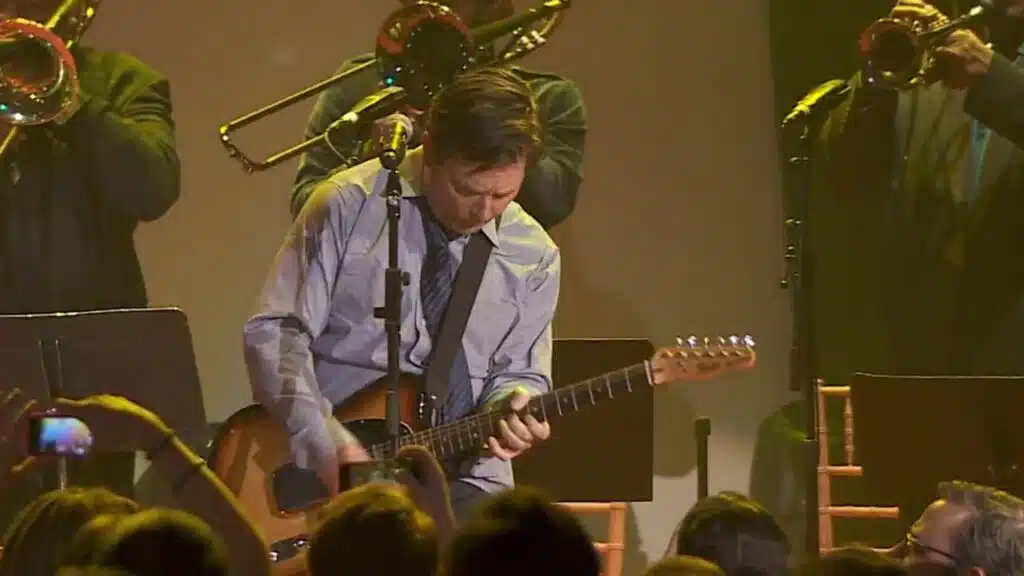
Michael J. Fox starred as Marty McFly in Back to the Future, released July 3, 1985. He didn’t play guitar in the Johnny B. Goode scene at the 1955 Enchantment Under the Sea dance.
Filmmakers lined up session guitarist Paul Hanson to nail the riffs, while Mark Campbell supplied the singing voice, capturing Chuck Berry’s rock classic style.
Marty McFly never held a real guitar for that performance. Director Robert Zemeckis wanted a flawless sound. Emmett “Doc” Brown’s time machine theme played second fiddle to skilled session work.
Each chord came from studio tracks, synced to the time machine moment.
Behind-the-Scenes Insights
Mark Campbell taught Fox to hold the electric guitar like a pro, and Tim May helped nail each riff’s timing. The film team rolled a boom mic on a dolly, patched it into a field mixer, and fed it through a portable console to sync Fox’s air guitar with real Chuck Berry riffs.
How the “Johnny B. Goode” Scene Was Filmed
Marty McFly jumped on stage in the Back to the Future Johnny B. Goode sequence. Michael J. Fox mimed every riff on his six-string. Brad Jeffries choreographed his wrist flicks and foot stomps.
Jack Mack and the Heart Attack delivered live rock classic beats. The cinema crane circled the action. A boom mic floated above the amps.
Tim May laid down the actual guitar track for Johnny B. Goode in a recording booth. Paul Hanson plucked the bass on set. Bones Howe fed the live audio through an analog mixer. Doc Brown cheered from the wings.
Robert Zemeckis spliced tight cuts between Fox’s strumming and the band’s live takes. Flashing lights mimicked the time machine pulse.
The Role of Mark Campbell and Tim May
Mark Campbell lent his singing voice to the Johnny B. Goode scene in Back to the Future, though the film did not credit his work. He sang the Chuck Berry classic with energy and grit.
Campbell, a vocalist for Jack Mack and the Heart Attack, earned a small share of soundtrack revenue. His performance hit the rock classic with raw soul, and the production team used a studio microphone and mixing console to capture every note.
Tim May handled the guitar track for that famous moment at the Enchantment Under the Sea dance, giving Michael J. Fox a real sound for his pretend moves. He plugged a Fender amp into a mixing board, then recorded riffs that echo Chuck Berry’s style.
Fans saw Marty McFly and Doc Brown rev up the time machine, but they heard May’s riffs drive the rock classic. Bassist Paul Hanson joined in, adding depth with low lines, while director Robert Zemeckis cheered the live spark in the guitar performance.
Michael J. Fox’s Guitar Skills
He strapped on a Gibson Les Paul for the “Johnny B. Goode” riff. He practiced power chords and strumming drills until they rang true.
His Experience with Playing Guitar
Michael J. Fox picked up a guitar at 14 and joined local bands to jam rock classic tunes. Paul Hanson, a top Hollywood guitar coach, taught him chord patterns and how to read tab. Late night practice built his chops on an electric guitar, and rhythm drills made those riffs tight.
That groundwork set the stage for his Marty McFly scenes in Back to the Future.
Months after the film, Parkinson’s hit, but Fox kept strumming through the storm on big stages. Joan Jett invited him to play a few bars in 2012, and Coldplay asked him to join their encore in 2017.
He proved guitar skills never fade, even as symptoms appear. Passion for music stayed strong in his life.
Preparation for the Movie Scene
Paul Hanson gave Michael J. Fox daily guitar lessons. He drilled basic chords and power riffs for the “Johnny B. Goode” moment in Back to the Future. Brad Jeffries taught him stage steps.
A storyboard mapped the Hill Valley stage. The props team set a retro guitar pick, mic stand, and an Ibanez Road Star II RS 430. Marty McFly’s outfit fit the sci-fi movie vibe.
Fox grabbed the Ibanez and nailed fiery shred licks in the high school band audition scene. He mimicked real guitar moves for the camera. Bones Howe layered his guitar performance with Doc Brown’s time machine hum.
A music supervisor cut live strings to boost soundtrack revenue.
Movie Magic and Sound Design
Sound artists sculpted the Johnny B. Goode scene with precision. Bones Howe, the music supervisor, led a crew that rolled Dolby Stereo tape through a multitrack recorder. They synced Michael J.
Fox’s mouth to Paul Hanson’s live riffs. Editors used an archival 1985 video for timing. Producers layered crowd foley, scrape of pick and amplifier hum. The scene helped boost soundtrack revenue.
This mix helped Back to the Future stand out as a sci-fi movie rock classic.
Sound designers used a digital audio workstation to mix guitar and vocals. Tim May slid in some drum tracks. Mark Campbell tweaked the levels for a bright twang. Doc Brown’s time machine effects peeked through in the background.
Engineers placed microphones close to amps for grit. The Pinheads applauded every beat. They dialed the mixer to balance every chord. Marty McFly’s guitar performance felt alive on screen.
Takeaways
Fans still buzz about that wild solo, and they grin at the stage moves. Michael J. Fox learned chords, yet a session musician drove the main riffs. Live tracks, crisp sound design and real musicians made the rock classic shine.
Viewers tap toes to that sci-fi time machine tune, and Fox’s flair sparkles through.
Discover more about the multifaceted life of Michael J. Fox, from his iconic roles to personal beliefs, in our detailed exploration “Is Michael J. Fox Christian?“.
FAQs
1. Did Michael J. Fox play guitar in Back to the Future?
He pretended to shred, but he did learn real chords. He took lessons from Tim May, and he did strum on screen. Fox honed his guitar skills off camera, in a side room. The film then mixed his work with studio guitar from Paul Hanson.
2. Who really played the guitar solo for Johnny B. Goode?
The Jack Mack and the Heart Attack group, with Tim May and Mark Campbell, did it. The band also had Brad Jeffries on drums. Chuck Berry did not play in the film. The scene nodded to a rock legend’s style, but no cameo from Pete Townshend. It also echoes the flair of a guitar legend. They nailed that rock classic.
3. Who sang the songs in the movie?
The singing voice in the film came from studio pros, not Fox. The music supervisor hired a singer to record The Power of Love. A music producer mixed the tracks, he teamed up with rock classic makers before. They did not use a garage band, they used pro artists.
4. Did Robert Zemeckis choreograph the guitar scene?
The director, Robert Zemeckis, worked with stunt men to sync the moves. He told Michael to pump up the straps, and stand by Doc Brown, next to the time machine. He shot it like a live gig, in a sci-fi movie. It felt electric.
5. Did the guitar scene boost the movie funds?
It drove up soundtrack revenue, and fans still rock to that riff. Johnny B. Goode became a staple on rock classic playlists. The film made more cash, it feels like a time machine for money. It is a sci-fi movie, but it rocks hard.
























