

You wake up. Your chest feels tight, and your shoulders ache. Does this sound familiar? Many people feel tense all the time. This constant pressure is called chronic stress, and it wears down your body day after day. Your mind races, and your body tenses up. You feel tired, but you simply cannot rest. If you recognize these signs, you are definitely not alone. Millions of people struggle with constant anxiety every single day.
The physical effects of stress damage your health in ways you might not even notice at first. Your heart works harder, and your immune system weakens. Over time, this constant pressure can lead to serious health problems like heart disease and high blood pressure.
The good news is that you can stop this cycle. I want to show you exactly how chronic stress damages your body and how to stop chronic stress effects. I will walk you through the exact steps I use to find relief, and I think you will be surprised at how easy it can be. So, grab a cup of coffee, and let’s go through it together.
Understanding Chronic Stress Effects
Chronic stress is not just a bad day at work. It is your body stuck in overdrive for months or even years. Your nervous system stays activated, and it continuously pumps out stress hormones like cortisol. This keeps your body in fight-or-flight mode long after the actual threat has passed.
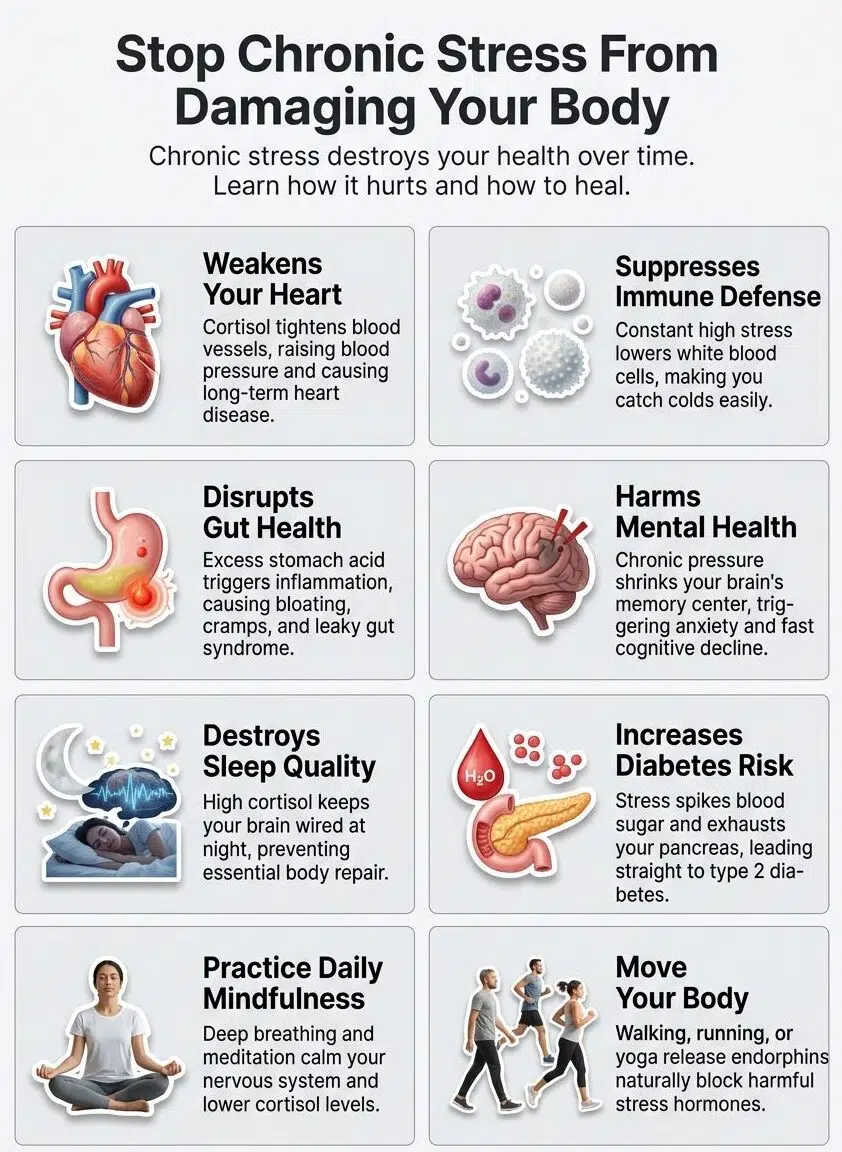
The American Psychological Association released its Stress in America 2025 survey, and the findings are eye-opening. They found that 62 percent of US adults consider societal division a significant source of stress in their daily lives. Even worse, over half of the people surveyed reported feeling lonely or emotionally isolated. This constant feeling of being on edge is exactly what chronic stress looks like today.
Stress is the trash of modern life. We get it because we all live and work in a world that makes us respond to it, says Lorraine Segal.
This mental health struggle affects your physical health in profound ways. Understanding exactly what you are dealing with helps you spot it early and take effective action.
What is chronic stress?
Stress hits everyone at some point, but chronic stress is very different. It sticks around for weeks, months, or even years. It wears you down like water constantly dripping on a stone. Your body treats this ongoing anxiety as an immediate physical threat.
Because your body senses danger, it keeps releasing cortisol and other hormones that trigger your fight-or-flight response. This constant flood of chemicals damages your general health and pushes your system to the brink of exhaustion. Your heart races, your muscles tense up, and inflammation spreads throughout your body.
Regular stress comes and goes. Things like traffic jams or work deadlines cause a quick spike in anxiety, but your body recovers after the stressor disappears. Chronic stress never really stops. Here are a few common triggers that fuel this endless cycle in the US today:
- Financial worries and inflation pressures.
- Ongoing difficult relationships or feelings of isolation.
- Job insecurity and unmanageable workloads.
- Health concerns that linger for months.
The natural stress response and its purpose
Now that you understand the danger of chronic stress, it helps to know how your body handles pressure in the first place. Your body features a brilliant, built-in alarm system. This system kicks into high gear when you face danger or a tough challenge.
Your brain releases hormones like cortisol and adrenaline within seconds of spotting a threat. These powerful chemicals prepare your muscles for action. They sharpen your focus and boost your energy levels instantly. This response saved our ancestors from predators, and it still protects us today from immediate physical threats.
Your heart pounds faster, your breathing quickens, and blood flows directly to your major muscles. This is your body working exactly as it should. It gives you the raw power to face whatever obstacle is directly ahead of you.
This natural stress response is simple but highly effective. It helps you survive emergencies and perform better during important moments. Athletes use this response to run faster. Students experience it before big exams, which can actually improve their test scores. The problem only arises when this biological alarm bell stays turned on for months or years.
How Chronic Stress Affects the Body
Chronic stress floods your body with hormones like cortisol. This triggers dangerous inflammation throughout all of your internal systems.
This constant state of high alert damages your heart and weakens your immune defenses. It disrupts your digestion and clouds your mental health. Let’s break down exactly what happens inside your body when you cannot relax.
Impacts on the cardiovascular system
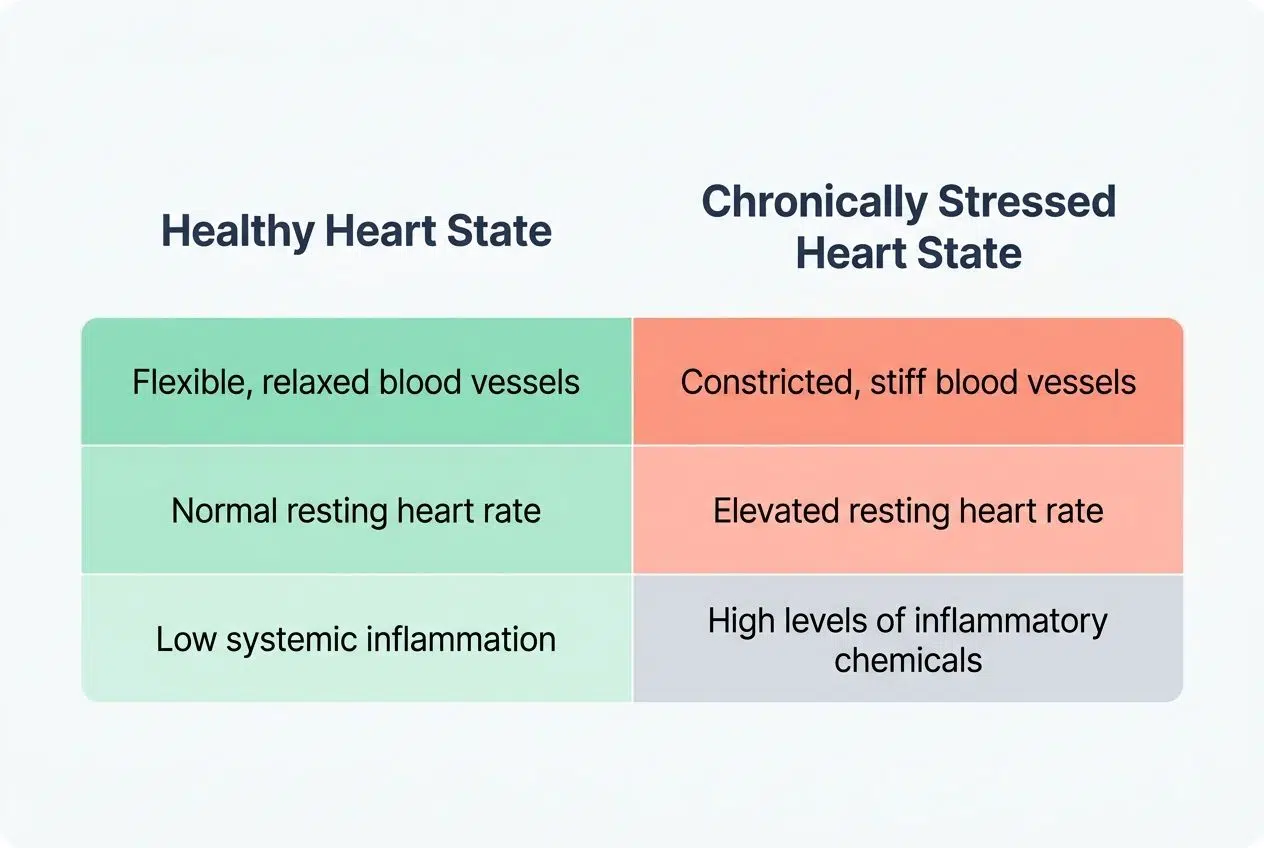
Your heart takes a severe beating when stress sticks around for too long. Cortisol causes your blood vessels to tighten up. This raises your blood pressure and forces your heart to work much harder than it should.
The American Heart Association reported in its 2025 Heart and Stroke Statistical Update that less than half of US adults get the recommended 150 minutes of weekly physical activity. This lack of movement compounds the physical strain of daily anxiety. Your heart rate speeds up, your arteries get inflamed, and this constant pressure leads to serious problems like heart disease and hypertension.
| Healthy Heart State | Chronically Stressed Heart State |
|---|---|
| Flexible, relaxed blood vessels | Constricted, stiff blood vessels |
| Normal resting heart rate | Elevated resting heart rate |
| Low systemic inflammation | High levels of inflammatory chemicals |
Inflammation becomes your cardiovascular system’s worst enemy during prolonged stress. The stress response triggers your body to release inflammatory chemicals that damage your artery walls. This makes them sticky and narrow, creating the perfect setup for plaque buildup.
Effects on the immune system
Chronic stress hits your immune system hard. A landmark study from Carnegie Mellon University led by Dr. Sheldon Cohen discovered exactly why this happens. The study showed that experiencing severe chronic stress for a month or longer makes you significantly more likely to catch a cold.
When you are under constant pressure, your immune cells actually lose their ability to respond to hormonal signals. This allows inflammation to run completely out of control.
This means your white blood cells become less effective at their primary job. Inflammation spikes throughout your body, creating a vicious cycle where your immune system struggles to protect you from simple illnesses. People under chronic stress catch colds more often, recover more slowly from injuries, and face higher risks of serious infections.
Damage to the digestive system
Your gut pays a heavy price when you are stressed. The gut-brain axis connects your mind directly to your stomach, and stress hormones like cortisol wreak havoc on this sensitive connection.
A 2025 study from the American Gastroenterological Association highlighted a massive post-pandemic surge in gut-brain disorders across the US. They found a direct link between high anxiety and severe stomach problems.
- Irritable Bowel Syndrome (IBS) cases jumped by 28 percent.
- Functional dyspepsia increased by nearly 44 percent.
- Your helpful gut bacteria begin to die off when stress hormones spike.
Your stomach produces extra acid under pressure. This triggers painful inflammation in your intestines. Food moves through your system too fast or too slow, which causes bloating and cramping. Taking steps to lower your stress levels through relaxation techniques gives your digestive system a fighting chance to heal.
Consequences for mental health
Chronic stress attacks your mental health like a relentless storm. Anxiety builds up rapidly when cortisol levels stay high for too long. This leaves you feeling on edge and jumpy all day.
Depression creeps in as your brain struggles to handle the constant pressure. Your resilience takes a major hit. Stress hormones flood your system day after day, making it incredibly hard to think clearly or feel like your normal self.
Inflammation spreads throughout your body, and this physically affects how your brain works and processes emotions. You might find yourself snapping at loved ones, feeling totally numb, or struggling to enjoy the hobbies you once loved.
Mental health does not exist in a bubble. It connects directly to your physical condition, and chronic stress tears both of these vital pillars apart at the same time.
Common Symptoms of Chronic Stress
Your body sends clear, loud signals when stress takes over your life. Spotting these warning signs early makes all the difference. Many people try to push through the pain, but ignoring these symptoms only makes the underlying damage worse. Here is what you need to watch out for.
Sleep disturbances
Chronic stress destroys your sleep quality in ways you might not expect. Your brain floods with cortisol right before bed. This keeps you wired at night, making it nearly impossible to fall asleep or stay asleep.
Tossing and turning becomes your nightly routine. This sleep deprivation then makes everything worse because a tired body cannot manage stress effectively. It is a vicious cycle that feeds itself and leaves you completely exhausted.
If you are experiencing stress-related sleep issues, you will likely notice a few specific patterns:
- Difficulty falling asleep even when you feel tired.
- Waking up frequently during the night with a racing heart.
- Grinding your teeth while you sleep is also known as bruxism.
- Feeling physically exhausted immediately upon waking up.
Muscle tension and headaches
Your muscles tighten up like a clenched fist when stress floods your body. Cortisol signals your body to prepare for physical danger. Because of this, your neck, shoulders, and jaw clench incredibly hard.
You hold this extreme tension for hours or even days. The result feels absolutely awful. Your head pounds, your shoulders ache, and you feel like someone wrapped a tight band around your skull.
Stress-related headaches happen because these tight muscles cut off natural blood flow. This creates intense pain signals that your brain simply cannot ignore. Physical activity actually loosens those tight muscles and releases natural pain-fighting chemicals.
Many people reach for pills first, but the real problem sits deeper in their elevated stress levels and systemic inflammation. Managing your anxiety through relaxation techniques and movement becomes critical for finding real relief.
Emotional instability
Chronic stress throws your emotions into total chaos. One moment you feel fine, and the next you feel intensely irritable or overwhelmed. Cortisol floods your brain and disrupts the delicate chemicals that control your daily mood.
Anxiety spikes without any warning. You might snap at the people you care about most. Sadness creeps in unexpectedly during quiet moments. These emotional swings happen because stress hormones hijack your mental health.
This emotional instability heavily affects your personal relationships and your work performance. You will struggle to focus on simple tasks. Small problems will suddenly feel like massive disasters. Breaking this pattern requires deliberate action, not just hoping things improve on their own.
Long-Term Health Risks of Chronic Stress
Chronic stress rewires your body’s vital systems over time. It turns temporary annoyances into permanent, life-altering problems. Your heart, brain, and metabolism all pay the ultimate price when stress sticks around too long.
Prolonged stress alters the effectiveness of cortisol to regulate the inflammatory response, promoting the development and progression of serious disease.
Heart disease and high blood pressure
Your heart pays a steep price when you are always worried. Cortisol keeps your blood vessels tight and narrow. This constant tension forces your heart to work much harder to push blood through your body.
High blood pressure damages your delicate artery walls. Your heart becomes exhausted from this endless strain, and dangerous plaque builds up inside your vessels. Heart disease often develops quietly without obvious warning signs until serious trouble hits.
According to the American Heart Association, engaging in at least 75 minutes of moderate exercise like brisk walking each week lowers your risk of cardiovascular disease by 17 percent. Taking action now through daily movement prevents your cardiovascular system from breaking down later.
Increased risk of diabetes
Chronic stress pushes your body into a constant state of high alert. This floods your system with cortisol and adrenaline. These hormones trigger your liver to release extra glucose into your bloodstream to give you quick energy.
A recent study published in Frontiers in Psychology explored this connection. It showed that people dealing with high stress often have higher A1C levels. This number is a key marker of your average blood glucose. The American Diabetes Association recommends keeping your A1C below 7 percent for most nonpregnant adults, but constant anxiety makes this goal very difficult to achieve.
Here is exactly how prolonged tension fuels your diabetes risk:
- Constant hormone surges exhaust your pancreas and reduce insulin production.
- Stress increases your cellular resistance to the insulin you do manage to produce.
- Anxiety often leads to poor dietary choices that cause rapid blood sugar swings.
Accelerated aging and cognitive decline
Stress hormones flood your body day after day, and they speed up the aging process in ways you cannot easily see. Your cells have tiny protective caps called telomeres that naturally shorten over time. Dr. Elissa Epel, a leading researcher at the University of California, San Francisco, proved that chronic stress accelerates this biological aging at the cellular level.
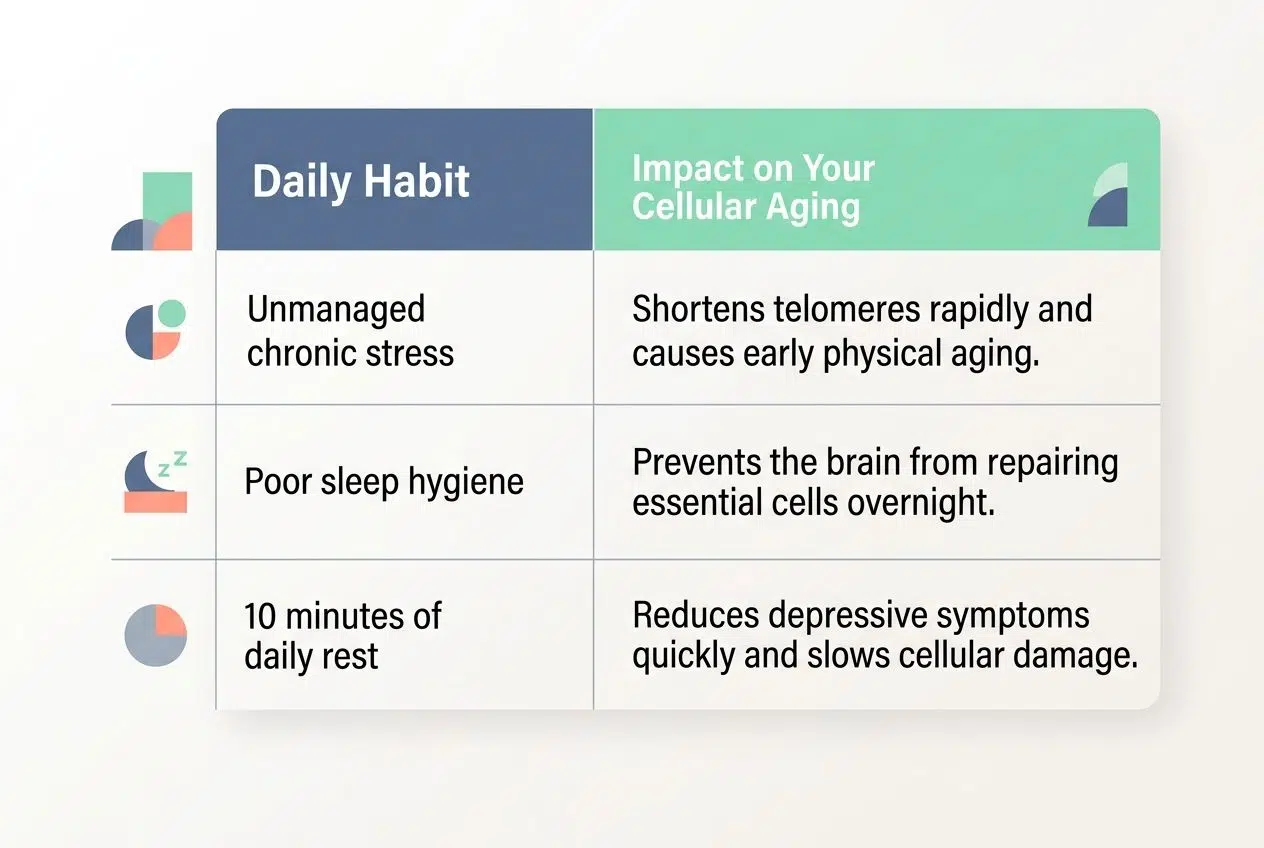
This constant pressure makes your telomeres shrink much faster than normal. Your skin loses elasticity, your hair grays more quickly, and your mental sharpness fades prematurely.
| Daily Habit | Impact on Your Cellular Aging |
|---|---|
| Unmanaged chronic stress | Shortens telomeres rapidly and causes early physical aging. |
| Poor sleep hygiene | Prevents the brain from repairing essential cells overnight. |
| 10 minutes of daily rest | Reduces depressive symptoms quickly and slows cellular damage. |
Cognitive decline creeps in slowly at first. It picks up alarming speed if you ignore the root cause. Exercise and quality sleep help fight this damage by boosting blood flow to your brain and lowering those harmful stress hormones.
How to Manage and Reduce Chronic Stress
You have the power to fight back against chronic stress by taking real action today. Your body and mind respond surprisingly fast when you give them the proper tools they need to heal.
You do not need to change your entire life overnight. Small, consistent habits make the biggest difference.
Mindfulness and relaxation techniques
Mindfulness and relaxation techniques offer powerful tools to interrupt your body’s stress response. These practices help lower your cortisol levels, reduce inflammation, and restore your sense of calm.
- Deep breathing exercises calm your nervous system fast. Dr. Andrew Weil’s 4-7-8 breathing technique is highly effective. Breathe in slowly through your nose for four counts, hold for seven counts, then exhale through your mouth for eight counts.
- Progressive muscle relaxation teaches your body the difference between tension and ease. Start at your toes and tighten each muscle group for five seconds before releasing.
- Meditation builds mental resilience against daily pressures. Apps like Headspace or Calm provide excellent guided sessions for beginners.
- Body scan exercises increase your awareness of where stress lives in your body. Lie down and mentally move through each body part, noticing sensations without judging them.
- Guided imagery transports your mind to peaceful settings. Listen to recordings that describe calm beaches or quiet forests to relax your brain.
- Yoga combines movement, breathing, and mindfulness into one helpful practice. Gentle poses stretch tight muscles while focused breathing activates your relaxation response.
- Journaling clears mental clutter by moving your chaotic thoughts onto paper. Write freely about your worries or gratitude for ten minutes each morning.
- Aromatherapy uses scents like lavender and chamomile to trigger relaxation. Diffuse essential oils in your home to activate brain regions associated with calm.
- Tai chi flows through slow, controlled movements that center your mind. This ancient practice improves your physical balance and mental flexibility simultaneously.
- Listening to calming music reduces cortisol production in your bloodstream. Choose instrumental pieces or nature sounds during work to act as a natural anxiety treatment.
Physical activity and exercise
Exercise stands as one of the most powerful tools you can use to fight chronic stress. Your body releases natural feel-good chemicals called endorphins when you move, and these substances work like a shield against stress hormones.
- Walking for thirty minutes each day reduces cortisol levels significantly. This makes it an accessible starting point for anyone feeling overwhelmed by daily pressures.
- Running or jogging activates your nervous system in positive ways. This shifts your body from stress mode into a calmer state where anxiety loses its grip.
- Strength training builds physical resilience. This muscular confidence translates into mental toughness that helps you handle life’s challenges much better.
- Swimming combines cardiovascular benefits with a meditative quality. The rhythmic movements and water resistance create a natural relaxation response in your body.
- Yoga stretches your muscles while calming your mind. This addresses both the physical tension and mental restlessness that constant pressure creates.
- Dancing releases natural endorphins faster than most activities. This turns exercise into something joyful rather than just another chore on your list.
- Cycling outdoors connects you with nature. This combination of physical activity with fresh air boosts your health in ways indoor exercise simply cannot match.
- High-intensity interval training burns nervous energy quickly. This style of workout is perfect for people who need rapid relief from anxiety and tension.
- Stretching routines improve your flexibility while signaling to your body that it is safe to relax. This breaks the painful cycle of muscle tension.
- Group fitness classes add social connection to your physical activity. This positive human interaction amplifies the stress-reducing benefits you receive.
Seeking professional help
Talking to a therapist can completely turn your stress management around. Mental health professionals know exactly how to help you build resilience and tackle anxiety at its roots. Platforms like BetterHelp or Talkspace offer excellent, accessible online counseling options from the comfort of your home.
If you live in the US and feel completely overwhelmed or in immediate distress, dialing the 988 Suicide and Crisis Lifeline provides free and confidential support at any time. You do not have to handle this heavy burden alone.
Your primary care physician plays a big role in prevention, too. They can check your cortisol levels and general health during regular checkups. Medical professionals spot the exact connection between your anxiety and physical symptoms like inflammation or high blood pressure.
Getting professional support early stops small problems from becoming major health crises. Taking this step shows real strength and a commitment to your own health.
Final Words
You have learned a lot about how chronic stress damages your body and how to stop it. This constant pressure harms your heart, weakens your immune system, and hurts your mental health through high cortisol and inflammation. Thankfully, mindfulness, exercise, good nutrition, and quality sleep work together to build resilience in your body.
These stress management strategies are simple to start today. You can practice deep breathing for five minutes, or you can take a short walk around the block.
Your physical health improves rapidly when you take action right now. This lowers your risk of heart disease, high blood pressure, and sleep disorders that steal your joy.
Professional support from therapists provides extra guidance if the burden feels too heavy to carry alone. Your body sends you signals every single day, so listen carefully. Choose one strategy this week to transform your health and reclaim your life.
Frequently Asked Questions (FAQs) on Chronic Stress Effects
1. How does chronic stress harm your body?
Chronic stress floods your body with cortisol, which raises blood pressure and weakens your immune system over time. The American Heart Association reports that chronic stress can increase your risk of heart disease by up to 40%.
2. What are some signs that stress is hurting me physically?
You might notice tension headaches popping up more than twice a week, or feeling wiped out no matter how much rest you get. According to the Mayo Clinic, chronic stress commonly causes muscle tension, frequent colds, and digestive problems like upset stomach or changes in appetite.
3. Can I really stop chronic stress from damaging my health?
Yes, you absolutely can! Studies show that practicing just 10 minutes of deep breathing or meditation daily can lower your cortisol levels significantly. Simple habits like regular walks, talking with friends, or even laughing at funny videos really do help protect your body from stress damage.
4. Are there quick ways to manage daily stress before it builds up?
Try the 4-7-8 breathing technique (breathe in for 4 counts, hold for 7, exhale for 8) for just five minutes to calm your nervous system before stress piles up.