I spend most of my working day in front of a PC. Then, before bed, I watch an episode of a series, play a podcast, or scroll Facebook. That habit alone takes almost an hour. On holidays, I watch movies or play PC games. So I keep asking myself one question: can technology improve sleep reducing screen time, or is that a contradiction?
I went through the latest research to find out. Here is what I learned, what I am changing, and where I think the tech industry sells the wrong fix.
Can Technology Improve Sleep Reducing Screen Time? Yes, but only when the technology works in the background. Tools that dim your lights, lock your apps, or wake you with light can help. Tools that make you look at another screen at night usually make things worse. The real fix is less screen time. Good tech just makes that easier.
What Research Says: Can Technology Improve Sleep Reducing Screen Time?
Two large 2025 studies changed how I see my bedtime hour.
In Norway, researchers studied 45,202 university students. Each extra hour of screen use after going to bed raised the odds of insomnia symptoms by 59%. It also cut sleep by about 24 minutes. The type of activity did not matter much, so Facebook was no worse than films. The lead researcher suggested stopping screens 30 to 60 minutes before sleep.
The second study, in JAMA Network Open, looked at 122,058 US adults. People who used screens in bed every night were 33% more likely to report poor sleep than people who never did. They also slept about 50 minutes less per week.
My holiday movie nights have their own problem. A 2017 study of 423 young adults found that binge-viewers had worse sleep quality and more fatigue. The cause was mental arousal. A gripping plot keeps your brain alert long after the credits.
Light matters too, but not only from screens. In a 2011 study, normal room light before bed delayed the sleep hormone melatonin in 99% of people. It also shortened melatonin time by about 90 minutes.
This explains why night mode never fixed anything for me. A 2021 study from Brigham Young University tested 167 young adults with Night Shift on, Night Shift off, and no phone at all. Across the whole group, sleep did not differ. Mental engagement mattered more than blue light.
My takeaway is simple. The problem is not only light. It is the time a screen steals and the way it keeps my mind switched on.
The Tools: How Can Technology Improve Sleep Reducing Screen Time
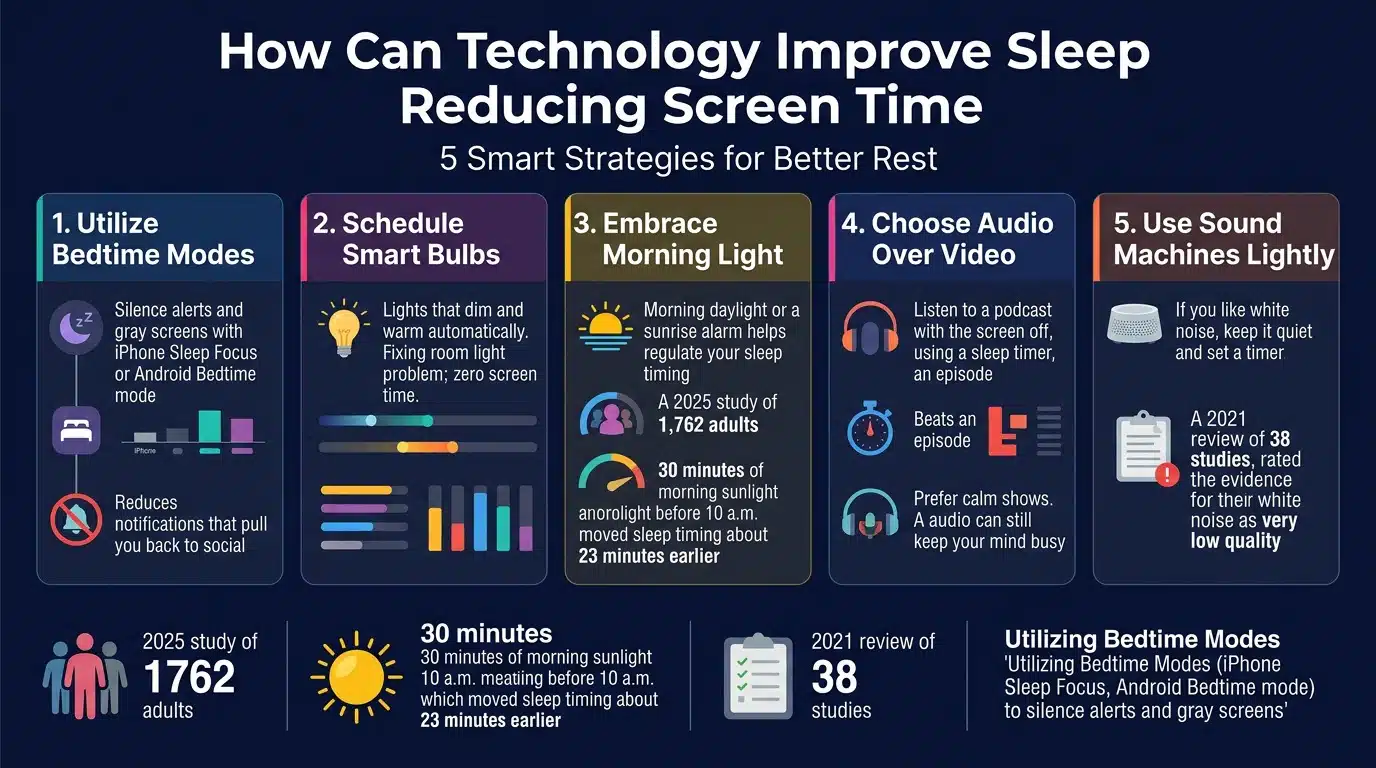
This is where I think technology earns its place. The best tools cut my screen time, or I never need a screen at night.
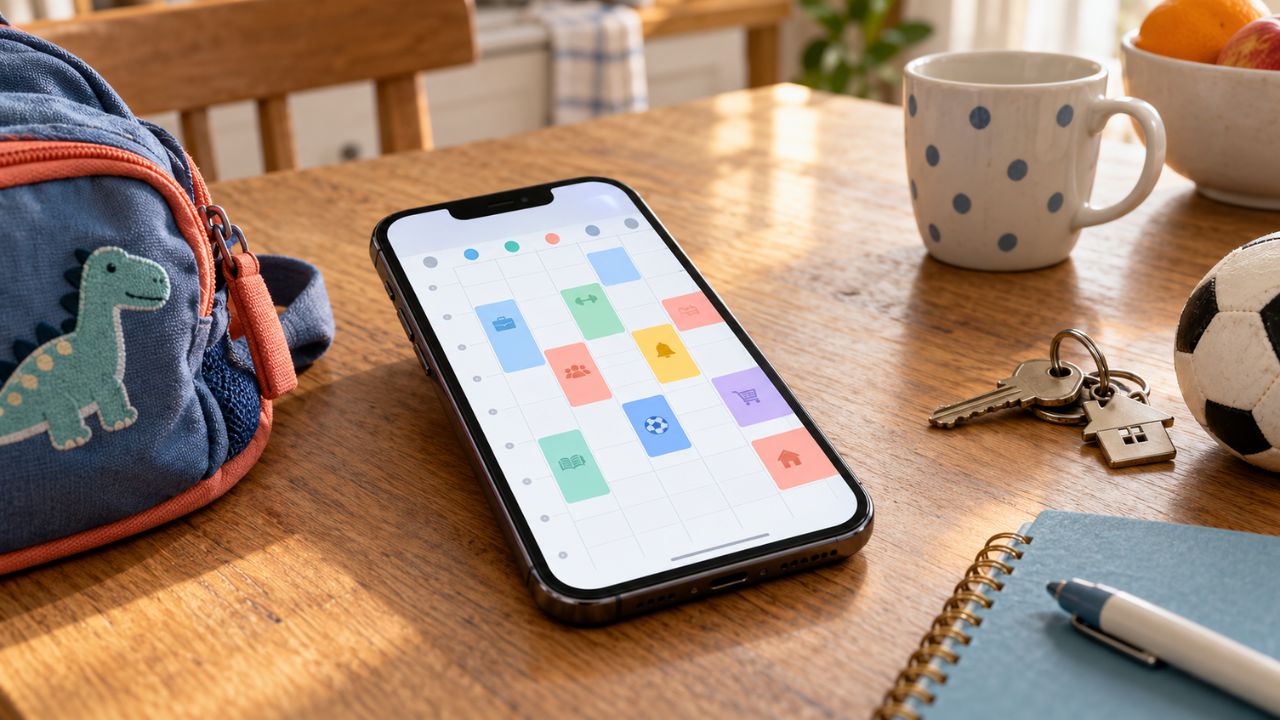
- Bedtime modes: iPhone Sleep Focus and Android Bedtime mode silence alerts at a set time. Bedtime mode can also turn the screen gray. Notifications are what pull me back to Facebook, so this matters most. For app picks, see our list of the best screen time apps to stop doomscrolling.
- Smart bulbs on a schedule: Lights that dim and turn warm on their own fix the room light problem with zero screen time.
- Morning daylight or a sunrise alarm: A 2025 study of 1,762 adults found that every 30 minutes of morning sunlight before 10 a.m. moved sleep timing about 23 minutes earlier.
- Audio instead of video: A podcast with the screen off and a sleep timer beats an episode. I still pick calm shows, since audio can keep the mind busy too.
- Sound machines, used lightly: A 2021 review of 38 studies rated the evidence for white noise as very low quality. If you like it, keep it quiet and set a timer.
Daytime tech can help too. My workday screens tire my eyes before bedtime even starts, and our guide to digital eye strain prevention covers that. For real insomnia, the FDA cleared SleepioRx in August 2024. It is a prescription app that delivers CBT-I, an evidence-based insomnia therapy, and you use it in the day, not in bed.
When the Answer Is No: Can Technology Improve Sleep Reducing Screen Time With Trackers?
Some sleep tech adds screen time instead of cutting it.
Sleep trackers are my main worry. In 2017, researchers coined the term orthosomnia. It means an unhealthy push for perfect sleep driven by tracker data. Checking a sleep score at 2 a.m. is still screen time, and worrying about the number does not help.
Sleep story and meditation apps sit in the middle. They can calm me down. But once I open my phone, I often end up on Facebook. If you use one, start the audio and turn the phone face down.
PC games are the hardest for me. A close match keeps me wired long after I quit.
My Workday and Holiday Plan: Can Technology Improve Sleep Reducing Screen Time?
I do not want to quit tech. I want it to work for me. Here is my plan:
- Bedtime mode starts 45 minutes before sleep and locks Facebook and video apps.
- Bedroom lights dim and turn warm two hours before bed.
- A calm podcast with the screen off and a 30-minute timer replaces the episode.
- My phone charges away from my bed. The AASM suggests another room if you can.
- On holidays, movies and games end at least an hour before bed.
- I get 10 minutes of daylight before I open my laptop.
For the mindset behind this, read our intentional screen time guide.
FAQs: Can Technology Improve Sleep Reducing Screen Time?
Does night mode help you sleep?
Not much. A 2021 study found no clear sleep benefit from Night Shift. What you do on the screen matters more than its color.
How long before bed should I stop using screens?
The American Academy of Sleep Medicine suggests powering down 30 to 60 minutes before bed.
Is a podcast better than a TV episode before bed?
Usually, yes, if the screen stays off. Pick calm content, because an exciting story still keeps you alert.
Are sleep trackers bad for sleep?
Not by themselves. They become a problem when you check them at night or stress over the scores.
Final Thoughts
So, can technology improve sleep reducing screen time? I think yes, with one rule: the best sleep tech is the tech you do not look at. Let it dim your lights, lock your apps, and get you into morning light. Then put the screen away. If you work on screens all day like me, start with one change tonight.