Office water looks simple from the outside. People need a clean drink, a place to refill their bottle, and an option that does not slow down the workday. Yet the cost of supplying that water can quietly grow through delivery fees, plastic bottle use, storage needs, maintenance calls, and time spent managing supplies.
For companies trying to cut overhead while supporting a cleaner workplace, the water station is a smart place to start. A bottleless setup connects to an existing water line, filters water on-site, and eliminates the need for recurring jug deliveries. That one change can affect purchasing, operations, the employee experience, and waste reduction simultaneously.
Why Bottled Water Costs More Than the Invoice Shows
Many offices think about water in terms of monthly delivery. A vendor drops off large jugs, takes away empties, and sends a bill. That sounds predictable, yet it is not always the full cost.
There is a space for storing full bottles and empty returns. Staff time is spent tracking orders, moving jugs, handling missed deliveries, and dealing with spills. There may also be safety concerns when employees lift heavy bottles onto a cooler. Even when these issues feel small, they add up across a full year.
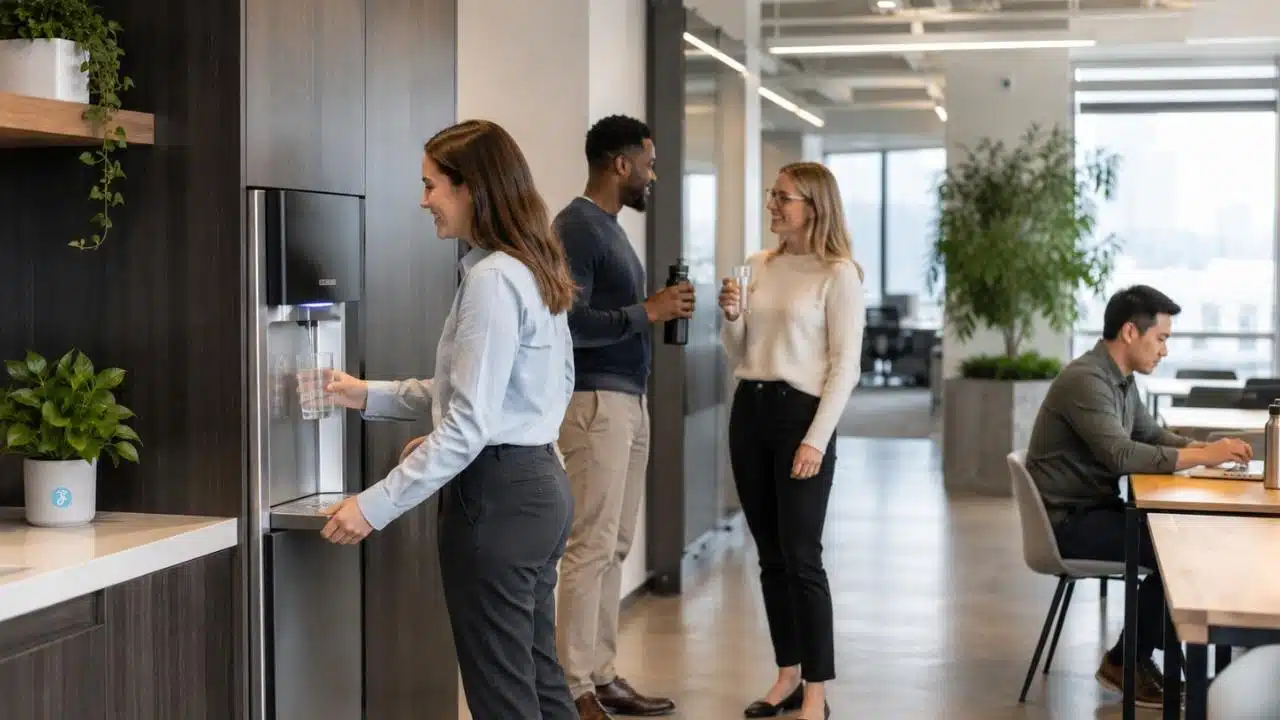
Using a bottleless water dispenser for office can reduce those extra tasks by turning water service into a built-in workplace utility rather than a recurring supply chain problem. Once installed, the system filters water as people use it. No stacks of bottles, no delivery schedule, and no last-minute scramble when the last jug runs out.
This can be especially useful for growing offices, clinics, schools, warehouses, and shared workspaces. The more people rely on the water station each day, the more valuable it becomes to remove repeat deliveries and storage from the process.
A bottleless system can also help managers budget with more confidence. Instead of paying for changing bottle volumes, fuel surcharges, deposits, and delivery-related fees, many offices move toward a steadier service or rental model. That makes it easier to compare monthly costs and spot waste in the facilities budget.
Less Plastic, Less Clutter, and a Better Employee Experience
Reducing waste is no longer only a sustainability talking point. It is part of how offices run cleaner, leaner, and more organized spaces.
Single-use plastic bottles remain a major waste concern. The U.S. Environmental Protection Agency tracks plastics in municipal solid waste and notes that plastic is widely used in packaging, including beverage bottles. The National Institutes of Health also notes that PET packaging accounted for a large share of single-serve beverage packaging in the U.S. in 2021.
Large office water jugs are different from single-use bottles, yet the delivery model still creates avoidable impact. Trucks make repeat trips. Bottles need cleaning, handling, and transport. Offices need space to store them. A bottleless system reduces that cycle by allowing employees to refill reusable bottles and cups at a filtered station.
That shift can also make the breakroom feel more modern. Employees do not need to wait for a delivery or change a heavy jug. Visitors see a cleaner water station. Facility teams deal with fewer obstacles in storage rooms and kitchen areas.
Clean design matters too. A cluttered office kitchen can send the wrong message, even when the rest of the workplace is polished. Removing bottle stacks gives the space a simpler look and makes it easier to keep floors clear.
For employees, the benefit is practical. Easy access to cold, hot, or room-temperature filtered water can support better daily habits. People are more likely to refill a bottle when the station is nearby, fast, and pleasant to use. That can also reduce trips to vending machines or nearby stores for bottled drinks.
How to Choose a Smarter Office Drinking Water Setup
The best water system depends on the size, layout, and daily traffic of the workplace. A small office may need one compact station in the kitchen. A larger workplace may need several units near conference rooms, break areas, or production floors.
Start with usage. Estimate how many employees, visitors, and customers use the space each day. Then look at peak times, such as lunch breaks or shift changes. A dispenser that works well for ten people may not be enough for a busy office of one hundred.
Next, review filtration needs. Some offices want better taste and odor reduction. Others may need more advanced filtration based on local water conditions. The right provider should be able to explain what the filter is designed to reduce, how often it needs service, and what the office team must do between visits.
Energy use is another factor. ENERGY STAR notes that water coolers come in different types, capacities, and energy profiles. Choosing efficient equipment can help reduce utility costs, especially when dispensers run all day in high-use offices.
Service should also be clear. Ask how installation works, who replaces filters, how repairs are handled, and what happens when a unit needs attention. A low-cost unit can become expensive when service is slow or unclear.
A strong office water plan should answer five simple questions:
- How many people will use the dispenser each day?
- Where will the unit be easiest to access?
- What filtration level does the office need?
- Who handles filter changes and maintenance?
- How will the total monthly cost compare with bottled delivery?
A Cleaner Water Station Can Be a Smarter Business Move
Switching away from delivered bottles is not only about looking green. It can reduce hidden costs, minimize storage issues, simplify office management, and improve employees’ daily experience.
The strongest case for change is the mix of savings and simplicity. A bottleless setup eliminates repeat bottle orders, reduces plastic waste, reduces clutter, and provides teams with steady access to filtered water. For businesses watching overhead, the office water station can be a small upgrade with a wide impact.
A better water system will not fix every facility’s cost. It can, though, remove one common source of waste from the workplace. For many offices, that makes the move to bottleless water feel less like a perk and more like a practical operating decision.