


The financial services industry is undergoing a transformative shift, with blockchain technology playing a key role in revolutionizing traditional banking, payments, lending, and investments. Blockchain’s ability to enhance security, transparency, and efficiency has paved the way for startups to innovate and disrupt legacy financial systems.
This transformation is not only changing the way financial institutions operate but also creating new opportunities for businesses and consumers. The emergence of blockchain startups is driving decentralization, reducing fraud, and improving transaction speeds, making financial services more accessible and efficient than ever before.
In this article, we explore 5 blockchain startups driving innovation in financial services, highlighting their groundbreaking solutions, real-world impact, and future potential.
How Blockchain is Transforming Financial Services

Blockchain technology is revolutionizing financial services by addressing long-standing inefficiencies and creating a more secure, transparent, and accessible financial ecosystem. As financial institutions increasingly integrate blockchain into their operations, we see improvements in transaction speed, reduced costs, and enhanced fraud prevention measures.
The decentralized nature of blockchain is also fostering greater financial inclusion, enabling individuals and businesses in underbanked regions to access banking and investment opportunities. Below, we explore the key areas where blockchain is making a significant impact on financial services.
Enhanced Security and Transparency
Blockchain’s decentralized nature ensures that financial transactions are recorded on an immutable ledger, reducing fraud and increasing trust among stakeholders. Every transaction is cryptographically secured, making it nearly impossible to alter or delete records, thus enhancing security and transparency in financial transactions.
Unlike traditional banking ledgers, blockchain provides an auditable and transparent system where all transactions are publicly verifiable, ensuring trust among participants.
Efficiency in Operations
Traditional financial transactions often involve intermediaries, leading to delays and increased costs. Blockchain enables peer-to-peer transactions, eliminating the need for third parties and reducing operational inefficiencies.
Smart contracts further automate processes, ensuring faster execution and reduced reliance on manual verification.
Additionally, blockchain allows for real-time cross-border transactions, significantly cutting down settlement times, which can take days in conventional banking systems.
Impact on Various Sectors
The financial sector is leveraging blockchain in multiple areas:
- Banking: Streamlining payments, reducing transaction costs, and eliminating intermediaries.
- Payments: Enabling near-instant cross-border transactions with lower fees and enhanced security.
- Lending: Facilitating decentralized finance (DeFi) solutions for faster and more inclusive lending.
- Insurance: Improving claims processing, fraud detection, and risk assessment with smart contracts.
- Investments: Tokenization of assets, enabling fractional ownership and enhanced liquidity.
5 Blockchain Startups Driving Innovation in Financial Services
The financial services industry is witnessing an unprecedented wave of innovation, with blockchain startups playing a crucial role in reshaping lending, payments, and investment solutions. These companies are leveraging blockchain’s decentralized and transparent nature to offer secure, efficient, and cost-effective financial services.
Below, we explore five pioneering startups driving blockchain-based transformation in the financial sector.
1. Figure Technologies – Revolutionizing Lending and Investment
Founded in 2018, Figure Technologies is at the forefront of blockchain-based lending and investment solutions. It utilizes the Provenance blockchain to streamline the process of home equity loans, mortgage refinancing, and securities trading.
The company aims to simplify and accelerate traditionally complex financial processes by leveraging blockchain for automation and security. Figure has quickly established itself as a leader in blockchain lending, with its innovative products reducing the time and costs associated with traditional loan processes.
Key Innovations:
- Blockchain-powered lending: Offers home equity lines of credit (HELOC) and personal loans on a decentralized platform.
- Digital securities trading: Uses blockchain to tokenize securities and enable instant trading.
- AI-driven underwriting: Implements AI to assess creditworthiness and automate loan approvals, reducing processing time.
Impact:
- Processed over $1 billion in loans, significantly reducing time and costs.
- Partnered with financial institutions to bring blockchain efficiency to lending markets.
- Enabled faster, more transparent transactions in the mortgage and investment sectors.
Comparison Table:
| Feature | Traditional Lending | Figure Technologies |
| Loan Approval Time | 30-45 days | 5-7 days |
| Transaction Transparency | Low | High |
| Processing Costs | High | Low |
| Security | Moderate | Enhanced via blockchain |
2. Paxos Trust Company – Pioneering Digital Asset Settlement
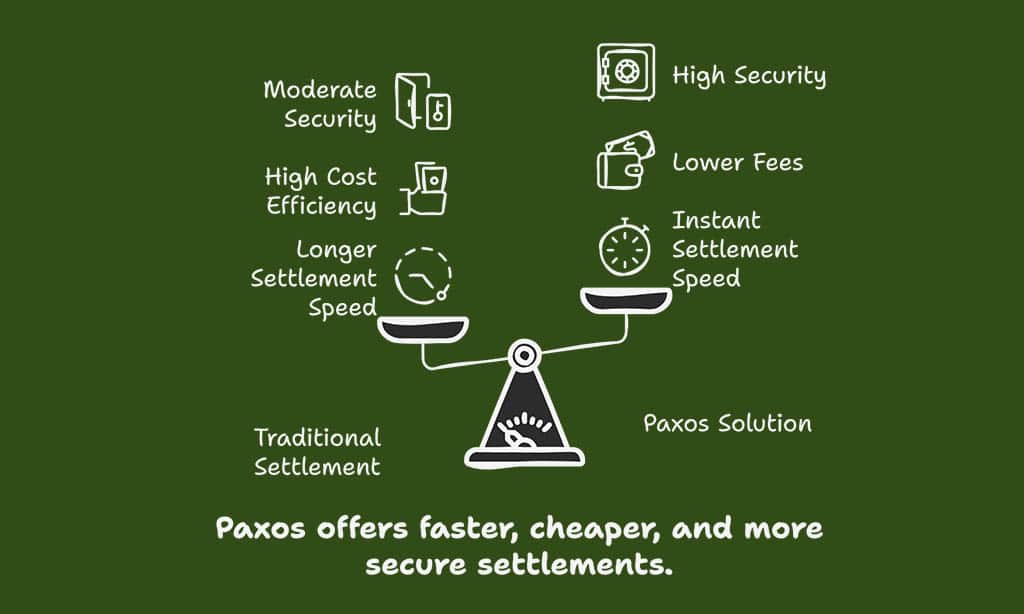
Paxos was established in 2012 and is a regulated financial institution specializing in blockchain-based settlement solutions. It is one of the leading blockchain companies providing trusted digital asset solutions, stablecoins, and tokenized securities.
Paxos has been instrumental in enabling secure and transparent asset transfers, allowing major financial institutions to integrate blockchain technology without regulatory uncertainty.
Key Innovations:
- Stablecoins like Paxos Standard (PAX) and Binance USD (BUSD) for seamless digital transactions.
- Blockchain-powered post-trade settlement solutions, reducing counterparty risk.
- Partnership with PayPal, allowing users to buy, sell, and hold cryptocurrencies.
Impact:
- Facilitated billions of dollars in cryptocurrency and asset settlements.
- Improved transparency and efficiency in financial transactions.
- Partnered with companies like Mastercard to explore blockchain-based cross-border payments.
Comparison Table:
| Feature | Traditional Settlement | Paxos Solution |
| Settlement Speed | 2-3 days | Instant |
| Cost Efficiency | High | Lower Fees |
| Security | Moderate | High |
| Compliance | Complex | Fully Regulated |
3. Axoni – Enhancing Post-Trade Processing
Founded in 2013, Axoni develops blockchain-based solutions aimed at modernizing post-trade processing. The company specializes in building distributed ledger networks that enable real-time reconciliation of financial data, particularly in the equity and derivatives markets.
Its solutions reduce inefficiencies and operational risks associated with traditional trade settlements.
Key Innovations:
- Veris, a distributed ledger network for equity swaps and derivatives.
- Automated real-time data synchronization between counterparties.
- Smart contract integration for automating financial agreements.
Impact:
- Partnered with BlackRock, Goldman Sachs, and Citigroup to modernize trading infrastructure.
- Reduced post-trade settlement time from days to minutes.
Comparison Table:
| Feature | Traditional Post-Trade | Axoni Blockchain Solution |
| Settlement Speed | 2-3 days | Instant |
| Data Accuracy | Prone to errors | Fully synchronized |
| Operational Costs | High | Lower |
4. Securitize – Digitizing Private Securities
Founded in 2017, Securitize provides a blockchain-based platform for issuing and managing digital securities. It enables businesses to raise capital through tokenized assets while ensuring regulatory compliance.
The company offers an end-to-end digital securities issuance solution, making it easier for private firms to access new funding opportunities. With a strong focus on investor protection and seamless regulatory adherence, Securitize is helping transform private markets into more efficient and accessible investment ecosystems.
Key Innovations:
- Tokenization of private securities, allowing fractional ownership.
- Smart contract automation to manage compliance and transactions.
- Secondary trading support, enabling liquidity in private markets.
Impact:
- Partnered with major financial firms to expand digital securities.
- Improved access to private investments for retail and institutional investors.
Comparison Table:
| Feature | Traditional Securities | Securitize Solution |
| Ownership Fractionalization | Not Possible | Enabled via Tokenization |
| Compliance & Regulation | Manual Process | Automated with Smart Contracts |
| Market Liquidity | Low | Higher Liquidity via Digital Assets |
| Settlement Time | Several Days | Instant Settlement |
5. Archax – Institutional-Grade Digital Asset Exchange
Archax is the first FCA-regulated digital asset exchange in the UK, bridging the gap between traditional finance and blockchain-based assets. It offers a highly secure and compliant platform for institutional investors looking to trade digital securities.
With a focus on regulatory transparency and investor protection, Archax is paving the way for mainstream adoption of blockchain-based financial instruments.
Key Innovations:
- Regulated trading platform for tokenized assets.
- Custodial solutions for secure asset storage.
- Institutional-grade compliance, ensuring trust and transparency.
Impact:
- Facilitated institutional adoption of blockchain-based financial instruments.
- Improved market access for digital securities.
Comparison Table:
| Feature | Traditional Exchanges | Archax Solution |
| Regulatory Compliance | Varies | FCA-Regulated Exchange |
| Asset Security | Moderate | Institutional-Grade Custody |
| Trading Accessibility | Limited to Traditional Assets | Digital Securities & Tokenized Assets |
| Market Reach | Regional | Global Institutional Access |
Takeaways
Blockchain technology is rapidly transforming financial services, and the startups highlighted in this article are at the forefront of this revolution. From lending and payments to investment and post-trade processing, these companies are leveraging blockchain’s core strengths—security, transparency, and efficiency—to reshape the financial landscape.
As regulatory frameworks evolve and adoption continues to grow, blockchain’s role in financial services will only expand, unlocking new opportunities for businesses and consumers alike. Whether through reducing transaction costs, increasing financial inclusion, or streamlining complex processes, blockchain is set to redefine how financial institutions operate in the future.
























