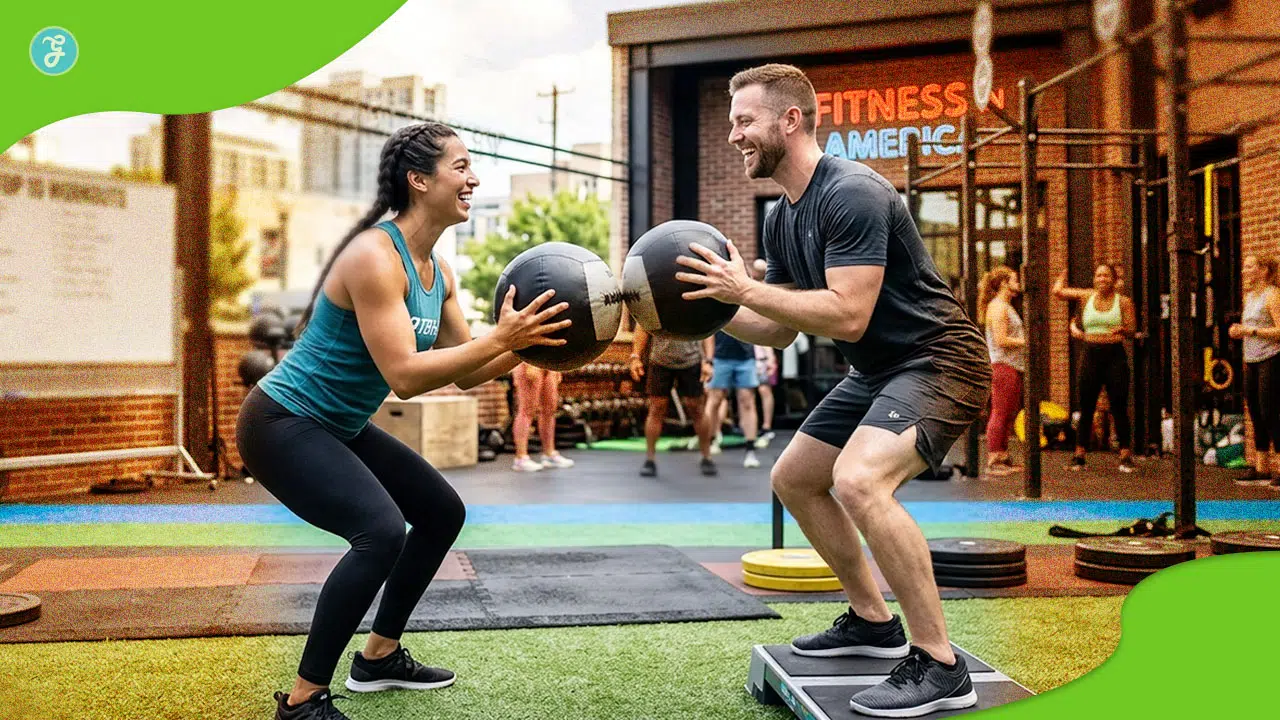
The era of the solitary jogger is fading into the past. For decades, fitness meant a lonely hour on a treadmill, staring at a wall while drowning out the world with noise-canceling headphones. But today, the American workout scene has flipped the script. We are witnessing the death of the lonely treadmill and the birth of a movement where community is the primary driver. People no longer say they are going for a run. Instead, they say they are meeting their squad. This shift has turned social fitness apps into the new town squares of health.
The modern landscape is defined by a phygital reality. This blend of physical movement and digital connection has replaced the sterile, silent gym floors of the 2010s.
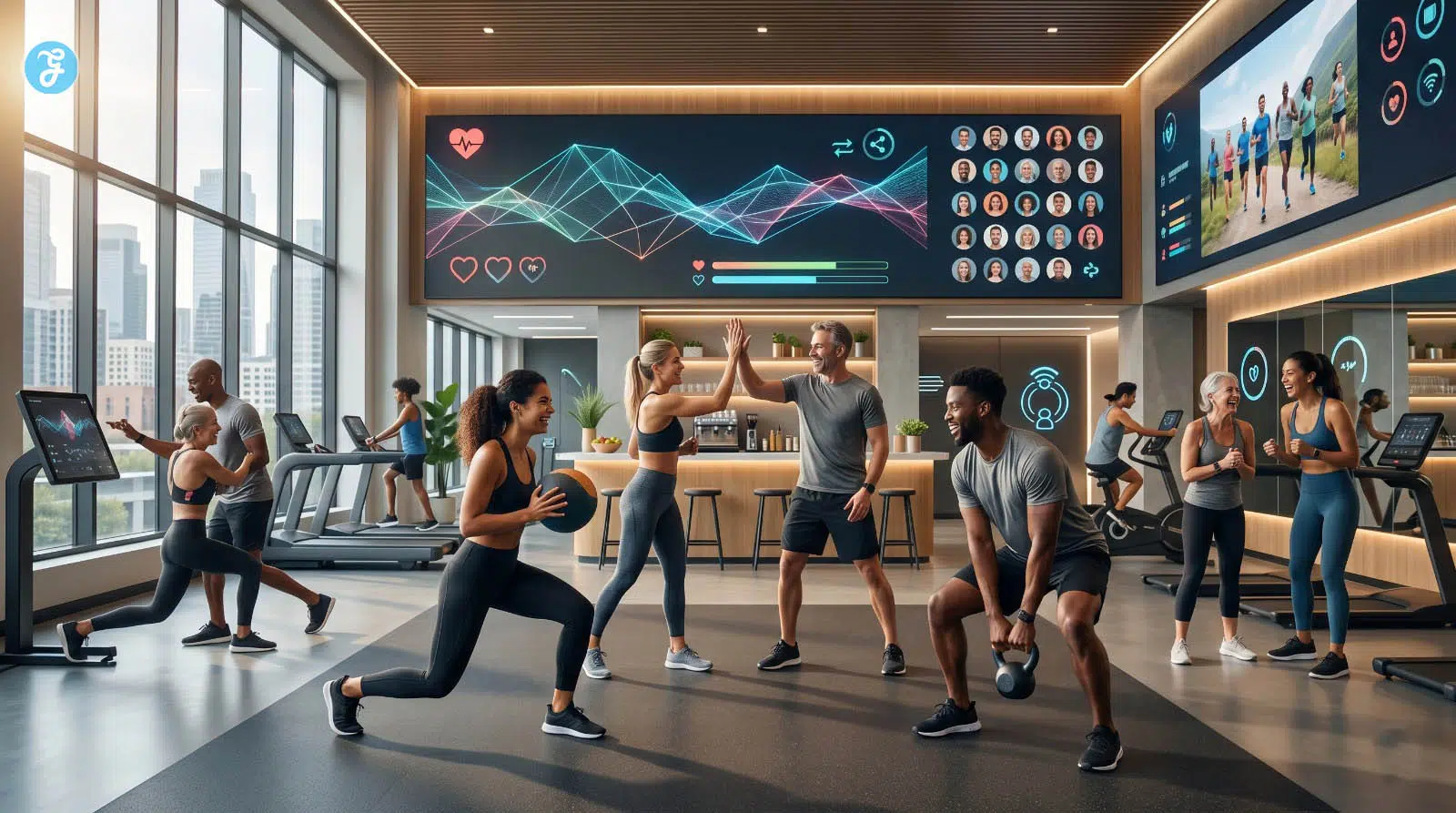
Today, fitness is no longer just about the calories you burn or the miles you clock. It is about social currency. It is about the digital tribe that keeps you accountable. We are moving from a world of personal bests to a world of collective gains. In this new era, your workout only feels complete when your community is right there with you, even if they are miles away on a screen. This is a revolution of belonging, and it is changing how America moves.
The Human Pulse in a Digital Grid
Watching this shift toward hyper-connected health feels like witnessing a double-edged sword. There is something truly moving about technology stepping in to heal the loneliness epidemic that has gripped so many Americans.
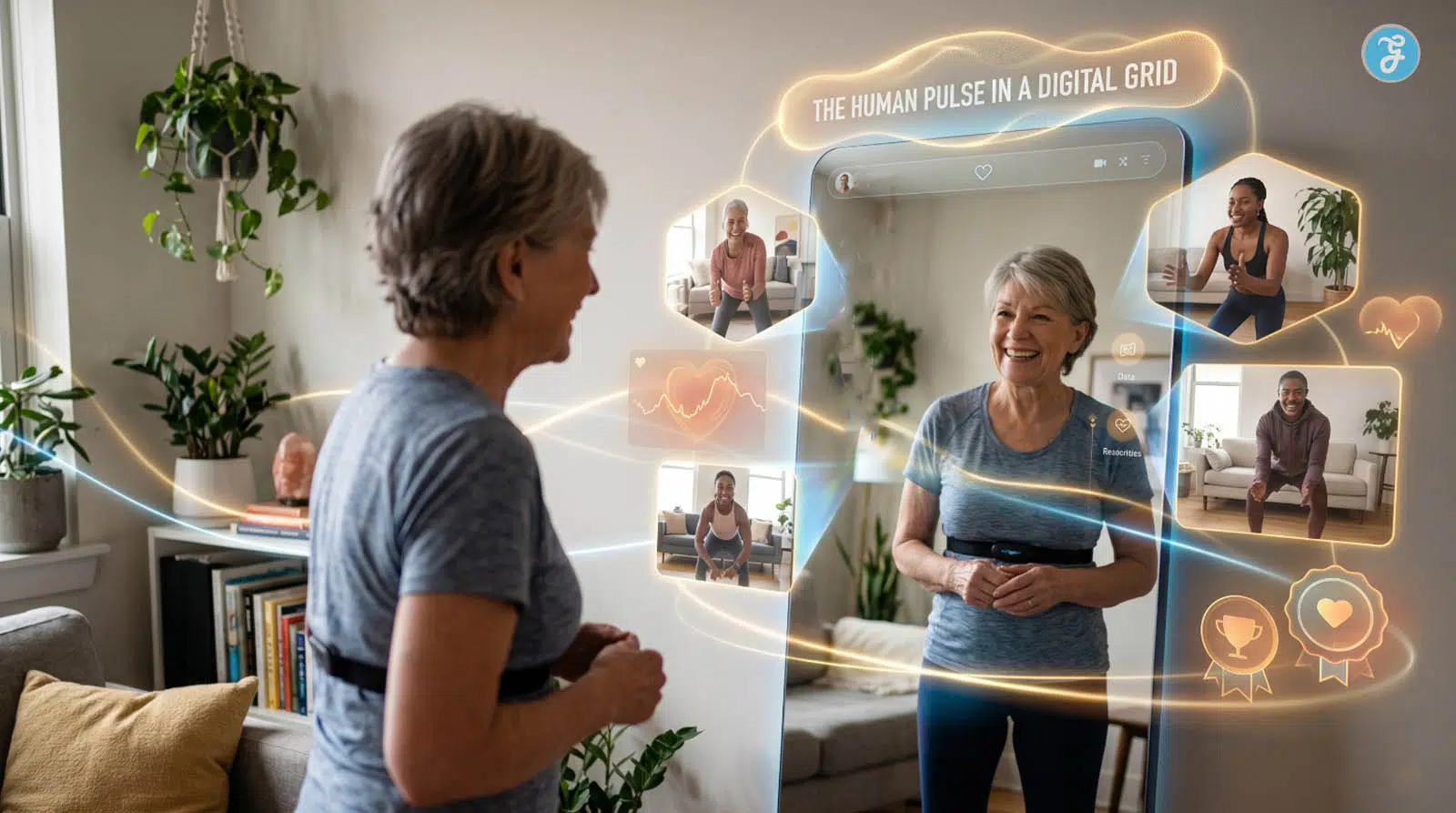
I see people finding a sense of belonging in digital squads that they never found in a brick-and-mortar gym. It proves that our screens can actually foster genuine human warmth when designed with the right intent.
The Paradox of the Connected Pulse
I often wonder if we are trading away the quiet power of the sacred solo workout. There was once a meditative quality to exercise where the only voice you heard was your own. Now, every mile is tracked and every rep is shared. This creates a constant tension between public accountability and private reflection. I find myself questioning if a workout still counts if no one is there to “like” it. As we look toward 2030, the idea of exercising in total isolation might become a rare luxury or a forgotten relic. We are gaining a tribe, but I hope we aren’t losing the ability to simply be alone with our own strength. It is a strange new world where our heartbeats are public data points. Finding a balance between that community fire and personal peace will be our next big challenge.
Top 10 Social Workout Startups in the US
The following ten companies have redefined the American fitness experience. They represent the best of the current market, blending cutting edge technology with the primal need for human connection.
1. SweatPals (Austin, TX)
Best for: Discovering local fitness communities and turning digital matches into real-world meetups.
- The Problem: Many people find it difficult to break into local fitness circles or find consistent workout partners in a new city.
- The Solution: An online community platform that acts as a social marketplace for fitness activities. It allows users to discover and book local experiences while giving instructors tools to build their own tribes.
- The Edge: SweatPals has successfully fueled the “Daylife Movement,” positioning communal fitness as a primary social activity for the post-pandemic generation.
- Features: Real-time direct messaging with other “Heroes,” event discovery based on location, and instructor tools for scheduling and payments.
- Pros: High focus on real-world interaction; excellent for building neighborhood identity.
- Limitations: Strength of the network is highly dependent on active users in your specific city.
2. Heroic (Austin, TX)
Best for: High performance seekers who want a social platform rooted in behavioral science and “virtuous” habits.
- The Problem: Most fitness apps focus on physical metrics but ignore the mental and emotional drivers that keep a person moving over the long-term.
- The Solution: A training platform that integrates ancient wisdom and modern science. It uses social features like Direct Messaging and group targets to encourage users to show up at their best.
- The Edge: Recent pilot studies show that users hitting three or more daily targets on the platform report a 15% increase in social connection.
- Features: Direct Messaging with other members, daily “Big 3×2” target tracking (Energy, Work, Love), and access to a vast library of “Basic Training” courses.
- Pros: Encourages holistic growth beyond just muscle gain; strong scientific backing for habit formation.
- Limitations: The heavy focus on philosophy and productivity may feel overwhelming to those just looking for a simple workout timer.
3. Stridekick (Chicago, IL)
Best for: Cross-platform social challenges for friends, families, and corporate teams.
- The Problem: The “walled gardens” of wearable tech often prevent a Garmin user from competing with an Apple Watch or Fitbit user.
- The Solution: A hardware agnostic app that syncs steps and activity data from almost any device into a single social leaderboard.
- The Edge: Stridekick has become the go-to for inclusive challenges, famously partnering with major universities and corporations to host 10,000+ person movement events.
- Features: Multi device syncing, private “Journey” challenges with friends, and community chat functions.
- Pros: Completely levels the playing field regardless of what tech you wear; free for small groups.
- Limitations: Primarily focused on walking and step counts rather than specialized sports or heavy lifting.
4. The Athletic Clubs (New York, NY)
Best for: Urbanites who want the accountability of a permanent, small squad.
- The Problem: Boutique fitness classes can feel anonymous, making it easy for individuals to “ghost” their workouts without anyone noticing.
- The Solution: A membership-based community where users train in fixed-time, 20 person squads twice a week. This repetition builds neighborhood identity and social accountability.
- The Edge: Now expanded to seven locations in NYC, The AC recently hosted a 600 person winter gala, proving their “fittest social club” model works outside the gym too.
- Features: Fixed time squad training, a year-round social calendar (galas, parties), and neighborhood-centric locations.
- Pros: Extremely high retention rates; creates deep friendships through consistent peer contact.
- Limitations: Currently limited to New York City and requires a commitment to a set schedule.
5. Bold (San Mateo, CA)
Best for: Adults over 65 who want to stay active while staying connected to their peers.
- The Problem: Senior fitness is often neglected by mainstream tech, leading to increased fall risks and social isolation.
- The Solution: A digital platform providing science-backed exercise programs specifically for aging bodies, combined with live classes that foster peer interaction.
- The Edge: Bold’s programs are proven to lower fall risk by 46%, making it a trusted partner for major US health plans.
- Features: Clinical assessments, live and on-demand classes with expert trainers, and personalized pain management programs.
- Pros: Directly addresses the loneliness epidemic among seniors; improves both physical stability and social outlook.
- Limitations: Requires a certain level of digital comfort for at-home participation.
6. FitGrid (New York, NY)
Best for: Studio enthusiasts who want to feel more connected to their instructors and classmates.
- The Problem: The shift to hybrid fitness has left many studio goers feeling disconnected from their local gym community.
- The Solution: A retention software that allows instructors to send personalized messages to clients and enables classmates to see who else is attending.
- The Edge: Their new “Class App” has created a social network within the gym, allowing users to follow their “fitness neighbors.”
- Features: FitGrid Pro for instructor to client messaging, studio business intelligence dashboards, and a dedicated community social network.
- Pros: Strengthens the bond between instructors and students; helps studios reduce member churn.
- Limitations: Users are dependent on their local studio having a FitGrid subscription.
7. DogGo Dash Club (New York, NY)
Best for: Runners who want to turn their workouts into a social activity with their pets.
- The Problem: Traditional running apps ignore the social and physical needs of the millions of Americans who run with their dogs.
- The Solution: A niche platform that gamifies running for both the owner and the dog, offering social meetups and breed specific pace matching.
- The Edge: By tapping into the “pet human wellness” boom, they have created a high engagement community that values four legged companionship.
- Features: Pace matching for dogs, social dash events, and canine fitness tracking.
- Pros: Makes solo runs more entertaining; builds a unique community of like minded dog lovers.
- Limitations: Very niche; mostly appeals to dog owners in urban areas.
8. Ladder (Austin, TX)
Best for: Strength training enthusiasts who crave team based motivation and expert coaching.
- The Problem: Going to the gym without a plan is frustrating, and hiring a personal trainer is too expensive for most people.
- The Solution: An app that places users on a specific “Team” led by an expert coach. Everyone on the team does the same workout on the same day.
- The Edge: Recently awarded ‘Best Overall’ by Women’s Health.
- Features: Team Chat for social support, daily coach-built plans, and a workout journal to track progressive overload.
- Pros: Provides elite level programming at a fraction of the cost; high community engagement in team threads.
- Limitations: Requires a subscription and is best suited for those with access to basic gym equipment.
9. Kickoff (New York, NY)
Best for: People who need 1-on-1 accountability and daily social check-ins without the high price tag.
- The Problem: Most fitness apps are too passive, and humans often need a real person to check in on them to stay consistent.
- The Solution: A platform connecting users with human coaches who provide daily support via text and video. It is designed to be affordable and often covered by insurance companies.
- The Edge: Kickoff now integrates with over 500 apps, including MyFitnessPal, allowing coaches to provide a 360-degree social support system.
- Features: Daily text-based coaching, live video sessions, and extensive nutrition integration.
- Pros: Highly personal; focuses on the relationship between the coach and the client.
- Limitations: Less focus on group competition; heavily dependent on the quality of the individual coach.
10. Tempo (San Francisco, CA)
Best for: Home exercisers who want the social energy of a leaderboard combined with high tech form correction.
- The Problem: Working out at-home can feel lonely and unsafe if you aren’t sure about your lifting form.
- The Solution: An AI-powered home gym that uses 3D sensors to track movement and correct technique in real-time, all while showing you your place on a live leaderboard.
- The Edge: Their “Readiness Score” system now adjusts workouts based on your sleep and stress data, sharing that progress with your digital community.
- Features: 3D Time of Flight motion sensors, live and on-demand classes, and body composition scanning.
- Pros: Provides the closest thing to a live personal trainer in your living room; strong social competition.
- Limitations: High initial hardware cost and requires dedicated floor space.
The Fitness Industry Shift
The American fitness economy has reached a tipping point where community is no longer a perk but a requirement. We are seeing a massive migration of capital and attention away from the silent, massive gym floors of the past. Startups are proving that the future of health is not found in a building, but in a network.
The Great Unbundling of the Big Box Gym
Traditional gyms are facing a significant challenge as specialized social startups steal their market share. These new players are unbundling the old fitness model by picking one specific activity and building a deep social layer around it. Instead of paying for a massive facility with fifty machines you never use, Americans are choosing niche communities like Ladder for strength or SweatPals for local meetups. This shift has forced major gym chains to rethink their value, moving away from just providing equipment and toward facilitating human connection. The “big box” is becoming a hub for the community rather than just a place to sweat in silence.
The Rise of Agentic Social Platforms
We have moved past the era of passive tracking where an app simply tells you how many steps you took. Now, the market is dominated by agentic platforms that use AI to act on your behalf within a social context.

These tools don’t just record data; they actively nudge you to join a squad or alert your training partner when your recovery score is high. This move from “looking at data” to “acting on social signals” has changed the economic landscape. Subscription models are now thriving because they provide a continuous stream of social interactions and personalized coaching that a static pedometer could never offer.
Social Fitness as a Clinical Tool
Perhaps the most significant shift is how US health insurers now view social fitness as a preventative mental health tool. Major providers have begun offering premium discounts for users active in verified social workout networks. This is a direct response to the loneliness epidemic and its proven links to chronic illness and mental health decline. By incentivizing group exercise, insurers are effectively betting that a “squad” is as effective as a pill for long-term wellness. This clinical validation has moved social fitness apps from a lifestyle choice to a recognized pillar of the American healthcare system.
We often search for the perfect supplement or the newest piece of tech to fix our health. But as recent shifts have shown us, the ultimate fitness hack is actually a sense of belonging. Science tells us that we push harder and stay longer when we feel seen by others. This isn’t about fancy algorithms. It is about the simple, deep-seated need to be part of a tribe. When you know a squad is waiting for you at 6:00 AM, your motivation stops being a chore and starts being a commitment to your friends.
It is a beautiful irony that our most advanced technology is being used to bring us back to our most primal roots. Thousands of years ago, humans moved in groups for survival. Today, we use apps and AI to recreate that same collective energy. We have come full circle. We are using digital tools to satisfy an ancient hunger for companionship. This movement proves that while the platforms change, our human needs remain the same.
What Truly Matters Now
As we move further into this decade, our definition of a successful workout has changed forever. It is no longer measured solely by the numbers on a watch or the reflection in a mirror. It is measured by the strength of the bonds we build along the way. Now, the best sensor for your workout is not a piece of glass or silicon. It is the person sweating in the lane next to you. Whether they are across the street or across the country, their presence is what turns a routine into a lifestyle. We are finally learning that we don’t have to reach the finish line alone. The view is always better when you share it with a tribe.
Frequently Asked Questions (FAQs) on Social Fitness Apps
Most high quality platforms now use privacy zones as a standard feature. This allows you to hide the start and end points of your workouts, like your home or office, from the public map. You can still compete on global leaderboards while keeping your exact residence invisible to other users. These days, many apps have also moved toward ghost mode. This lets you share your stats with a squad without revealing your live GPS coordinates to the wider community.
Yes, many major US health insurers now offer social wellness incentives. If you can prove active participation in a verified social workout network, you may be eligible for premium discounts or health savings account credits. Insurers have realized that users with high social accountability have lower rates of chronic illness and mental health claims. It is best to check with your specific provider to see which apps are currently on their approved list for rewards.
While live video streaming requires a solid connection, most leaderboard data is remarkably light. Apps like Stridekick or Ladder use very little data because they only transmit numerical values and text-based chat. If you are training in a park or an area with spotty service, these apps typically cache your progress and sync it the moment you hit a stable signal. Only high-tech home hardware like Tempo or live video classes through FitGrid require a consistent high-speed Wi-Fi connection.
Modern startups have moved toward positive-only social architectures. Many platforms have replaced open comment sections with reaction stickers or pre-set encouragement phrases to keep the vibe supportive. Communities like Heroic and The Athletic Clubs also use peer moderation and virtue scores to ensure that the focus remains on growth rather than ego. If a user is found to be fostering a negative environment, they are often moved to private silos or removed from the team entirely.
Can I use these apps if I am recovering from an injury or have limited mobility?
Absolutely. The shift toward specialized social networks means there are now specific communities for every ability level. Apps like Bold are built specifically for those who need low-impact, safety-focused movement. Many social platforms also allow you to set Relative Effort goals. This means you are ranked based on how hard you are working relative to your own current fitness level, rather than being compared to an elite athlete. It allows someone in physical therapy to feel just as much like a Hero as a marathon runner.
Disclaimer: This content is for informational purposes only and does not constitute medical or fitness advice. The social fitness apps and digital tools discussed are data-focused aids intended for monitoring and motivation. They should not replace professional medical judgment. Always consult a healthcare provider before starting a new exercise protocol or making significant changes to your wellness management based on digital data.
Note on Methodology: This selection is based on editorial research into the United States fitness technology market. While the platforms are numbered, this is a guide to their unique technological strengths rather than a definitive ranking. We have selected these entries based on their specialized capabilities in community building, behavioral science, and the “phygital” integration of social connection within the American wellness sector.