Mornings in 2026 no longer begin with a simple step count. They begin with data that feels closer to a lab report than a fitness badge. The best US fitness trackers 2026 reflect this shift. Americans are no longer satisfied with rings that count calories or watches that nudge them to stand. They want insight. They want context. They want to know what is happening inside the body, not just how far it moved.
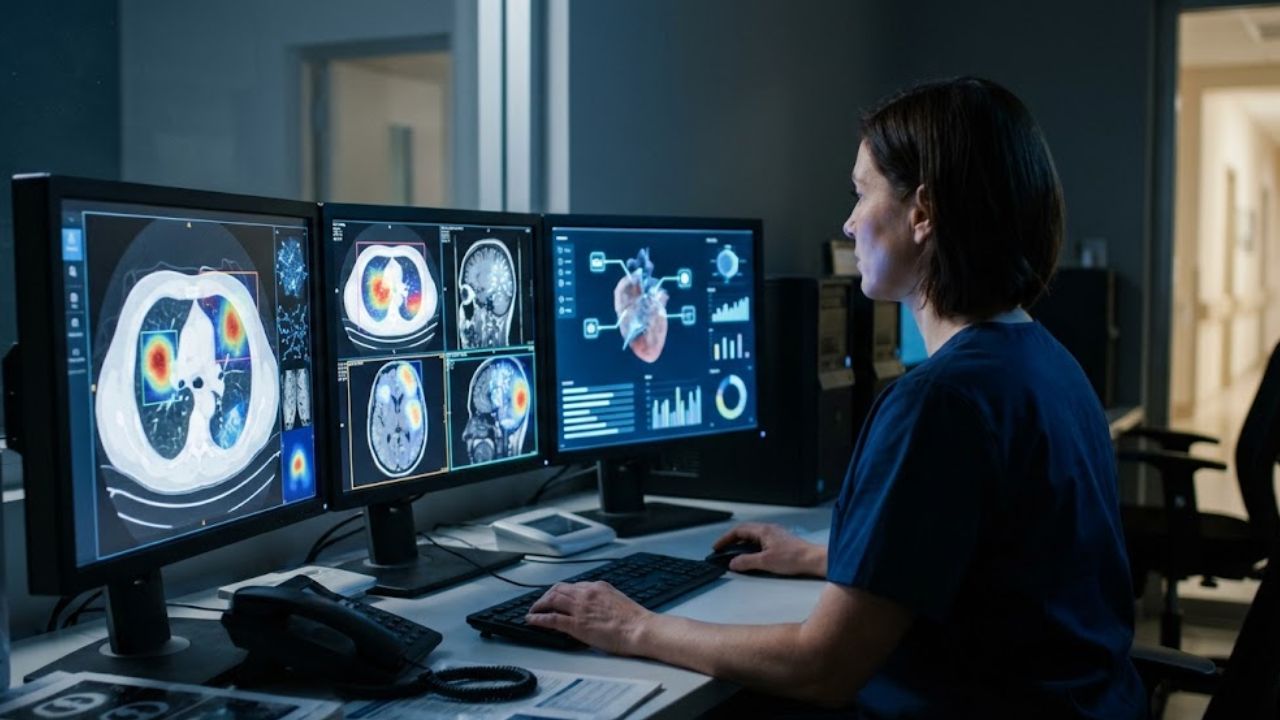
This demand did not appear overnight. Over the past few years, wearable technology has moved toward clinical credibility. Devices now track heart rate variability, skin temperature trends, blood oxygen levels, and sleep cycles with growing accuracy. Many sync with health platforms that mirror electronic medical records.

In 2026, these platforms often feature AI-driven health assistants that bridge the gap between daily metrics and a primary care portal, turning wearable data into an ongoing clinical dialogue. The line between consumer fitness and preventive healthcare is thinning. In the US, where lifestyle diseases remain a leading concern, this matters. People are not just chasing goals. They are managing risk.
The ten trackers in this list sit at the center of that change. Each focuses on a niche. Recovery. Stress. Metabolic health. Hormonal cycles. Movement quality. These are not generalists. They are specialists. Together, they show where the industry is headed.
Best US Fitness Trackers 2026: The Rise of Smarter, Quieter Health Tech
We are moving past the exhausting extremes of recent fitness culture. For years, gamification ruled the market. Every workout became a competitive score, and every rest day felt like a failure. That high-stress mindset is finally breaking, making way for a quieter approach to wellness.

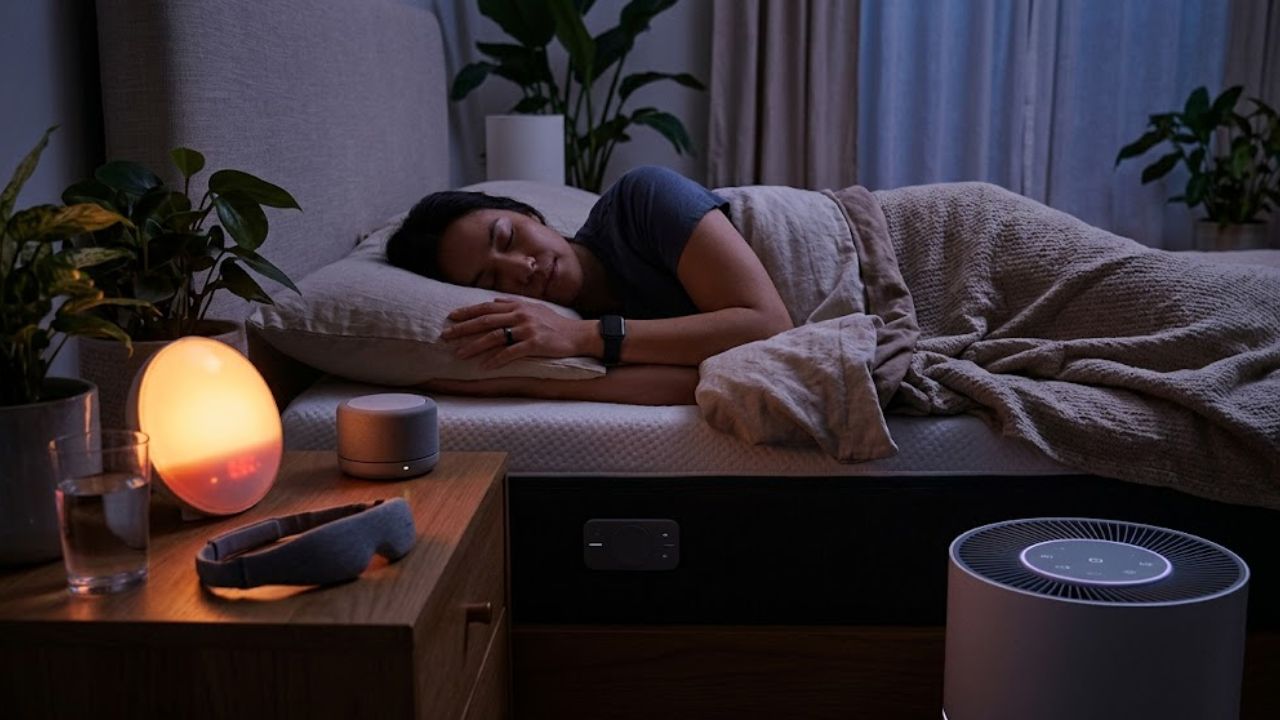
The correction is visible in the very design of today’s wearables. As the focus shifts toward planned recovery and protected sleep, discretion has become the ultimate feature. Users are abandoning bulky screens, constant alerts, and glowing dials. They prefer subtle form factors that slip into daily life without announcing themselves. A flush ring. A continuous patch. A sensor woven directly into fabric.
Technology is stepping back from our field of vision while becoming far more intelligent in the background. The trackers on this list serve a culture that has traded relentless performance for long-term sustainability. They do not shout for your attention. They quietly guide it.
The Discreet Disruptors: Smart Rings
Americans are increasingly moving toward wearables that feel less like gadgets and more like second skin. The smart ring has become the standard for this shift. It offers a way to stay informed without the constant pull of a digital screen.

Oura Ring 4
The Oura Ring 4 remains the benchmark for professionals who want data without the noise, featuring an interior that is completely flush, replacing the raised sensor bumps of earlier models with an all-titanium build.
- Best for: Professionals balancing high-stress roles who need discreet, 24/7 sleep and recovery tracking.
- Why We Chose It: It uses a new 18-path Smart Sensing technology that maps the unique physiology of your finger, ensuring accuracy even if the ring rotates during sleep. Its standout feature is the Readiness Score, which calculates how much strain your body can handle based on your previous night’s recovery to actively prevent burnout.
- Things to consider: To access the deep data analytics, personalized insights, and full features, it requires an ongoing monthly subscription.
Evie Ring
While many trackers treat the female body as a variation of the male one, the Evie Ring is built specifically for women to present humanized data as part of a larger wellness narrative.
- Best for: Women who want to align their physical activity with their natural biological rhythms and menstrual health.
- Why We Chose It: Its most striking feature is the open-loop design, allowing the ring to expand and contract naturally to accommodate the finger swelling that often accompanies hormonal cycles. It tracks menstrual health, mood, and sleep stages, providing vital context for why energy might dip on certain days.
- Things to consider: It is designed primarily for holistic wellness and biological tracking rather than hardcore, metric-heavy athletic performance.
The Biohacking & Recovery Pioneers
A specific segment of the US market now views fitness as a biological puzzle to be solved. These users are not just looking for averages; they want high-resolution data that guides their lifestyle choices.
Whoop 5.0
Whoop 5.0 continues its legacy as the screen-free choice for elite performance, catering to users who view fitness as a biological puzzle to be solved.
- Best for: Elite athletes and data-driven biohackers focused on high-resolution recovery and strain metrics.
- Why We Chose It: Released in 2025 but remaining the flagship standard in 2026, it is noticeably thinner and boasts a 14-day battery life thanks to a new high-density PowerPack. It earns its merit by focusing on the “Healthspan” metric, analyzing your biological age against your chronological age to show how daily habits impact long-term longevity.
- Things to consider: The Whoop device itself does not function without its mandatory, ongoing subscription, representing a continuous financial commitment.
Levels Health CGM
Continuous Glucose Monitoring (CGM) is no longer just for managing diabetes; Levels Health has brought this technology to the mainstream American wellness market to fundamentally change how people view nutrition.
- Best for: Individuals seeking personal metabolic proof to guide their daily nutrition and diet choices.
- Why We Chose It: By wearing a small sensor on the arm, users see exactly how their blood sugar reacts to a specific meal or a late-night snack in real time. It replaces generic diet advice with dynamic data, showing that a “healthy” oatmeal causing a sugar spike and midday crash for one person might be stable fuel for another.
- Things to consider: Wearing an adhesive micro-needle sensor on your arm is slightly more invasive than a traditional wristband, and the sensors require periodic replacement.
Biostrap Kairos
Biostrap Kairos is the choice for the data-obsessed, acting essentially as a clinical-grade health monitor on your wrist.
- Best for: Clinical researchers and highly analytical individuals seeking deep insights into cardiovascular health.
- Why We Chose It: It uses a red-light optical sensor that penetrates much deeper than the green lights used in standard watches to capture raw waveform data. It uses this deep biometric data to measure arterial elasticity and peripheral blood flow, reaching a level of cardiovascular insight that consumer devices cannot match.
- Things to consider: Because it is heavily geared toward B2B, enterprise, and clinical research platforms, the user interface is less streamlined for the casual, everyday consumer.
The Rise of Molecular Monitoring: A 2026 Paradigm Shift
The next boundary for US wearables is the shift from tracking movement to analyzing molecules. In 2026, we are seeing the first reliable consumer devices that move beyond optical sensors to microfluidic analysis. This is the era of sweat-sensing.

New patches and integrated sensors can now analyze the chemical composition of perspiration in real time. They track electrolyte loss, lactate thresholds, and even cortisol levels. For the American endurance athlete, this is a game-changer. It replaces the guesswork of hydration with a precise notification of exactly which minerals need replenishment. It turns the skin into a dynamic data port, providing a window into systemic inflammation and stress that a heart rate monitor simply cannot see. This molecular clarity is the new frontier for those who view their body as a high-performance machine. It represents a move away from external physics and toward internal chemistry.
The Neurological Modulators
In 2026, the definition of an activity tracker has expanded to include devices that actively change how you feel. These tools focus on the nervous system, helping Americans manage the chronic stress of modern life.
Apollo Neuro
Expanding the definition of an activity tracker, the Apollo Neuro does not just track your stress; it actively helps you manage and change how you feel.
- Best for: Americans looking for active tools to manage chronic stress, anxiety, or difficulties with sleep onset.
- Why We Chose It: It uses silent, soothing vibrations known as Apollo Vibes to signal safety to the brain via the vagus nerve. Worn on the wrist or clipped to clothing, users can choose modes like Unwind, Social, or Power Nap, utilizing a form of touch therapy that improves heart rate variability over time.
- Things to consider: It is purely a neurological modulator and stress management tool; it does not track standard fitness metrics like step counts, pace, or GPS routes.
Bellabeat Ivy
Tailored to the female nervous system, the Bellabeat Ivy tracks heart rate and respiratory data without a visible screen, blending effortlessly into a professional or social wardrobe.
- Best for: Women who want to track their stress management and health data with absolute discretion.
- Why We Chose It: Designed to look like a piece of high-end jewelry, it tracks your vitals while calculating a “Cardiac Coherence” score that reflects how well you are managing stress. It keeps your health data entirely private, as metrics are accessible only through its paired mobile app.
- Things to consider: Its jewelry-first design means it lacks a screen entirely, so you must rely on your smartphone to view any real-time metrics or notifications.
The Heavyweight Innovators
The major American tech giants have refined their offerings in 2026, moving away from generalist features toward specialized, high-impact health tools.
Garmin Forerunner 570
For the dedicated American runner, the Forerunner 570 serves as the definitive tool for balancing high-performance training with essential physiological recovery.
- Best for: Dedicated runners and endurance athletes who require high-impact, actionable training insights.
- Why We Chose It: It features a brilliant AMOLED display that remains readable in the harshest sun and introduces a refined “Training Readiness” score. By weighing sleep, recovery time, and acute training load, it tells you exactly how hard you should push on your morning run to get the best physiological return.
- Things to consider: It is a robust, feature-heavy athletic watch that may feel bulky to users who prefer a minimalist, sleep-only tracking experience.
Apple Watch Series 11
Apple continues to dominate by making complex data accessible, remaining the most integrated choice for those already deep in the US tech ecosystem.
- Best for: iPhone users who want a seamless blend of smartwatch lifestyle features and advanced health tracking.
- Why We Chose It: Featuring the highly efficient S10 chip, it powers “Workout Buddy,” an AI-driven experience that provides real-time, spoken coaching during sessions. It has also introduced advanced sleep architecture tracking, giving users a highly detailed score on their REM and deep sleep quality.
- Things to consider: Despite hardware improvements, the battery life still falls short of dedicated screen-free fitness trackers and generally requires daily charging.
Fitbit Charge 6
A legacy staple that remains highly relevant in 2026 due to its Google ecosystem updates, the Fitbit Charge 6 is perhaps the most important device for the average user.
- Best for: The average user who wants reliable, no-fuss health data and smart integrations without the bulk of a smartwatch.
- Why We Chose It: It marks a return to functional design with the reintroduction of a physical side button for sweaty hands and uses Google’s most accurate heart rate algorithms. It focuses on the fundamentals like heart health, sleep, and activity, while seamlessly bridging the gap with Google Maps and Wallet integration.
- Things to consider: While the base tracking is excellent, unlocking advanced data analytics, sleep profiles, and premium coaching requires a paid Fitbit Premium subscription.
The Wearable as a Medical Asset
In the United States, the relationship between personal tech and healthcare infrastructure has reached a pivotal turning point in 2026. Your fitness tracker is no longer a toy; it is an actuarial asset. Major American insurance providers have moved beyond simple step-count rewards to dynamic premium modeling based on verified physiological data.
If your Oura Ring or Apple Watch confirms consistent deep sleep and a healthy heart rate variability over six months, you may see a direct reduction in your monthly health insurance premiums. This integration is supported by new Federal standards for data portability. Users can now securely “beam” a three-month health summary directly into their provider’s electronic health record during a virtual check-up. This shift from reactive sick-care to proactive wellness management is perhaps the most significant economic impact of the wearable revolution. It is turning the “quantified self” into a “qualified patient,” where data is the primary currency for better care.
The End of the Dashboard Era
We are also witnessing the quiet death of the complex fitness dashboard. For years, American users have been overwhelmed by charts and graphs they did not understand. In 2026, the best trackers have replaced these visuals with conversational intelligence.
Instead of scrolling through a week of heart rate data, users now interact with an AI health companion that summarizes the findings. It might say, “You have had three nights of poor REM sleep, and your resting heart rate is up five beats. Skip the heavy lifting today and go for a walk instead.” This move toward natural language coaching makes the technology accessible to a wider demographic, ensuring that the insights actually lead to behavior change rather than just data fatigue.
The Real Shift in 2026 Fitness Tracking
The story of 2026 is not about more features. It is about better answers. The best US fitness trackers 2026 prove that progress in health tech now depends on precision, not noise. Users are done collecting data they cannot use. They want signals they can trust and act on.
What stands out is clarity. These devices narrow the gap between information and decision. They turn passive tracking into daily guidance.
Data That Leads to Action
Step counts and calorie estimates still exist. But they no longer define value. What matters now is actionable data. Heart rate variability trends that flag fatigue. Sleep staging that explains poor recovery. Continuous glucose insights that show how food affects energy. These are not abstract metrics. They shape real choices. When to train. When to rest. What to eat. How to adjust.
This is where trust is built. Accuracy is improving, but more importantly, interpretation is improving. Devices are learning to speak in plain terms.
Personalization Over Feature Overload
The earlier race was about who could add more sensors. That race has slowed. In its place is a sharper focus on personalization. The best trackers now adapt to individual baselines. They learn patterns over time. They respond to the user, not the average.
This shift reduces noise. It cuts through generic advice. It respects that no two bodies respond the same way. That is where real accountability begins. Not in comparison, but in self-awareness.
A Quieter, Smarter Presence
The design language has changed as well. Smaller devices. Fewer interruptions. Less screen time. More integration into daily life. A ring that tracks sleep without distraction. A patch that monitors recovery without constant alerts.

This restraint matters. It keeps the focus on health, not on the device itself. Technology steps back so behavior can move forward.
Where It Leaves the User
The promise of the best US fitness trackers 2026 is simple. Know your body better. Act sooner. Adjust with confidence. These tools do not replace judgment. They refine it. Health is no longer a distant goal. It is a series of informed decisions made each day. The right tracker does not overwhelm. It guides.
Frequently Asked Questions (FAQs) on Best US Fitness Trackers 2026
Do any US health insurance providers offer discounts for using these trackers?
Yes. In 2026, several major US insurers, including UnitedHealthcare and Aetna, have expanded their wellness reward programs. By hitting specific daily targets on verified devices like the Fitbit Charge 6 or Apple Watch, eligible members can earn hundreds of dollars in annual premium credits or pharmacy discounts.
Can niche trackers accurately monitor health during cold plunges or saunas?
While many devices are water-resistant, extreme temperatures remain a challenge. The Whoop 5.0 and Oura Ring 4 are among the few designed to withstand the thermal shock of a cold plunge. However, most manufacturers still advise against prolonged exposure to saunas over 140°F, as high heat can degrade battery longevity and sensor accuracy.
Is it possible to use these high-end trackers without a monthly subscription?
This is a growing concern for US consumers. While Whoop and Oura require ongoing subscriptions to access deep data analytics, brands like Garmin and the new Polar Loop offer a “buy it once” model. These devices provide full access to all recovery and strain metrics without a recurring monthly fee.
How do these devices handle data privacy for users in sensitive professions?
With the 2026 update to US data privacy conversations, many trackers now offer a “restricted sync” mode. This allows users in military or high-security roles to store data locally on the device and sync it only via encrypted wired connections, preventing the accidental broadcast of GPS locations on social fitness maps.
Are there fitness trackers designed specifically for the aging US population?
The 2026 market has seen a surge in “Active Aging” wearables. Devices like the Withings ScanWatch and Garmin Lily 2 now include advanced fall detection and “crash reporting” that can automatically notify emergency contacts or medical professionals if a sudden impact is detected.
Which trackers work best for people who do not want to carry a smartphone?
For those seeking a “digital detox,” the Apple Watch Series 11 (with LTE) and the Garmin Forerunner 570 are the leaders. They feature built-in GPS and independent cellular connectivity, allowing you to stream music, use maps, and send emergency texts while leaving your phone at home.
Disclaimer: This content is for informational purposes only and does not constitute medical or fitness advice. The wearables and health platforms discussed are data tools intended for monitoring and motivation. They should not replace professional medical judgment or clinical diagnosis. You should always consult a healthcare provider before starting a new exercise protocol or making significant changes to your health management based on wearable data.
Note on Methodology: This list is based on editorial research into the US health technology market in 2026. While the trackers are numbered, this represents a guide to their unique technological strengths rather than a definitive ranking of quality. We have selected these specific devices based on their specialized capabilities in metabolic, neurological, and molecular monitoring. Each entry represents a distinct breakthrough tailored to specific wellness needs within the American healthcare landscape.