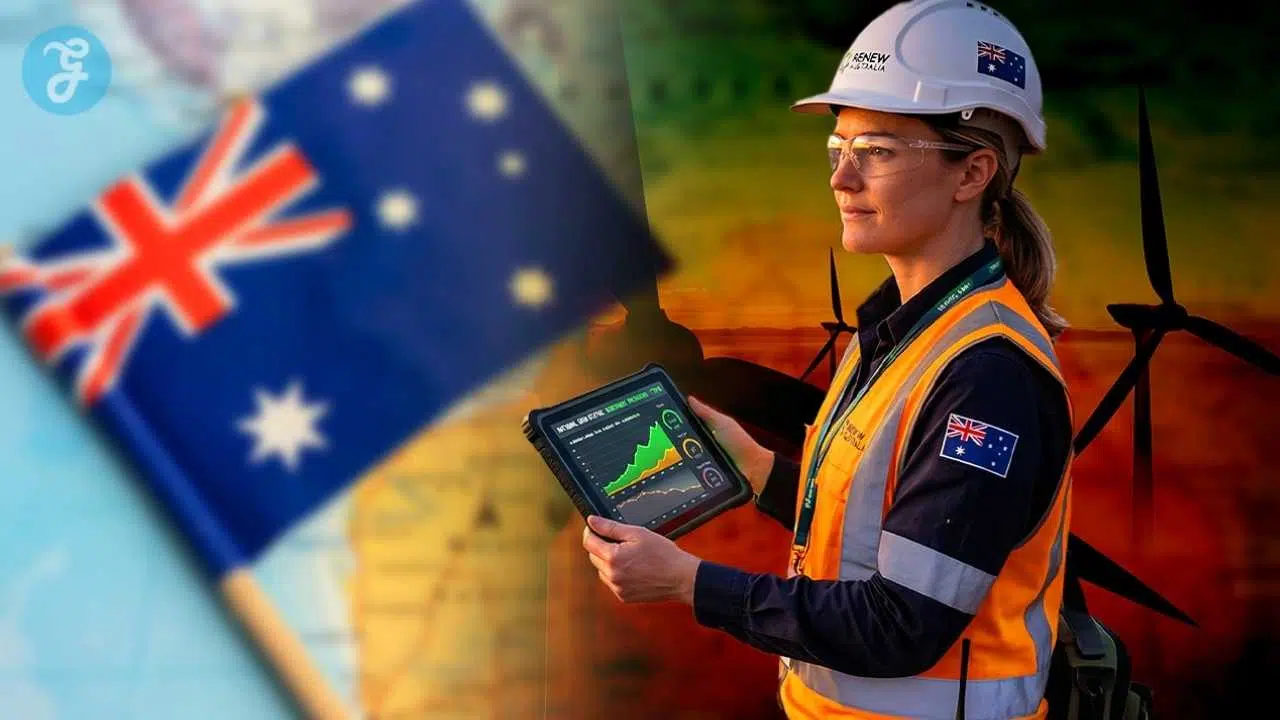
The way we generate and consume electricity is completely changing. For decades, the system relied entirely on burning fossil fuels. Today, the Australia energy transition is rewriting the rules of the grid. Planners are swapping out old thermal power stations for a mix of solar panels, wind turbines, and massive batteries.
This shift touches everything from your quarterly power bill to massive infrastructure projects in regional towns. It is a massive physical and economic undertaking. Let’s look closely at 17 undeniable facts driving this nationwide shift toward cleaner power.
The Scope and Speed of Change
The shift away from fossil fuels is not happening at a slow, leisurely pace. The targets set by both state and federal governments demand rapid, large-scale construction. Planners are racing against the clock as old infrastructure reaches its expiry date. The entire electrical backbone of the country is getting an upgrade right now.
1. The Ambitious 82 Percent Renewable Target
The federal government wants 82 percent of the national electricity market powered by renewable sources by the year 2030. Hitting this target is an absolute sprint against time. Right now, renewables sit at roughly 40 percent of our total power mix. Doubling that figure in less than a decade requires putting steel in the ground at record speed. Planners, developers, and the government are working overtime to bridge the gap between where we are and where we need to be. It means approving new wind farms, mapping out massive solar arrays, and making sure the supply chain can actually deliver the parts. The Australia energy transition relies heavily on this single, hard deadline to force action and keep investors moving forward.
| Factor | Current State | 2030 Target |
| Renewable Share | ~40% | 82% |
| Pace of Build | Steady but delayed | Requires massive acceleration |
| Primary Driver | State and Federal policy | Avoid grid shortfalls |
2. The Legally Binding Push Toward Net Zero
The 2030 target is just a stepping stone. The country has a legally binding commitment to reach net zero emissions by 2050. This goal shapes every single funding scheme and policy decision happening today. Reaching net zero means we cannot just clean up the electricity grid and call it a day. We have to decarbonize heavy transport, manufacturing, and agriculture. Cleaning up the power grid first is the foundational step because it allows us to eventually power those other sectors with clean electricity. You cannot run a fleet of electric delivery trucks efficiently if you are still plugging them into a coal-powered grid. Net zero forces the entire economy to rethink how it operates.
| Sector | Current Challenge | Net Zero Solution |
| Electricity | High reliance on fossil fuels | Wind, solar, and battery storage |
| Transport | Petrol and diesel dominance | Widespread EV adoption |
| Heavy Industry | Gas and coal for high heat | Green hydrogen and electrification |
3. The Rapid Retirement of Coal Infrastructure
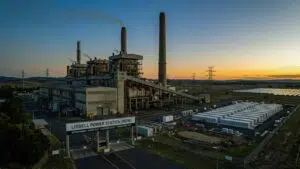
Coal-fired power stations built the modern grid, but they are getting incredibly old. The timeline for their closure is speeding up fast, and this is entirely about economics. Plant operators are bringing forward closure dates for massive generators like Eraring and Liddell because running old, clunky machinery is expensive. It is especially hard to make a profit when cheap solar power floods the market during the day and drives wholesale prices into the negative. As these giant plants exit the system, they leave a huge hole in the energy supply. We have to build replacement capacity immediately to prevent the lights from going out during the evening peak.
| Coal Plant | State | Status/Impact |
| Liddell | NSW | Closed in 2023; site transitioning to a clean energy hub. |
| Eraring | NSW | Slated for early closure; dates remain highly debated. |
| Yallourn | VIC | Scheduled to close by 2028; requires massive battery replacements. |
The Power of the Sun and Wind
You cannot talk about power generation in this country without talking about the weather. Sunshine and wind are our new baseline resources. Everyday homeowners and multinational corporations are both tapping into this free energy. The sheer volume of renewable generation being added to the system is staggering.
4. World Leaders in Rooftop Solar Adoption
Australians put more solar panels on their roofs than almost anyone else in the world. Over three million homes generate their own electricity right now. On bright spring days, those millions of roofs collectively become the biggest power plant in the country. This grassroots movement completely flips the old model of buying power from a distant company. People are lowering their bills and directly participating in the clean energy shift from their own backyards. It forces grid operators to rethink how power moves, because suddenly the suburbs are generating power instead of just consuming it.
| Metric | Detail | Grid Impact |
| Total Installations | Over 3 million households | Massive decentralized power plant |
| Peak Generation | Midday, clear skies | Drives daytime wholesale prices down |
| Consumer Benefit | Lower quarterly bills | Empowers homeowners |
5. The Expansion of Large-Scale Solar Farms
Household panels do a lot of heavy lifting, but utility-scale solar farms operate on a completely different level. Developers are buying up cheap land in sunny, regional areas to build massive arrays of panels that stretch to the horizon. These modern solar farms often use highly engineered tracking technology so the panels tilt to follow the sun from east to west. This squeezes out every last drop of generation possible. The biggest challenge for these mega-projects is not the sunlight; it is getting the power from remote inland farms to the coastal cities where the actual demand lives.
| Project Element | Description | Main Challenge |
| Land Use | Requires large, flat regional areas | Competing with agricultural land |
| Technology | Single-axis tracking systems | Upfront capital costs |
| Output | Hundreds of megawatts | Grid connection delays |
6. Onshore Wind Providing Heavy-Lifting Capacity
Solar power is incredible, but it disappears the second the sun goes down. Onshore wind energy provides a necessary counterbalance to keep the grid stable. Modern wind turbines generate electricity around the clock and actually perform significantly better during the colder, windier winter months when solar output drops off. States like South Australia and Victoria have massive wind resources that already provide a huge chunk of their daily power needs. Building more onshore wind requires careful planning to make sure local farming communities are happy to host the giant towers on their properties.
| Benefit | Description | Ideal Region |
| Generation Time | 24/7 potential; peaks at night | Southern states (SA, VIC, TAS) |
| Seasonality | Strongest in winter | Coastal and elevated inland areas |
| Grid Balance | Perfectly complements daytime solar | High wind corridors |
7. The Emerging Offshore Wind Industry
To get even more reliable power, developers are looking straight out to sea. The government recently declared specific ocean zones for offshore wind development, particularly off the coast of Gippsland and the Hunter Valley. Ocean winds are generally much stronger and a lot more consistent than winds over land. Building massive turbines in deep water is wildly expensive and technically difficult, but the payoff is huge. You get a massive, steady supply of electricity sitting right next door to major manufacturing hubs and coastal cities without taking up valuable farming land.
| Zone | Status | Strategic Advantage |
| Gippsland (VIC) | First declared zone | Close to retiring coal plants |
| Hunter (NSW) | Declared zone | Powers heavy industrial hubs |
| Illawarra (NSW) | Proposed zone | Proximity to future green steel making |
Storing and Moving the Energy
Generating electricity from the weather is only half the battle. Storing it for when the weather turns bad is the real challenge. You also have to physically move that power from new, remote locations into the suburbs. This phase of the Australia energy transition is heavily focused on major infrastructure and deep storage.
8. The Boom in Utility-Scale Battery Storage
When the sun goes down, demand for electricity shoots up as people turn on ovens, TVs, and heaters. Big chemical batteries are stepping in to cover this evening peak. Developers are building massive lithium-ion battery parks all over the country. These giant batteries soak up cheap solar power at noon and sell it back to the grid at 7 PM. Beyond just storing bulk power, these batteries act like shock absorbers for the grid. They can inject bursts of energy in milliseconds to prevent blackouts if a transmission line trips unexpectedly.
| Battery Function | How It Works | Grid Benefit |
| Energy Arbitrage | Buy cheap at noon, sell high at night | Smooths out wholesale price spikes |
| Frequency Control | Reacts in milliseconds to dips | Prevents localized blackouts |
| System Strength | Acts as a digital shock absorber | Stabilizes a weather-dependent grid |
9. Pumped Hydro Projects for Deep Storage
Chemical batteries are perfect for a few hours of backup, but what happens if the wind does not blow and the sun stays hidden for three straight days? That is exactly where pumped hydro comes in. These massive civil engineering projects act like giant water batteries. When power is cheap, electric pumps push millions of liters of water up a mountain to a high reservoir. When power is scarce, the water flows back down through a turbine to generate electricity. Projects like Snowy 2.0 are designed to provide deep, long-lasting storage to get the entire grid through extended periods of terrible weather.
| Project Phase | Mechanism | Energy State |
| Charging | Pumping water uphill | Using excess grid energy |
| Storage | Water sitting in upper dam | Stored potential energy |
| Discharging | Water flows down through turbines | Generating grid energy |
10. Rewiring the Nation with New Transmission Lines
The old power grid was built very simply: move electricity from a few massive coal plants to the big cities. The new grid has to collect power from hundreds of wind and solar farms scattered across the outback. This means we have to build thousands of kilometers of new high-voltage transmission lines. The government’s Rewiring the Nation program is trying to fund and speed up this massive process. Building giant metal towers across private farmland is highly controversial, making community approval and transmission building the trickiest physical part of the whole transition.
| Project Name | Location | Primary Purpose |
| Humelink | Regional NSW | Connects Snowy 2.0 to the main grid |
| VNI West | VIC to NSW | Shares wind and solar between states |
| Project EnergyConnect | SA to NSW | First new interconnector in 15 years |
11. The Rise of Distributed Energy Resources
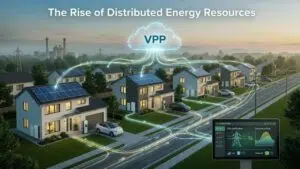
The future of the grid is a two-way street. Planners call this concept Distributed Energy Resources. This includes your home battery, your smart air conditioner, and eventually your electric vehicle sitting in the driveway. Smart software can link thousands of household batteries together to form a Virtual Power Plant (VPP). Instead of building a massive, expensive new gas peaker plant, a system operator can just pull a tiny bit of stored power from ten thousand homes at once to meet a sudden spike in demand. It turns the suburbs into an active part of the energy market.
| Resource Type | Consumer Role | Grid Impact |
| Home Battery | Stores daily solar excess | Discharges during evening peak |
| Smart Appliances | Runs during cheap energy periods | Shifts demand away from peak times |
| Electric Vehicles | Acts as a massive mobile battery | Vehicle-to-Grid (V2G) potential |
Economic and Social Impacts
Completely rebuilding how a country gets its power costs billions of dollars. This level of investment is changing local economies, creating entirely new career paths, and opening doors for new export markets. We are seeing a major shift in where money is spent and who is doing the actual physical work.
12. Record-Breaking Clean Energy Investment
It takes staggering amounts of private capital to build wind farms and big batteries. Institutional investors and massive superannuation funds are pouring billions into the clean energy sector right now. They see that the underlying economics make perfect sense because the fuel from the sun and wind is completely free. However, the current pace of financial commitment actually needs to speed up to hit our goals. Getting projects off a planning whiteboard and into physical construction requires sustained investor confidence over the next decade.
| Investment Type | Source | Target Area |
| Private Equity | Super funds, international banks | Large-scale solar and wind farms |
| Government Funding | Grants, state-backed corporations | Transmission and deep storage |
| Retail Investment | Homeowners | Rooftop solar and home batteries |
13. The Capacity Investment Scheme Overhaul
Energy markets can be highly volatile, which makes traditional banks very nervous about lending money for huge projects. To fix this hesitation, the federal government expanded the Capacity Investment Scheme. Think of it as a strict financial safety net for big builds. The government guarantees a minimum baseline revenue for developers building new clean energy and storage. If wholesale electricity prices crash, the government makes up the difference. If prices spike, the government takes a cut. This removes the risk and gets big projects financed and built much faster.
| Scheme Aspect | How it Works | Market Impact |
| Revenue Floor | Protects against price crashes | Makes projects bankable |
| Revenue Ceiling | Caps excessive profits | Protects the taxpayer |
| Main Target | Clean dispatchable capacity | Accelerates battery and hydro builds |
14. Job Creation and Workforce Training
You absolutely cannot build a new grid without highly skilled workers. The transition is creating a massive boom for tradies, electricians, civil engineers, and project managers. However, we currently do not have enough trained workers to build all these projects at the exact same time. Governments and technical universities are scrambling to set up new training centers across the country. A huge focus is placed on retraining workers from the old coal and gas industries so they can take high-paying, secure jobs in the new clean energy economy.
| Job Category | Skills Required | Demand Level |
| Electrical Trades | High-voltage cabling, grid connection | Extremely High |
| Civil Engineering | Earthworks, foundation pouring | High |
| Project Management | Logistics, community consultation | High |
15. The Pursuit of a Green Hydrogen Future
Australia has always been a massive global energy exporter. As the rest of the world slowly stops buying our coal, we need a brand new product to sell. Enter green hydrogen. By using our massive surplus of solar and wind power, we can run machines called electrolyzers to split water and create clean hydrogen gas. This gas can be shipped overseas or used locally to make high-value green steel. The technology is still expensive and in its early days, but the government is offering major tax breaks to try and kickstart the industry before other nations beat us to it.
| Hydrogen Step | Process | End Goal |
| Power Source | 100% Renewable energy (wind/solar) | Zero emissions process |
| Production | Electrolysis splits water into H2 and O2 | Create pure hydrogen gas |
| Application | Export or heavy industry use | Replace coal in steelmaking |
Changing the entire electrical system is incredibly difficult. We are essentially trying to swap out the engine of a car while we are still driving it down the highway. From global hardware shortages to the pure physics of grid frequency, the people running the power system face daily headaches.
16. Supply Chain and Material Bottlenecks
We do not make many solar panels, big transformers, or wind turbine blades here in Australia. We buy almost all of them from overseas. The major problem is that every other country in the world is also trying to buy them right now to meet their own climate targets. This global bottleneck drives up component prices and causes massive delays to construction schedules. To fix this, policies are slowly shifting toward building up our own domestic manufacturing for critical components. We have to ensure we are not entirely at the mercy of global shipping lanes and foreign factories.
| Component | Supply Vulnerability | Domestic Solution |
| Solar Panels | Heavily reliant on foreign imports | Subsidizing local solar manufacturing |
| Large Transformers | Multi-year global waitlists | Upgrading local heavy industry output |
| Wind Towers | Difficult and expensive to ship | Building steel fabrication hubs locally |
17. Maintaining Grid Stability During the Shift
The Australian Energy Market Operator (AEMO) has arguably the hardest job in the country. They have to keep the grid perfectly balanced at exactly 50 Hertz every single second of the day. Old coal plants use massive, heavy, spinning metal turbines that naturally keep the grid stable through sheer physical momentum. Solar panels and wind turbines do not have that heavy physical weight. The operator is relying on brand new technology like grid-forming batteries and massive spinning flywheels called synchronous condensers to artificially provide that stability and keep the lights on.
| Physics Challenge | Old Grid Solution | New Grid Solution |
| Frequency Control | Heavy spinning coal turbines | Grid-forming batteries |
| System Strength | Centralized thermal plants | Synchronous condensers |
| Supply Dips | Burning more coal/gas | Discharging big batteries instantly |
Final Thoughts
The Australia energy transition is a complex, massive, and entirely necessary undertaking. We are moving from a sluggish system dominated by a few centralized fossil fuel giants to a highly dispersed, weather-driven network of clean generation. Hitting the 2030 targets will require unprecedented coordination between government planners, private investors, and everyday households putting solar on their roofs. While the engineering and supply chain hurdles are significant, the economic and environmental payoffs of a fully decarbonized, cheap energy grid make the effort incredibly worthwhile for our future.
Frequently Asked Questions (FAQs) About Australia Energy Transition
1. What happens to old solar panels and wind turbines?
A major recycling industry is currently being developed. Old solar panels can be crushed to extract valuable silver, copper, and silicon. Wind turbine blades, which are made of tough fiberglass, are harder to recycle, but new chemical processes are being tested to break them down for use in construction materials.
2. What is system strength in the energy grid?
System strength refers to the grid’s ability to maintain a steady voltage waveform after a disturbance, like a lightning strike on a power line. Traditional power plants naturally provide high system strength. As they retire, grid operators install equipment like synchronous condensers to keep the system strong and prevent localized blackouts.
3. Can electric vehicles power my home during a blackout?
Yes, this technology is called Vehicle-to-Home (V2H) or Vehicle-to-Grid (V2G). Using a specialized bidirectional charger, you can use the massive battery sitting inside your electric car to run your household appliances during a power outage or sell power back to the grid when prices are high.
4. Why are wholesale electricity prices sometimes negative?
Negative prices happen during the middle of the day when the sun is shining brightly, the wind is blowing, and overall demand is low. Rooftop and large-scale solar flood the market with so much free energy that generators literally have to pay the grid to take their electricity off their hands to avoid overloading the system.
5. How do virtual power plants actually work?
A Virtual Power Plant (VPP) is a software network. If you sign up, the VPP operator gets permission to control your home battery. When the grid desperately needs power, the software signals thousands of enrolled home batteries to discharge a small amount of energy all at exactly the same time, acting just like a traditional centralized power station.