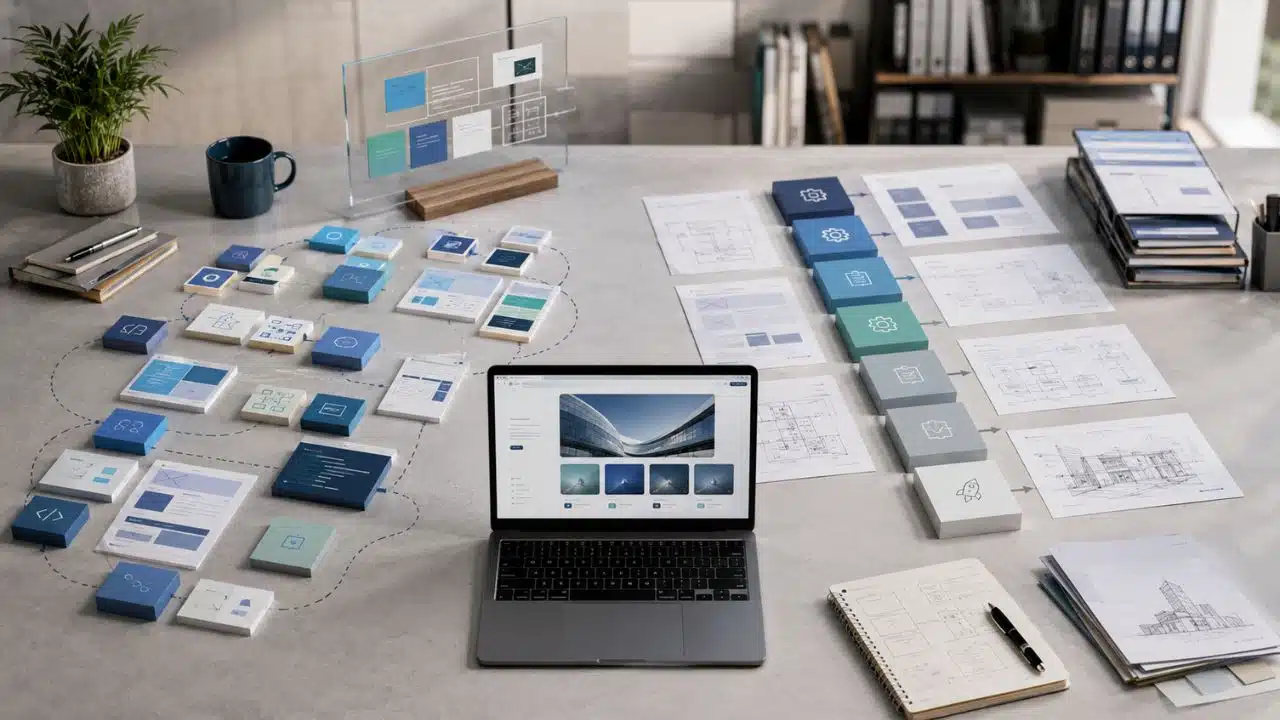
The Agile vs Waterfall decision should not come down to which method sounds more modern. Agile is usually a better fit when requirements may change, useful work can be delivered in stages, and regular feedback can influence what happens next.
Waterfall is often more suitable when the result is already well understood, work must follow a defined sequence, and late changes would be expensive, unsafe, or difficult to approve. Neither approach is inherently better. I would choose based on the uncertainty surrounding the project, the team’s access to meaningful feedback, the dependencies involved, and the consequences of changing direction later.
That requires looking beyond surface-level comparisons. A team can hold daily stand-ups and still be unable to adapt. Another can follow a carefully planned sequence without becoming rigid. The method matters, but the conditions around it matter just as much.
What Agile vs Waterfall Actually Mean
The terms are often used so loosely that teams end up comparing practices rather than delivery approaches.
Agile is broader than Scrum and sprints
The Agile Manifesto introduced four values for software development, emphasizing people, working results, customer collaboration, and responsiveness to change. It does not require two-week sprints, story points, daily stand-ups, or a particular task-management platform.
It also does not reject plans, documentation, contracts, or processes. The manifesto says those things still have value. The emphasis is on preventing them from becoming more important than useful results and genuine collaboration.
Agile is therefore better understood as a family of adaptive and iterative approaches. Scrum is one framework within that broader family. Kanban, Extreme Programming, and other systems apply similar principles in different ways.
Scrum is not another word for Agile
The official Scrum Guide describes Scrum as a lightweight framework for creating value through adaptive solutions to complex problems. It includes defined accountabilities, events, and artifacts, including the Product Backlog, Sprint, and Increment.
A team can work according to Agile principles without using Scrum. It can also follow every Scrum ceremony without becoming meaningfully Agile.
If stakeholders disappear between planning and launch, priorities cannot change, and every decision needs approval from several managers, the presence of a backlog or daily meeting changes very little.
Waterfall is a sequential, predictive approach
Waterfall usually divides a project into phases that progress in sequence. In software, these might include requirements, design, development, testing, deployment, and maintenance.
More planning and specification happen near the beginning. One phase is normally reviewed or approved before the next begins.
“Predictive” is the broader project-management term. Predictive approaches define the intended scope, schedule, resources, and delivery path early enough to create a stable plan. Waterfall is one familiar form of predictive delivery, although not every planned project follows a strict one-pass model.
The history is more nuanced than the common stereotype suggests. Winston Royce’s frequently cited 1970 software paper illustrated a sequential process but warned that a simple one-pass version was risky. He recommended feedback, prototyping, documentation, and iteration.
Real Waterfall projects can accommodate review and change. Those changes tend to pass through more formal controls and may have a larger effect on approved scope, cost, or schedule.
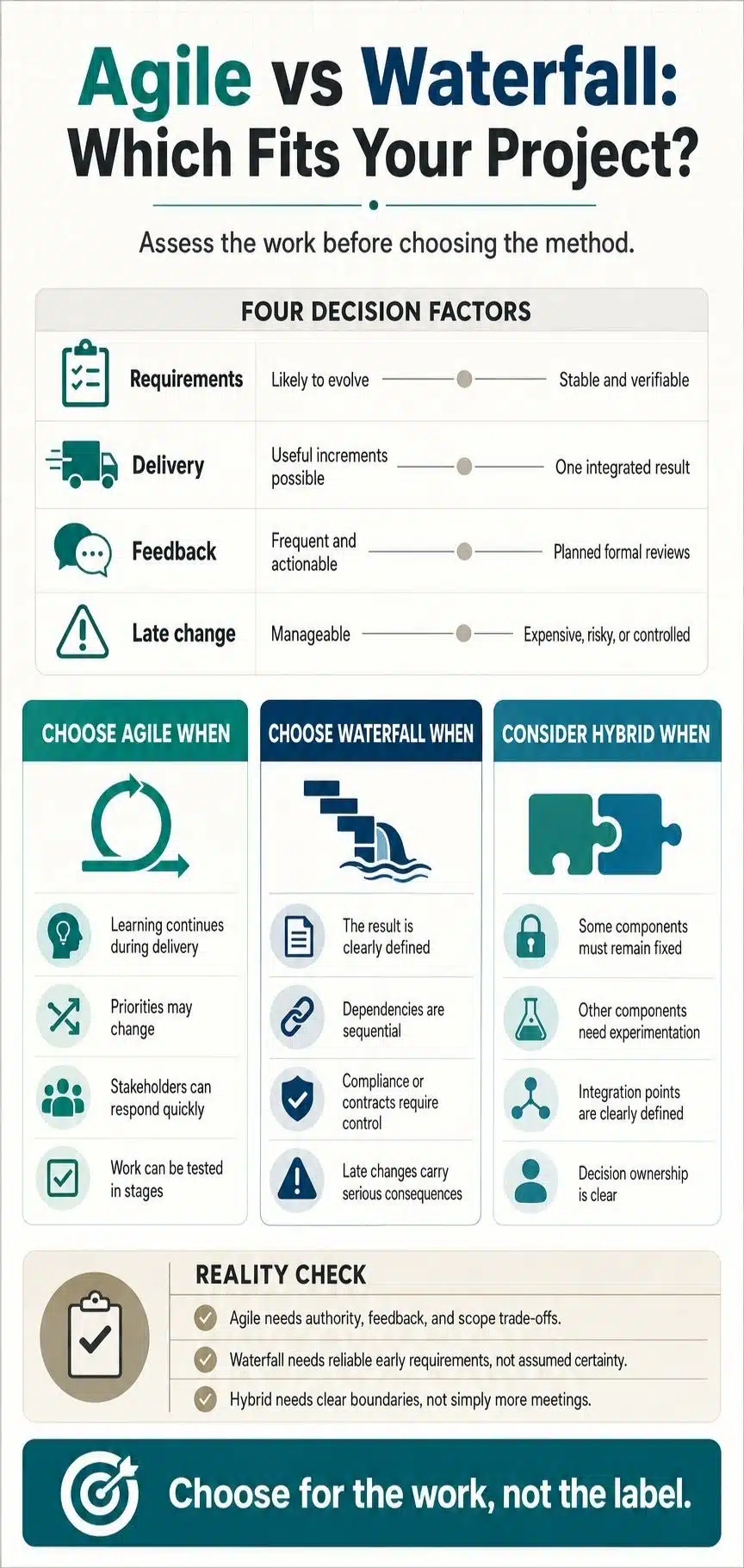
The Real Difference Is How the Project Handles Uncertainty
Some projects begin with a stable problem, a proven solution, and clearly defined acceptance criteria. Others begin with questions about user needs, technical feasibility, costs, or the right solution.
Agile is designed for the second situation. It gives a team repeated opportunities to test assumptions and adjust before the entire budget or schedule has been committed.
Waterfall works best when the team already knows enough to make detailed planning reliable. A predictable sequence can then make procurement, budgeting, approvals, coordination, and supplier management easier.
The danger is choosing a process that merely hides uncertainty. In Waterfall, that happens when early assumptions are written into a requirements document and treated as facts. The plan looks settled, but the underlying questions remain unanswered.
In Agile, uncertainty can become an excuse for weak direction. Priorities change constantly, objectives remain vague, and “responding to change” starts to mean accepting every new request.
A method should help a team expose risk and make better decisions. It should not give uncertainty a more professional-looking place to hide.
Agile vs Waterfall: The Differences That Matter
The practical differences between Agile and Waterfall appear in how teams plan work, manage changing requirements, gather feedback, test results, organize responsibilities, and measure progress. Understanding these areas makes it easier to see which approach fits the realities of a project.
Planning and requirements
Waterfall usually asks the team to define the expected result in considerable detail before implementation. Requirements, specifications, budgets, schedules, and acceptance criteria establish a baseline for the project.
This works when stakeholders understand what they need and can verify it early. It becomes less reliable when people cannot judge the proposed solution until they see or use it.
Agile spreads planning across the project. A team may still have a long-term goal, roadmap, budget, and delivery date, but near-term work is planned in more detail than work several months away.
That is not the absence of planning. It is a decision to delay some details until the team has better evidence.
Scope and change
Waterfall generally treats approved scope as a commitment. Changes may require impact analysis, additional funding, revised schedules, or formal approval.
That control can be valuable when changes affect safety, contracts, compliance, physical construction, or several dependent teams. The problem appears when the process protects an outdated requirement simply because changing it is inconvenient.
Agile expects priorities and details to evolve. New work can enter the backlog, but it must compete with existing work.
This distinction matters. Agile does not make change free. If a deadline and budget are fixed, adding new requirements usually means removing, delaying, or simplifying something else. Without that trade-off, a flexible backlog becomes an expanding wish list.
Delivery and feedback
Waterfall often concentrates delivery near the end of a project or at major planned milestones. Stakeholders may be heavily involved during requirements gathering and formal reviews, but less involved during implementation.
Agile aims to produce smaller, usable or testable increments. Stakeholders can react to real work rather than relying entirely on documents, mockups, or percentage-complete reports.
Frequent feedback only helps when someone can act on it. If decision-makers repeatedly miss reviews or need weeks to approve a change, the team gains little from demonstrating work every two weeks.
Testing and risk
A weak Waterfall project leaves too much testing until late in the schedule. By then, a requirement, integration, or usability problem may affect months of completed work.
A well-managed predictive project does not need to make that mistake. Designs can be reviewed, risky assumptions can be tested through prototypes, and components can be verified before final integration.
Agile brings testing and review into shorter delivery cycles, which can reveal certain problems earlier. However, dividing unfinished work into sprints does not automatically reduce risk. Each increment must be complete enough to generate useful evidence.
Some risks also require substantial analysis before implementation. Structural safety, manufacturing tolerances, long procurement lead times, and formal certification cannot always be explored through small releases.
Agile works best with a stable, cross-functional team that can complete useful work without depending on a long chain of handoffs. Team members need access to stakeholders and enough authority to resolve normal delivery questions.
Waterfall can accommodate more specialized roles that contribute at different stages. This may suit projects involving engineers, procurement teams, contractors, inspectors, legal reviewers, or regulators.
Those handoffs still need care. Documents cannot capture every design decision or operational concern. Even in a sequential project, direct communication between specialists can prevent expensive misunderstandings.
Budgeting, contracts, and progress reporting
Waterfall supports contracts built around a defined scope, schedule, price, and set of acceptance criteria. That can simplify procurement when the expected result is genuinely stable.
The danger is false precision. An estimate based on untested assumptions does not become dependable because it appears in a detailed plan or signed contract.
Agile budgeting may fund a delivery team, product goal, or fixed period while allowing the exact feature mix to evolve. Progress is shown through completed work, user feedback, reduced risk, or measurable outcomes.
Agile can still operate with fixed deadlines and contracts. The agreement simply needs to explain what may change, who controls priorities, how work will be accepted, and which constraints remain non-negotiable.
When Agile Fits a Team Well
Agile is a strong choice when learning is part of the work rather than something expected to finish before delivery begins.
It is especially useful when:
- User needs may change after people see the product.
- The solution contains technical or operational uncertainty.
- Useful work can be released, demonstrated, or tested in stages.
- Stakeholders can review progress and make timely decisions.
- Priorities may shift as new evidence becomes available.
- Early increments can create value before the full project is complete.
Consider a company developing a customer portal. The team might begin with secure account access, a basic account overview, and invoice downloads. Later work can be shaped by support requests, user behavior, technical findings, and business priorities.
That approach still needs direction. The team must understand the problem it is solving, the outcomes it wants, and the constraints it cannot ignore.
Signs your organization is not ready for Agile
Agile often struggles because the organization adopts the language without supporting the underlying way of working.
Warning signs include:
- Stakeholders cannot attend reviews or provide decisions.
- Every adjustment requires several layers of approval.
- Team members are divided across too many unrelated projects.
- The product cannot be tested or released in meaningful increments.
- Feedback is collected but cannot influence priorities.
- Managers assign daily tasks while calling the team self-managing.
- The deadline, budget, and complete scope are all considered fixed.
- New work is added continually without removing or delaying anything.
Under these conditions, Agile can turn into a cycle of meetings, changing requests, and unfinished work. The organization wants adaptability without accepting the decisions and trade-offs that make it possible.
When Waterfall Is the Better Choice
Waterfall remains useful when the team can define the intended result early and the work must move through an established sequence.
It may be the better option when:
- Requirements and acceptance criteria are stable.
- Later work depends heavily on completing earlier stages.
- Physical changes would be costly or difficult to reverse.
- Contracts require clearly defined deliverables.
- Safety, audit, compliance, or certification controls are central.
- The final result cannot create meaningful value in smaller releases.
- Specialist teams and suppliers must coordinate around fixed milestones.
Imagine installing industrial equipment in an existing facility. Electrical capacity, structural requirements, dimensions, procurement lead times, shutdown windows, and safety approvals may all need to be settled before installation.
The team may still use prototypes, simulations, site inspections, and design reviews. What it should not do is begin physical installation while treating unresolved engineering constraints as details that can be adjusted later.
When Waterfall is only creating the appearance of certainty
A detailed project plan can look reassuring even when the information behind it is weak.
Look more closely if:
- Stakeholders approve requirements they do not fully understand.
- User or operational feedback is postponed until final testing.
- Early estimates become commitments despite major unknowns.
- The project produces extensive documentation but few testable results.
- Design decisions cannot be revisited when new evidence appears.
- Progress reports show completed phases without demonstrating that the final result will work.
- Teams rely on unofficial workarounds because the change process is too slow.
Waterfall is most defensible when the project is actually predictable, not simply when the organization prefers certainty on paper.
Agile vs Waterfall Through the Same Project
Suppose a company wants a portal where customers can view invoices, update account information, download documents, and contact support.
Under Waterfall, the project might begin with a full requirements phase. The team documents user roles, security controls, system integrations, page designs, reporting needs, and acceptance criteria. Once approved, the work moves through design, development, testing, and launch.
This approach could be appropriate if the underlying systems are stable, the workflows are well understood, and several suppliers need a fixed set of deliverables.
Its main risk is delayed learning. Customers and support staff may not recognize a confusing workflow until much of the portal has already been built.
With Agile, the team might begin with one usable customer journey: secure login, account overview, and invoice access. It tests or releases that increment, studies the response, and uses the findings to shape document downloads, notifications, profile management, and support features.
That reduces the cost of some mistakes and may create value sooner. It also depends on an architecture that supports incremental delivery and stakeholders who can respond throughout the project.
The better option depends on what the team knows. If the portal relies on a back-end replacement that cannot be divided safely, promising small independent releases may be unrealistic. If customer needs are still uncertain, specifying every screen and workflow at the beginning may lock the team into the wrong solution.
Choose the Method for the Work
I would lean toward Agile when the project needs continuous learning and the team can turn feedback into timely decisions. I would choose Waterfall when the intended result is stable, dependencies are genuinely sequential, and uncontrolled change carries a high cost.
When both conditions exist, I would tailor the approach by component. Calling everything hybrid without defining the boundaries rarely improves delivery.
The right method should make uncertainty easier to see, clarify who owns important decisions, and provide credible evidence of progress. If the process mainly produces meetings, documents, and arguments about terminology, the team may be maintaining the methodology more carefully than the project itself.
Frequently Asked Questions on Agile vs Waterfall
1. Can the team deliver something useful in stages?
If a partial release can create value or test an important assumption, iterative delivery becomes more attractive. If nothing works until final integration, predictive coordination may carry more weight.
2. How quickly can stakeholders provide meaningful feedback?
Agile depends on access to users, sponsors, customers, or subject-matter experts while changes are still affordable. Feedback delivered months later cannot guide a short delivery cycle.
3. What happens if a requirement changes late?
Consider the financial cost, safety implications, contractual effect, rework, and approval time. The more serious the consequences, the more validation the team needs before committing.
4. Which dependencies must remain sequential?
Some sequences are technically unavoidable. Others survive because departments and approval processes have always operated that way. The distinction can change the delivery design.
A cross-functional team needs stable membership, access to the right expertise, clear priorities, and permission to make normal delivery decisions. A new framework cannot compensate for missing authority or fragmented staffing.