AI Search Engine Content Formats are clear, highly structured, and data-backed content frameworks—like direct-answer definitions, comparison tables, and itemized lists—designed to provide immediate, self-contained answers that LLMs can easily parse and cite.
A page can rank #1 on Google and still be invisible in ChatGPT, Perplexity, or Google AI Overviews. Traditional search relies on keywords and backlinks, but AI search engines prioritize AI search engine content formats—clear, highly structured data built for instant extraction.
A 2026 study analyzing 75,000 AI answers and over 1 million citations revealed that listicles, informational guides, and product pages generate over half of all AI search citations. However, being cited often means being paraphrased rather than quoted word-for-word. To earn referral traffic and brand visibility, your content must make comparison seamless, highlight clear evidence, and answer the exact questions AI engines extract most.
What Citation Percentages Do Not Tell You
No format wins across every prompt. The study found that user intent predicted the cited page type more strongly than the industry or AI platform did. Informational prompts favored articles. Commercial research favored listicles. Product and category pages became more prominent when the user was closer to taking action.
The research covered five industries and used non-branded prompts. Its averages will not match markets where regulation, local availability, or first-party documentation carries unusual weight.
Citation selection is also unstable. In an Ahrefs comparison, Google AI Mode and AI Overviews cited the same URLs for matching queries only 13.7% of the time. Another generation can use different sources while producing a similar answer, making guaranteed-citation promises difficult to defend.
Clear presentation still appears useful. Semrush found that cited pages scored higher for summarization, expertise signals, Q&A formatting, section structure, and visible elements such as lists and tables. These were associations, not proof that an FAQ or table causes citations. Structure cannot rescue thin or unreliable content.
How the 7 AI Search Engine Content Formats Rank
These formats are ordered by their citation share in the 2026 dataset, excluding the study’s catch-all “Other” category. The ranking shows broad patterns, not guaranteed performance. Query intent, source quality, freshness, and accessibility still determine which page an engine selects.
1. Listicles
Listicles led the study with 21.88% of citations overall. Their share rose to 40.86% for commercial prompts, where users were comparing products, services, or providers.
Listicles suit “best,” “top,” and “which should I choose” questions, but that does not justify another shallow roundup. A credible list explains its selection, applies meaningful criteria, and helps readers eliminate unsuitable choices.
A software comparison should distinguish between team size, workflows, integrations, pricing model, and setup burden. Repeating company descriptions does not help anyone decide.
Self-promotional rankings deserve extra skepticism. Among the most-cited professional-services listicles examined in the study, 80.9% of citations went to third-party lists rather than pages where a company ranked itself. The finding comes from one segment of the research, but the editorial lesson travels well: declared criteria and visible independence make a comparison more useful. Seven justified entries are better than 20 barely differentiated names added to reach a keyword target.
2. Informational Articles
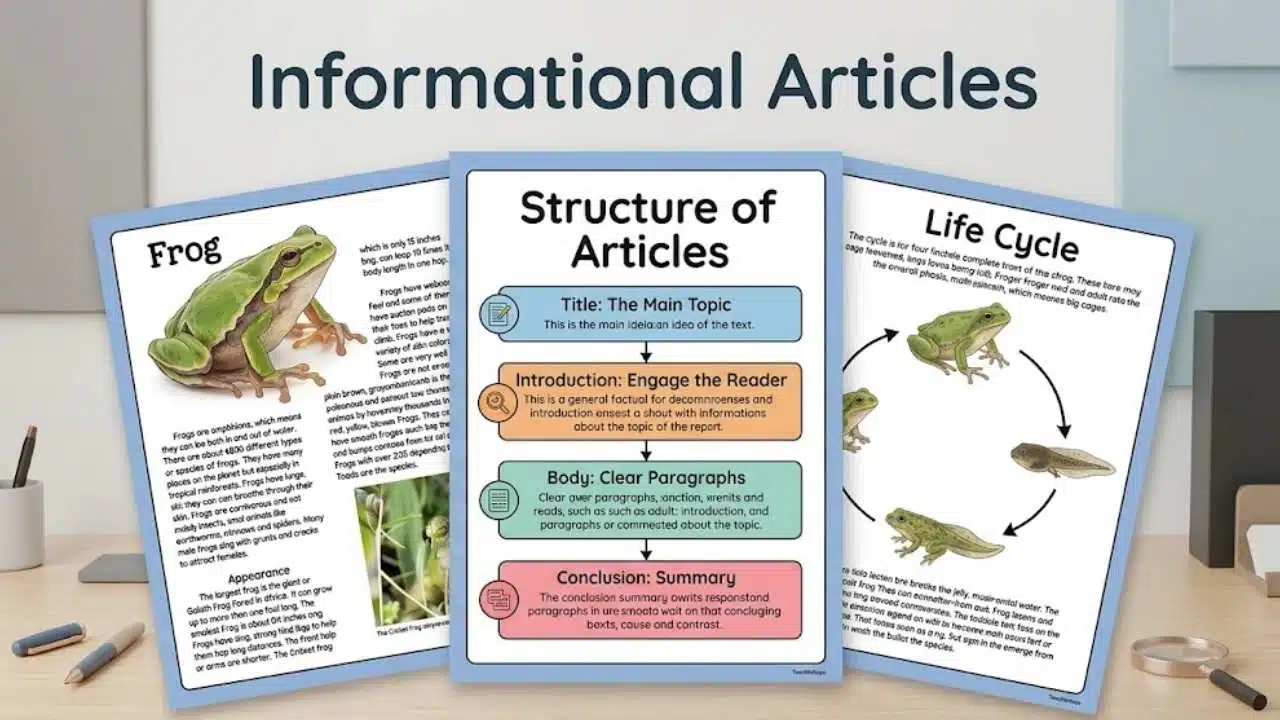
Articles accounted for 16.68% of citations overall and dominated informational prompts with a 45.48% share. For publishers explaining a concept, policy, trend, or technical subject, this is the most important format on the list.
Length is not the advantage. An article that delays the answer can be less useful than a focused explanation. Lead with the clearest answer, then add evidence, examples, qualifications, and application details.
The early academic study that introduced GEO found that adding relevant statistics, quotations, and source citations improved visibility within its experimental benchmark. It also found that results varied by topic, and the researchers acknowledged that generative systems would keep changing. The sensible response is not to decorate articles with random numbers. Use evidence that directly supports the claim, identify its scope, and remove statistics that no longer reflect current conditions.
3. Product Pages
Product pages received 13.66% of citations overall and 24.88% for transactional prompts. When someone is ready to buy, subscribe, book, or download, the first-party page is often the most direct source for current facts.
Many product pages weaken that advantage with slogans. State what the product does, who it serves, which versions exist, and what limitations apply. Prices, availability, compatibility, stock, and feature access need regular review.
Keep essential facts in visible text rather than placing them only inside images or interactive widgets. Google recommends making important content available as text and ensuring structured data matches what visitors can see. Standard product schema may help Google interpret the page, but there is no special AI schema that guarantees inclusion in AI Overviews or AI Mode.
4. Category Pages
Category pages generated 11.25% of citations. They were more prominent for navigational or local prompts at 18.31% and transactional prompts at 14.97%.
This format is underrated by teams that treat every search opportunity as a blog assignment. For a store, directory, marketplace, or large publication, a maintained category page may answer an action-oriented query more directly.
A grid of repeated cards is not enough. Explain what belongs in the collection, offer meaningful filters, show the attributes people use to compare options, and link to detailed pages. Avoid padding the introduction with generic keyword copy. If the text does not help someone browse or choose, it probably does not belong there.
5. Public Discussions and Community Pages
Discussions accounted for 7.52% of citations overall. Perplexity was the clear outlier, drawing 17.35% of its citations from pages such as forums, Reddit, LinkedIn, and review communities.
Discussion pages can surface details brand copy leaves out: recurring complaints, workarounds, competing opinions, and customer language. That makes them useful for questions about public opinion or practical friction.
This is also the easiest format to misuse. Planted recommendations, fake reviews, and promotional replies presented as independent advice damage trust and may violate community rules. Brands are better served by answering genuine questions accurately, disclosing affiliations, and maintaining public support discussions where outdated solutions can be corrected. A community page earns value through participation and moderation, not formatting alone.
6. How-to Guides
How-to guides represented 6.21% of citations overall and 9.21% for informational prompts. Their smaller share does not make them unimportant. For queries containing words such as “install,” “configure,” “calculate,” or “fix,” a procedural guide may be the closest match.
Strong guides include prerequisites, ordered steps, decision points, and an expected result. They also cover predictable failure points. “Connect the integration” is inadequate if permissions, account tiers, or regional availability can block it.
Use screenshots when they clarify an interface, but keep the essential instructions in text. Add a review date or version number when menus, policies, or technical requirements are likely to change. If a task takes three steps, present three accurate steps rather than stretching it into a longer article.
7. Homepages
Homepages accounted for 5.26% of citations overall, rising to 13.56% for navigational and local prompts. They are not the right place for a detailed tutorial, but they can establish basic facts about an organization.
A visitor should quickly understand what the business offers, who it serves, where it operates, and where its main resources are located. Vague slogans force readers and search systems to infer basic facts.
Keep names, locations, service descriptions, and contact details consistent across the homepage, About page, business profiles, and relevant structured data. For most publishers, improving this factual foundation is more useful than adding a large GEO-focused paragraph to the homepage.
A Practical Way to Choose What to Publish
Start with the prompts that matter to the business, not the format with the largest percentage. Collect 15 to 20 realistic questions from search data, customer support, sales conversations, and audience research. Classify each as informational, commercial, navigational, or transactional.
Then check whether an existing page already answers it:
- Improve an article when the prompt needs explanation or evidence.
- Build an independent listicle when readers are comparing several options.
- Update product or category pages when the user is close to acting.
- Create a how-to guide when the task requires a repeatable process.
- Strengthen the homepage when basic brand, service, or location facts remain unclear.
Before publishing, compare the page against several real prompts, not one preferred keyword. A format may look tidy in the CMS yet fail because it does not answer the follow-up questions people naturally ask next.
Updating a relevant page is often more sensible than creating a new URL. It preserves existing authority, reduces overlapping coverage, and gives the team fewer pages to keep accurate.
Final Thoughts
AI citation research is useful for setting priorities, but the percentages should not become another mechanical publishing formula. The strongest AI search engine content formats are the ones that match the prompt and supply information worth citing.
Choose the format after understanding the reader’s task. Then make the facts visible, current, specific, and easy to verify. That editorial discipline is less fashionable than chasing every GEO tactic, but it gives both readers and AI systems a better source to work with.