

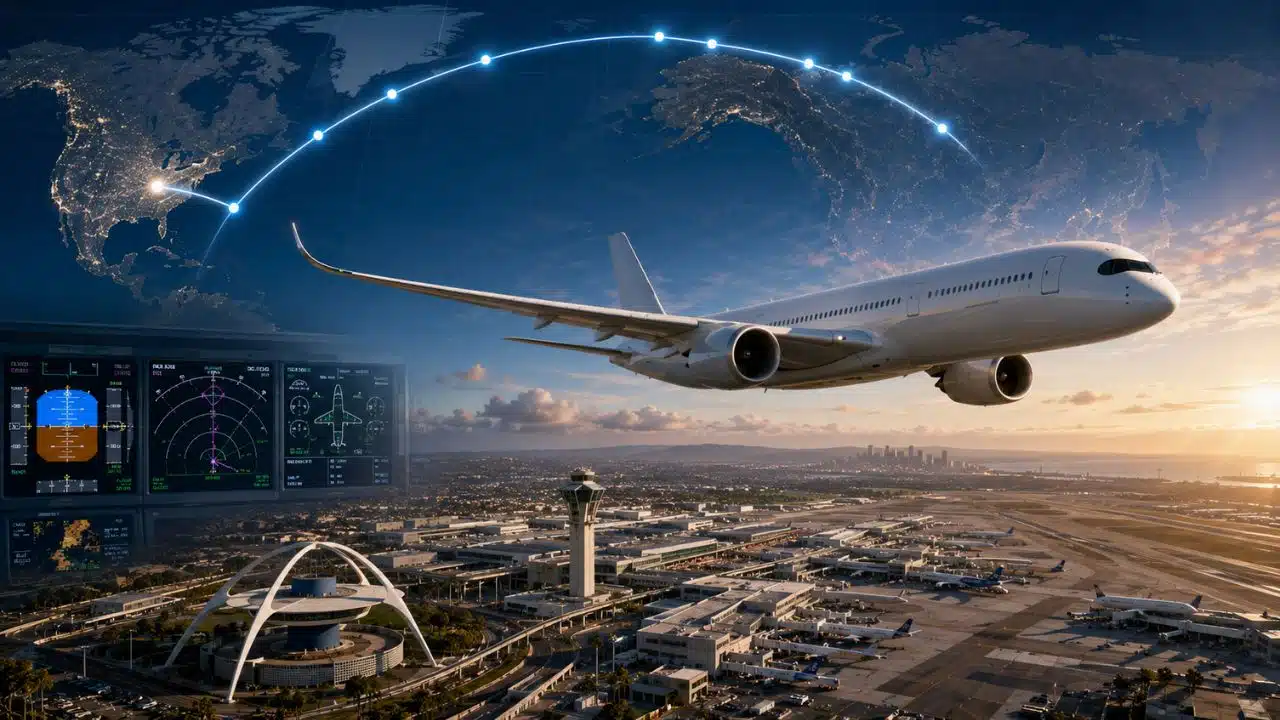
It was somewhere over the Bering Sea, roughly 38,000 feet above one of the most remote stretches of ocean on the planet when the cockpit of an Airbus A350-900 lit up with an alert. The crew was hours into a scheduled run from Detroit Metropolitan Wayne County Airport to Tokyo Haneda, carrying passengers who had settled in for a 13-hour trans-Pacific journey. What they saw on their Engine Indicating and Crew Alerting System changed the plan entirely.
The story of the Delta flight DL275 diverted LAX incident isn’t a horror story. It’s actually the opposite: a precise, practiced safety response that most passengers never fully understand, played out at 38,000 feet with everyone’s lives depending on decades of protocol.
This is the version of that story the other articles haven’t told you.
What Exactly Was Delta Flight DL275?
Delta Air Lines Flight DL275 operates one of the more demanding routes in the U.S. carrier’s international network: Detroit Metropolitan Wayne County Airport (DTW) to Tokyo Haneda Airport (HND). The distance is roughly 6,400 miles. The flight time, under normal conditions, runs between 12 and 14 hours depending on winds.
On May 28, 2025, the aircraft assigned to this route was an Airbus A350-900 bearing the registration N508DNE. This is one of Delta’s wide-body long-haul workhorses, powered by two Rolls-Royce Trent XWB engines, an engine family known for its fuel efficiency and reliability in sustained transoceanic operations.
The A350-900 in Delta’s fleet is configured with premium seating across three cabins: Delta One (business class), Premium Select, and Main Cabin. On a route like DTW–HND, the plane typically carries a mix of corporate travelers, tourists heading to Japan, and passengers connecting onward through Haneda. That May 28 departure was, by every outward sign, routine.
It stopped being routine somewhere west of the Aleutian Islands.
What the Cockpit Crew Actually Saw Before DL275 Diverted to LAX
To understand why Delta flight DL275 diverted to LAX and the event unfolded the way it did, you need to understand what pilots see when an engine system sends an alert at altitude and what they’re required to do about it.
The Airbus A350-900 uses a centralized avionics suite called the ECAM, or Electronic Centralized Aircraft Monitor. When any aircraft system deviates from expected parameters, ECAM generates an alert with a classification level of advisory (white), caution (amber), or warning (red). The crew of DL275 received an indication related to the engine anti-ice system on one of the two Rolls-Royce Trent XWB engines.
What Is an Engine Anti-Ice System, and Why Does It Matter?
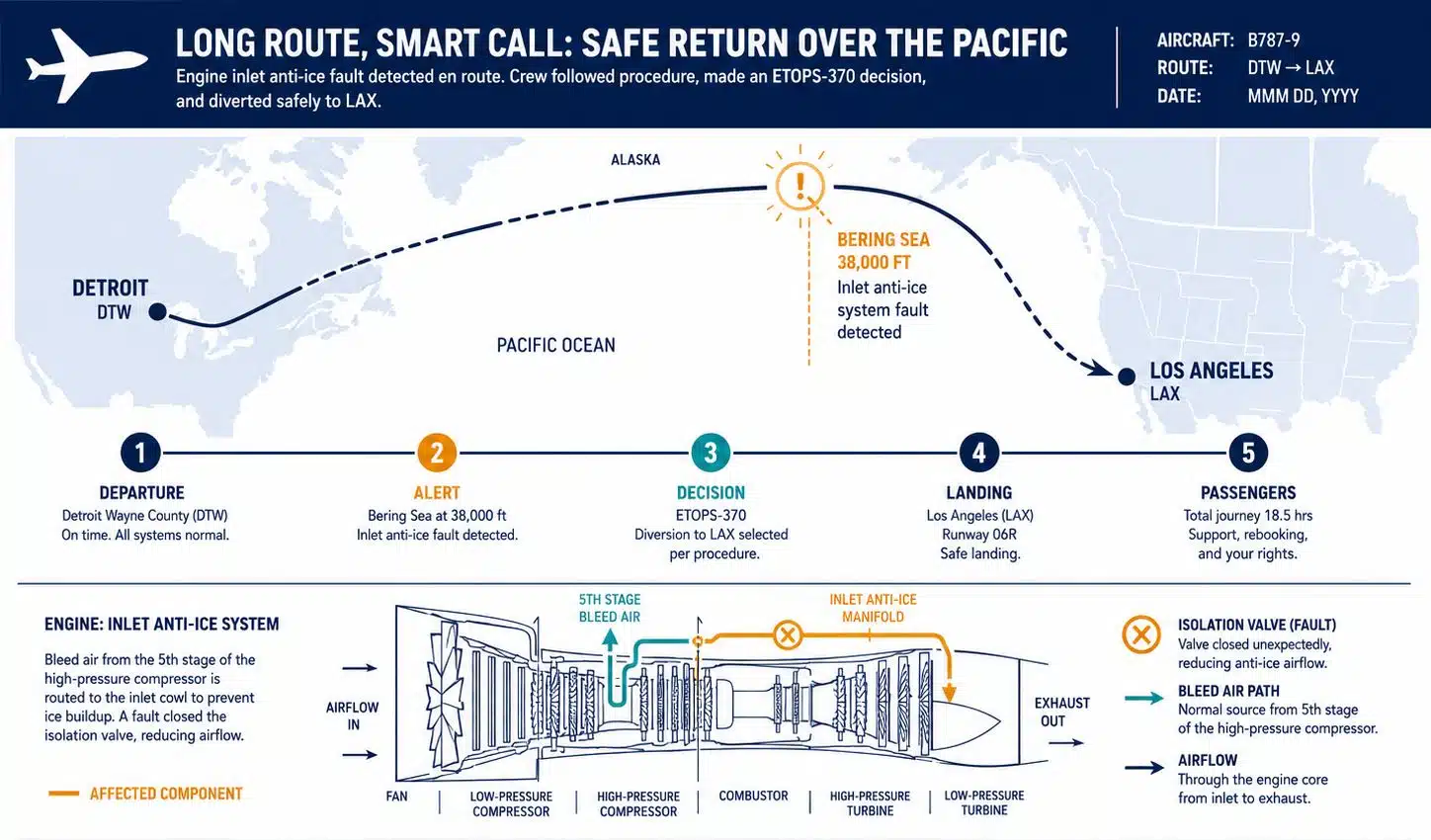
At 38,000 feet, the outside air temperature can drop below minus 50 degrees Celsius. At that temperature, even microscopic moisture in the air can form ice crystals. Engine inlets, the large circular openings at the front of each engine, are particularly vulnerable. Ice accumulation on the inlet lip can break off and travel into the fan, causing blade damage. It can also distort airflow, reducing engine efficiency and, in extreme cases, causing a surge.
The anti-ice system on the Trent XWB uses hot bleed air drawn from the engine compressor and routed through the engine inlet, keeping the surface temperature above freezing. It’s controlled by the FADEC, the Full Authority Digital Engine Control, which monitors the system’s pressure, temperature, and valve positions continuously.
When the crew saw the indication, it meant the FADEC had detected an anomaly in this chain. The specific fault could be a solenoid valve that wasn’t responding correctly, an irregular pressure reading in the bleed air circuit, or a sensor reporting values outside the expected range. Crucially, the engine itself was not failing. The thrust was normal. The aircraft was flying fine. But the monitoring system had flagged that one protective mechanism, the anti-ice shield on one engine, could not be fully confirmed as operational.
The Checklist and the Decision
This is the part of the story nobody writes about.
When ECAM generates an alert, crews don’t improvise. They open the Quick Reference Handbook, or QRH—a laminated, procedure-indexed document that has a specific procedure for every abnormal situation the aircraft’s designers could anticipate. The QRH for an anti-ice system fault will walk the crew through a series of checks: verify which system has flagged, confirm the fault isn’t a sensor false positive, assess the status of the redundant system, and then reach the decision point.
The decision point, in this case, asked a direct question: can this aircraft continue across a remote oceanic stretch without a fully confirmed anti-ice system? And the answer, applied conservatively and correctly, was no.
The crew contacted Delta’s Operations Control Center via ACARS—the Aircraft Communications Addressing and Reporting System, essentially a text messaging network for aircraft. Dispatch confirmed the decision. They then contacted Air Traffic Control, declared their intent to divert, and began planning the reroute. All of this happened calmly and systematically, with checklists completed and boxes ticked. No Mayday. No PAN-PAN. Just professionals doing exactly what they were trained to do.
Why the Bering Sea Makes This Decision Critical—The ETOPS Factor
Most passengers have never heard of ETOPS, which stands for Extended-range Twin-engine Operational Performance Standards. But it’s the regulatory framework that makes the entire concept of long-haul, twin-engine flight over remote ocean possible—and it explains why the crew’s diversion decision carried particular urgency at that specific location.
Before ETOPS regulations were developed in the 1980s, commercial twin-engine aircraft couldn’t legally fly routes that took them more than 60 minutes’ flying time from the nearest suitable airport. The reason is obvious: if one engine fails, you need to reach a runway on the remaining engine, and you need to do it within a reasonable time. Two-engine planes were therefore confined to overland routes or shorter oceanic crossings.
ETOPS changed that by certifying specific aircraft-engine combinations for extended diversions. The Airbus A350-900 with Rolls-Royce Trent XWB engines holds one of the most expansive approvals: ETOPS-370. That means the aircraft is certified to fly routes where the nearest diversion airport is up to 370 minutes away on one engine.
What ETOPS-370 Means in Practice for DL275
The DTW–HND route crosses the North Pacific, skirting above the Aleutian Islands and across the Bering Sea. This region qualifies as a remote ETOPS zone — not because there are no airports, but because the nearest ones (Adak Island, Cold Bay, Anchorage) have limited facilities and, for a wide-body A350 with 280-plus passengers, limited capacity to handle a full-scale diversion.
When a crew in an ETOPS zone decides to divert, they work from a preplanned list of ETOPS alternate airports—airports that were specifically evaluated and approved during the route planning phase. These alternates must have usable runways, sufficient fuel, and some degree of passenger handling infrastructure. Los Angeles International Airport (LAX) is one of the most well-qualified ETOPS alternates in the Pacific theater, sitting approximately 5 hours of flight time from the Bering Sea portion of the DTW–HND route.
The crew wasn’t randomly picking a destination. They were following a pre-approved diversion plan, selecting the optimal airport from a vetted list.
Why Delta DL275 Chose LAX Over Every Other Airport
Given that the alert occurred over the Bering Sea, there were airports geographically closer than LAX. Anchorage, Alaska — specifically Ted Stevens Anchorage International Airport — is a major Pacific diversion hub with a long runway history and military heritage. So why did the crew of DL275 push past Anchorage and choose Los Angeles?
The answer involves several factors that operated simultaneously.
Anti-ice system fault in cold weather. This is the one that matters most. If the anti-ice system on one engine couldn’t be confirmed operational, landing in Anchorage — where May temperatures can hover just above freezing and where icing conditions are common — would recreate exactly the risk the crew was trying to avoid. LAX, by contrast, sits in a climate where ground icing is essentially never a concern. The warm, dry air of Southern California meant the aircraft could be safely parked and inspected without the added complication of ambient icing risk.
Delta’s maintenance infrastructure. LAX is one of Delta’s West Coast operational hubs. The airline maintains a staffed maintenance facility there, with technicians familiar with the A350 and the Trent XWB engine family. When DL275 landed, there were people on the ground who could immediately begin the diagnostic process on the anti-ice indication. At a smaller or less-aligned airport, that expertise might not be available for hours — or at all.
Passenger handling capacity. An Airbus A350-900 in Delta’s configuration carries close to 300 passengers. Getting nearly 300 people rebooked, fed, and housed requires hotel inventory, gate space, and a large airline customer service team. LAX has all of that. It is among the best-equipped airports in the United States for exactly this kind of mass-diversion logistics.
Weather and operational windows. Los Angeles in late May is predictably clear. The crew knew they were landing in conditions that would not add further complications to an already disrupted operation.
The choice of LAX, in short, wasn’t the nearest available airport. It was the correct one.
What Happened to Passengers After Delta Flight DL275 Diverted to LAX
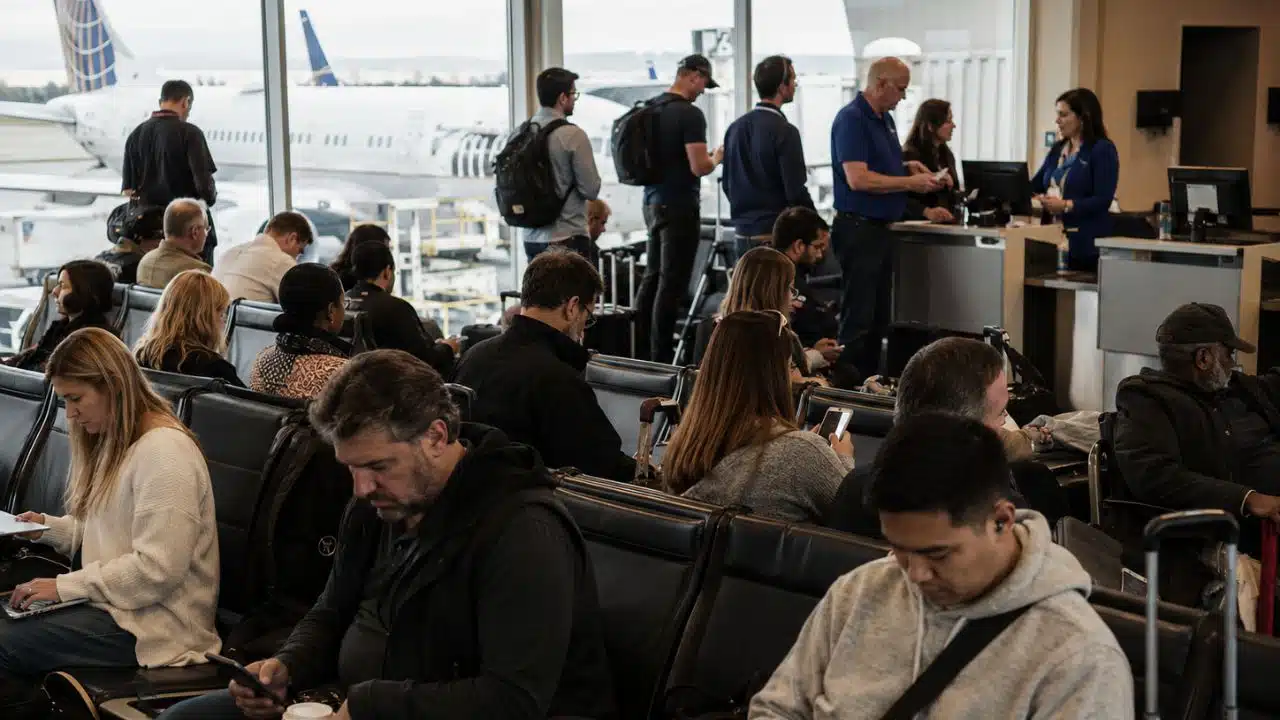
The Airbus A350-900 landed safely on Runway 06R at Los Angeles International Airport. No injuries were reported. Emergency services were standing by as a standard precautionary measure, but they weren’t needed. Passengers deplaned normally into a terminal that was prepared to receive them.
What followed was part of a diversion that passengers experience directly—and where airline performance is most visible.
The 18.5 Hours on the Ground
DL275 remained on the ground at LAX for approximately 18.5 hours. During that time, Delta’s maintenance team inspected the anti-ice system on the affected engine. Depending on the specific fault — valve, sensor, or bleed air circuit — this kind of repair can range from a component swap that takes a few hours to a more involved diagnostic process. The 18.5-hour window suggests a thorough inspection rather than a quick fix.
Once cleared, the aircraft returned to service and eventually continued operations. Passengers who chose to wait were rebooked on the first available DL275 departure or routed through alternative connections to Tokyo Haneda.
Rebooking, Hotels, and What Delta Owes You
This is where things get important for travelers, because the rights framework for a diversion is different from what most people assume.
Under U.S. Department of Transportation rules, airlines are not required to pay cash compensation for flight diversions caused by mechanical safety issues — this falls under what’s commonly called the “safety exception.” However, Delta’s own Contract of Carriage goes further than the legal minimum. Delta’s standard practice for a diversion requiring an overnight stay includes rebooking on the next available flight at no charge, hotel accommodation when passengers are displaced overnight, meal vouchers, and ground transportation to and from the hotel.
Passengers on DL275 reported a range of experiences. Some were rerouted within hours on other Pacific carriers or Delta codeshare partners. Others with more complex itineraries spent the night in LAX-adjacent hotels at Delta’s expense. A small number chose to return to Detroit and rebook the following day’s DL275 departure.
One thing that applies regardless of the diversion reason: you are entitled to a full refund if you choose not to travel at all. If DL275’s diversion meant your Tokyo trip became impossible, you could request a refund of the full ticket price and walk away.
For those who had purchased travel insurance or used a credit card with trip interruption coverage, additional reimbursement was available for incidentals — meals, ground transport, and costs not covered by Delta’s vouchers.
Was the DL275 LAX Diversion an Emergency or a Precaution?
The phrasing matters here, and it’s where most coverage of the Delta flight DL275 diverted LAX incident gets loose with terminology.
An aviation emergency, in formal terms, involves declaring either a MAYDAY (immediate threat to the aircraft’s safety) or a PAN-PAN (urgent situation that is serious but not immediately life-threatening). Both trigger a specific response from Air Traffic Control: priority handling, emergency services on standby, and potentially a scramble response depending on the region.
The crew of DL275 declared neither.
This was a precautionary diversion. The aircraft continued to fly normally after the alert. The engines were producing normal thrust. The flight controls were fully functional. There was no fire, no structural issue, no loss of control. The crew diverted because a protective system—the anti-ice capability on one engine—could not be confirmed operational over a remote oceanic stretch where the consequences of an escalating problem would be severe.
That’s a meaningful distinction for passengers who experienced the diversion and may be wondering whether they were ever in real danger. The honest answer is the alert represented a potential risk if conditions changed or the fault propagated, which is precisely why the crew acted. But at no point was the aircraft in immediate peril. The diversion was proactive, not reactive.
The Federal Aviation Administration’s mandatory incident reporting system (MOR—Maintenance and Operations Reports) would capture the event for review, but this type of precautionary diversion is not unusual in Pacific operations. It happens multiple times a year across the global fleet without public notice.
The Airbus A350-900: Why This Aircraft Handled the Diversion So Well
It’s worth spending some time on the aircraft itself, because understanding the A350-900’s design gives context to why the diversion remained orderly rather than developing into something more serious.
The Airbus A350 family was designed from the outset for long-haul twin-engine operations. It holds ETOPS-370 certification — one of the highest available — which means regulators have determined that its redundancy systems, engine reliability data, and monitoring capabilities justify 370-minute diversion windows. This certification doesn’t come automatically; it requires years of in-service data and demonstrated reliability rates.
The Rolls-Royce Trent XWB, the engine family that powers the A350-900 exclusively, is widely regarded as one of the most reliable turbofan engines currently in commercial service. Its FADEC system — the same one that generated the anti-ice indication on DL275 — is designed to flag anomalies early, before they develop into operational problems. In this sense, the alert on DL275 was the monitoring system working correctly.
The aircraft’s fly-by-wire flight control system also means that the flight computers continuously monitor the aerodynamic state of the aircraft and compensate for any asymmetries. Even with reduced confidence in one engine’s anti-ice protection, the aircraft remained completely controllable.
None of this is to minimize what the crew faced. A decision made at 38,000 feet over the Bering Sea, based on ambiguous sensor data, with 300 passengers in the back, is not trivial. But the A350-900’s architecture gave the crew time, information, and options. That’s what the design was built to do.
What Delta Did Right — and What Every Pacific Traveler Should Know
The handling of the Delta flight DL275 diverted LAX situation offers a practical template for how airline diversions should go. Several things Delta did well are worth naming specifically.
Early, calm communication. Passengers on DL275 reported receiving clear announcements from the flight deck explaining that the aircraft was diverting to Los Angeles due to a technical indication and that safety was not being compromised. This kind of proactive communication is not universal across airlines, and it matters enormously for passenger composure.
Proper diversion airport selection. Choosing LAX over the geographically nearer Anchorage demonstrated sound operational judgment. The crew and dispatch prioritized not just reaching a runway, but reaching the right runway — one where the fault could be addressed safely and passengers could be managed effectively.
Rebooking speed. Multiple accounts suggest Delta’s rebooking systems at LAX processed passengers within four hours of landing, with the app updating itineraries automatically for many travelers before they even reached the gate.
What You Should Do If Your Flight Diverts
If you’re ever on a diverted international flight, these steps will serve you better than waiting in line at the gate:
Open your airline’s app the moment you land and before you deplane. Airlines increasingly automate rebooking during diversions, and the app often has your new itinerary before the gate agents do. Check your options and claim a seat on the next available flight before the crowd forms.
Ask specifically for hotel accommodation if an overnight stay is required. Don’t wait to be offered it — Delta and most major U.S. carriers will provide this, but it sometimes requires requesting it directly at the customer service desk.
Know the difference between a refund and rebooking. If the diversion means your plans are fundamentally disrupted, you have the right to request a full refund rather than accepting rebooking. This is worth knowing before you’re standing in a chaotic terminal at midnight.
Check your credit card benefits. Cards like Chase Sapphire Reserve, Amex Platinum, and various travel-focused Visa Signatures include trip interruption coverage that can cover incidentals not handled by the airline. The claim window typically starts the moment the diversion is confirmed.
File for any additional reimbursement in writing. Delta’s website allows you to submit expense claims for disruption-related costs. Keep all receipts.
Frequently Asked Questions About Delta Flight DL275 Diverted to LAX
Was the Delta flight DL275 diverted LAX incident an emergency?
No. The diversion of DL275 to LAX was a precautionary action, not an emergency. The crew did not declare a MAYDAY or PAN-PAN. The aircraft’s engines were operating normally, and no injuries occurred at any point. The diversion was triggered by an engine anti-ice system indication that the crew determined was incompatible with continuing across a remote oceanic stretch. Precautionary diversions of this type are a normal — and deliberately conservative — feature of ETOPS-certified long-haul operations.
What caused Delta DL275 to divert to LAX?
The specific cause was an indication related to the engine anti-ice system on one of the aircraft’s two Rolls-Royce Trent XWB engines. The FADEC detected an anomaly in the anti-ice circuit while the aircraft was flying over the Bering Sea at approximately 38,000 feet. Rather than continue across the Pacific with a protective system in uncertain status, the crew followed standard ETOPS protocols and diverted to the most suitable available alternate airport: LAX.
What are passengers owed when Delta diverts a flight?
Under U.S. DOT rules, airlines are not legally required to provide cash compensation for diversions caused by genuine safety issues. However, Delta’s own policies go beyond this minimum. Passengers on diverted flights that require an overnight stay are entitled to rebooking at no charge, hotel accommodation, meal vouchers, and ground transportation. Passengers who do not wish to continue traveling are entitled to a full refund. Travel insurance and credit card trip interruption benefits can cover costs beyond what the airline provides.
How long did Delta Flight DL275 remain at LAX after diverting?
The aircraft remained at Los Angeles International Airport for approximately 18.5 hours following the diversion. During this time, Delta’s maintenance team inspected and addressed the anti-ice system issue. The A350-900 registered N508DNE was subsequently cleared for return to service.
What is an engine anti-ice system, and why did it cause a diversion?
An engine anti-ice system prevents ice from forming on the engine inlet — the large circular opening at the front of the engine — by routing hot compressed air from the engine itself around the inlet surface. At high altitude over cold ocean water, the risk of ice ingestion is significant enough that airlines treat any doubt about the anti-ice system’s status as a hard stop. A confirmed failure doesn’t mean the engine will fail, but it removes a safety buffer that pilots require before continuing over terrain where a diversion would take hours to execute.
Did Delta Flight DL275 eventually reach Tokyo Haneda?
The passengers on the May 28, 2025, departure were rebooked either on subsequent DL275 departures or on alternative routings through Pacific connections. The aircraft itself, after clearing maintenance inspection at LAX, was returned to service. The route continues to operate regularly as part of Delta’s international network.
What does ETOPS mean, and how does it relate to the DL275 diversion?
ETOPS stands for Extended-Range Twin-Engine Operational Performance Standards. It’s the regulatory framework that allows twin-engine commercial aircraft to fly routes over remote areas, far from the nearest airport. The Airbus A350-900 holds ETOPS-370 certification, meaning it can legally operate routes where the nearest diversion airport is up to 370 minutes away on a single engine. The DL275 diversion was a direct application of ETOPS protocol: when a system indication created uncertainty over a remote oceanic stretch, the crew implemented the pre-approved diversion plan to LAX.
The Diversion You Should Hope For
Here’s the reframe that gets lost in every article about the Delta flight DL275 diverted LAX incident: what happened on May 28, 2025, was not a near-miss. It was a successful outcome.
The Rolls-Royce Trent XWB’s FADEC caught an anomaly in the anti-ice system before it could develop into anything more serious. The flight crew consulted their checklists, communicated with dispatch, assessed their ETOPS alternate options, and made a conservative, correct decision. The Airbus A350-900—an aircraft specifically designed to handle exactly this kind of situation—flew safely for five additional hours to Los Angeles without incident. Nearly 300 people walked off the plane without a scratch.
That’s not a story about something going wrong. It’s a story about every system working exactly as designed: the monitoring systems, the crew training, the regulatory framework, the airline operations, and the aircraft engineering.
Aviation has an unmatched safety record in modern transportation precisely because the industry treats anomalies like the one that triggered the Delta flight DL275 diversion to LAX as reasons to land, not reasons to press on. The discomfort passengers experienced—the disrupted plans, the long night at LAX, the rebooking lines—was the acceptable cost of maintaining that record.
If you fly across the Pacific regularly, the right response to news like this isn’t anxiety. It’s confidence. Because the fact that DL275 diverted is proof that the people in charge of keeping you safe know exactly when to stop.





















