
Every single day on the calendar holds a vast, interconnected universe of narratives that have shaped the modern world, and May 18 is certainly no exception. When we peel back the layers of time on this specific date, we uncover a tapestry woven with political revolutions, scientific breakthroughs, cultural milestones, and deeply profound tragedies. From the intricate power dynamics of the Bangalee sphere to the shifting borders of empires in Europe, the historical footprint of May 18 requires a nuanced, analytical approach to fully grasp its impact on our contemporary reality. As we navigate the complex corridors of history, documenting the rise and fall of global leaders and the birth of visionaries who redefined their respective fields, we gain invaluable insights into the cyclical nature of human civilization.
This comprehensive retrospective meticulously details the defining events, the celebrated births, and the mourned losses that occurred on May 18, providing a thorough historical grounding optimized for modern historical analysis.
The Bangalee Sphere: May 18 in Bangladesh & India
The Indian subcontinent shares a deeply rich and often turbulent history, marked by centuries of colonial resistance, socio-economic restructuring, and dynamic cultural evolution. On May 18, the region witnessed several critical policy shifts and technological leaps that permanently altered its geopolitical trajectory.
Defining Geopolitical and Historical Milestones
Let us deeply examine the major political transitions and historical events that reshaped the socio-economic and strategic landscape of the Indian subcontinent on this specific day.
1951: Implementation of the Zamindari Abolition Act
On May 18, 1951, the East Bengal State Acquisition and Tenancy Act of 1950 was officially put into effect, representing a monumental shift in the region’s agrarian economy. This critical piece of legislation formally dismantled the oppressive Permanent Settlement system established during British colonial rule by Lord Cornwallis in 1793. By abolishing the feudal Zamindari structure, the act stripped wealthy, absentee landlords of their vast estates and legally secured direct land ownership rights for the disenfranchised peasantry of East Bengal (which is modern-day Bangladesh).
This sweeping land reform was not just an economic restructuring; it was a profound socio-political liberation that weakened the entrenched aristocracy, empowered the rural working class, and laid the crucial groundwork for a more egalitarian agrarian society in the post-colonial era.
1974: India’s “Smiling Buddha” Nuclear Test
The geopolitical balance of South Asia was fundamentally and irrevocably altered on May 18, 1974, when the Republic of India successfully detonated its first nuclear explosive device. Conducted under tight secrecy at the Pokhran test range in the deserts of Rajasthan, the operation was codenamed “Smiling Buddha.” The Indian government officially characterized the detonation as a “peaceful nuclear explosion” (PNE) designed for industrial and civilian purposes. However, the international community immediately recognized the military implications.
This successful test made India the sixth country in the world—and crucially, the first nation outside the five permanent members of the United Nations Security Council—to test a nuclear weapon. The event catalyzed intense global scrutiny, triggered widespread sanctions, and accelerated a localized arms race that would shape the region’s defense strategies for decades to come.
1912: Release of the First Indian Film
Before the sprawling, multi-billion dollar Bollywood industry of today existed, the foundations of Indian cinema were laid on May 18, 1912. On this day, Shree Pundalik, a silent film directed by visionary Dadasaheb Torne, was released to the public at the Coronation Cinematograph in Mumbai. The film was essentially a photographic recording of a popular Marathi stage play. While Dadasaheb Phalke’s Raja Harishchandra, released a year later in 1913, is frequently credited by historians as the first full-length Indian feature film due to its fully indigenous production, Shree Pundalik stands as the absolute pioneering milestone.
It introduced the Indian public to the magic of moving pictures and ignited a cultural phenomenon that would eventually dominate the global entertainment landscape.
To summarize the key historical figures from the Bangalee and broader South Asian sphere associated with this date, the following table provides a quick, reader-friendly reference to notable births and deaths.
| Category | Name | Year | Significance |
| Birth | H. D. Deve Gowda | 1933 | Prominent Indian politician and the 11th Prime Minister of India. |
| Birth | Biplab Kumar Deb | 1971 | Indian politician and former Chief Minister of Tripura. |
| Death | Reema Lagoo | 2017 | Beloved Indian actress renowned for her maternal roles in Hindi blockbusters. |
| Death | Anil Madhav Dave | 2017 | Respected Indian environmentalist and Minister of State for Environment. |
International Observances & Global Holidays on May 18
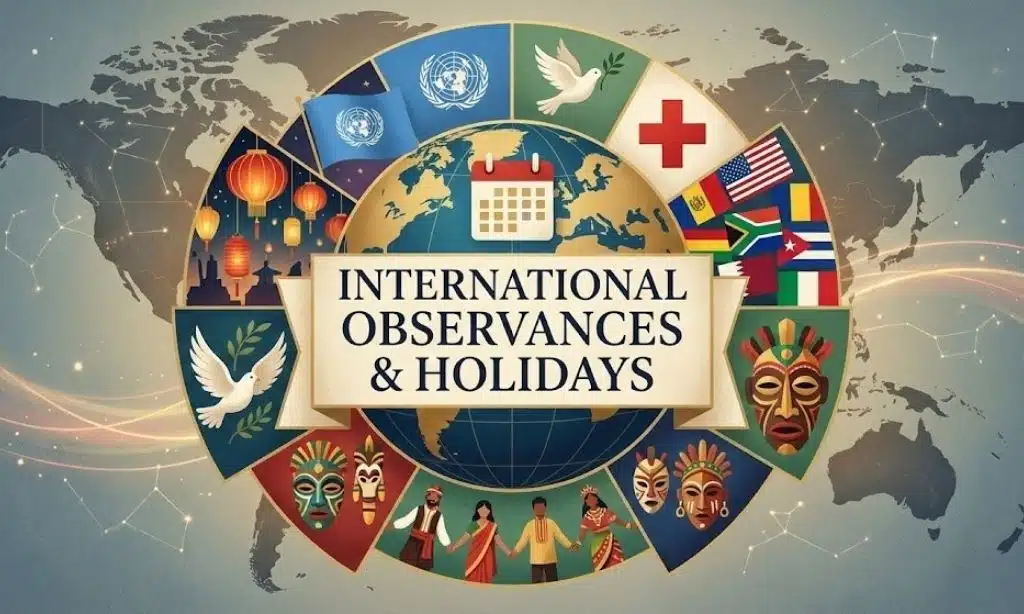
Beyond the borders of any single nation, May 18 serves as a vital day for global awareness, medical advocacy, and collective remembrance. These international observances highlight the shared values and ongoing struggles of the global community.
The Importance of Global Solidarity
These holidays are not merely arbitrary dates on a calendar; they act as vital mechanisms for preserving cultural memory, driving international health initiatives, and recognizing the arduous journeys of sovereign nations fighting for recognition.
Below is an at-a-glance view of the official observances and national days recognized globally on May 18.
| Observance | Scope | Core Focus |
| International Museum Day | Global | Highlighting museums as a means of cultural exchange and mutual understanding. |
| World AIDS Vaccine Day | Global | Advocating for urgent vaccine research and honoring dedicated medical professionals. |
| Somaliland Independence Day | Regional (Somaliland) | Commemorating the 1991 self-declared independence from the Republic of Somalia. |
| Haiti Flag Day | National (Haiti) | Celebrating the creation of the national flag during the 1803 Haitian Revolution. |
| Mullivaikkal Remembrance Day | Regional / Diaspora | Mourning the tens of thousands of lives lost during the Sri Lankan Civil War. |
Global History: Geopolitical Shifts and Defining Moments
Stepping beyond the South Asian subcontinent, the broader global stage has witnessed profound and often cataclysmic shifts on May 18. From the ashes of volcanic eruptions to the drafting of critical legislation that suppressed human rights, the world has been repeatedly transformed on this date.
North America: Legal Precedents and Natural Disasters
In the United States and Canada, this date is marked in the history books by both devastating environmental events that reshaped the physical landscape and deeply consequential legal rulings that divided a nation.
1896: The Plessy v. Ferguson Decision
On May 18, 1896, the United States Supreme Court delivered a devastating, generational blow to the advancement of civil rights with its ruling in Plessy v. Ferguson. The case stemmed from an 1892 incident in which Homer Plessy, a man of mixed racial heritage, deliberately defied a Louisiana state law mandating segregated seating on railroad cars. In a 7-1 decision, the Court upheld the constitutionality of racial segregation under the pernicious legal doctrine of “separate but equal.” This ruling legally institutionalized racial discrimination and provided federal backing for the oppressive Jim Crow laws that would systematically disenfranchise, marginalize, and endanger Black Americans for over half a century.
The sociological and political damage inflicted by this ruling was immeasurable, stalling the promises of the post-Civil War Reconstruction era. It wasn’t until the landmark Brown v. Board of Education decision in 1954 that this deeply flawed doctrine was finally overturned.
1980: The Eruption of Mount St. Helens
Nature’s terrifying power was put on full display on the morning of May 18, 1980, when Mount St. Helens, a stratovolcano located in Washington state, violently erupted. Triggered by a massive 5.1 magnitude earthquake, the mountain’s entire north face collapsed in the largest terrestrial landslide in recorded human history. The subsequent lateral blast shot superheated ash, gas, and pulverized rock outward at supersonic speeds, completely leveling hundreds of square miles of dense forest. The cataclysmic event claimed the lives of 57 people, destroyed over 200 homes, and caused billions of dollars in infrastructural and economic damage.
The eruption reduced the mountain’s elevation by over 1,300 feet, leaving behind a massive, horseshoe-shaped crater and fundamentally altering the local ecosystem. It remains the deadliest and most economically destructive volcanic event in United States history.
1956: The Orleans Aviation Tragedy
In one of the most tragic aviation disasters in Canadian history, a Royal Canadian Air Force CF-100 Canuck jet interceptor crashed into the Villa St. Louis convent in Orleans, Ontario, on May 18, 1956. The jet was participating in a routine interception exercise when it plummeted from the sky. The catastrophic impact and resulting inferno killed 11 grey nuns, a priest, a convent cook, and the two military crew members aboard the aircraft. The event sent shockwaves through the local community and prompted rigorous investigations into military aviation safety protocols over civilian populations.
Europe and Asia: Empires, Wars, and Autonomy
Across the sweeping landscapes of Europe and Asia, May 18 has been a crucible for empire-building, political subjugation, and the relentless pursuit of national sovereignty by marginalized populations.
1804: Napoleon Bonaparte Declared Emperor
The political landscape of Europe was radically redesigned on May 18, 1804, when the French Senate officially proclaimed Napoleon Bonaparte as the Emperor of the French. This momentous declaration officially transitioned France from a struggling republic—born out of the bloody French Revolution—back into a hereditary monarchy. Napoleon’s ascension to imperial power consolidated his absolute control over the state apparatus and set the aggressive stage for the devastating Napoleonic Wars.
His subsequent military campaigns would rapidly dismantle the Holy Roman Empire, redraw the territorial borders of continental Europe, and spread the ideals of the Napoleonic Code, leaving a complex legacy of administrative modernization coupled with brutal imperial conquest.
1944: The Deportation of the Crimean Tatars
Under the direct and brutal orders of Soviet Premier Joseph Stalin, May 18, 1944, marks the beginning of the Sürgünlik, the violent and systematic deportation of the entire Crimean Tatar population from their ancestral homeland on the Crimean Peninsula. Falsely accusing the entire ethnic group of widespread collaboration with Nazi Germany during World War II, the Soviet secret police forced over 191,000 men, women, and children onto cramped, squalid cattle trains destined for remote exile in Central Asia, primarily Uzbekistan.
The grueling journey and the harsh conditions in the special settlement camps resulted in massive casualties, with estimates suggesting that up to half of the deported population perished from starvation, disease, and exposure within the first few years. Today, this horrific act of ethnic cleansing is formally recognized by multiple sovereign nations as an act of genocide.
1980: China’s ICBM Test and Nuclear Ascent
Signaling its rapid militaristic and technological advancement on the global stage, the People’s Republic of China successfully conducted its first full-range test of an intercontinental ballistic missile (ICBM) on May 18, 1980. The missile, designated the Dongfeng-5 (DF-5), was launched from the Jiuquan Satellite Launch Center and traveled thousands of miles before splashing down precisely in the designated target area in the South Pacific Ocean. This successful test firmly established China as a formidable nuclear power capable of striking targets globally, fundamentally shifting Cold War dynamics and modern deterrence strategies.
Famous Birthdays: Visionaries and Icons Born on May 18
History is ultimately driven by the actions, intellect, and creativity of individuals. Over the centuries, May 18 has introduced the world to some of its most brilliant scientific minds, influential religious leaders, and captivating cultural entertainers.
The table below highlights a diverse array of global figures whose enduring legacies began on this day, serving as a testament to human potential.
| Name | Year of Birth | Nationality | Enduring Legacy |
| Omar Khayyam | 1048 | Persian | Brilliant polymath, mathematician, astronomer, and author of the celebrated Rubaiyat. |
| Bertrand Russell | 1872 | British | Nobel laureate, pioneering logician, philosopher, and prominent global peace advocate. |
| Pope John Paul II | 1920 | Polish | Charismatic leader of the Catholic Church instrumental in ending European Communist rule. |
| George Strait | 1952 | American | Legendary, multi-platinum country music artist affectionately known as the “King of Country.” |
| Chow Yun-Fat | 1955 | Chinese | Internationally acclaimed actor renowned for his defining roles in global action cinema. |
| Tina Fey | 1970 | American | Groundbreaking comedian, award-winning writer, and visionary creator of 30 Rock. |
Notable Deaths: Legacies Lost on May 18
As much as we celebrate the beginnings of great lives on this date, we must also pause to respectfully remember the immense talent, leadership, and artistic genius that the world lost on May 18.
This table serves as a historical memorial to the significant cultural, scientific, and political figures who passed away on this exact date.
| Name | Year of Death | Nationality | Cause / Legacy |
| Charles Perrault | 1703 | French | Laid the foundational literary framework for the modern fairy tale genre (e.g., Cinderella). |
| Isaac Albéniz | 1909 | Spanish | Highly influential composer and piano virtuoso who defined the Spanish Romantic era. |
| Gustav Mahler | 1911 | Austrian | Masterful conductor and composer bridging the Austro-German tradition with modernism. |
| Ian Curtis | 1980 | British | Tragic suicide at age 23; the iconic, deeply influential lyricist and singer of Joy Division. |
| Chris Cornell | 2017 | American | Chief architect of the 90s grunge movement and the powerhouse vocalist of Soundgarden. |
Unique Trivia and Historical Curiosities
Beyond the sweeping geopolitical changes and famous biographies, history is often colored by fascinating footnotes and obscure anomalies. Here are a few lesser-known facts and trivia items associated with May 18.
-
The Apollo 10 Dress Rehearsal: Launched on May 18, 1969, the Apollo 10 mission served as the ultimate, critical dress rehearsal for the historic Apollo 11 moon landing. Astronauts Thomas Stafford and Eugene Cernan piloted the lunar module within a mere 8.4 nautical miles of the lunar surface, testing all procedures and radar systems without actually touching down, paving the way for Neil Armstrong’s giant leap just two months later.
-
The World’s Tallest Structure: Completed on May 18, 1974, the Warsaw Radio Mast in Konstantynów, Poland, stood at an awe-inspiring 646 meters (2,119 feet). Until its sudden and catastrophic collapse during maintenance in August 1991, this incredible feat of engineering held the undisputed record as the tallest structure ever built by human hands.
-
Aboriginal Labor Rights: The historic Pilbara Walk-Off officially began on May 18, 1946, when hundreds of Aboriginal pastoral and domestic workers in Western Australia bravely went on strike. This watershed labor action, which lasted for three grueling years, was a pivotal moment in the ongoing fight for fair wages, basic human rights, and the broader Indigenous land rights movement in Australia.
Reflective Retrospective: The Weight of May 18
When we look back at the relentless cascade of events that fall on May 18, it becomes strikingly clear that history is not merely a series of isolated incidents, but an intricate, breathing tapestry of human ambition, tragedy, and unyielding resilience. As an analyst charting these historical waters, one cannot help but notice the profound dichotomy inherent in this specific date. On one hand, we see the undeniable triumph of decolonization and the push for equitable rights—evident in the dismantling of the oppressive Zamindari system in Bengal and the fierce push for sovereign autonomy across various global spheres.
On the other hand, the date bears the heavy, lingering scars of institutionalized oppression and devastating natural disasters, from the discriminatory legal ruling of Plessy v. Ferguson to the catastrophic, landscape-altering eruption of Mount St. Helens. Understanding these contrasting moments allows us to deeply reflect on our current geopolitical landscape. The decisions made on this day decades, or even centuries, ago continue to ripple through modern domestic policies, international relations, and cultural narratives. By critically examining this cross-section of history, we are reminded that every day holds the profound potential to drastically alter the trajectory of human civilization, urging us to approach our contemporary global challenges with an informed historical awareness and a highly nuanced perspective.