The transition to clean road transport moves incredibly fast right now, and New Zealand is actively carving its own path to a greener tomorrow. Building the New Zealand EV charging network comes with a unique set of geographic challenges, thanks to the country having rugged mountain ranges, deep valleys, and incredibly long coastal highways.
Making sure everyday drivers can easily top up their car batteries anywhere across Aotearoa takes massive coordination and serious financial investment. People used to genuinely worry about range anxiety, but that fear is fading fast as new plug stations pop up at local grocery stores, malls, and isolated highway stops every single week.
Right now, a massive overhaul upgrades public transport and road infrastructure from the top of the North Island to the bottom of the South Island. The government recently set aggressive policies, handed out millions in zero-interest loans, and teamed up with private energy businesses to put power plugs exactly where everyday drivers need them the most. This grand strategy goes way beyond simply dropping a few electrical cables into the dirt at an old gas station. It involves completely upgrading the national power grid, fixing bureaucratic red tape, and making sure isolated rural towns do not get left behind during the clean energy transition.
If you wonder how the country plans to actually support the thousands of electric cars hitting the roads every month, you will appreciate the sheer scale of this project. From smart power hubs that communicate directly with local lines to ultra-rapid plugs that recognize your car automatically, the progress is looking highly impressive. Let us dive right into these thirteen surprising facts about how New Zealand builds its electric vehicle future.
The Core Strategy Driving the EV Network
A successful national rollout demands a rock-solid plan that covers absolutely everything from initial funding to local district building codes. Planners know that a random, piecemeal approach completely fails when a country relies so heavily on road transport for daily life, freight delivery, and summer tourism. The government stepped in to clear the path for fast building and incredibly easy public access.
We are seeing major new laws passing that slash old bureaucratic rules, alongside massive funds unlocking to speed up the entire construction timeline. Energy Minister Simon Watts and Transport Minister Chris Bishop recently backed huge investments to fix the low ratio of public plugs. This section breaks down the foundational steps and massive financial strategies currently driving the change across the country.
1: The Ambitious 10,000 Charger Goal by 2030
New Zealand set a highly aggressive target to install 10,000 public power points by the year 2030 to fully support the growing fleet of clean cars. In the past, the country sat near the bottom of the OECD rankings for public plugs compared to the total number of clean cars driving on the road, with only about 1,800 active stations early on. Pushing that total up to 10,000 completely changes the game for everyday commuters and long-distance travelers.
This massive number aims to bring the national ratio to roughly one public plug for every forty electric vehicles. Having such a huge safety net ensures that whether you commute through busy Auckland traffic or take a scenic drive down south, finding power feels just as normal and stress-free as finding a traditional gas station. We see construction crews working overtime to meet this massive infrastructure goal.
| Target Metric | Current Status | 2030 Goal |
| Total Public Plugs | Roughly 1800 early base | 10,000 active units |
| Vehicle Ratio Target | Below OECD average | 1 plug per 40 vehicles |
| Primary Focus Area | Major cities initially | Nationwide coverage |
2: Slashing Red Tape and Resource Consents
Local bureaucracy used to severely slow down the entire expansion process, making it a nightmare for energy companies to build basic hardware. Companies wanting to install simple public stations had to fight through a confusing patchwork of local council rules, which cost them extra time and thousands of wasted dollars. To fix this frustrating problem, the government announced major amendments to the National Environmental Standards for Electricity Transmission Activities NES-ETA.
These specific rule changes, which fully activate on May 7, 2026, officially remove the need for complex resource consents for typical installations. Now, builders can put hardware into the ground significantly faster because nationally consistent rules replace the fragmented and heavily delayed district plans. You will start seeing new sites popping up in weeks rather than taking months to get basic council approval.
| Bureaucracy Problem | Solution Implemented | Activation Date |
| Fragmented local rules | NES-ETA national amendment | May 7, 2026 |
| Slow council approvals | Permitted activity status | Speeds up build times |
| High administrative cost | Removes complex consents | Saves money for builders |
3: Massive Government and Private Co-Investment

Building a nationwide system costs hundreds of millions of dollars, and the government relies heavily on private companies to help cover the massive bill. A really smart co-investment model currently drives the rollout, encouraging big private sector participation without draining taxpayer funds entirely. Recent announcements revealed that the government allocated 52.7 million dollars in zero-interest loans to help businesses construct new regional hubs.
Major industry players like ChargeNet and Meridian Energy actively co-invested around 60 million dollars of their own capital into these exact projects. This takes the total fresh investment well over 110 million dollars, which will rapidly add over 2,500 new public stations to the map. Sharing the financial risk makes it highly attractive for savvy businesses to invest in high-quality hardware while keeping the net cost to the Crown extremely low.
| Funding Source | Investment Amount | Expected Result |
| Government Loans | 52.7 million dollars | Zero-interest backing |
| Private Partners | 60 million dollars | Meridian and ChargeNet |
| Total New Plugs | Over 110 million combined | 2500 plus new stations |
Overcoming Range Anxiety on Kiwi Roads
Range anxiety happens when a driver constantly worries their battery will die long before they can reach their safe destination. New Zealand features incredibly long stretches of open, isolated highway, making this specific fear a primary roadblock to widespread electric car adoption. To directly combat this lingering worry, planners look closely at deep traffic data to put new plugs exactly where they matter the absolute most.
Eliminating these dead zones means traveling families can take long summer road trips without constantly stressing over their dashboard battery gauge. The strategy splits the focus between building fast hardware for highway pit stops and slower hardware for long parking sessions. The facts below show exactly how planners identify and fix these regional highway gaps across both islands.
4: Mapping Out the Exact Needs of the North and South Islands
Infrastructure planners strictly refuse to guess where these expensive new stations should be planted in the ground. Researchers mapped out the entire country to see exactly what local drivers need through the end of the decade, looking at traffic flows and holiday bottlenecks. The data clearly showed that the government needed to split the incoming batch of 2,500 chargers strategically between urban zones and regional routes.
About half of the new installations go directly to major centers like Auckland, Hamilton, Tauranga, Wellington, Christchurch, and Dunedin to handle heavy daily commuting. The other half gets pushed out into the deep regions so that drivers living outside the main cities still get massive benefits. This careful mapping prevents wasting taxpayer money in areas that already have plenty of power while saving the isolated regions from being totally forgotten.
| Geographic Area | Infrastructure Allocation | Primary User Benefit |
| Major Urban Centers | 50 percent of new hardware | Daily city commuters |
| Deep Regional Zones | 50 percent of new hardware | Rural drivers and tourists |
| South Island Routes | Targeted highway stops | Reduces long-drive stress |
5: Tackling the State Highway Fast-Charging Gaps
While the major routes between big cities have great coverage, detailed traffic data revealed some surprising blind spots sitting right on the main state highways. To keep domestic tourism alive and thriving for electric car owners, specific routes get massive hardware upgrades right now. Out of the newest rollout, roughly 1,374 direct current DC fast chargers are explicitly aimed at fixing these highway gaps.
These powerful units deliver electricity directly to the car battery and can charge a standard vehicle in twenty to sixty minutes, making them perfectly suited for highway rest areas. Filling these exact geographic gaps means families can pack up the car for a classic road trip, pull over for a quick lunch, and get back to driving without ever feeling scared about getting totally stranded.
| Highway Hardware Type | Unit Count Deployed | Ideal Use Case |
| DC Fast Chargers | 1374 new active units | 20 to 60 minute pit stops |
| Route Upgrades | Targeted state highways | Eliminates regional blind spots |
| Tourism Impact | High reliability factor | Safe summer road trips |
6: Upgrading to Ultra-Fast Rapid Chargers
People genuinely do not want to wait around for two hours while their car charges up on the side of a busy highway. The engineering focus heavily leans toward installing ultra-fast direct current units instead of relying on basic, slow wall plugs for travelers. Standard fast models top up a car in thirty minutes, but hyper-rapid units push massive amounts of power and finish the entire job in just fifteen minutes flat.
Private networks like ChargeNet even introduced an awesome Autocharge feature where compatible cars simply plug in, automatically recognize the user account, and start pushing power immediately without needing a smartphone app to initiate it. Putting these incredibly powerful machines along the main transit corridors means less waiting time, fewer physical stations needed overall, and a much happier group of drivers getting right back to their vacations.
| Charging Technology | Speed and Capability | Driver Convenience |
| Hyper-Rapid Units | 15 minute charging time | Get back on the road fast |
| Autocharge Feature | Automatic car recognition | No app tapping required |
| Hardware Output | Massive electrical push | Handles newer large batteries |
Integrating Charging Infrastructure into Everyday Life
For clean cars to truly take over the market, plugging your vehicle into a power source must fit perfectly into your normal daily routine. It needs to feel like a completely passive background habit rather than an annoying, scheduled chore that ruins your afternoon. The New Zealand EV charging network expands rapidly into places where everyday people already spend large chunks of their free time.
From local grocery stores and massive shopping malls to remote farm towns, the ultimate goal makes pulling power completely accessible everywhere you look. By mixing fast hardware on the highways with slower hardware in city parking lots, the government ensures every type of car gets what it needs. Let us explore exactly how everyday locations naturally adapt to this new electric reality.
7: Partnering with Everyday Retailers and Supermarkets
The concept of destination charging takes over the entire country right now, changing how people think about fueling up. Instead of making a separate, annoying trip to a dedicated station, drivers can charge up while doing their regular household chores. Out of the latest infrastructure funding, roughly 1,200 alternating current AC chargers are being installed explicitly for this exact purpose.
AC units run a bit slower, making them absolutely perfect for places where cars sit parked for longer periods, like massive shopping centers, office workplaces, and busy suburban supermarkets. You can simply plug your car into the terminal, walk inside to grab your weekly groceries or watch a movie, and come back out to a vehicle completely ready for the work week ahead.
| Retail Integration | Hardware Type Used | Typical Dwell Time |
| Supermarket Lots | AC Alternating Current | 1 to 3 hours parking |
| Office Workplaces | AC Alternating Current | 4 to 8 hours parking |
| Shopping Malls | Destination charging | 2 to 4 hours parking |
8: Standardizing Connectors and Outlets Nationwide
Absolutely nothing ruins a long road trip faster than arriving at a station with low battery and realizing the heavy cable does not fit your specific car port. National building guidelines place a massive focus on keeping hardware completely standard across the board to stop this nightmare from happening. Because New Zealand heavily imports clean cars from Japan, Europe, and America, several totally different port types exist on local roads.
The current AC and DC hardware split also completely saves drivers who own plug-in hybrid electric vehicles PHEVs, because many hybrids do not even have ports that allow DC fast-charging. Ensuring thousands of AC units exist means hybrid owners never get locked out of the national ecosystem, providing ultimate peace of mind when buying a new vehicle.
| Vehicle Compatibility | Charging Method | Hardware Solution |
| Pure Battery Vehicles | High speed DC ports | Fast highway chargers |
| Plug-In Hybrids PHEVs | Standard AC ports only | 1200 new AC units added |
| Imported Vehicles | Mixed port varieties | Universal connector cables |
9: Expanding the Network into Rural and Remote Areas
Electric cars often feel like expensive city machines, but a truly successful national plan must directly serve the rural towns and the heavy agricultural sector. Putting sophisticated hardware out in remote farming spots brings huge physical challenges, like running lines across long distances to reach distant power substations.
When the government structured the zero-interest loans, they noted that the average loan per charge point sits around 20,000 dollars, but the actual net cost to the Crown drops to just 10,000 dollars per unit after repayments. This smart financial leveraging allows private companies to justify building stations out in the wop-wops where customer traffic is lower but community need is extremely high. Ensuring that rural nurses, deep-country farmers, and small-town locals get access proves the rollout truly covers everyone.
| Rural Challenge | Financial Strategy | Community Benefit |
| Low traffic volumes | Zero interest building loans | Makes remote builds viable |
| High install costs | 10k net cost to Crown | Saves taxpayer money |
| Geographic isolation | Dedicated regional funding | Connects farmers and towns |
Future-Proofing the Grid and the Fleet
Adding hundreds of thousands of massive batteries to the national power grid means the background electrical system must stay incredibly strong and stable. Planners literally have to think a decade ahead to avoid massive neighborhood blackouts and prepare for industrial trucks joining the clean energy movement. The entire New Zealand EV charging network relies heavily on incredibly smart software technology to smoothly balance the daily electrical load.
The Energy Efficiency and Conservation Authority heavily investigates how to recycle Crown capital to keep funding these future upgrades. The following facts clearly highlight how the country rigorously prepares for the incredibly heavy demand coming over the next decade.
10: Shifting Demand to Avoid Grid Peaks
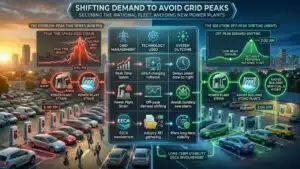
If every single commuter came home at six in the evening and instantly plugged their car in, the local power lines would probably melt down and crash. To totally prevent this disaster, authorities heavily push smart two-way charging technology and off-peak demand shifting. The Energy Efficiency and Conservation Authority actively gathered detailed information from the industry to figure out the absolute best way to manage these massive grid spikes.
Smart systems essentially communicate with the local power lines and purposely delay the main power draw to the middle of the night when nobody is awake and demand heavily drops. This clever method securely powers the entire national fleet without forcing the government to waste billions of dollars building dozens of brand new coal or hydro plants.
| Grid Management | Technology Used | System Outcome |
| Peak Time Spikes | Smart charging software | Delays power draw to night |
| Power Plant Strain | Off-peak demand shifting | Avoids building new plants |
| EECA Involvement | Industry RFI gathering | Plans long-term stability |
11: Preparing for Heavy Electric Vehicles
Basic passenger cars easily grab most of the daily news headlines, but cleaning up the massive transport sector requires electrifying heavy freight lines, commercial trucks, and large city buses. These massive industrial machines need highly specialized hardware because their huge batteries draw crazy amounts of electricity at once. Their sheer physical size also means they simply cannot squeeze into a standard supermarket parking spot without blocking traffic.
Network planners currently map out dedicated industrial-scale hubs located right near major freight routes, busy seaports, and massive distribution warehouses. This forward-thinking strategy ensures the vital logistics industry can finally drop dirty diesel fuel without slowing down the critical national supply chain or annoying regular car drivers.
| Transport Sector | Infrastructure Need | Strategic Placement |
| Heavy Freight Trucks | Massive megawatt chargers | Placed on major haul routes |
| Commercial Buses | High capacity depot plugs | Built inside transit yards |
| Supply Chain Flow | Drive-through massive bays | Located near shipping ports |
12: Building a Resilient Network with 29 Lines Companies
People often forget that a single massive company does not control the entire national electricity grid in Aotearoa. Instead, 29 totally different local lines companies completely manage the regional power distribution from town to town. Coordinating a smooth, flawless rollout across all these different regional groups presents a massive logistical nightmare for builders.
To solve this, the government works directly with energy authorities to standardize exactly how stations connect to the local supply grid regardless of the region. This unprecedented teamwork ensures that local grid capacity gets thoroughly checked by the experts, completely preventing annoying power outages while simultaneously driving down the terribly high costs of hooking up new hardware.
| Infrastructure Hurdle | Coordination Effort | Final Result |
| 29 distinct companies | National standardized rules | Removes local confusion |
| Connection costs | Streamlined hookup process | Lowers builder expenses |
| Grid overloading | Local capacity checking | Prevents town blackouts |
13: Focusing on an Equitable Transition for All New Zealanders
Perhaps the most impressive part of the entire national strategy focuses entirely on maintaining deep social fairness across all tax brackets. The clean energy shift absolutely cannot leave lower-income families stranded simply because they cannot afford a private driveway. Many wealthy early adopters own nice private garages where they plug in easily, but a huge portion of the working population heavily rents or lives in cramped apartments without secure off-street parking.
The public strategy specifically targets these dense neighborhoods by actively planning affordable on-street power solutions and shared community hubs. The ultimate government vision strictly promises that secure access stays open to absolutely everyone, regardless of where they live or how much money they earn.
| Demographic Group | Housing Situation | Infrastructure Plan |
| Early Adopters | Own private home garages | Private overnight wall boxes |
| Apartment Renters | No off-street parking access | Shared community charging hubs |
| Low Income Zones | Street parking dependent | Curbside public local chargers |
Final Thoughts
New Zealand officially takes massive, calculated leaps to secure its clean transport future for generations to come. By completely tearing down outdated local rules, using incredibly smart data to eliminate range anxiety, and backing private projects with serious zero-interest funding, the country proves that an elite New Zealand EV charging network remains entirely possible.
Hitting that 10,000 unit mark by 2030 requires serious daily effort, but local lines companies, massive retail partners, and forward-thinking technology make the roadmap perfectly clear. The strong focus on smart grid integration and fair neighborhood access ensures absolutely every driver can confidently join the clean energy transition without feeling left out.
Frequently Asked Questions (FAQs) About New Zealand EV Charging Network
How many public EV chargers does New Zealand currently have?
Before the recent massive funding boosts and red tape removals, the country sat with roughly 1,800 active public charging points. However, with the new co-investment strategies and zero-interest loans actively pushing things forward, the network quickly scales up by adding over 2,500 new units, heading fast toward long-term national goals.
What is the target for public chargers in New Zealand by 2030?
The government holds a firm and highly ambitious target to establish a massive network of 10,000 public EV charging points across the country by the year 2030. This calculated target aims to securely provide approximately one public plug for every forty clean cars driving on the road.
Are there enough charging stations in the South Island?
Extensive data modeling proves that while the North Island requires more sheer volume due to heavy urban traffic, the South Island receives heavily targeted funding to meet peak holiday demand. Planners specifically target long stretches of South Island state highways with DC fast chargers to ensure road-trippers and deep rural locals have highly consistent access.
How long does it take to charge an EV at a public rapid charger?
Charging time heavily depends entirely on the size of the vehicle battery and the raw power output of the station. However, modern hyper-rapid direct current chargers typically push a standard battery to eighty percent capacity in roughly fifteen to twenty minutes, getting you right back on the highway.
Can an electric vehicle power a house in New Zealand?
Yes, smart two-way technology makes this completely possible today. The Energy Efficiency and Conservation Authority actively investigates how vehicle-to-home systems work best. These highly smart units allow a car battery to supply electricity straight back to a house during peak hours, which severely lowers household power bills and totally supports the local grid.
Do you need a resource consent to install a public charger in NZ?
As of May 7, 2026, you generally do not need a complex and expensive resource consent for standard installations. The government heavily amended the National Environmental Standards for Electricity Transmission Activities ~NES-ETA~ to make typical hardware installations a completely permitted activity, removing the frustrating district plan hurdles that previously delayed construction.