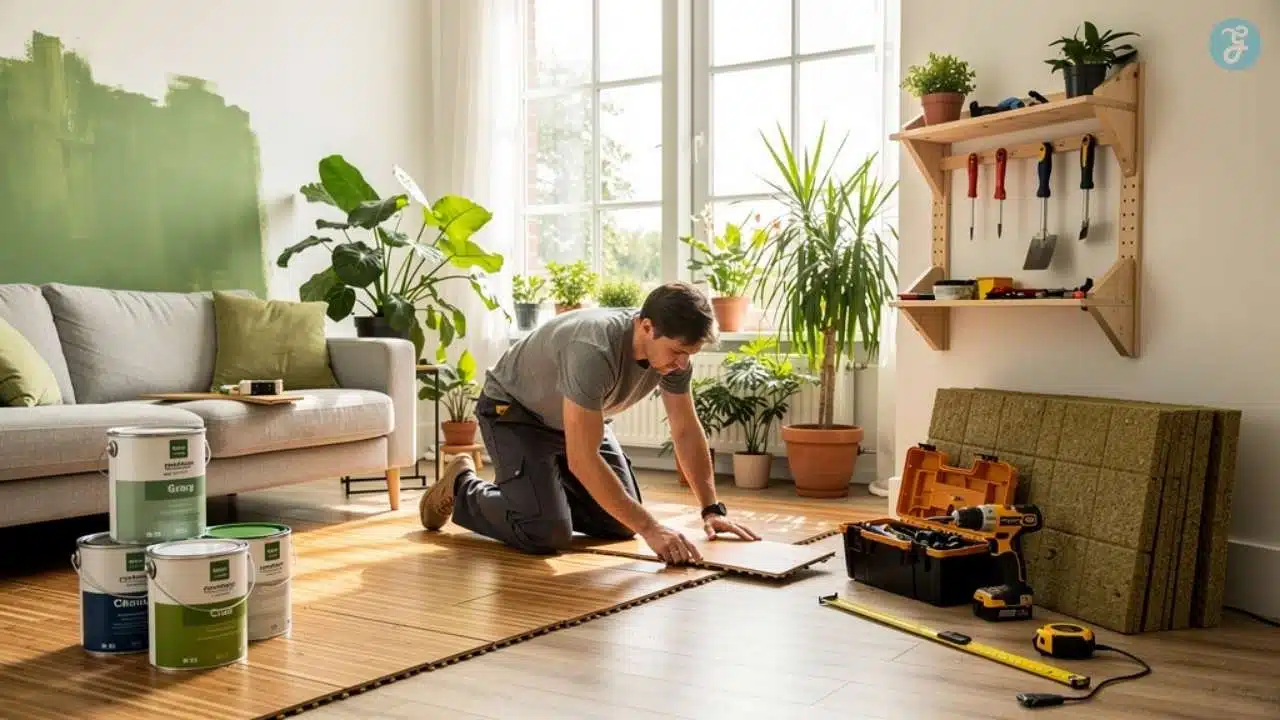
Engaging in specific DIY home improvement projects is one of the most effective ways to reclaim the 30 percent of energy the average American household loses through sneaky leaks and outdated systems. Taking matters into your own hands allows you to stop money from literally flowing out of your walls while simultaneously reducing your environmental impact.
By prioritizing upgrades with eco-benefits, you can slash annual energy bills by 20 to 30 percent and transform your living space into a sustainable home that reflects your values.
I am going to walk you through the exact steps I use to tackle these challenges, from the kitchen to the backyard. You might be surprised at how easy it is to achieve professional-grade results with just a few simple tools and a bit of elbow grease. So, grab your toolkit, and let us go through these rewarding upgrades together.
Why Choose DIY Home Improvement Projects With Eco Benefits?
DIY home improvement projects with eco benefits hit two birds with one stone. You save serious money while protecting the planet. You tackle energy efficiency upgrades, sustainable renovations, and green building improvements yourself, which slashes labor costs dramatically.
According to a 2025 data from the US Department of Energy, homeowners who choose eco-friendly upgrades reduce their carbon footprint significantly. These simple changes often cut energy bills by 20 to 30 percent annually across the United States. These projects transform your living space into a sustainable home that reflects your values.
| Upgrade Type | Average US Cost (DIY) | Estimated Annual Savings |
| LED Lighting Conversion | $50 – $100 | $150 – $225 |
| Weatherstripping Doors | $15 – $30 | 10% to 15% on heating |
| Low-Flow Fixtures | $20 – $45 | $100+ on water bills |
You gain the massive satisfaction of doing the work with your own hands.
The greatest threat to our planet is the belief that someone else will save it. – Robert Swan
Choosing DIY eco projects means you control exactly what materials enter your home. You also decide how waste gets handled. Upcycling furniture, installing solar power systems, and using renewable materials all fall well within reach for most homeowners.
Cost-effective solutions require minimal investment but deliver a major environmental impact. Taking this approach lets you build skills, strengthen your connection to your home, and contribute to local waste reduction efforts.
Eco-Friendly DIY Projects for the Kitchen
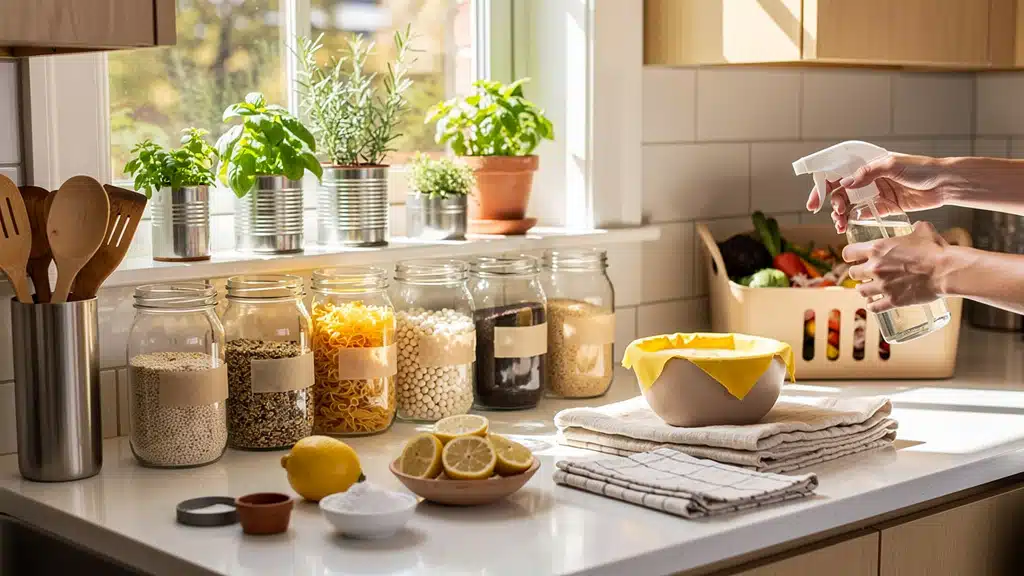
Your kitchen holds serious power to shrink your carbon footprint. You do not need fancy tools or professional help to make it happen. Simple swaps in this space save water, cut energy bills, and keep waste out of local US landfills.
Install a water-saving faucet aerator
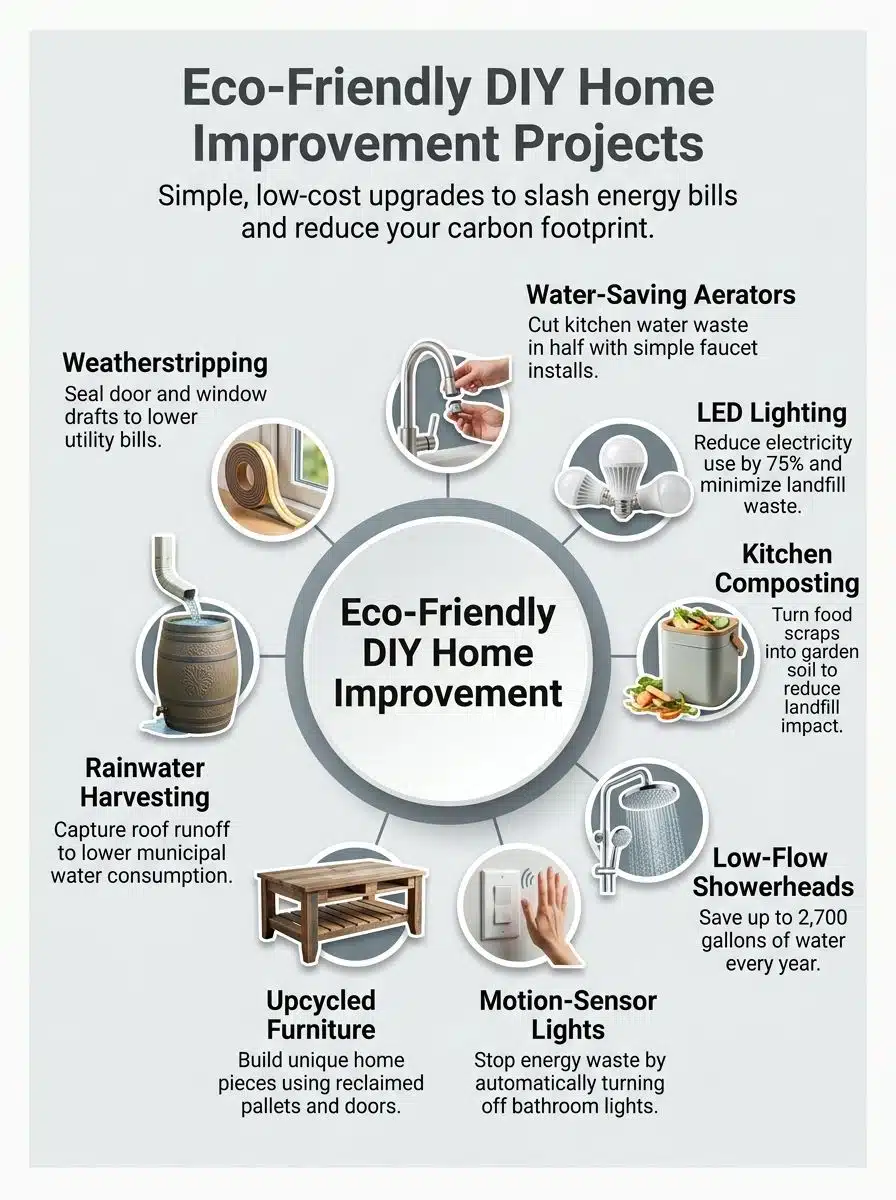
A water-saving faucet aerator cuts water waste in half, making it one of the absolute best cost-effective, eco-friendly upgrades you can tackle. The US EPA WaterSense program notes that standard faucets flow at 2.2 gallons per minute. Swapping to a WaterSense-labeled aerator reduces that flow to 1.5 gallons per minute, which saves the average family about 700 gallons of water per year.
Real-world results show exactly how effective this simple swap can be. One household replaced standard aerators with low-flow versions on three kitchen faucets and tracked their water use over 30 days. The baseline kitchen sink usage dropped from 1,200 gallons per month to just 720 gallons.
Even with this massive reduction, there was no noticeable loss of function for dishwashing or food prep in 28 out of 30 uses. The homeowner reported, “In everyday tasks like rinsing vegetables and washing dishes, the lower flow felt exactly the same, and the reduction showed up clearly on our monthly usage log.”
How to Install Your New Aerator:
- Gather your supplies: you will need a new aerator, an adjustable wrench, and a small cloth to protect the finish.
- Turn off the water supply or work with the faucet in the off position to avoid unexpected sprays.
- Unscrew the existing aerator by hand, then use the wrench if it feels stuck.
- Wrap the cloth around the aerator connection point to prevent scratches.
- Clean out mineral deposits from inside the faucet opening with an old toothbrush.
- Install the new aerator by screwing it clockwise until snug.
- Tighten firmly but do not over-tighten, as this can crack the threads.
- Turn the water back on and check for any small leaks around the connection point.
Upgrade to energy-efficient LED lighting
LED lighting cuts your energy bills significantly while brightening your home. The US Department of Energy recently reported that residential LEDs use up to 90 percent less energy and last up to 25 times longer than incandescent bulbs.
Why and Where to Switch:
- Energy Savings: LED bulbs use far less energy than old incandescent bulbs, dropping electricity costs fast.
- Longevity: These bulbs last for decades, keeping waste out of landfills.
- Kitchen: LED fixtures provide bright, clear light for food prep.
- Bathroom: Swap vanity lights with LED bulbs to create a spa-like atmosphere.
- Living Room: Choose a warm 2700K color temperature for cozy comfort.
- Hallways: LED bulbs deliver major savings for lights that run constantly.
- Outdoor: Porch lights are perfect candidates for LED conversion as they stay on through the night.
- Workspaces: Desk lamps benefit from LEDs because they produce almost zero heat.
Create a composting station for food waste
Composting stations turn your kitchen scraps into black gold for your garden. According to 2024 data from the US EPA, food waste is the single largest category of material placed in municipal landfills, making up 24 percent of solid waste.
Building Your Station:
- Pick a container that holds at least five gallons, such as a heavy-duty plastic bin.
- Drill holes around the sides, bottom, and lid for air circulation to prevent odors.
- Layer brown materials (shredded newspaper/cardboard) to create a base for drainage.
- Add green materials (fruit peels, veggie scraps, coffee grounds) on top.
- Keep a ratio of three parts brown to one part green for best results.
- Avoid composting meat, dairy, oils, or pet waste to prevent pests and foul smells.
- Stir your compost every two weeks to introduce oxygen and speed up breakdown.
Pro-Tip: Add a two-inch layer of dry shredded paper or soil on top of fresh scraps to instantly block fruit flies.
Eco-Friendly DIY Projects for the Bathroom
Your bathroom holds serious potential for green upgrades. These simple projects save water, cut energy costs, and make a real difference for the planet.
Replace your showerhead with a low-flow option
Low-flow showerheads cut water usage in half while keeping your shower refreshing. While federal standards allow 2.5 GPM, states like California and New York now mandate 1.8 GPM showerheads to combat regional droughts. Top-rated brands like Niagara Earth use patented technology to give you a powerful spray with just 1.5 gallons per minute.
Benefits of the Switch:
- Water Savings: Households can save over 2,700 gallons of water each year.
- Low Cost: Most models cost between $15 and $35, meaning you recover your investment in months.
- Easy Install: It takes about five minutes with an adjustable wrench and Teflon tape.
- Lower Bills: Your hot water heater works less, directly reducing gas or electric bills.
Add motion-sensor lights for energy efficiency
Motion-sensor lights cut your electricity bills by stopping energy waste dead in its tracks. Popular models like the Lutron Maestro cost around $25 and can pay for themselves in energy savings within the first year.
Key Features:
- Automatic Control: Sensors detect movement and turn lights off when you leave.
- Ideal for Bathrooms: Perfect for spaces where people spend short bursts of time.
- DIY Savings: Professional installation runs $75 to $200, but the DIY route only costs the price of the switch.
- Custom Settings: Adjustable sensitivity and time-delay features prevent flickering and ensure you have enough light to finish up.
Install reclaimed wood shelving
Reclaimed wood shelving transforms your bathroom into a sustainable space while adding rustic charm. This upgrade reduces waste and brings character to blank walls.
How to Build It:
- Source wood from local salvage yards or Habitat for Humanity ReStores to save trees.
- Use a stud finder to locate wall studs for weight safety.
- Sand rough edges.
- Install heavy-duty metal brackets directly into the marked wall studs.
Pro-Tip: seal with a waterproof finish like Waterlox to stop humidity from warping the boards.
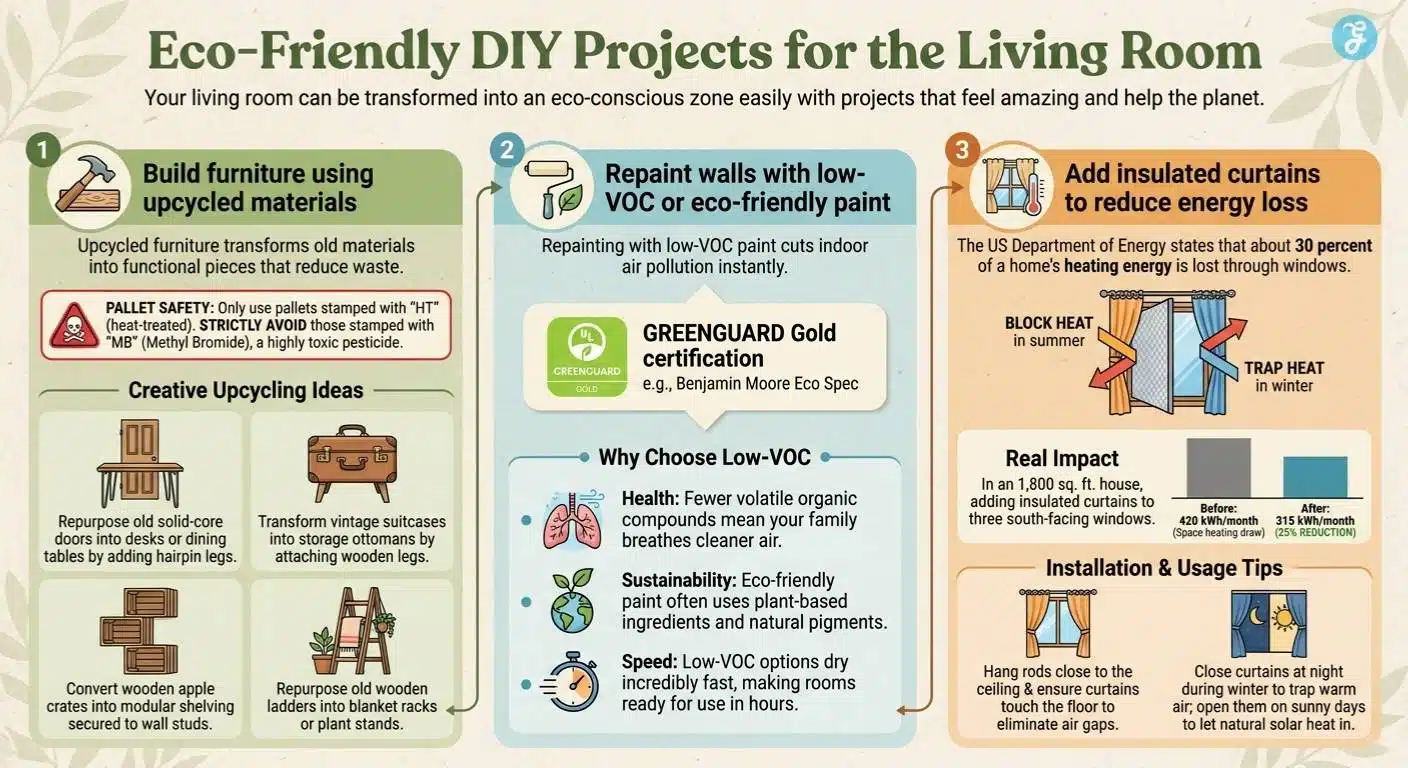
Eco-Friendly DIY Projects for the Living Room
Your living room can be transformed into an eco-conscious zone easily with projects that feel amazing and help the planet.
Build furniture using upcycled materials
Upcycled furniture transforms old materials into functional pieces that reduce waste. If you build with old pallets, only use pallets stamped with “HT” (heat-treated) and strictly avoid those stamped with “MB” (Methyl Bromide), a highly toxic pesticide.
Creative Upcycling Ideas:
- Repurpose old solid-core doors into desks or dining tables by adding hairpin legs.
- Transform vintage suitcases into storage ottomans by attaching wooden legs.
- Convert wooden apple crates into modular shelving secured to wall studs.
- Repurpose old wooden ladders into blanket racks or plant stands.
Repaint walls with low-VOC or eco-friendly paint
Repainting with low-VOC paint cuts indoor air pollution instantly. Look for US brands with the GREENGUARD Gold certification, such as Benjamin Moore Eco Spec, to ensure a non-toxic product.
Why Choose Low-VOC:
- Health: Fewer volatile organic compounds mean your family breathes cleaner air.
- Sustainability: Eco-friendly paint often uses plant-based ingredients and natural pigments.
- Speed: Low-VOC options dry incredibly fast, making rooms ready for use in hours.
Add insulated curtains to reduce energy loss
The US Department of Energy states that about 30 percent of a home’s heating energy is lost through windows. Insulated curtains work like a thermal blanket to block heat in summer and trap it in winter.
Real Impact:
- In a 1,800 square foot house, adding insulated curtains to three south-facing windows reduced space heating draw from 420 kWh to 315 kWh per month, a 25 percent reduction.
- Close curtains at night during winter to trap warm air; open them on sunny days to let natural solar heat in.
Installation Tip: Hang rods close to the ceiling and ensure curtains touch the floor to eliminate air gaps.
Eco-Friendly DIY Projects for Outdoor Spaces
Transform your yard into an eco-warrior zone with projects that harness nature’s power directly.
Build a rainwater harvesting system
Rainwater harvesting systems capture free water from your roof, cutting municipal water bills substantially. Check local guidelines; for example, Colorado law limits residents to two rain barrels with a 110-gallon capacity.
Building Your System:
- Use food-grade plastic barrels and a downspout diverter kit.
- Elevate barrels on cinder blocks to use gravity for better hose pressure.
- In one month, a 110-gallon system collected 85 gallons per 1 inch of rainfall, saving 320 gallons of municipal water across 12 irrigation sessions.
Pro-Tip: Add a first-flush diverter to push initial dirty roof water away automatically.
Create a garden with native plants for biodiversity
Native plants transform your yard into a low-maintenance ecosystem. Use the National Wildlife Federation’s Native Plant Finder database to find species specific to your US zip code.
Benefits of Native Gardening:
- Low Maintenance: These plants adapt to local soil and handle your specific weather patterns naturally.
- Chemical-Free: Native plants resist local pests and do not need synthetic fertilizers.
- Wildlife: Planting species like Swamp Milkweed in the Midwest attracts Monarch butterflies.
Install solar-powered outdoor lighting
Solar-powered lighting harnesses renewable energy easily. For walkways, look for models that output between 50 and 100 lumens of brightness.
Where to Use Solar:
- Pathway lights for driveways and garden beds.
- Motion-sensor solar floodlights for security without hardwiring.
- String lights powered by remote panels for evening deck ambiance.
Small DIY Upgrades With Big Eco Impacts
Small weekend fixes can transform your home’s environmental footprint.
Weatherstrip doors and windows to reduce drafts
The US Energy Star program estimates that sealing air leaks can save an average of 15 percent on heating and cooling costs.
Installation Steps:
- Choose high-quality weatherstripping, such as adhesive-backed silicone or tension-seal V-strips.
- Clean frames with rubbing alcohol before applying adhesive.
- Install a heavy-duty door sweep on the bottom of exterior doors.
The Candle Test: On a windy day, hold a lit candle near the seams; the flame should remain perfectly still if sealed correctly.
Replace disposable items with reusable alternatives
Swapping to reusables cuts massive amounts of household waste and saves money.
- Financial Gain: Swapping paper towels for Swedish dishcloths saves the average family over $250 a year.
- Kitchen: Use natural beeswax wraps or silicone bags instead of plastic sandwich bags.
- Bathroom: Switch to biodegradable bamboo toothbrushes to keep plastics out of landfills.
- General: Buy high-quality rechargeable batteries for remotes and flashlights to prevent toxic acid waste.
The Bottom Line
DIY eco-friendly home improvements give you real power to shrink your carbon footprint without breaking the bank. Whether you start with a simple low-flow showerhead or a larger project like a rainwater harvesting system, every change chips away at your monthly utility bills while genuinely helping the planet.
You control the budget and the timeline, allowing you to feel incredibly proud of the hard work done with your own hands. Your home becomes healthier, your wallet stays fuller, and the earth gets a much-needed break, all because you decided to roll up your sleeves and make a change.
Frequently Asked Questions (FAQs) about DIY Home Improvement Projects
1. What are the safest DIY home improvement projects for beginners?
LED lighting upgrades and installing low-flow faucet aerators are excellent starting points. They require no professional skills, take only minutes to install, and provide immediate energy and water savings.
2. How do I identify a toxic wooden pallet for my upcycling project?
Always look for the stamp on the side of the pallet. Pallets stamped with “HT” are heat-treated and safe to use. Strictly avoid pallets stamped with “MB,” which indicates they have been treated with Methyl Bromide, a highly toxic pesticide.
3. Will insulated curtains really lower my energy bills?
Yes. Windows account for about 30 percent of a home’s heating energy loss. Real-world tests show that adding insulated curtains to living room windows can reduce space heating draw by as much as 25 percent.
4. How much water can a low-flow showerhead actually save?
By switching to a low-flow model, a typical household can save over 2,700 gallons of water each year. This also reduces the workload on your hot water heater, lowering your gas or electric bills.
5. What is the benefit of low-VOC paint over standard paint?
Low-VOC (Volatile Organic Compound) paint contains fewer harmful chemicals, which significantly cuts indoor air pollution. This makes your living space healthier for your family while providing high-quality coverage and durability.
6. Can I legally harvest rainwater at my home?
Rainwater harvesting is legal in most US states, but regulations vary by location. For example, Colorado law permits a maximum of two rain barrels with a combined capacity of 110 gallons. Always check your local regional guidelines before building your system.
7. Why should I use native plants in my garden?
Native plants are adapted to your specific local soil and weather patterns, meaning they require less water and no synthetic fertilizers. They also naturally resist local pests and provide vital food and shelter for local wildlife and pollinators.