In the high-stakes world of global commerce in 2026, where Environmental, Social, and Governance (ESG) criteria often dictate investment flows, a profound shift is occurring within the boardroom of Aotearoa (New Zealand). The traditional, profit-at-all-costs corporate model is no longer the sole operating system, as forward-thinking leaders realize that true sustainability and community engagement require a deeper, more authentic connection to place. There is an increasing, necessary move to understand and meaningfully weave Māori Cultural Values into the fabric of NZ corporate culture.
This isn’t about mere compliance or a fancy logo redesign; it’s about a foundational rethinking of how we do business in a bicultural nation, moving past “tick-box” exercises toward genuine, holistic partnerships that benefit people and the environment as much as they do shareholders. Understanding the complexity of this shift requires a structured approach to distinguish meaningful engagement from superficial branding. We developed a strict set of filters to identify the most critical aspects of this ongoing integration.
Our Selection Criteria
-
Systemic Impact: The fact must describe changes to foundational corporate systems (governance, policy, values), not just one-off events or marketing.
-
Reciprocity: Evidence of genuine benefits for Māori (mana whenua, employees, or communities), not just value extraction by the corporate.
-
Long-term Commitment: The facts describe strategies with multi-year commitments rather than temporary trends or election-cycle reactions.
-
Authenticity: Evaluation of whether the integration is led by Māori experts (or through deep partnership) rather than corporate branding departments.
Understanding these selection criteria helps to frame who this evolution ultimately affects and who can best utilize this information.
Target Demography
This insight list is specifically curated for New Zealand executives, HR professionals, sustainability managers, and any employee looking to actively understand and participate in fostering a genuinely bicultural work environment.
With the context established and the demographic identified, let’s explore the specific ways these foundational values are fundamentally altering our business landscape.
12 Essential Ways Māori Cultural Values Are Redefining the Corporate Landscape in Aotearoa
The ongoing integration is touching every aspect of business, from recruitment and daily communication to high-level strategy and environmental management. Here is a detailed breakdown of the most significant and effective ways this is happening today.
The most visible and immediate entry point for many organizations is often through the daily language used by employees and leadership.
1. Integration of Te Reo Māori in Professional Communications
Once relegated primarily to simple greetings (kia ora), Te Reo Māori is becoming a daily staple in professional settings, utilized for key terminology, sign-offs, and even the creation of official job titles that more accurately reflect the holistic nature of roles. Leading corporations now provide robust language resources, including app-based learning, internal pronunciation workshops, and standardized bicultural signatures as part of their standard onboarding.
Best Feature/For: Promoting a genuine sense of bicultural identity and normalization of the language across all levels of the workforce.
Why We Chose It:
-
A powerful, accessible first step toward demonstrating respect for the indigenous culture.
-
Encourages employees to engage with the concepts behind the words, deepening understanding.
Things to consider: Organizations must be cautious that this use does not become superficial “performative signage” and is supported by real efforts to understand the language’s cultural load.
Beyond language, the foundational importance of human relationships is reshaping how teams are built and maintained.
2. Embracing Whanaungatanga (Relationship Building) in Onboarding
The foundational concept of whanaungatanga is radically changing standard HR practices by replacing rigid orientation sessions with immersive, connection-focused processes. New employees are often formally welcomed through a pōwhiri (formal welcome) or mihi whakatau (informal welcome), allowing them to share their own whakapapa (ancestry/connections) rather than just their professional resume. This approach prioritizes deep connection, mutual respect, and the building of a cohesive whānau (family) atmosphere before focusing purely on job metrics.
Best Feature/For: Drastically improving employee retention and creating a deep, genuine sense of belonging from day one.
Why We Chose It:
-
Humanizes the employee experience by validating their personal identity as much as their professional role.
-
Builds immense initial trust and psychologically safe environments within teams.
Things to consider: It requires a shift in mindset from HR teams who are focused purely on legal compliance, which can temporarily slow down rapid hiring cycles.
This focus on human care naturally extends to how an organization treats its clients and guests.
3. Operationalizing Manaakitanga (Hospitality/Care) in Client Services
The principle of manaakitanga, which means to extend care and hospitality, is moving from a general hospitality rule to a strategic differentiator in competitive markets. Forward-thinking NZ companies ensure that clients, guests, and visiting dignitaries are welcomed with genuine warmth, provided with food, and treated as honored manuhiri (guests). This cultural practice fosters deep emotional connections that often lead to more durable, high-trust business relationships that weather corporate challenges.
Best Feature/For: Elevating standard customer service into a high-trust, memorable cultural encounter.
Why We Chose It:
-
Sets a powerful and uniquely New Zealand tone for all professional interactions.
-
Directly counteracts the transactional and impersonal nature of many standard modern business transactions.
Things to consider: It requires dedicated resources, staff time, and a budget for hospitality that might be challenged by cost-focused CFOs.
The care for people must be balanced with an equal concern for the environment that sustains us all.
4. Kaitiakitanga (Guardianship) Driving Sustainability Strategy
The profound value of kaitiakitanga, the concept of guardianship and protection of the natural world, is replacing standard, compliance-driven CSR (Corporate Social Responsibility) policies with much deeper, long-term environmental ethics. Leading corporations in agriculture, tourism, and manufacturing are partnering with local iwi (tribes) and hapū (sub-tribes) to understand their specific, indigenous perspective on resource management. These partnerships ensure that the business operates not just to maximize profits but to preserve the mauri (life force) of the environment for future generations.
Best Feature/For: Securing genuine “social license to operate” and future-proofing the organization against climate-related resource volatility.
Why We Chose It:
-
A much more potent and emotionally resonant driver for sustainability than bureaucratic emissions targets.
-
Connects the company’s success to the long-term health of the specific land they operate on.
Things to consider: This integration requires deep, active partnerships and often involves making difficult, financially less optimal decisions in the short term.
Ensuring that this care is systemic requires changes at the very top of the organizational pyramid.
5. Adoption of Bicultural Governance Models
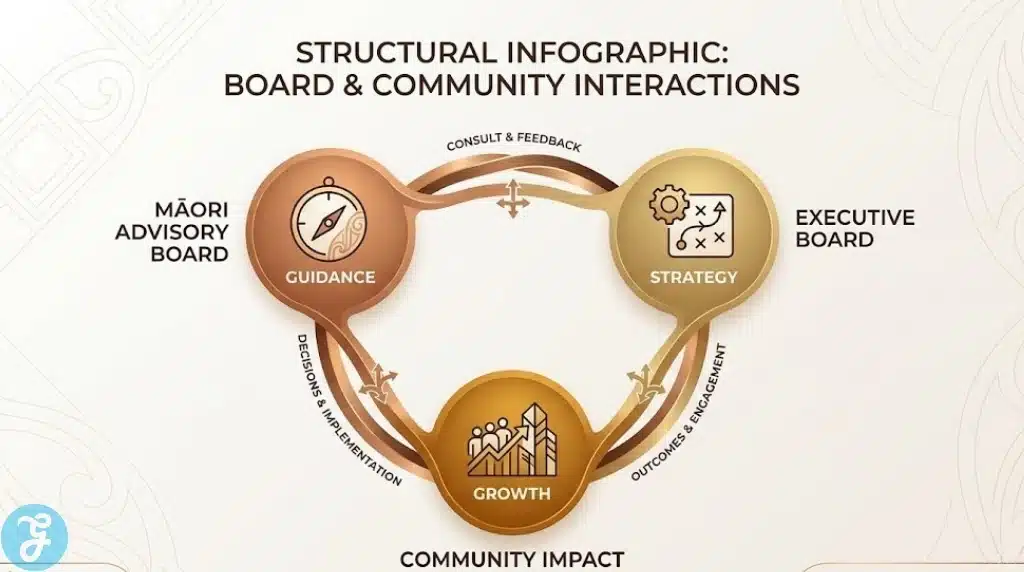
To ensure that the integration is genuine, several large corporations, particularly in the cooperative or state-owned sectors, are moving beyond simple Māori representation to formalized bicultural governance. This includes the creation of dedicated Māori advisory boards, the appointment of bicultural strategy advisors reporting directly to the CEO, or even the inclusion of a dedicated iwi-appointed director position. These structural changes ensure that Māori Cultural Values are actively considered in high-level strategic decisions, rather than being an afterthought.
Best Feature/For: Ensuring authentic, systemic integration that isn’t dependent on the personal views of a specific CEO or HR manager.
Why We Chose It:
-
The most powerful indicator that the corporation views biculturalism as a foundational pillar rather than a wellness program.
-
Directly improves the organization’s risk management regarding Māori relationships and the Treaty of Waitangi.
Things to consider: It requires deep humility from existing leadership to share decision-making power with bicultural experts.
Governance models dictate how an organization handles its procedures, particularly when bringing people together.
6. Fostering Tikanga (Correct Procedure) in Corporate Gatherings
The principles of tikanga, the correct ways of doing things that guide social interactions, are becoming standard protocol for internal and external corporate events. Many corporations now normalize the use of karakia (incantations/prayers) to open and close meetings, and ensure that appropriate koha (contributions/gifts) are offered during pōwhiri. Implementing tikanga ensures that cultural protocols are respected, reducing the anxiety of both Māori and non-Māori staff when interacting in bicultural settings.
Best Feature/For: Reducing cross-cultural anxiety and ensuring high-stakes meetings begin in a respectful, unifying manner.
Why We Chose It:
-
It creates a unifying cultural experience that centers all participants and aligns their shared intentions.
-
Directly honors the concept of poutama (stepped learning), respecting existing social hierarchy and process.
Things to consider: It must be facilitated by culturally competent leaders to ensure it feels authentic rather than a performative chore.
While procedure is vital, recognizing the inherent mana and self-determination of people is the key to deep empowerment.
7. Recognizing Rangatiratanga (Self-Determination/Sovereignty)
Leading corporations are recognizing that true bicultural integration involves understanding and respecting rangatiratanga, the value of self-determination and sovereignty as laid out in the Treaty of Waitangi. For business, this means actively supporting Māori economic empowerment through preferential procurement policies, creating leadership pathways specifically for Māori staff, and ensuring Māori have a strong voice in policies that affect them. This approach shifts the dynamic from paternalistic “assistance” to genuine, reciprocal partnership.
Best Feature/For: Moving the relationship from surface-level wellness to fundamental structural and economic equity.
Why We Chose It:
-
Crucial for building deep, durable relationships with Māori commercial entities and communities.
-
Fosters immense innovation by leveraging a completely different socio-political and economic perspective.
Things to consider: It can create a “two-track” system within an organization if not managed with transparent communication for the non-Māori workforce.
This recognition of empowerment allows us to shift our view from individuals to the strength found in the group.
8. Building Cultural Cohesion through Kotahitanga (Unity)
The value of kotahitanga, unity or solidarity, is replacing traditional “team building” with a deeper focus on collective responsibility and shared purpose. Corporations are fostering this by encouraging team members to learn about each other’s distinct heritage and using specific cultural frameworks for collective problem-solving. This approach ensures that individual strengths are harnessed for the greater good of the whānau (team), rather than fostering internal competition that can corrode trust.
Best Feature/For: Creating a resilient, high-trust team environment that is fiercely loyal to their shared mission.
Why We Chose It:
-
Provides a more potent cultural anchor for team cohesion than generic global team-building models.
-
Reduces toxicity and increases employee retention by prioritizing collective success.
Things to consider: Teams must have a shared base level of cultural understanding before these frameworks can be utilized effectively.
Focusing on the collective requires strong support structures to maintain balance and well-being.
9. Applying Hauora (Holistic Well-being) in HR Policy
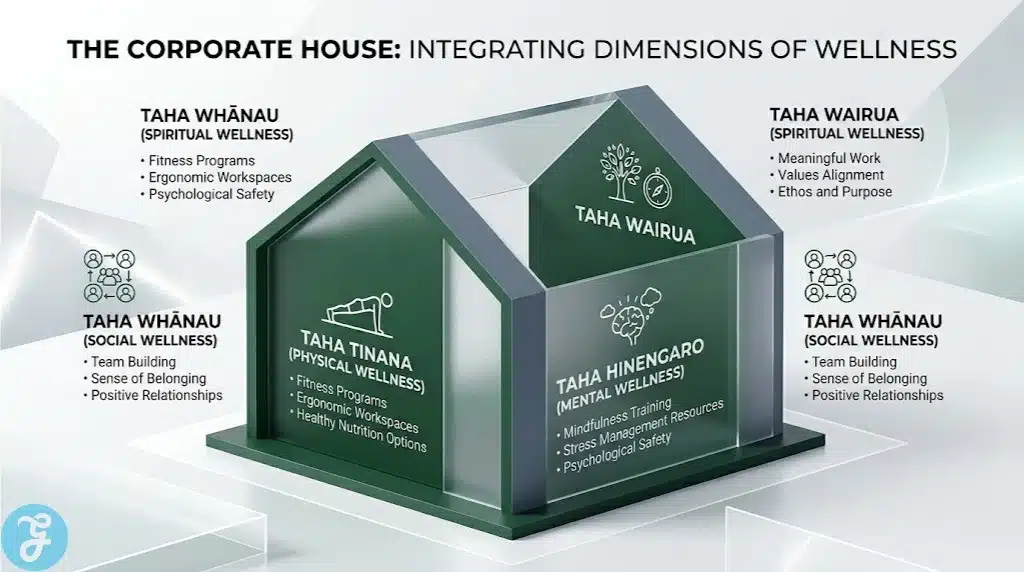
Rather than viewing employee health as just the absence of illness, HR policies are now being guided by hauora, the Māori concept of holistic well-being. This model, often visualized through Sir Mason Durie’s Te Whare Tapa Whā (the four walls of the house), integrates mental health, physical health, spiritual connection, and social/family health into corporate wellness programs. Policies might include cultural leave for pōwhiri or tangihanga (funerals), recognizing that an employee’s well-being is intrinsically linked to their family and spiritual connection to the land.
Best Feature/For: Developing a truly modern, empathetic HR system that drastically reduces burnout and improves overall employee health.
Why We Chose It:
-
A much more compassionate and effective model of corporate health than bureaucratic physical-checkup programs.
-
Directly acknowledges that an employee is a whole person with spiritual and family obligations.
Things to consider: It requires deep trust between the employee and manager to manage personalized wellness plans effectively.
The focus on holistic care means we must look at how wealth is managed and shared within the company.
10. Reimagining Compensation with Te Ōhanga Māori (The Māori Economy)
While profit remains essential, many corporations are integrating the values of Te Ōhanga Māori, or the Māori economy, which prioritizes social outcome as a primary metric of success. This might include implementing performance KPIs that measure environmental health, employee mentorship, or community impact alongside standard EBIT (Earnings Before Interest and Taxes) targets. By shifting the internal definition of “value,” the organization creates a more balanced, long-term business strategy that is less vulnerable to short-term market fluctuations.
Best Feature/For: Creating a multi-dimensional definition of corporate success that aligns profit with social good.
Why We Chose It:
-
Forces executives and managers to make decisions that prioritize long-term health over immediate gain.
-
Makes the organization significantly more attractive to modern, values-driven capital and talent.
Things to consider: It requires extensive training for financial analysts and executives to ensure they can accurately quantify these diverse metrics.
Focusing on these long-term gains requires ensuring that the technical skills are available to execute the strategy.
11. Future-proofing Talent with Targeted Upskilling and Mentorship
Leading NZ corporations are addressing the digital and equity gaps by using specific Māori Cultural Values to guide their training and upskilling programs. This includes “future-proofing” their Māori workforce with training in AI, data science, and technical certifications that are globally recognized. This approach ensures that as the company’s operations evolve, its bicultural representation remains intact at every technical level, preventing technological displacement.
Best Feature/For: Protecting the workforce from technological displacement and actively closing the equity gap.
Why We Chose It:
-
Ensures that technical teams reflect the general demographics of New Zealand, reducing bias in software.
-
Provides employees with portable, valuable skills that increase their lifetime earning potential.
Things to consider: These programs require a deep commitment from the CTO or CIO to ensure they are aligned with the actual technical roadmap of the company.
Finally, ensuring that these technical advances are guided by ethical data management is the ultimate security layer.
As companies integrate more AI and complex data analytics into their operations, forward-thinking organizations are recognizing the concept of Māori Data Sovereignty as a critical ESG risk and opportunity. This value argues that Māori data should be subject to Māori governance and control. Leading corporations are partnering with data sovereignty experts to ensure their AI models are not just “unbiased” but are actually guided by tikanga, actively protecting the intellectual property of indigenous knowledge.
Best Feature/For: Demonstrating high ethical integrity and risk management in the digital age.
Why We Chose It:
-
It places the corporation at the very forefront of digital ethics and AI risk management globally.
-
A potently unique selling point in a market increasingly concerned with digital transparency and trust.
Things to consider: Measuring the exact ROI of digital ethics can be difficult, requiring a leap of faith regarding brand value and long-term risk.
Reviewing these values reveals specific areas where an organization can achieve the highest initial impact on their corporate culture.
An Overview Of NZ Corporate Bicultural Integration Strategies
The ongoing transition requires a balanced portfolio of strategic actions, covering everything from immediate policy to high-level governance. The following data matrix illustrates the primary focus and complexity of these foundational approaches.
Overview Comparison Table
| Strategy | Primary Value/Focus | Implementation Ease | ROI Timeline | Impact on Culture |
| Te Reo Integration | Te Reo Māori / Language | Easy | Short-term | Foundational |
| Bicultural Onboarding | Whanaungatanga / Relations | Medium | Short-term | High |
| Client Hospitality | Manaakitanga / Care | Medium | Medium-term | Medium |
| ESG Partnerships | Kaitiakitanga / Guardianship | Difficult | Long-term | Transformative |
| Bicultural Governance | Biculturalism / Structure | Difficult | Long-term | Transformative |
| Tikanga Normalized | Tikanga / Process | Medium | Medium-term | Medium |
| Economic Equity | Rangatiratanga / Equity | Difficult | Long-term | Transformative |
| Cultural Cohesion | Kotahitanga / Unity | Easy | Short-term | High |
| Hauora HR Policy | Hauora / Wellness | Medium | Medium-term | Medium |
| Social Metrics | Ōhanga Māori / Outcomes | Difficult | Long-term | Transformative |
| Upskilling | Future-proofing / Talent | Medium | Medium-term | Medium |
| Data Sovereignty | Tikanga / Ethics | Difficult | Long-term | Transformative |
Reviewing this table allows us to pinpoint specific strategies for immediate activation.
Our Top 3 Picks and Why?
Focusing on these three core areas will yield the most potent initial results for any organization.
-
Bicultural Governance: Because unless biculturalism is embedded in the very decision-making architecture, it will always remain a temporary wellness trend.
-
ESG Kaitiakitanga Partnerships: Because this is the single best way to ensure the environmental strategy has long-term viability and genuine “social license.”
-
Kotahitanga Cultural Cohesion: Because the single best way to reduce cross-cultural anxiety is to create a fierce sense of shared unity among the diverse workforce.
Implementing these concepts effectively requires a personal, step-by-step approach to change management.
How to Choose the Right Strategy for Bicultural Integration by Yourself?
Taking ownership of your immediate team’s bicultural competency is possible, even if the broader company is still on its journey. You must align the cultural effort with the inherent dynamic of your specific department.
-
Assess the Baseline Awareness: Conduct anonymous pulse surveys to understand exactly where your team’s cross-cultural confidence actually sits.
-
Determine the Biggest Bottleneck: Look for a specific process, such as onboarding or client meetings, that is currently lacking in authenticity or causing anxiety.
-
Audit Your Own Leadership: Reflect deeply on how you personally react to bad news or unexpected failures, as this often indicates your own unconscious bicultural competence.
Before you attempt to launch any full-scale structural changes, running through this final checklist will ensure you have a secure foundation.
The Final Checklist
Follow these five steps to ensure your integration efforts are successful and durable.
-
Do you have formal, active partnerships with local mana whenua (or appropriate Māori experts)?
-
Is your communication strategy clear enough to avoid non-Māori staff developing resentment?
-
Have you audited your existing KPIs to measure the cultural goals rather than just financial ones?
-
Do you have a robust feedback mechanism that allows marginalized staff to voice concerns without fear?
-
Have you confirmed that your integration efforts are being led by culturally competent experts?
Moving beyond the immediate operational focus, it’s important to reflect on the broader implications of this massive cultural shift.
The Soul of Aotearoa’s Corporate Future
When we critically analyze the Māori Cultural Values being integrated across New Zealand’s corporate landscape, it becomes evident that we are observing something far more profound than a temporary HR trend. We are witnessing the very maturation of our national identity. For decades, the Anglo-corporate model operated with a form of blind exceptionalism, assuming its Western paradigms were universally optimal. This inertia is exactly what biculturalism must dismantle.
The future of global business depends on an organization’s capacity to see its workforce as complex human beings rather than mere operational assets. In Aotearoa, defining exactly what that looks like is not a passive event; it requires the ruthless dismantling of legacy hierarchies that often penalize bicultural thinking. The “uncomfortable” truth of 2026 is that companies still treating these initiatives as “side-projects” while maintaining punitive underlying corporate structures will inevitably face a major operational paradox. Authenticity cannot be focus-grouped or bolted on. Companies that merely pay lip service to unity and care, while refusing to genuinely share decision-making power or economic returns with Māori, will lose their top talent.
The only viable path forward is one of radical reciprocity, where the traditional, cold metrics of profit are irrevocably fused with the human, spiritual, and environmental priorities of Te Ao Māori (The Māori World). Navigating the nuances of bicultural corporate development naturally brings up several recurring questions from both employers and employees.
Frequently Asked Questions (FAQs) About Māori Cultural Values in NZ Corporate Culture
Addresses these common queries to help demystify the logistics of such a profound shift.
Is this integration relevant for global companies operating in NZ?
Yes. Global firms are finding that bicultural competency is increasingly mandatory to secure governmental contracts and maintain their domestic “social license to operate.”
How do you accurately measure the success of hauora in HR policy?
Success is typically measured through continuous employee net promoter scores (eNPS), reduced voluntary turnover among Māori staff, and tracking internal metrics like utilization of cultural leave.
Doesn’t giving Māori Data Sovereignty compromise general AI ethics?
No. Many digital ethics experts argue that integrating indigenous data sovereignty principles actually makes AI more robust, transparent, and trustworthy by providing a different ethical lens for auditing models.
Will my company lose efficiency by adopting Māori business concepts?
While the decision-making process might temporarily slow down as relationships are built, the execution phase often speeds up dramatically, as all parties have immense trust and shared intentions, reducing costly resistance later.
Do I need to ask mana whenua before using karakia in meetings?
Generally, yes. Best practice is to ask local iwi or culturally competent Māori advisors which karakia are appropriate for your specific purpose and to ensure that the staff member using it is doing so respectfully.