Have you ever wondered why is Pokémon still popular after so many years? Many childhood trends disappear with time. Toys get replaced. Games become outdated. TV shows lose their audience. But Pokémon has done something rare. It has stayed loved across generations. For many adults, Pokémon brings back memories of the late 1990s and early 2000s.
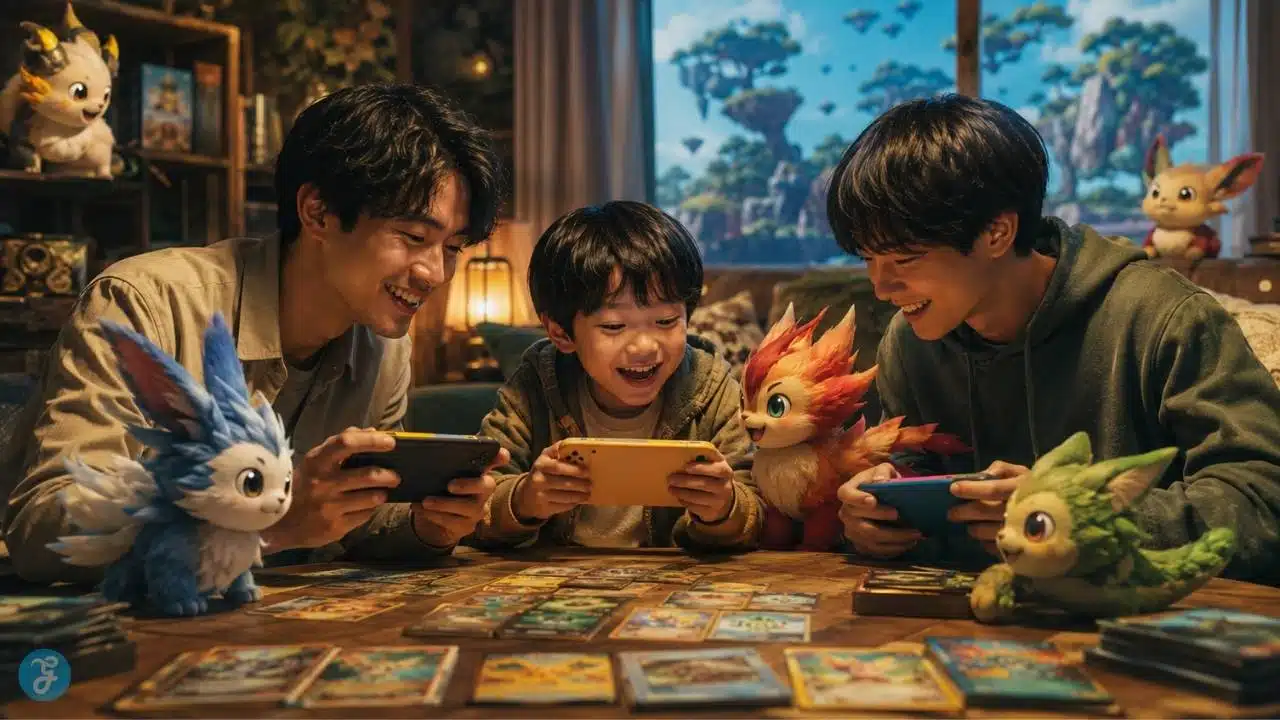
They remember trading cards at school, watching Ash and Pikachu on television, playing on a Game Boy, or arguing with friends about the best starter Pokémon. For younger fans, Pokémon feels completely new through Nintendo Switch games, mobile apps, digital card platforms, streaming shows, and online communities.
That is what makes Pokémon special. It is not only a childhood memory. It is still an active part of modern entertainment. Parents who once loved Pokémon now share it with their children. New fans discover it through games, anime, cards, and social media. Collectors chase rare cards. Competitive players study strategies. Casual fans simply enjoy the characters.
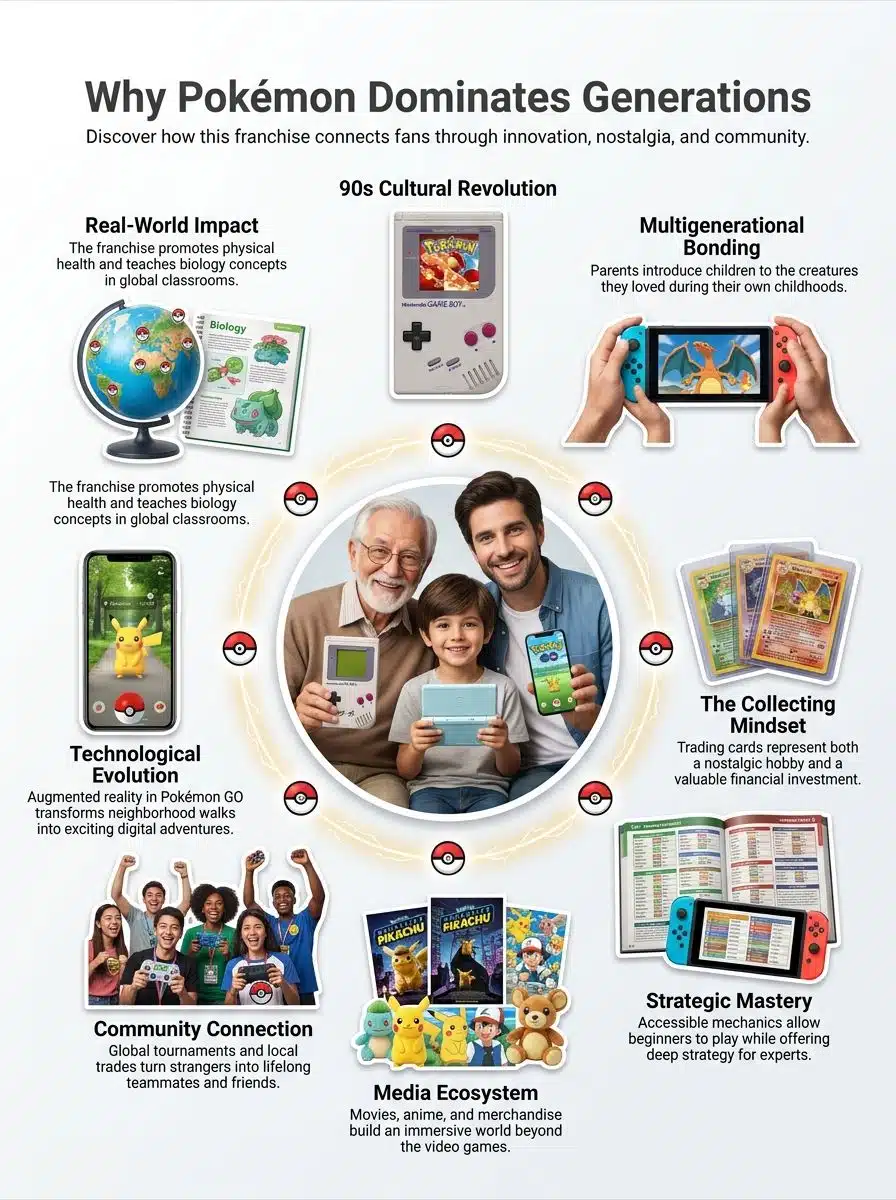
So, why is Pokémon still popular today? The answer comes from its mix of nostalgia, creativity, simple storytelling, smart reinvention, and emotional connection. The journey of understanding this phenomenon requires us to look at where this magic began and how it systematically built an empire that refuses to age.
The Origin of Pokémon
Pokémon began with a simple but powerful idea: players could catch creatures, train them, battle with them, trade them, and build their own journey. That idea was easy for children to understand, but it also had enough depth to keep older players interested.
The Simple Idea That Started Everything
The first Pokémon games launched in Japan in 1996 for the Game Boy. These early games introduced players to a world filled with unique creatures, each with different abilities, types, and personalities.
The original concept was inspired by the childhood experience of collecting insects and exploring nature. That sense of discovery became the foundation of Pokémon. Players were not just fighting monsters. They were exploring a world, finding companions, and building a team that felt personal.
From Game Boy to Global Entertainment
The game encouraged players to explore towns, forests, caves, routes, and gyms. Every new area brought the possibility of finding a new Pokémon. This made the world feel alive and full of surprises.
Soon after the games, Pokémon expanded into trading cards, anime, toys, movies, and merchandise. This was one of the smartest moves behind its early success. Children did not only play Pokémon on a handheld console. They watched it on television, collected cards, carried themed school supplies, and talked about it with friends.
Why the Original Formula Worked
From the beginning, Pokémon was more than a game. It was a world children could enter from many directions. The original formula worked because it gave players freedom, progress, and emotional attachment. You could choose your team. You could train your favorite Pokémon. You could trade with friends. You could feel like the journey belonged to you. That personal feeling became one of the strongest reasons behind Pokémon’s long-term popularity.
Important Pokémon Timeline
| Year | Event |
|---|---|
| 1996 | Pokémon Red and Green launched in Japan |
| 1998 | Pokémon arrived in North America |
| 1999 | Pokémon Trading Card Game debuted in North America and Europe |
| 2004 | First Pokémon TCG World Championships |
| 2013 | Pokémon X and Y became the first core games to launch worldwide at the same time |
| 2016 | Pokémon GO launched during the 20th anniversary era |
| 2019 | Detective Pikachu became the first live-action Pokémon movie |
| 2021 | Pokémon celebrated its 25th anniversary |
| 2026 | Pokémon celebrates its 30th anniversary |
Why Pokémon Became a Global Phenomenon
Pokémon became a global phenomenon because it offered something simple, emotional, and universal. The idea of going on an adventure, meeting loyal companions, and growing stronger through challenges speaks to people everywhere.
A Universal Story of Adventure
At its heart, Pokémon is a coming-of-age adventure. A young trainer leaves home, explores the world, meets new companions, faces challenges, and grows stronger. This story is easy to understand across cultures. Children love the fantasy of becoming a trainer. Adults understand the deeper appeal of growth, friendship, and discovery. Pokémon does not need a complicated story to connect with people. Its emotional language is simple and powerful.
The Power of Recognizable Characters
Another reason Pokémon spread so quickly was its strong character design. Pikachu, Charizard, Bulbasaur, Squirtle, Mewtwo, and many others became instantly recognizable. The designs were colorful, memorable, and easy to love. Some Pokémon looked cute. Some looked powerful. Some looked mysterious. Some looked funny. This variety helped every fan find a favorite.
Pikachu became especially important because it worked as the perfect mascot. It was cute enough for children, expressive enough for animation, and simple enough to become globally recognizable.
A Franchise Built Across Many Platforms
Pokémon also arrived at the right moment. Handheld gaming was becoming popular, and Pokémon gave players a reason to carry an adventure in their pocket. The anime gave the games a stronger emotional identity. The trading cards made Pokémon social. Merchandise made it visible in everyday life.
Children could watch Ash and Pikachu in the morning, play the game later, trade cards at school, and talk about favorite Pokémon with friends. That constant presence helped Pokémon become part of childhood culture.
How Games Keep the Franchise Fresh
One major answer to why is Pokémon still popular is that the games keep evolving. Pokémon does not depend only on old memories. It continues to release new games, new regions, new Pokémon, and new gameplay features.
The Core Gameplay Still Works
The basic formula remains familiar: explore, catch, train, battle, and become stronger. This loop is simple, but it is extremely satisfying. Players enjoy discovering new Pokémon. They enjoy building a team. They enjoy seeing their Pokémon grow. They enjoy winning battles after learning new strategies. This core gameplay still works because it gives players a constant sense of progress.
New Regions and New Pokémon Keep Fans Curious
Each generation adds something different. New worlds, new characters, new Pokémon types, new battle mechanics, and new visual styles keep the experience from feeling stale. A new Pokémon game always brings curiosity. Fans want to know what the new region looks like. They want to see the new starter Pokémon. They want to discover new evolutions, rivals, gym leaders, and legendary Pokémon. This cycle of discovery keeps the franchise exciting for both old and new players.
Simple for Beginners, Deep for Experts
The best part is that Pokémon remains easy for beginners. A child can start playing without knowing complicated rules. They can enjoy catching cute Pokémon and going through the story. At the same time, serious players can spend hours studying abilities, type matchups, stats, moves, and competitive strategies.
This balance is one of Pokémon’s greatest strengths. It welcomes casual players but still rewards deep knowledge. Few franchises manage to be this simple and this strategic at the same time.
The Role of Anime in Reaching Young Fans
The Pokémon anime has played a huge role in keeping the franchise alive for young audiences. Games introduce the world, but anime gives it heart.
Ash and Pikachu Made Pokémon Emotional
For many fans, the emotional bond with Pokémon began through Ash and Pikachu. Their journey was about more than battles. It was about friendship, teamwork, courage, patience, and never giving up. These themes are simple, but they connect strongly with children. Ash wanted to become better. Pikachu stayed loyal. Together, they showed that growth takes effort, trust, and persistence.
The Anime Makes Pokémon Feel Like Companions
The anime helped make Pokémon feel like real companions instead of just game characters. Pikachu was not only a mascot. It had personality, emotion, loyalty, and charm. That made viewers care. Children were not only watching battles. They were watching friendships. They saw Pokémon laugh, struggle, protect their trainers, and grow through experience. This emotional storytelling made the franchise much stronger.
New Storylines Help New Generations Connect
Over the years, the anime has introduced new regions, new characters, and new Pokémon. This helps each generation feel like it has its own version of the Pokémon world. Older fans may remember classic episodes, while younger fans connect with newer storylines. This continuous storytelling keeps Pokémon visible even among children who may not start with the games. A child might first discover Pokémon through a cartoon episode, then become interested in cards, games, toys, or apps. That is why the anime remains so important.
Why Pokémon Cards Still Matter
Pokémon cards are still a major reason the franchise remains popular. They make Pokémon physical, collectible, social, and exciting.
The Joy of Opening a Pack
For children, cards are fun because they are colorful and easy to share. Opening a pack feels exciting because you never know what you will get. Finding a rare card creates a real moment of joy. Even common cards can feel special if the artwork is beautiful or the Pokémon is a favorite. This simple excitement keeps fans coming back.
Cards Create Real Social Interaction
Trading cards with friends builds social connections. Children compare collections, trade duplicates, show off rare cards, and learn how to make fair exchanges. In a digital age, Pokémon cards give fans something they can hold, trade, organize, and display. That physical experience still matters. Cards also create face-to-face interaction. They give children and adults a reason to gather around a table, talk, and play together.
Collecting Appeals to Adults Too
For adults, Pokémon cards often carry nostalgia. Many older fans remember collecting cards as children. Some now return to the hobby because it reminds them of their childhood. Others enjoy collecting rare cards, protecting them, grading them, or building competitive decks.
The Pokémon Trading Card Game appeals to different types of fans. Some people play seriously. Some collect for artwork. Some chase rare cards. Some simply enjoy opening packs with family or friends. This flexibility keeps the card game strong.
How Parents Pass Pokémon to Their Children
One of the strongest reasons Pokémon stays popular is that parents pass it down to their children. Many adults who grew up with Pokémon now have families of their own.
Nostalgia Becomes a Family Experience
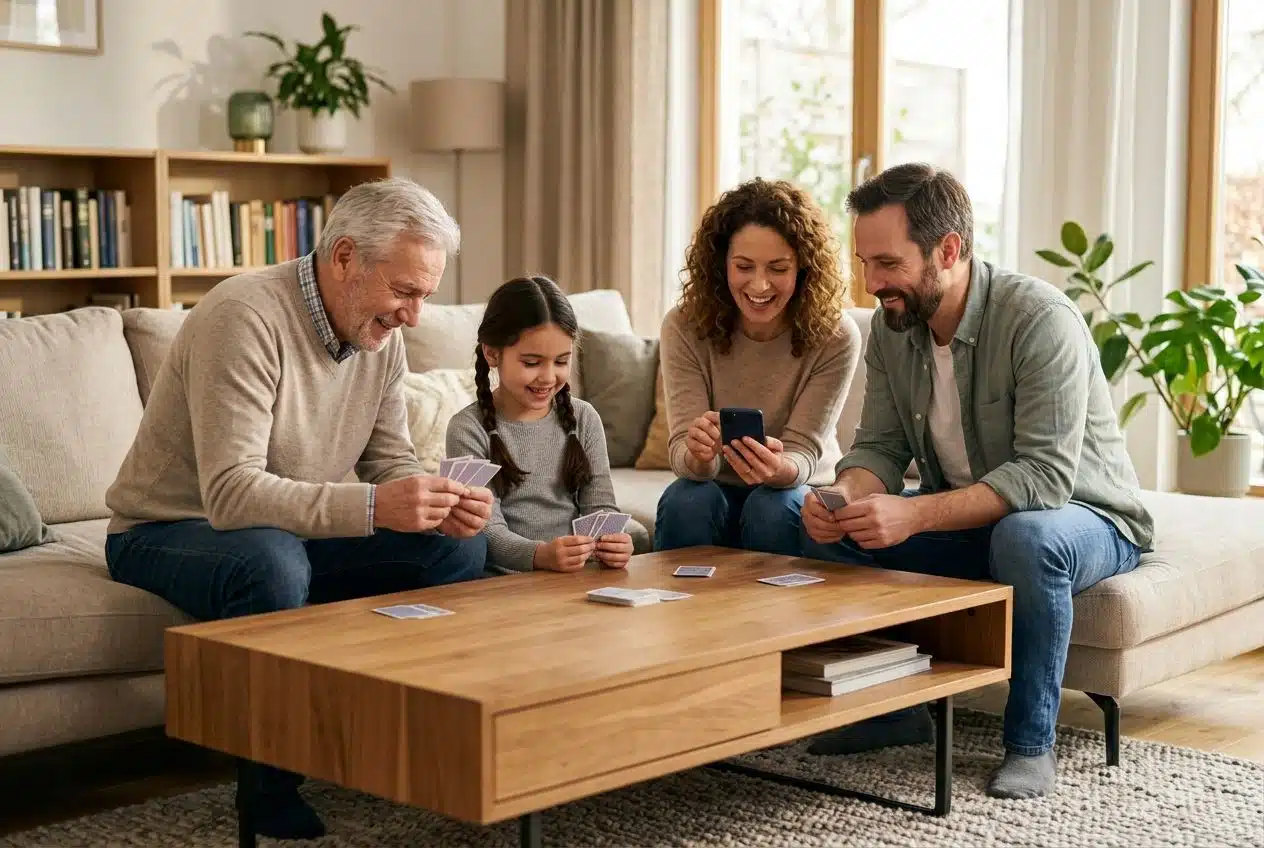
Parents remember the excitement of catching their first Pokémon, watching the anime, or collecting cards. When these adults introduce Pokémon to their children, it becomes more than entertainment. It becomes a shared memory. The parent feels nostalgia. The child feels discovery. Both enjoy the same world from different perspectives.
A parent can teach a child how to play the card game. A child can show a parent a new Pokémon from a recent game. They can open card packs together, watch episodes together, or play Nintendo Switch games side by side. These moments may seem small, but they create meaningful family bonding. This is a major reason why is Pokémon still popular across age groups. It gives families a simple way to bond through play, imagination, and shared excitement.
Pokémon Feels Safe and Family-Friendly
Pokémon also works well for family bonding because it is friendly, colorful, and easy to understand. Parents often feel comfortable introducing it to children because the main themes are adventure, teamwork, friendship, patience, and growth. That family-friendly tone helps Pokémon stay alive in homes around the world.
Pokémon’s Digital Future
Pokémon’s future looks strong because the franchise continues to adapt to digital habits. Younger fans are growing up in a world where entertainment moves across phones, consoles, apps, streaming platforms, and online communities. Pokémon fits naturally into that world.
Pokémon Moves Across Screens
The franchise already has console games, mobile apps, online battles, digital storage systems, digital card experiences, and global online communities. This gives fans many ways to stay connected. A fan can play a mainline game on Nintendo Switch, use a mobile app, watch animated content, collect cards, and follow Pokémon creators online. This cross-platform presence helps Pokémon stay visible.
Mobile Gaming Keeps Pokémon Accessible
Mobile gaming is especially important. Pokémon GO showed how powerful the franchise could be when it moved into real-world locations and smartphone culture. It encouraged people to walk, explore, meet others, and experience Pokémon outside the home. Mobile games also make Pokémon easier to access for casual fans. Not everyone owns a gaming console, but many people have smartphones.
Future Technology Can Expand the World
Future Pokémon experiences may become even more immersive. Digital cards, augmented reality, online tournaments, cloud-based collections, and interactive storytelling could all play a larger role. The franchise has the flexibility to grow with new technology. This matters because Pokémon cannot survive on nostalgia alone. It must continue meeting fans where they are. So far, it has done that very well.
Pokémon’s digital future is not about replacing the old magic. It is about giving fans new ways to experience the same sense of discovery.
Pokémon GO and Real-World Adventure
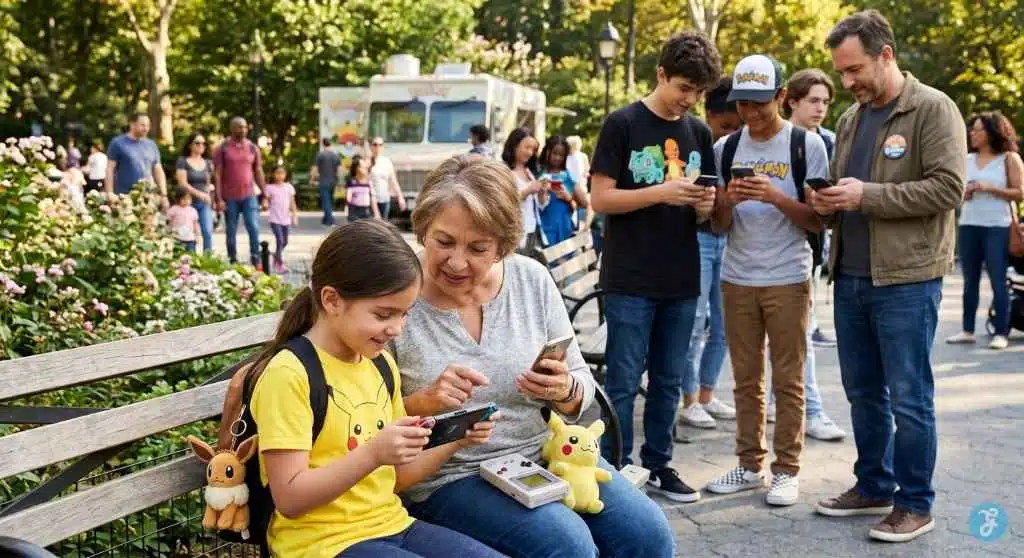
Pokémon GO changed the way many people experienced the franchise. Instead of playing only on a console or watching on a screen, players could walk through real places and find Pokémon around them.
Turning Real Places Into Game Spaces
Pokémon GO made the world feel more playful. Parks, streets, landmarks, and neighborhoods became part of the adventure. Players could go outside and feel like their everyday surroundings were filled with hidden discoveries. This made the experience exciting even for people who had not played Pokémon in years.
Bringing Back Casual and Older Fans
Pokémon GO helped many casual fans return to the franchise. People who had not touched a Pokémon game for a long time suddenly joined raids, walked through neighborhoods, and caught Pokémon on their phones. The game was simple to start, which made it less intimidating than traditional console games. This accessibility helped Pokémon reach a wider audience.
Encouraging Community and Movement
The game also encouraged community interaction. Players gathered for raids, events, and special catches. Strangers became teammates. Friends walked together. Families went outside to play. This real-world connection gave Pokémon another layer of relevance. It proved that the franchise could move beyond traditional gaming and still feel exciting.
Community Makes Pokémon More Than a Game
Pokémon has always been social. Trading, battling, collecting, and discussing favorite Pokémon are all part of the experience.
From Playground Trades to Online Communities
In the early days, children traded cards at school and battled through link cables. Today, fans trade online, join local tournaments, participate in global competitions, follow content creators, and share collections on social media. The tools have changed, but the social spirit remains the same. Pokémon gives people something to talk about, compare, and enjoy together.
Tournaments and Events Keep Fans Engaged
Local game stores, online groups, tournaments, and fan communities all help strengthen the franchise. Events give fans a reason to keep practicing, collecting, and improving. They also create real friendships among people who share the same interests. This makes Pokémon feel bigger than a game. It becomes a community experience.
Fans Keep the Franchise Alive Between Releases
Community keeps Pokémon active even when there is no new game or show. Fans continue discussing rare cards, battle strategies, favorite characters, theories, memories, and predictions. This ongoing conversation is powerful. A franchise stays popular when people keep talking about it. Pokémon has mastered that better than most entertainment brands.
Pokémon Understands the Power of Nostalgia
Nostalgia is a powerful part of Pokémon’s success. Older fans remember the first games, early anime episodes, classic cards, and original Pokémon.
Old Fans Feel Remembered
Classic Pokémon like Pikachu, Charizard, Eevee, and Mewtwo still appear in modern games, cards, and merchandise. These characters comfort older fans because they feel familiar. They remind adults of childhood, school days, old consoles, and early collections. This emotional pull keeps many older fans connected.
New Fans Still Get Fresh Experiences
Pokémon does not only focus on the past. Every new generation introduces fresh Pokémon, new regions, new characters, and new stories. This helps younger fans feel like Pokémon belongs to them, too. If Pokémon only focused on old fans, young players might lose interest. If it only focused on new fans, older players might feel disconnected. Instead, the franchise does both.
The Balance Between Old and New
Pokémon respects the past while moving forward. That balance is one reason why is Pokémon still popular after decades. It knows how to make old fans feel remembered and new fans feel welcomed. This is not easy to do, but Pokémon has done it consistently.
My Personal Connection With Pokémon
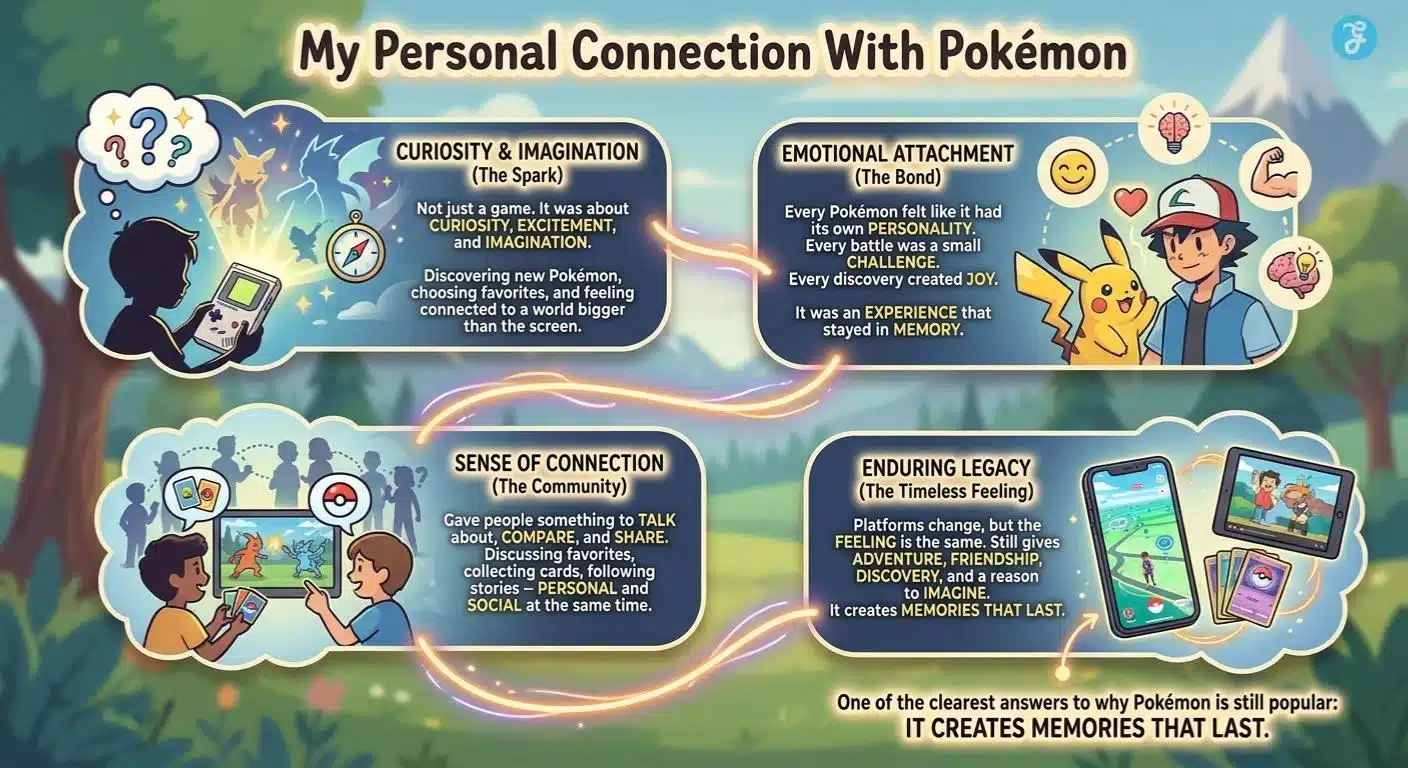
My connection with Pokémon feels personal because it was never just about playing a game. It was about curiosity, excitement, and imagination. I still remember how special it felt to discover new Pokémon, choose favorites, and feel connected to a world that seemed much bigger than the screen.
What made Pokémon different for me was the emotional attachment. Every Pokémon felt like it had its own personality. Every battle felt like a small challenge. Every new discovery created a moment of joy. It was not only entertainment. It was an experience that stayed in memory.
Pokémon also created a sense of connection. It gave people something to talk about, something to compare, and something to share. Whether it was discussing favorite Pokémon, collecting cards, or following the animated stories, the experience felt personal and social at the same time.
Today, when I see younger fans enjoying Pokémon through new games, cards, mobile apps, and shows, I understand why the franchise still works. The platforms have changed, but the feeling is the same. Pokémon still gives people adventure, friendship, discovery, and a reason to imagine. That is one of the clearest answers to why is Pokémon still popular. It creates memories that last.
Why Pokémon Works for Casual and Serious Fans
Pokémon works because it can be enjoyed at many levels. A young child can like a Pokémon simply because it looks cute. A casual player can enjoy the story and collect favorites. A serious player can study strategy and compete at a higher level.
Casual Fans Can Enjoy It Easily
The basic gameplay is easy. Players catch Pokémon, build a team, and battle. A casual fan does not need to understand every stat or strategy to enjoy the journey. They can choose their favorite Pokémon based on design, personality, or memories. That makes the franchise welcoming.
Serious Players Find Deep Strategy
Beneath the simple structure, there is a deep system of types, moves, abilities, stats, items, and strategies. Competitive players think carefully about team balance, matchups, speed, roles, and battle plans. This gives experienced fans a reason to keep learning.
Fans Can Choose Their Own Path
The franchise does not force everyone to play the same way. It allows fans to choose their own relationship with the world. Some fans collect. Some battle. Some watch. Some draw fan art. Some follow the anime. Some only play mobile games. All of them can still feel like part of the Pokémon community.
Pokémon’s Emotional Formula
Pokémon has lasted because its emotional formula is simple and powerful. It combines adventure, friendship, collecting, strategy, imagination, and growth.
The Main Elements Behind Its Appeal
| Element | Why It Works |
| Adventure | Players feel like they are exploring a larger world |
| Friendship | Pokémon feel like companions, not just tools |
| Collecting | Fans enjoy completing teams, cards, and Pokédex entries |
| Strategy | Battles reward learning and planning |
| Nostalgia | Older fans stay emotionally connected |
| Reinvention | New games and apps attract younger fans |
| Community | Trading and battling create social bonds |
| Family appeal | Parents and children can enjoy it together |
Why This Formula Lasts
This emotional formula gives Pokémon long-term strength. It does not depend on one trend or one platform. It offers many reasons to care. A fan can leave Pokémon for years and still return later. The world feels familiar, but there is always something new to discover.
More Than Just Entertainment
Pokémon is not only about winning battles. It is about choosing companions, building memories, sharing experiences, and feeling part of a larger world. That emotional depth helps explain why the franchise continues to matter.
Why Pokémon Still Feels Timeless
Pokémon still feels timeless because its core idea is easy to understand and emotionally strong. A player enters a world, meets unique creatures, forms bonds, faces challenges, and grows through the journey. The core feeling has not changed. Technology has changed, but the feeling has not. Whether someone plays on a Game Boy, Nintendo Switch, smartphone, or digital card platform, the emotional experience remains familiar.
Fans still enjoy discovery. They still enjoy collecting. They still enjoy choosing favorites. They still enjoy sharing the experience with others. Pokémon can change without losing their identity. This is why Pokémon can change without losing its identity. New games may look different. New Pokémon may be added. New apps may change how people play. But the heart of the franchise remains the same.
Pokémon gives people a world where curiosity is rewarded. It makes adventure feel friendly. It makes collecting feel meaningful. It makes imagination feel alive. A world that keeps growing with its fans. That timeless feeling is one of the biggest reasons the franchise continues to reach new generations. Pokémon does not ask fans to stay children forever. Instead, it grows with them. A child can enjoy the cute characters. A teenager can enjoy the strategy. An adult can enjoy nostalgia, collecting, or family bonding. That flexibility keeps Pokémon relevant.
Final Thoughts
So, why is Pokémon still popular? It is popular because it understands what people love: adventure, friendship, discovery, collecting, imagination, and connection. Pokémon has changed a lot since its early days, but its heart remains the same. Fans still want to explore new places, meet new creatures, build teams, trade with friends, and share the experience with others.
The franchise also succeeds because it connects generations. Parents remember their childhood. Children create their own memories. Collectors find value. Gamers find strategy. Casual fans find joy. Pokémon does not survive only because of nostalgia. It survives because it keeps evolving. It respects longtime fans while giving new fans fresh ways to enter the world.
That is why Pokémon continues to captivate new generations. It is not just a game, a card set, or an animated show. It is a shared world that keeps growing with its fans.
Frequently Asked Questions (FAQs) About Why is Pokémon still popular?
1. Why does Pokémon keep attracting new fans every year?
The brand expertly blends adventure, friendship, and discovery in a way that feels incredibly fresh to every new age group. Because the franchise spans video games, trading cards, mobile apps, and animated series, it offers multiple easy entry points for different interests. Kids easily see themselves in the heroic young trainers, while adults love revisiting their childhood memories, creating a perfect, self-sustaining loop of new and returning fans that drives billions in annual revenue.
2. How do the video games stay popular with entirely different age groups?
The games are specifically designed with a “low floor and high ceiling” philosophy. This means they are incredibly easy and forgiving for beginners to pick up and play, but they offer deep, complex mathematical strategy for veteran players who want a serious competitive challenge. New mechanics, like open-world exploration and real-time catching, ensure the gameplay always feels fully aligned with modern gaming trends.
3. What role do physical trading cards play in keeping the brand exciting?
The Trading Card Game turns digital collecting into a highly social, physical event. It actively encourages friends to swap cards at school or compete in local community tournaments. Because rare cards can be highly valuable and feature stunning, unique artwork, opening a new booster pack brings a tactile, hands-on excitement that modern digital-only games simply cannot replicate.
4. How has the animated series helped the franchise reach new generations?
The animated show acts as the emotional heart of the entire franchise, telling simple, universal stories about courage and teamwork using familiar, lovable characters. The series introduces younger viewers to the rules of the world in a friendly, accessible way. Recently, the launch of a brand new animated series introduced fresh heroes, specifically giving today’s kids characters of their very own to grow up with.
5. Can playing mobile AR games actually be good for your physical health?
Yes, there are highly documented health and social benefits associated with the brand’s AR mobile titles. These games actively encourage players to walk outside, significantly increasing their daily physical activity and step counts. Furthermore, the game’s designated community events encourage players to gather safely in local parks, helping users build real-world friendships, explore their neighborhoods, and combat social isolation.
6. What is Pokémon’s digital future?
Pokémon’s digital future may include more mobile apps, digital cards, online communities, augmented reality features, cloud systems, and immersive gaming experiences.