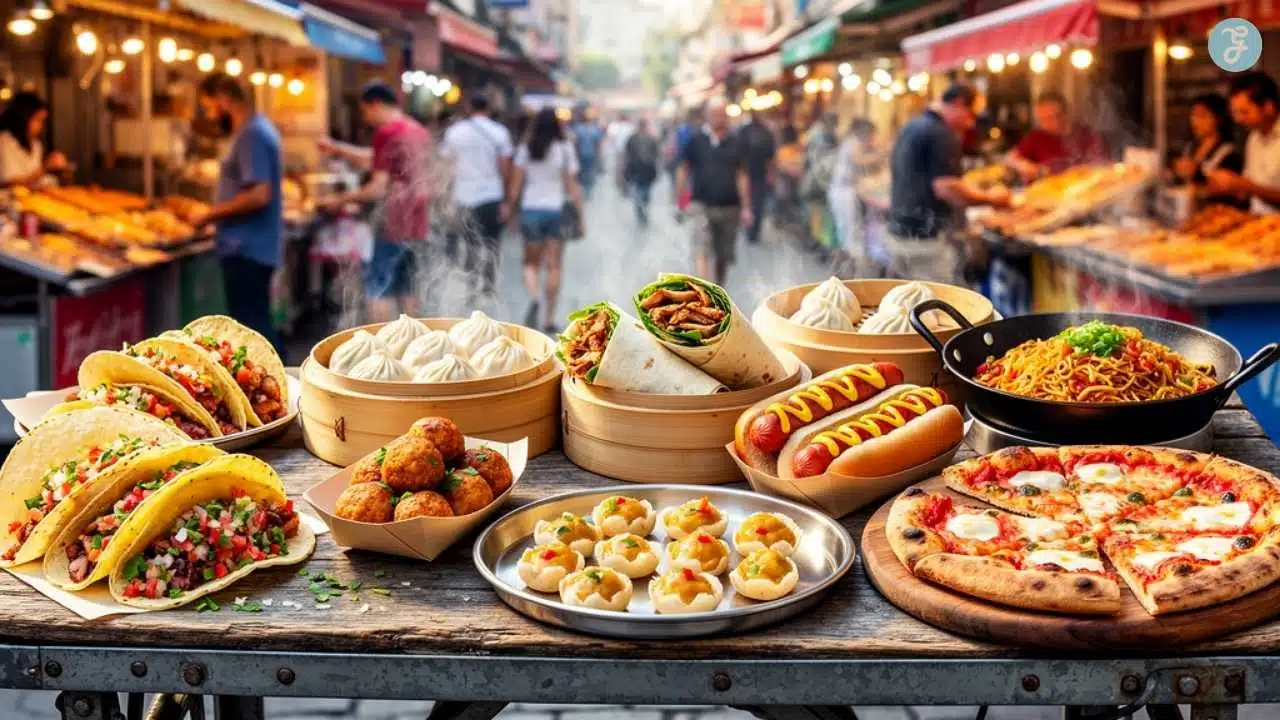
Have you ever followed the intoxicating smell of toasted spices down an unfamiliar alley, only to freeze because you have no idea what or how to order? Hunting down popular global street foods is the absolute best cheat code for skipping those overpriced tourist traps and eating exactly like a local.
Forget the stuffy restaurants with their predictable menus and stiff white tablecloths. The real culinary magic happens right on the pavement, where passionate vendors serve up fiery wok-tossed noodles, shatteringly crisp pastries, and sticky-sweet treats to over 2.5 billion people every single day. If you want to experience the vibrant, chaotic, and deeply delicious soul of a city, you have to hit the streets.
Grab a thick stack of napkins and bring a serious appetite, we are about to take a mouth-watering tour of the world’s most legendary food carts.
Why Street Food is a Global Phenomenon
Food carts, night markets, and mobile vendors are the beating heart of neighborhood dining across the world. They bypass formal dining rooms to connect us directly with a region’s history, heritage, and soul.
You will often see complete strangers becoming fast friends while sharing a steaming meal on a bustling corner. This style of eating perfectly blends rapid convenience with unfiltered authenticity. Here is exactly why these humble food carts continue to capture our hearts and stomachs:
- Affordable Exploration: You get complex, gourmet flavor profiles without the steep restaurant markups.
- Direct Community Support: Your money bypasses corporate chains and goes straight to hardworking families.
- Unmatched Freshness: Vendors cook your meal to order right before your eyes.
- The Showmanship: Watching a vendor stretch noodles, flip blazing woks, or carve roasted meats is dinner and a show rolled into one.
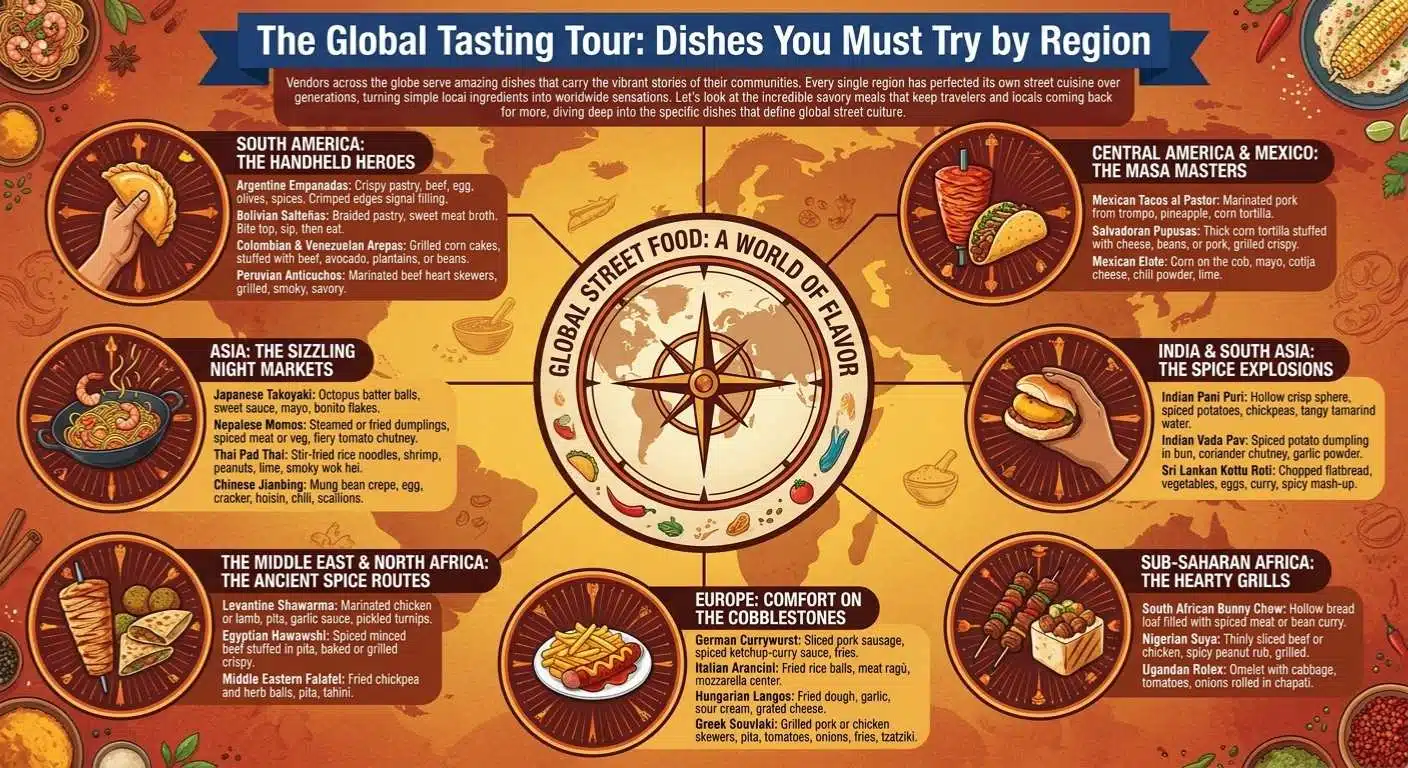
The Global Tasting Tour: Dishes You Must Try by Region
Vendors across the globe serve amazing dishes that carry the vibrant stories of their communities. Every single region has perfected its own street cuisine over generations, turning simple local ingredients into worldwide sensations. Let’s look at the incredible savory meals that keep travelers and locals coming back for more, diving deep into the specific dishes that define global street culture.
South America: The Handheld Heroes
South America serves up some of the most beloved, flavor-packed handheld meals on the planet. Walking through the colorful streets of this continent means you are never more than a few steps away from a steaming, perfectly portioned snack.
Argentine Empanadas
These are the ultimate walking snacks. A crispy, golden pastry shell is traditionally filled with savory ground beef, hard-boiled eggs, green olives, and warm spices. Each region crimps the dough differently to signal what is inside.
Bolivian Salteñas
Do not let the shape fool you; these are not standard empanadas. Salteñas are beautifully braided, baked pastries uniquely filled with a rich, piping-hot, and slightly sweet meat broth. The trick is to bite off the top corner and sip the savory soup before eating the pastry!
Colombian & Venezuelan Arepas
These thick, naturally gluten-free grilled corn cakes are a daily staple. Vendors slice them open like a pocket and generously stuff them with hearty fillings like shredded beef, ripe avocado, sweet plantains, or black beans.
Peruvian Anticuchos
Late at night in Lima, you will smell the smoke from street carts grilling anticuchos. These are tender, heavily marinated beef heart skewers grilled over an open flame, offering a deeply savory, smoky, and melt-in-your-mouth experience.
Central America & Mexico: The Masa Masters
The street food culture in Mexico and Central America revolves around ancient techniques of preparing corn (masa) and building complex, fiery salsas. The energy around these late-night stalls is absolutely electric.
Mexican Tacos al Pastor
The undisputed king of Mexican street food. Vendors expertly slice marinated pork deeply right off a spinning vertical spit (the trompo), catching the meat in a small corn tortilla and flicking a slice of roasted pineapple perfectly on top.
Salvadoran Pupusas
You can hear the rhythmic clapping of vendors shaping these by hand from blocks away. Pupusas are thick corn tortillas stuffed with gooey cheese, refried beans, or seasoned pork (chicharrón), cooked on a hot griddle until the cheese bubbles out and crisps up.
Mexican Elote
This is street corn taken to the absolute highest level. Vendors boil or roast sweet corn on the cob, slather it in creamy mayonnaise, and generously coat it in crumbly cotija cheese, chili powder, and a heavy squeeze of fresh lime.
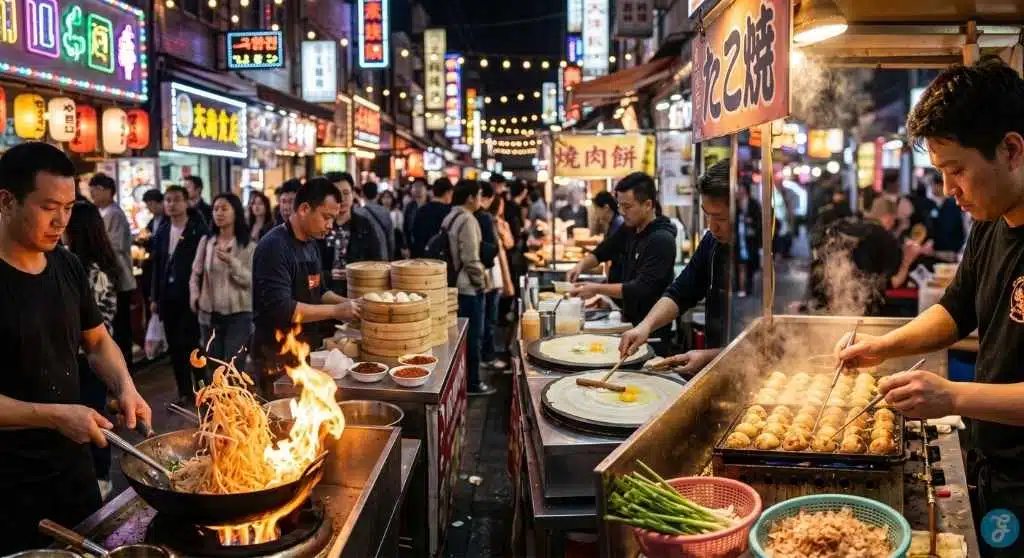
Asia: The Sizzling Night Markets
Asia offers a wildly chaotic, fragrant, and deeply flavorful night market culture that truly comes alive the second the sun goes down. Navigate the neon-lit stalls to find these iconic culinary staples.
Japanese Takoyaki
Walking through Osaka means you will encounter vendors using special cast-iron pans to rapidly flip these golden, crispy batter balls. They are filled with tender octopus and topped with sweet sauce, mayonnaise, and dancing bonito flakes that sway in the heat.
Nepalese Momos
These delightful little steamed or fried dumplings are packed with spiced meat or cabbage and onions. What makes them unforgettable is the fiery, garlic-heavy tomato chutney vendors spoon generously over the top.
Thai Pad Thai
Forget the takeout version; watching a skilled vendor create this in Bangkok is a fiery performance. They toss rice noodles, fresh shrimp, crushed peanuts, and lime in a roaring wok, achieving a smoky “wok hei” (breath of the wok) flavor that is impossible to replicate at home.
Chinese Jianbing
Often hailed as the ultimate street breakfast. Vendors spread a thin, crepe-like mung bean batter on a circular hotplate, crack an egg over it, and fold it around a crispy fried cracker, savory hoisin sauce, chili paste, and fresh scallions.
India & South Asia: The Spice Explosions
You simply cannot talk about global street food without exploring the vibrant, sensory-overload stalls of South Asia. The explosion of spices and textures found here requires a fun, adventurous spirit.
Indian Pani Puri
This is an interactive snacking sport! Vendors hand you hollow, shatteringly crisp spheres filled with spiced potatoes and chickpeas, rapidly dunked into a vat of tangy, minty, fiery tamarind water. You must pop the entire thing in your mouth at once for an incredible flavor explosion.
Indian Vada Pav
Often affectionately called the “Mumbai Burger,” this features a deeply spiced, deep-fried potato dumpling smashed inside a soft bread bun. It is heavily slathered with bright green coriander chutney and a dry, fiery red garlic powder.
Sri Lankan Kottu Roti
You will hear this dish being made before you see it. Vendors use heavy metal blades to rapidly chop flatbread, vegetables, eggs, and rich curry together on a screaming hot griddle, creating a spicy, comforting, and incredibly hearty mash-up.
The Middle East & North Africa: The Ancient Spice Routes
Street food in this region leans heavily on fresh herbs, ancient spice blends, and slow-roasted meats that have been marinating for days.
Levantine Shawarma
The ultimate late-night prize. Vendors stack heavily marinated cuts of chicken or lamb on a vertical spit, letting it slow-roast in its own juices all day. They shave off crispy ribbons into a warm pita, topping it with pungent garlic sauce (toum) and crunchy pickled turnips.
Egyptian Hawawshi
Imagine a deliciously spiced meat pie made for the streets. Minced beef mixed with onions, peppers, and warm spices is stuffed inside a traditional pita bread and baked or grilled until the bread becomes wonderfully crispy and soaked in savory juices.
Middle Eastern Falafel
Fresh chickpeas ground with bright green herbs like parsley and cilantro, formed into balls, and fried until perfectly crunchy. Served inside a fluffy pita with a heavy drizzle of creamy sesame tahini, it is a plant-based masterpiece.
Sub-Saharan Africa: The Hearty Grills
African street food is bold, incredibly filling, and heavily focused on communal eating and vibrant, spicy marinades.
South African Bunny Chow
Born in Durban, this uniquely brilliant dish consists of a hollowed-out half-loaf of fresh white bread filled to the absolute brim with a deeply spiced, savory meat or bean curry. You simply tear off pieces of the bread bowl to scoop up the rich sauce.
Nigerian Suya
A popular evening street food consisting of thinly sliced beef, ram, or chicken heavily coated in a complex, spicy peanut rub (yaji) and grilled perfectly over an open flame. It is smoky, spicy, and deeply nutty.
Ugandan Rolex
No, not the watch! This clever street food name comes from “rolled eggs.” Vendors cook an omelet loaded with cabbage, tomatoes, and onions, and then roll it up tightly inside a warm, flaky chapati flatbread. It is the ultimate grab-and-go breakfast.
Europe: Comfort on the Cobblestones
Europe brings rich, hearty, and deeply comforting flavors to the sidewalks, making them the perfect companions for warming up during a chilly evening stroll through historic city squares.
German Currywurst
The undisputed champion of Berlin street food. Vendors slice a hot pork sausage and drench it in a thick, spiced ketchup-curry sauce, typically serving it alongside a massive mountain of perfectly salted, hot fries.
Italian Arancini
Hungry locals in Sicily grab these massive, golden, deep-fried rice balls on the go. They are traditionally stuffed with a rich, slow-cooked meat ragù and a center of perfectly gooey mozzarella cheese that stretches with every bite.
Hungarian Langos
A decadent, pillowy fried dough that is practically the size of a dinner plate. Vendors rub it vigorously with raw garlic while it is still hot, then heavily smother it in tangy sour cream and a mountain of grated cheese.
Greek Souvlaki
Fast, fresh, and iconic. Tender, marinated chunks of pork or chicken are skewered, grilled to a charred perfection, and wrapped in a thick, warm pita with fresh tomatoes, red onions, hot chips (fries), and a cooling dollop of tzatziki sauce.
The Midnight Munchies: Late-Night Lifesavers
Sometimes the best street food is the kind you eat at 2:00 AM after a long night of dancing, working, or exploring. These dishes are specifically designed to soak up the night’s adventures.
Poutine [Canada]
The ultimate late-night comfort food. A mountain of crispy French fries topped with fresh, squeaky cheese curds and drowned in boiling hot, savory brown gravy. The curds must squeak, or it isn’t authentic!
Tteokbokki [South Korea]
Step into a glowing red pojangmacha (street tent) in Seoul for these chewy, cylindrical rice cakes smothered in a fiery, sticky, sweet red chili sauce (gochujang). It is spicy enough to wake you up and hearty enough to send you to sleep happy.
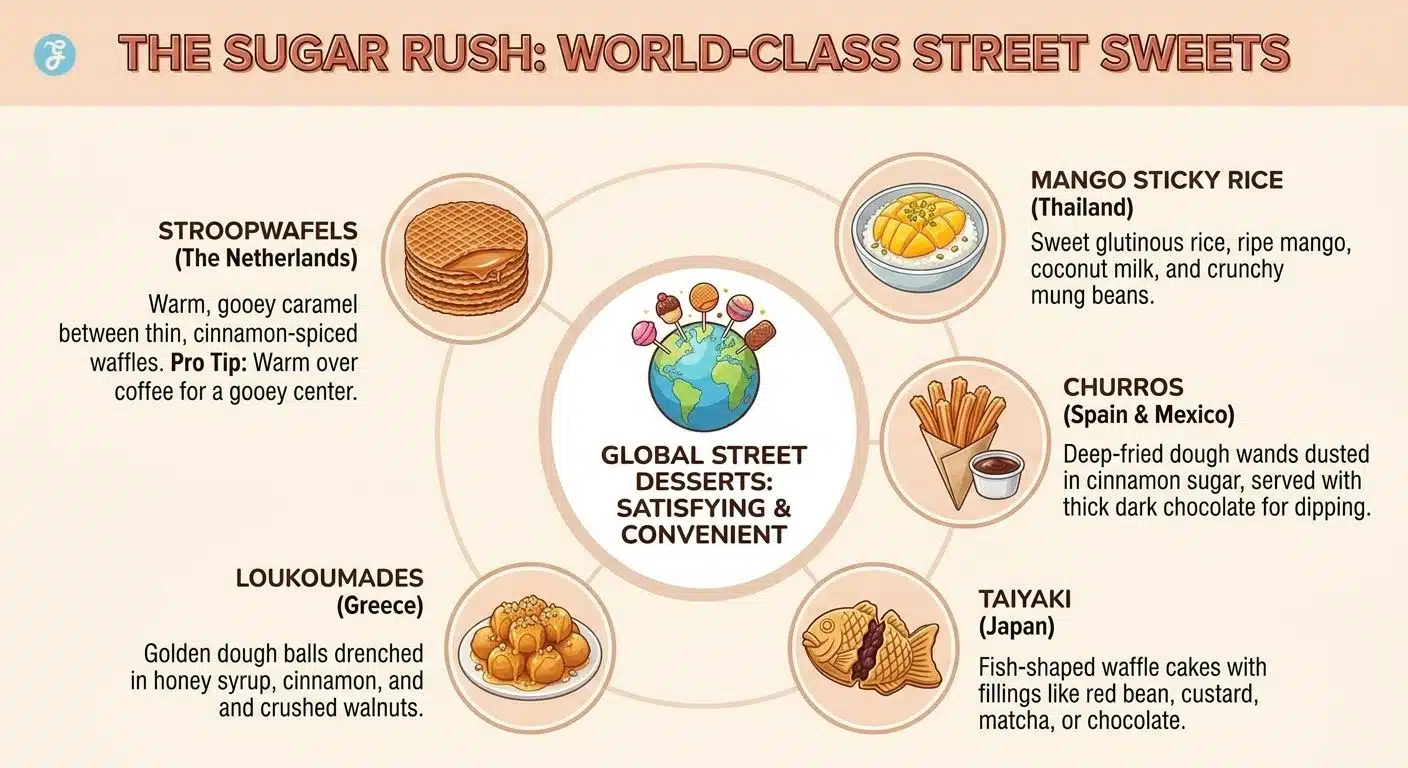
The Sugar Rush: World-Class Street Sweets
Because there is always room for dessert, no matter how much savory food you have already consumed. Street vendors across the globe have mastered the delicate art of creating sugary masterpieces that are incredibly satisfying and conveniently designed to be eaten while you walk to your next destination.
Stroopwafels [The Netherlands]
Imagine a layer of warm, gooey caramel pressed between two incredibly thin, cinnamon-spiced waffle cookies. Buying one fresh off a heavy cast-iron press at a bustling Amsterdam street market is an absolute revelation.
Pro Tip: If you bring a packaged stack home, rest the cookie over a hot cup of coffee or tea for a minute to gently melt the caramel inside back to its perfect, gooey state.
Mango Sticky Rice [Thailand]
This is a masterclass in culinary simplicity and contrasting textures. Vendors serve a warm bed of glutinous rice soaked in sweet, fragrant coconut milk, topped with generous slices of perfectly ripe, butter-soft mango. To finish it off, they sprinkle roasted mung beans over the top, providing a deeply satisfying crunch that balances the rich, creamy sweetness.
Churros [Spain & Mexico]
These long, star-shaped wands of dough are piped directly into roaring hot oil and deep-fried until they are shatteringly crisp on the outside while remaining airy inside. Freshly coated in a heavy dusting of cinnamon sugar, they are often served in a paper cone alongside a small cup of molten, pudding-thick dark chocolate for luxurious dipping.
Taiyaki [Japan]
You will smell the sweet, cake-like batter cooking before you even see the cart. Taiyaki are charming, fish-shaped waffle cakes traditionally filled with a steaming hot, sweetened red bean paste. Modern vendors also offer brilliant fillings like rich vanilla custard, matcha cream, or melted chocolate, offering a warm, handheld pastry that is as fun to look at as it is to eat.
Loukoumades [Greece]
These bite-sized, golden dough balls are the Greek answer to the doughnut, and they are nothing short of addictive. Vendors fry the airy dough until perfectly crisp, then immediately drench it in warm honey syrup, finishing it off with a heavy dusting of cinnamon and crushed walnuts. They are sticky, crunchy, and melt entirely in your mouth.
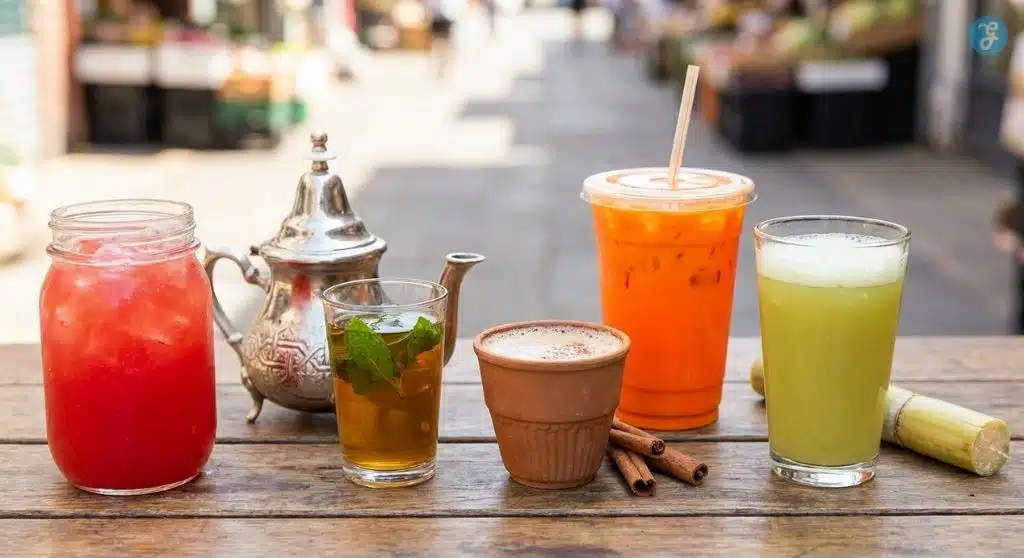
Sip Like a Local: Legendary Thirst Quenchers
You are going to need something incredible to wash all of that amazing street food down. Skip the generic, mass-produced sodas and look for these local liquid legends that offer a genuine taste of a region’s agricultural roots.
To give you a quick overview of what to look for on your next trip, here is a handy cheat sheet of the world’s most refreshing street drinks.
| Drink | Origin | Main Ingredients | The Vibe |
| Aguas Frescas | Mexico | Fresh fruit, water, sugar | Bright, icy, and incredibly fruity. |
| Moroccan Mint Tea | Morocco | Green tea, fresh mint, sugar | Hot, sweet, and aggressively herbaceous. |
| Masala Chai | India | Black tea, milk, warm spices | Rich, creamy, and deeply comforting. |
| Cha Yen | Thailand | Spiced black tea, condensed milk | Sweet, icy, and a vibrant neon orange. |
| Caldo de Cana | Brazil | Raw sugarcane | Frothy, pale-green, and naturally sweet. |
These regional specialties are just as important as the food itself. Let’s dive into exactly why you need to try each one of these iconic beverages.
Mexico: Aguas Frescas
Massive, colorful glass barrels filled with icy, refreshing fruit waters line the vibrant streets of Mexico. Vendors blend fresh fruits, cereals, or edible flowers with water and just a touch of sugar to create these beautiful coolers. Flavors range from sweet watermelon and cantaloupe to tart hibiscus (Jamaica) and earthy, sweet tamarind.
This perfectly showcases how simple, fresh, natural ingredients can create an infinitely better alternative to artificial, overly carbonated sodas. It is the ultimate way to cool down on a scorching afternoon after eating a plate of highly spiced street tacos. The ice used in major city street carts is usually made from safe, purified water, but if you have a very sensitive stomach, you can easily ask for your drink “sin hielo” (without ice).
Morocco: Moroccan Mint Tea
Served from gleaming silver teapots, this hot beverage is the ultimate symbol of Moroccan hospitality. Vendors pour this aggressively sweet, fresh-mint-packed green tea from high above the small glass to create a frothy, bubbly crown on top, affectionately known as the “turban.”
The theatrical pouring technique and the deep cultural significance make ordering this tea an unforgettable, highly interactive beverage experience. It acts as the perfect digestif for settling your stomach after a heavy, savory tagine or navigating the chaotic alleys of a bustling souk. It is traditionally served piping hot, even in the middle of the scorching summer, as locals firmly believe hot drinks actually help cool the body down.
India: Masala Chai
The rhythmic sound of bubbling milk and the intoxicating smell of crushed cardamom will guide you to the nearest “chaiwala” (tea seller) anywhere in India. This rich concoction boils robust black tea leaves with whole milk, sugar, and a warming, fragrant blend of spices like ginger, cloves, and cinnamon.
Authentic street chai is brewed incredibly strong and thick, offering a complex, layered spice profile that massive coffee shop chains simply cannot replicate. It delivers a comforting morning pick-me-up or a much-needed, late-afternoon energy boost while exploring.
You will often find it served in small, unglazed clay cups called “kullads,” which add a distinct, earthy flavor to the tea and are completely biodegradable, meant to be smashed on the ground after drinking.
Thailand: Cha Yen [Thai Iced Tea]
You will spot this drink instantly from a mile away thanks to its vibrant, almost neon-orange color. Vendors brew heavily spiced black tea (often infused with star anise, orange blossom, and crushed tamarind), pour it over a mountain of crushed ice in a plastic bag, and finish it with a generous pour of thick, sweet condensed milk.
The creamy, icy sweetness perfectly complements the intense spice levels and savory notes of Southeast Asian street food, rapidly balancing out the fiery chili heat of a fresh papaya salad or a spicy green curry. It is exceptionally sweet by design, so if you prefer less sugar, you can ask the vendor to go easy on the condensed milk by simply saying “mai waan” (not sweet).
Brazil: Caldo de Cana [Sugarcane Juice]
Walk through any lively street market in Brazil, and you will undoubtedly hear the loud, mechanical hum of a sugarcane press. Vendors feed long, thick stalks of raw sugarcane through a metal press, extracting a naturally sweet, frothy, pale-green liquid. It is typically served ice-cold, often with an essential squirt of fresh lime or blended with a chunk of pineapple.
Watching the raw, woody stalks transform into a delicious, fresh beverage right in front of your eyes is absolutely mesmerizing. It offers rapid, natural rehydration and an instant, jitter-free energy spike during a hot, humid day. Just remember that you must drink it immediately; fresh sugarcane juice oxidizes rapidly and begins to lose its vibrant flavor and color within minutes of being pressed.
Tips for Enjoying Street Food Safely
Vendors truly know their craft, and you can dive into this culinary adventure with total confidence if you follow a few basic, street-smart rules.
- Follow the Longest Line: A long line of locals is the absolute best indicator of a safe, delicious meal. High customer traffic means the vendor uses up their ingredients rapidly, meaning nothing sits around spoiling.
- Observe the Prep Station: Cleanliness is easy to spot. Safe vendors use gloves or tongs, have clean wiping cloths, and keep raw meat far away from cooked items.
- Watch the Heat: Choose dishes that are cooked to order over high heat (boiling broths, roaring grills, bubbling fryers) right in front of you.
The Final Bite: Savoring the Connection
There is something profoundly humbling about standing on a bustling street corner, thousands of miles from home, eating a meal prepared with generations of care right before your eyes. Street food strips away the pretension of formal dining and replaces it with raw, vibrant human connection.
When you accept a steaming plate of dumplings or a freshly fried empanada directly from a vendor’s hands, you are participating in a global tradition of shared sustenance. It reminds us that despite our vast cultural differences, we all seek comfort, flavor, and community in our daily meals. The next time you smell the intoxicating aroma of toasted spices or sizzling meat drifting from a humble food cart, do not just walk by.
Stop, observe the craft, and take a bite. Your next favorite meal is waiting on the sidewalk.
Frequently Asked Questions (FAQs) on The Popular Global Street Foods
1. What are some of the most popular global street foods I should try first?
If you are a beginner, start with accessible favorites that offer a great balance of familiar and new flavors. Mexican street tacos, Vietnamese bánh mì, Canadian poutine, and Spanish churros are excellent, universally loved entry points.
2. Why do people love eating street food around the world?
It is quick, highly affordable, and packed with bold, unadulterated flavors. A 2024 survey found that 67% of American diners say street food offers the most authentic taste of a destination compared to formal restaurants.
3. How do I find the best street food when traveling to a new city?
Skip the immediate tourist zones near major monuments. Instead, ask a local (like a barista or hotel clerk) where they eat lunch. Look for bustling food markets that specifically cater to university students or local office workers.
4. Are there any tips for trying new street foods safely?
Always follow the local crowds; high turnover guarantees the food is fresh. Choose items that are cooked to order over high heat, and avoid fresh salads or unpeeled fruits if you are in a region where the tap water is not safe to drink.
5. Is street food safe for vegetarians and vegans?
Absolutely! Many global cultures rely heavily on plant-based street foods. Look for Indian chaats, Middle Eastern falafel, or Mexican elote (street corn). Just politely ask if the cooking oils or savory broths use any animal products before ordering.
6. How do I handle the language barrier when ordering street food abroad?
A warm smile and a polite point go a long way! Simply point to what the person in front of you ordered, or gesture to the fresh ingredients you want included. Many vendors appreciate the effort of a simple “hello” and “thank you” in their native tongue.