

Have you ever walked out of a theater and thought, “Wait, wasn’t this movie already made ten years ago?” It’s not just déjà vu. There’s a clear pattern taking over the big screen. From superhero sequels to remakes of classic ’90s cartoons, many films today feel like copies of earlier hits. And audiences are noticing.
A striking statistic helps explain the trend: in 2024, nine out of the ten highest-grossing movies in the United States were sequels or prequels. That represents a major shift from the kinds of films that once dominated the box office.
So grab some popcorn and take a closer look at why this is happening.
Here’s a breakdown of why studios keep returning to familiar stories, what this means for the movies audiences love, and where fresh ideas are actually hiding.
What is Reboot Culture?
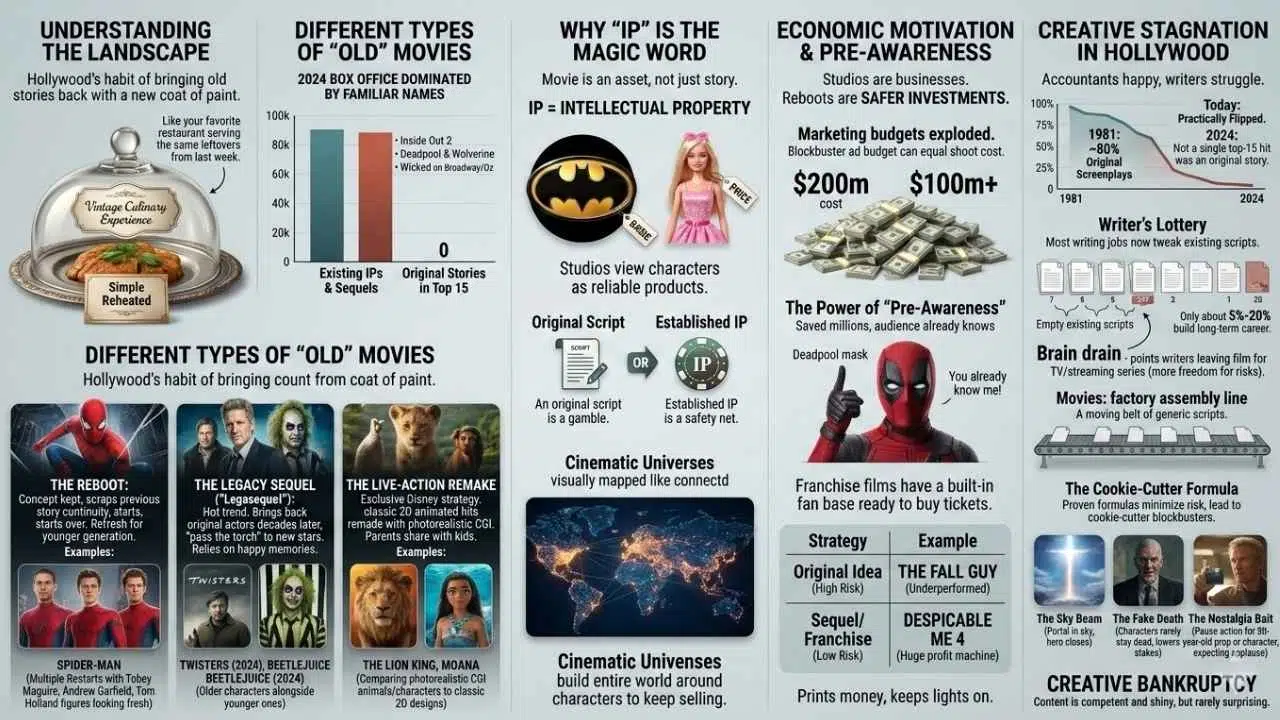
Reboot culture is Hollywood’s habit of bringing old stories back with a new coat of paint. It is like your favorite restaurant serving the same leftovers from last week but calling it a “vintage culinary experience.”
It’s not just a feeling; the data backs it up. In 2024, the box office was dominated by familiar names like Inside Out 2 and Deadpool & Wolverine. The only movie in the top ten that wasn’t a direct sequel was Wicked—and even that is based on a massive Broadway play and the Wizard of Oz universe.
Defining the Different Types of “Old” Movies
To understand what we are watching, we have to know the difference between the products studios are selling us. It’s not just “remakes” anymore; they have specific categories to maximize profit.
- The Reboot: This takes a concept, scraps the previous story continuity, and starts over. Think of how Spider-Man has been restarted multiple times with Tobey Maguire, Andrew Garfield, and Tom Holland. The goal is to refresh the character for a younger generation.
- The Legacy Sequel (or “Legasequel”): This is the hot trend right now. These movies bring back original actors decades later to pass the torch to new stars. Twisters (2024) and Beetlejuice Beetlejuice (2024) are prime examples. They rely heavily on your happy memories of the first film to sell tickets to the new one.
- The Live-Action Remake: This is almost exclusively a Disney strategy. They take their classic 2D animated hits, like The Lion King or Moana, and remake them with photorealistic CGI. It works because parents want to share their childhood favorites with their kids.
Why “IP” is the Magic Word
You will hear industry folks talk about “IP” constantly. That stands for Intellectual Property. In modern Hollywood, a movie isn’t just a story; it’s an asset.
Studios view characters like Batman or Barbie as reliable products. An original script is a gamble, but an established IP is a safety net. This is why we see “Cinematic Universes” everywhere. If a studio owns the rights to a character, they want to build an entire world around them to keep selling tickets for years.
The Economic Motivation Behind Reboots
Let’s be real: movie studios are businesses first and art houses second. They choose reboots because they are safer investments than betting on a new idea.
Making a movie is expensive, but selling a movie is where the real money burns. Marketing budgets have exploded. For a major blockbuster, the cost to advertise the film can equal the cost to shoot it. If a movie costs $200 million to make, the studio might spend another $100 million just on ads.
The Power of “Pre-Awareness”
This is where sequels win. They come with something called “pre-awareness.” You already know who Deadpool is. You don’t need a trailer to explain the concept. This saves the studio millions in marketing because they don’t have to educate the audience from scratch.
“A 2024 report showed that for films without a franchise or star power, marketing is significantly harder. Franchise films have a built-in fan base ready to buy tickets on day one.”
Compare that to an original movie. If a studio releases a film called The Unknown Hero, they have to spend a fortune just to tell you who the hero is, why you should care, and what the tone of the movie is. It’s a huge financial risk.
The Safety Net Factor
When the economy is shaky, studios get even more conservative. In 2024, the domestic box office was down about 4% from the previous year. In that environment, executives are terrified of a flop.
| Strategy | Risk Level | Example |
|---|---|---|
| Original Idea | High | The Fall Guy (Underperformed despite good reviews) |
| Sequel/Franchise | Low | Despicable Me 4 (Huge profit machine) |
The numbers don’t lie. Despicable Me 4 might not win Best Picture, but it prints money. That financial safety allows studios to keep the lights on, even if it bores the critics.
Creative Stagnation in Hollywood
While the accountants are happy, the writers are struggling. The obsession with safe bets means fewer original scripts are getting the green light.
I read a stunning comparison that highlights this shift. Back in 1981, roughly 80% of studio films were based on original screenplays. Today, that number has practically flipped. In 2024, not a single top-15 box office hit was an original story.
The “Writer’s Lottery”
It is incredibly hard to break in with a new idea today. Data suggests that only about 5% to 20% of screenwriters manage to build a long-term career in this climate. Most “writing” jobs now involve tweaking existing scripts for franchises rather than inventing new worlds.
This creates a “brain drain.” The most creative minds often leave film for television or streaming series, where they have more freedom to take risks. That leaves movies feeling like a factory assembly line.
The “Cookie-Cutter” Formula
You can often predict the plot of a blockbuster before you even see it. This is because studios lean on proven formulas to minimize risk.
- The Sky Beam: How many times have you seen a villain open a portal in the sky that the hero has to close?
- The Fake Death: Characters rarely stay dead in franchises because they are too valuable to lose. This lowers the emotional stakes.
- The Nostalgia Bait: Movies now frequently pause the action just to show you a prop or character from 30 years ago, expecting you to clap.
This reliance on tropes leads to “creative bankruptcy.” We get content that is competent and shiny, but rarely surprising.
The Role of Audiences in Reboot Culture
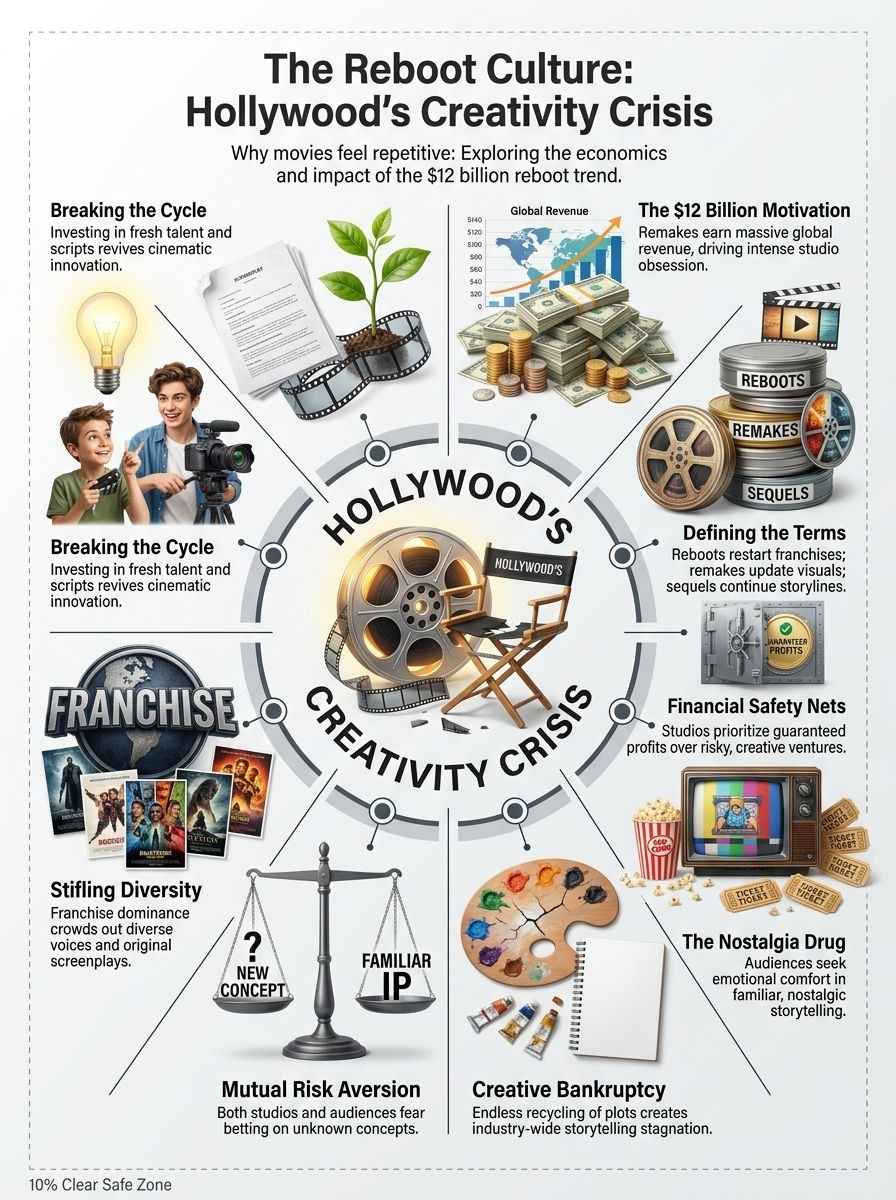
It is easy to blame the studios, but we play a big part in this cycle too. We vote with our wallets, and our voting record is clear.
Surveys show a fascinating contradiction. A recent poll by Tubi found that 74% of Gen Z and Millennials say they prefer original content over remakes. Yet, when Deadpool & Wolverine hit theaters, those same people bought tickets in droves.
Why We Crave “Comfort Food”
There is a psychological reason we do this. Psychologists call nostalgia “mental time travel.” When life feels stressful or uncertain—like during high inflation or global instability—we crave the familiar.
Watching a reboot of a movie you loved as a kid releases dopamine. It feels safe. It’s like eating mac and cheese; you know exactly what it’s going to taste like, and that is comforting.
The Risk of the Unknown
Going to the movies is expensive. A ticket, popcorn, and parking can easily cost $50 or more for a couple. When you are spending that kind of cash, you want a guarantee.
An original movie is a risk. It might be bad. A sequel to a movie you liked is a “safe bet.” You are pretty sure you will at least be entertained. This risk aversion makes it very hard for new stories to break through the noise.
The Impact on Cinema and Filmmaking
The dominance of reboots is squeezing out an entire category of film: the mid-budget movie.
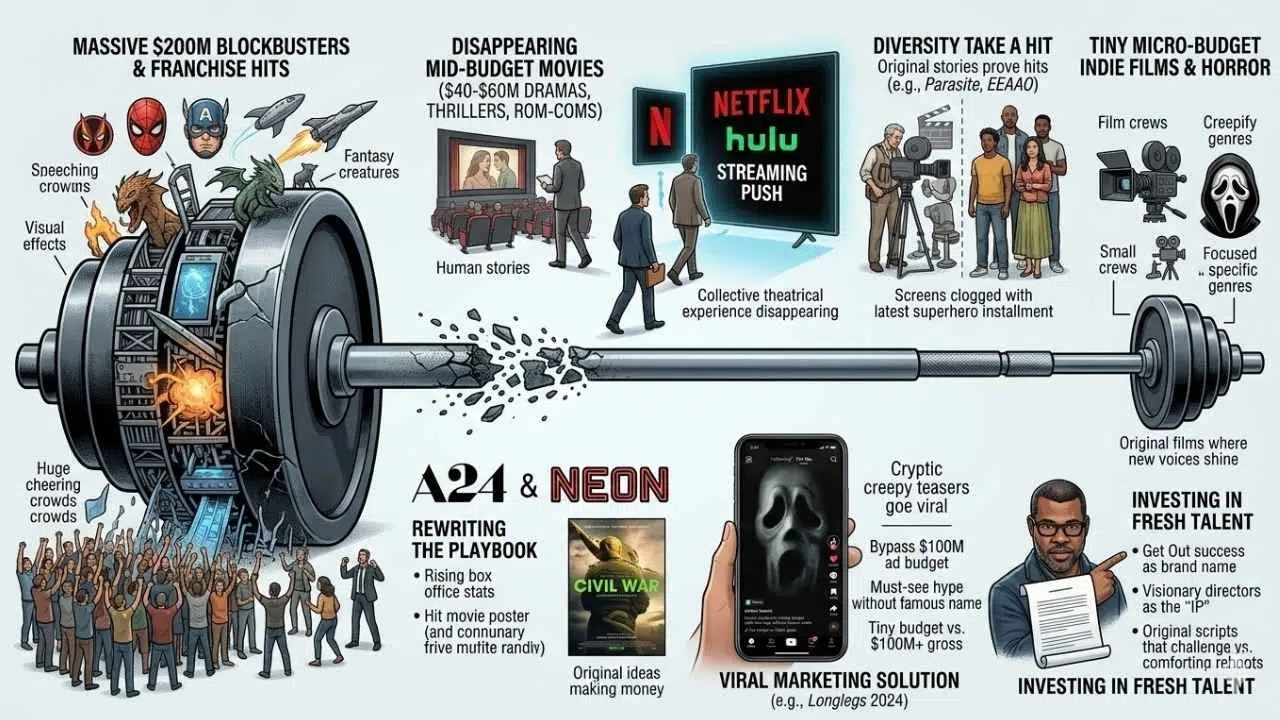
You used to see dramas, thrillers, and romantic comedies with budgets around $40-$60 million playing in theaters everywhere. Now, the industry is split into two extremes: massive $200 million blockbusters and tiny micro-budget indie films.
The “Barbell” Effect
Think of the industry like a barbell. On one side, you have the massive franchise hits. On the other, you have small, low-budget horror movies. The middle has fallen out.
Directors who want to tell human stories often can’t get theatrical funding. They are pushed directly to streaming services like Netflix or Hulu. This means the collective experience of watching a drama in a theater with strangers is disappearing.
Diversity Takes a Hit
When studios only reboot old franchises, they are often recycling stories from eras that were less inclusive. While they try to update casts, the core stories are still rooted in the past.
Original films are where new voices truly shine. Movies like Parasite or Everything Everywhere All At Once proved that diverse, original stories can be massive hits. But for every one of those that succeeds, dozens of others never get distribution because screens are clogged with the latest superhero installment.
Can Hollywood Break Free from Reboot Culture?
It’s not all doom and gloom. There are signs that the tide might be turning, and the solution is coming from the “indie” world.
Studios like A24 and Neon are rewriting the playbook. In 2024, A24 saw its box office revenue jump significantly, thanks to hits like Civil War. They are proving you can make money with original ideas if you market them smartly.
The Viral Marketing Solution
Smart studios are using the internet to bypass the need for a $100 million ad budget. Look at the horror movie Longlegs (2024). Neon marketed it with cryptic, creepy teasers that went viral on TikTok.
This created “must-see” hype without a famous franchise name. The movie ended up grossing over $100 million on a tiny budget. This proves audiences will show up for something new if you make it feel like an event.
Investing in Fresh Talent
The biggest change needs to happen at the top. Studios need to trust new directors the way they used to. Jordan Peele is a great example. After the massive success of Get Out, his name became the brand.
If Hollywood starts treating visionary directors as the “IP” instead of comic book characters, we might see a renaissance of creativity. We need more original scripts that challenge us, rather than just comfort us.
Final Thoughts
Hollywood leans on reboots, remakes, and sequels because they are financial safety nets in a risky business. But this pattern pushes original ideas to the sidelines and turns theaters into recycling centers.
We have the power to change this. Audiences can demand fresh content by supporting new movies like Longlegs or Civil War when they hit theaters. It’s easy to complain about reboots, but buying a ticket for an original film is the only vote that counts.
Change won’t happen overnight, but choosing creativity over comfort can bring the excitement back to the big screen. If you are curious to learn more, check out books on 1970s cinema history at your local library to see just how wild and original movies used to be!





















