

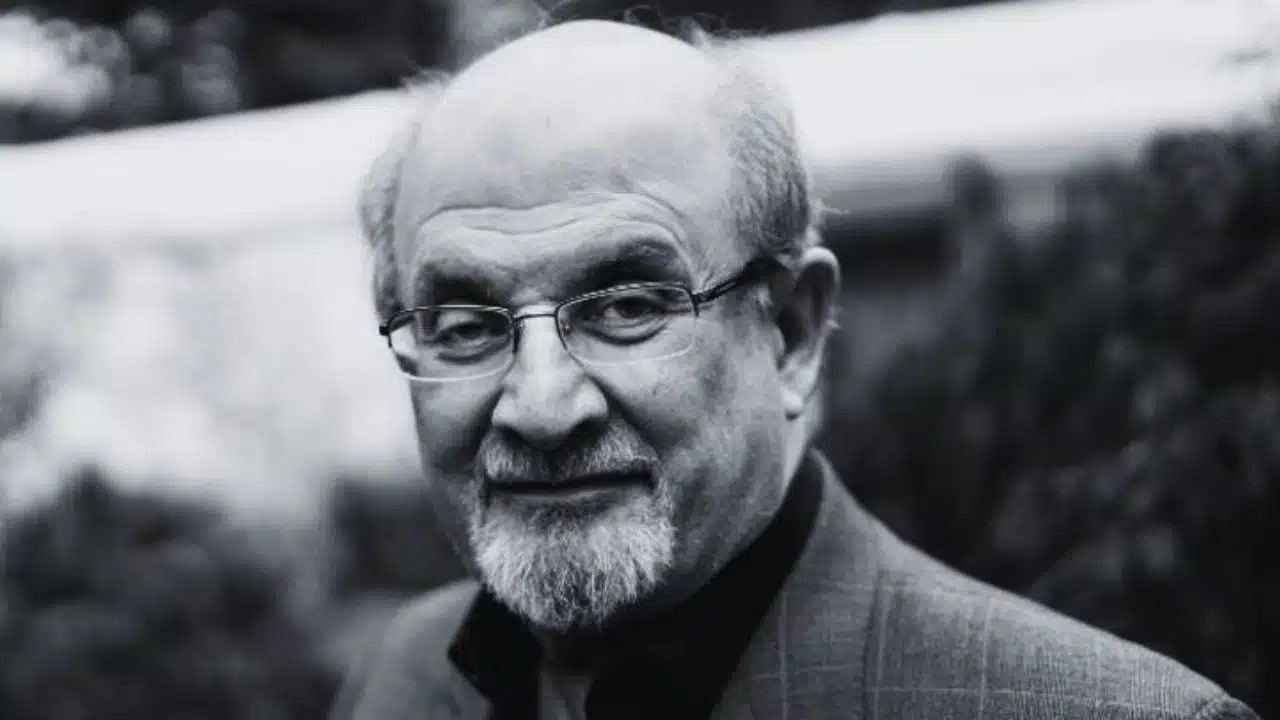
As the global literary community holds its breath for the Swedish Academy’s announcement, speculation is reaching fever pitch that Indian-born author Sir Salman Rushdie could win the 2025 Nobel Prize in Literature, potentially ending a 112-year drought for writers of Indian origin. A win would be a monumental moment, not only for its literary recognition but as a powerful global statement on artistic freedom.
The last, and only, time a writer from India received the prestigious award was in 1913, when Rabindranath Tagore was honoured for his “profoundly sensitive, fresh and beautiful verse.” Now, more than a century later, the name on the lips of critics, bookmakers, and readers is that of Rushdie, a literary giant whose life and work embody the fierce, often perilous, struggle for free expression. His enduring relevance, tragically underscored by a brutal assassination attempt in 2022, has positioned him as a frontrunner in a field of perennial contenders.
The Rushdie Nobel Contention
- A Century-Long Gap: If successful, Rushdie would be the first writer of Indian origin to win the literature Nobel in 112 years, since Rabindranath Tagore’s win in 1913.
- Strong Betting Odds: As of early October 2025, UK-based betting aggregator Nicer Odds places Rushdie among the top five favourites with odds of 8/1, trailing only Chinese author Can Xue and perennial Japanese candidate Haruki Murakami. (Source: The Guardian)
- A Symbol of Free Speech: The Swedish Academy has historically awarded writers who champion human rights and free expression. Rushdie’s decades-long defiance following the 1989 fatwa for The Satanic Verses and his recent survival from a violent attack make him a potent symbol of artistic courage.
- Unparalleled Literary Acclaim: Rushdie’s 1981 novel, Midnight’s Children, won the Booker Prize and was later awarded the “Booker of Bookers” in 1993 and the “Best of the Booker” in 2008, cementing its status as a seminal work of postcolonial literature. (Source: The Booker Prizes)
Why Rushdie, Why Now?
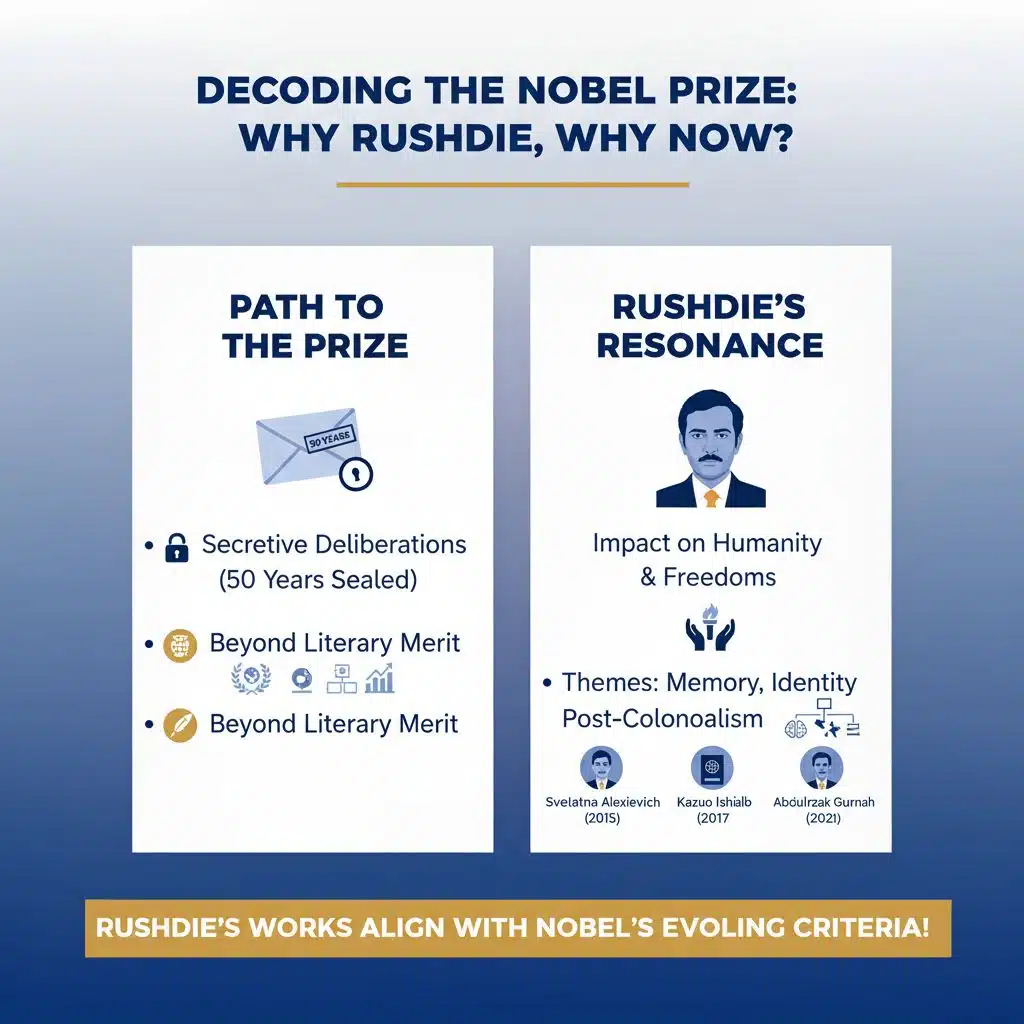
The path to the Nobel Prize in Literature is notoriously secretive, with the Swedish Academy’s deliberations kept sealed for 50 years. However, the selection criteria often extend beyond pure literary merit to encompass an author’s broader impact on humanity and their defense of essential freedoms. In recent years, laureates like Svetlana Alexievich (2015), Kazuo Ishiguro (2017), and Abdulrazak Gurnah (2021) have been celebrated for their explorations of memory, identity, and the lingering shadows of colonialism—themes that are central to Rushdie’s entire body of work.
Rushdie’s candidacy in 2025 feels particularly resonant for three key reasons:
1. Unquestionable Literary Legacy
From the moment Midnight’s Children was published, Salman Rushdie reshaped the landscape of English literature. He infused the English novel with a distinctly Indian voice, a “chutnification” of language that blended myth, history, and politics with the vibrant cadence of the subcontinent. His brand of magical realism gave voice to the chaotic, multifaceted experience of a newly independent India. Works like Shame (1983), The Moor’s Last Sigh (1995), and his latest, Victory City (2023), have consistently grappled with fundamental questions of migration, hybrid identity, and the often-violent collision of the secular and the sacred.
2. A Lifetime Championing Free Expression
Rushdie’s name became globally synonymous with the fight for free speech following the 1989 fatwa issued by Iran’s Ayatollah Khomeini calling for his death over alleged blasphemy in The Satanic Verses. For nearly a decade, he lived in hiding under constant threat. Yet, he never stopped writing or speaking out. The horrific knife attack he suffered on stage in New York in August 2022, which cost him sight in one eye, was a brutal reminder that the battle for words is a matter of life and death.
Awarding Rushdie the Nobel would be seen as the ultimate rebuke to those who seek to silence artists through violence. In an era of rising authoritarianism and intolerance, such a statement from the Swedish Academy would resonate far beyond the literary world.
As Suzanne Nossel, CEO of PEN America, stated following the attack, “Rushdie’s voice and his literary works are inextricably intertwined with the defense of freedom of expression, and the attack on him is a strike on the ideals of free inquiry, intellectual exchange, and creative liberty.” (Source: PEN America press release, August 12, 2022). This sentiment is widely shared and seen as a compelling non-literary argument for his candidacy.
3. Acknowledging a Global Voice
While born in Bombay (now Mumbai), Rushdie is a truly global citizen, having lived in the UK and now the US. Yet, his imaginative landscape remains deeply rooted in India. A Nobel for Rushdie would be interpreted as a prize for the Indian diaspora and for the unique, syncretic literary tradition that has emerged from it. It would celebrate a writer who has used the English language to tell stories that are unequivocally Indian in spirit and substance.
Latest Data & Statistics
The speculation around Rushdie is not mere conjecture; it is reflected in quantitative analysis from bookmakers, who closely track literary sentiment and trends.
- Nobel Prize Betting Odds (as of October 9, 2025):
- Can Xue (China): 5/1
- Haruki Murakami (Japan): 7/1
- Salman Rushdie (UK/India): 8/1
- Jon Fosse (Norway): 10/1
- Ngũgĩ wa Thiong’o (Kenya): 12/1
- India’s Nobel History in Literature:
- Total Laureates: 1
- Laureate: Rabindranath Tagore
- Year of Award: 1913
- Elapsed Time: 112 years (as of 2025)
- Global Literary Impact of Midnight’s Children:
- The novel has been translated into over 40 languages worldwide.
- It remains a fixture on university syllabi for postcolonial studies, a testament to its enduring academic and cultural impact more than four decades after publication.
Impact and Reactions
In India, the prospect of a Rushdie win has elicited a mix of excitement and cautious apprehension. The liberal literary establishment sees it as a long-overdue recognition. A Mumbai-based bookseller at the iconic Kitab Khana store noted, “Every October, we see a spike in sales of Rushdie, Murakami, and a few others. But this year, after the attack and his new book, the interest in Rushdie is different. It feels more personal. People are rooting for him as a person, not just an author.”
However, the controversial nature of The Satanic Verses—which remains banned in India—means a Nobel win could also reignite old debates and draw criticism from conservative religious factions. The Indian government has so far remained silent on the Nobel speculation, maintaining a neutral stance.
What to Watch Next
All eyes are now on Stockholm. The announcement by the Swedish Academy is expected any day. If Rushdie’s name is called, it will trigger global headlines and widespread celebration across the literary world. It would validate a lifetime of literary brilliance and unwavering courage. If another author is chosen, Rushdie’s name will undoubtedly return to the list of contenders next year, a testament to his towering and permanent place in the canon of world literature.






















