
You feel shaken after a car crash or a fall. You hurt, and you watch bills stack up fast. Filing a personal injury claim can feel like hiking a steep hill. Insurance companies push back on every cost.
Many people make small errors that cost them big.
One key fact is that each state sets a deadline, a statute of limitations, to file your claim. Miss that date, and you lose your right to fair compensation. Mistakes To Avoid When Filing A Personal Injury Claim will guide you through six traps to dodge.
You will see how to gather proof, from a police report to medical records, and why legal representation or a personal injury lawyer matters. Read on.
Key Takeaways
- File your claim before time runs out. In New South Wales and Victoria, you get 3 years from your crash date. Other states give you 2 to 6 years. You lose rights if you miss the deadline.
- See a doctor fast and save all records. Go within 72 hours after your accident. A 2022 claim rose from $20,000 to $75,000 when someone logged every bill and note.
- Get strong proof at the scene. Snap photos of damage, bruises, and skid marks. Film a quick video. Grab police and witness statements. Solid evidence stops insurers from downplaying your loss.
- Never sign a quick settlement or talk to adjusters alone. One driver lost $50,000 by signing too soon. Studies show you can add $30,700 on average by negotiating. Claims by lawyers average $77,600 vs $17,600 solo, a 3.5× boost after fees.
- Track hidden harm and future costs. Note PTSD, therapy, and lost wages. High tetraplegia injuries at C1–C4 can cost over $1,000,000 in year one and $200,000 each later year. Good proof wins pay for future care.
Delaying Medical Attention

Skipping a doctor visit can cost you more than pain. A bruised back can snowball in days. Florida law wants you in a clinic within 14 days after a car accident to tap PIP benefits.
Best practice asks you to see a physician within 72 hours. Secure medical records, scan X-ray films, log every doctor note.
Insurance adjusters may snub your personal injury claim if it lacks early treatment notes. Insurance companies might fight you over lost wages and medical bills. A trial attorney will point to crash reports, witness statements, medical evidence to push for fair compensation.
Fast care protects your well-being, boosts your legal rights.
Failing to Gather Sufficient Evidence
A pile up on a highway can create chaos, but it also offers key proof. Snap photos of skid marks, damage, bruises. Film video with a smartphone or camera. Get witness statements from drivers, passengers.
Grab that police report or accident report copy. Personal injury claims rely on firm evidence. Insurance companies may downplay your loss without solid proof.
Keep a folder for medical bills, lost wages, and other expenditures. Log every visit, every test, every prescription. Save medical records and receipts. A 2022 claim rose from $20,000 to $75,000 after someone tracked each expense.
A personal injury lawyer used that data, plus witness statements, to fight insurance adjusters. Legal representation protected their legal rights. It boosted their chance for fair compensation.
That proof met the burden of proving pain and suffering.
Waiting Too Long to File the Claim
States set strict time limits for injury lawsuits. Those windows can differ from two to six years. In New South Wales, injured parties must file a claim within three years of a car crash.
Victoria also enforces a three-year deadline after a vehicle collision. Missing that cutoff can strip you of legal rights, letting insurance companies deny your claim.
Call a personal injury lawyer soon after you see medical professionals, to dodge time traps. Quick legal help keeps you on track, so you can record medical bills, lost wages and pain and suffering.
Don’t wait until a claims adjuster from the insurance company ambushes you with a lowball. Act fast, file on time, and claim fair compensation.
Accepting a Settlement Too Quickly
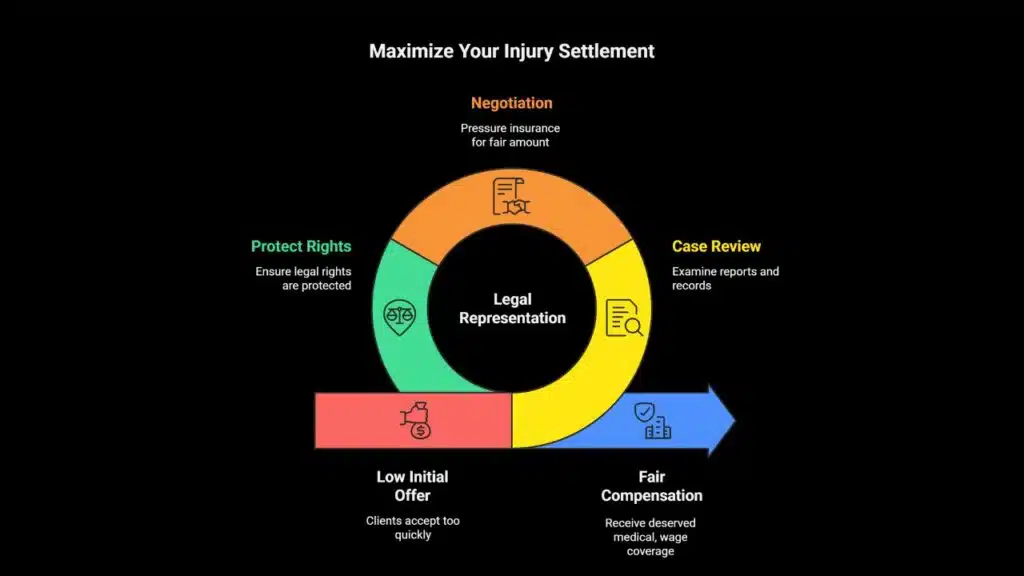
Insurance companies send quick settlement offers. Many clients accept and leave money behind. One driver signed papers and lost $50,000. Studies show negotiating can add an average of $30,700 more.
You deserve fair compensation for medical bills and lost wages.
A personal injury lawyer fights hard on your behalf. They review your report by law officers, medical records and witness accounts. Legal representation can pressure insurance adjusters.
It protects your legal rights and boosts your personal injury claim. You focus on healing while your lawyer builds your case.
Speaking to Insurance Adjusters Without Legal Representation
Talking to an insurance adjuster without a lawyer feels like walking into a lion’s den. They push you to give a recorded statement before you know your rights. You may waive claims for medical expenses, lost wages, or pain and suffering with a rushed form.
Adjusters get training to slash payouts, they check accident reports, witness statements and even social media posts for any slip. Data shows claims led by a legal professional average seventy seven thousand six hundred dollars but solo filers win just seventeen thousand six hundred.
A personal injury lawyer takes over calls, reviews medical records and handles forms you must not sign. Counsel explains how the statute of limitations affects your timeline, offers legal advice and shields you from hidden traps.
You will see 3.5 times more fair compensation, after fees, with expert legal representation. Skip solo talks, trust a lawyer to guard your legal rights.
Overlooking Psychological Injuries and Future Costs
People skip mental harm after a car crash. Invisible wounds can hurt more than a broken bone. PTSD, anxiety, and depression need a record. Add therapy notes to your medical records.
Insurance companies want proof. A personal injury lawyer can push insurance adjusters to pay for these visits. Each panic attack counts as lost wages and pain and suffering.
Wheelchair ramps and lifts cost big money. High tetraplegia at C1 to C4 can demand over $1 million the first year. Later you pay nearly $200,000 each year for ongoing care. Track every surgery, physical therapy session, and home modification expense.
Insurance adjusters will look for gaps in your medical bills. Strong legal representation can fight for fair compensation and cover future medical expenses.
Takeaways
Stay sharp, obey the statute of limitations and log every injury in your medical records. Gather witness statements, police report details and collision site images right away. Let a lawyer handle talks with insurance companies so you get fair compensation.
Skip quick offers from insurance adjusters if you lack legal advice. Follow these tips to boost your injury claim odds.
FAQs
1. What deadline applies to my personal injury claim in Australia?
You get three years to file a personal injury claim in Australia, that is the statute of limitations. If you miss this window you lose your legal rights.
2. Can I talk to insurance companies on my own?
Insurance companies and insurance adjusters want to pay you less, that’s their job. A personal injury lawyer knows their tricks and gives legal advice, don’t go solo.
3. How should I document my injuries and medical expenses?
Keep all medical records, medical bills and notes from treatment, gather official reports and witness statements, write down pain and suffering day by day. Good evidence gathering makes a big difference.
Yes, insurance companies may check your social networking sites after a vehicle accident. One photo of you hiking can hurt your case, don’t let a post trip you up.
5. Do I need legal representation or can I file a personal injury lawsuit myself?
You can start a personal injury lawsuit alone, but a legal professional brings legal guidance. They know personal injury law and can fight for fair compensation, medical expenses, lost wages, mental distress.
6. What is contributory negligence and how does it affect my settlement offer?
Contributory negligence means you share fault, if you are partly to blame your compensation and settlement offer can drop. The court uses a preponderance of evidence to split liability.