Electric cars and smart tech are changing how we drive. Yet, keeping up with the latest advances can feel overwhelming. You might wonder which companies lead the pack and what makes them stand out.
The EV market is growing fast, thanks to better tech and smarter AI systems. This article breaks down 12 top U.S. companies pushing boundaries in electric and autonomous vehicles. You’ll learn how they’re shaping the future of transportation without getting lost in jargon.
Ready to see who’s leading the charge? Read on.
AI and EV Innovations: Transforming the Transportation Industry
The transportation industry is changing fast thanks to breakthroughs from artificial intelligence (AI) paired with electric vehicles (EVs). These innovations make cars smarter while cutting emissions—paving new roads to cleaner travel options that don’t sacrifice performance or convenience!
Role of AI in EV Development
AI plays a big role in making electric vehicles smarter, faster, and safer. From self-driving tech and smart charging solutions, artificial intelligence helps cars learn, adapt, and predict issues before they happen, saving time, money, and hassle along the way.
Companies like Tesla, Waymo, and GM already rely heavily on machine learning algorithms to improve battery life, optimize routes, and personalize driving experiences. Even maintenance gets easier thanks to real-time alerts powered by predictive analytics that keep drivers on the roads longer without unexpected breakdowns.
Key Advancements in EV Technology
AI is reshaping EV development, but the tech itself is racing ahead too. Solid-state batteries promise longer ranges and faster charging, with companies like Toyota aiming to launch them by 2025.
Ultra-fast chargers, like Tesla’s V3 Supercharger, can add 200 miles in 15 minutes, cutting downtime.
The future of EVs isn’t just about power—it’s about smart energy.
Solar-integrated EVs, like Aptera’s three-wheeled car, harness sunlight to boost range. Wireless charging pads, tested by BMW and WiTricity, let drivers power up without plugs. Vehicle-to-grid (V2G) tech turns EVs into mobile energy storage, feeding power back to homes during outages.
Autonomous driving, powered by AI, is merging with EVs, as seen in Waymo’s electric Jaguars. These leaps make EVs smarter, greener, and more convenient.
12 Cutting-Edge Companies Shaping AI and EVs in the U. S
The U.S. is home to game-changing companies blending AI and electric vehicles, pushing the boundaries of what’s possible. From self-driving tech to smart charging, these innovators are rewriting the rules of transportation.
Tesla: AI-Driven Autonomous Driving Solutions
Tesla leads the AI-driven electric vehicle revolution with its self-driving technology. The company uses advanced artificial intelligence to power its Autopilot and Full Self-Driving systems, making cars smarter and safer.
Tesla’s continuous updates improve real-time decision-making for autonomous driving, setting industry standards.
Their proprietary AI chips process vast amounts of data from cameras and sensors. This helps predict road conditions, avoid collisions, and optimize energy use in EVs. Tesla’s innovations show how AI can transform transportation while pushing sustainable energy forward.
The race to full autonomy is accelerating, thanks to their cutting-edge solutions.
Waymo: Advancing Autonomous Mobility
While Tesla pushes AI-driven autonomy, Waymo takes self-driving tech even further. This Alphabet-owned company leads in autonomous mobility, with over 20 million miles logged on public roads.
Waymo’s fully autonomous rides prove AI isn’t just the future—it’s already here.
Waymo One operates robotaxis in Phoenix and San Francisco, offering driverless rides. Their AI handles complex city driving from pedestrians to unpredictable traffic. The system learns from billions of simulated miles, making it smarter every day.
Unlike Tesla’s driver-assist approach, Waymo skips human backup and aims for full independence. Their trucks haul freight autonomously, reshaping logistics. With partnerships like Uber, Waymo spreads its tech rapidly.
Rivian: Pioneering Electric Adventure Vehicles
Rivian stands out as a key player in the electric vehicle (EV) market, focusing on adventure-ready electric trucks and SUVs. Their R1T pickup and R1S SUV combine rugged performance with eco-friendly tech, appealing to outdoor enthusiasts.
The company uses AI for features like predictive maintenance and battery efficiency, making EVs more reliable for off-road use.
Backed by major investments from Amazon and Ford, Rivian pushes sustainable transportation into new territory. They aim to reduce emissions without sacrificing power or range, proving that electric vehicles can handle tough terrain.
With plans to expand charging networks and innovate further, Rivian is redefining what EVs can do in the American auto industry.
Lucid Motors: Redefining Luxury Electric Vehicles
Lucid Motors stands out in the luxury EV market with its high-performance electric cars. The company focuses on cutting-edge technology, offering impressive range and speed. Its flagship model, the Air sedan, boasts over 500 miles per charge, setting a new standard for electric luxury.
The brand combines sleek design with advanced AI systems for energy management. Lucid targets affluent buyers who want sustainability without sacrificing style or power. Next up, Proterra takes the spotlight with its focus on electric buses.
Proterra: Revolutionizing Electric Buses
While luxury EVs grab headlines, Proterra focuses on a greener future for public transport. This company builds all-electric buses, cutting emissions in cities across the U.S. Their buses run cleaner and cost less to maintain than diesel models.
Proterra uses smart charging tech and energy-efficient designs to boost performance. With AI-driven fleet management tools, they help cities optimize routes and battery life. The shift to electric buses is growing fast with companies like Proterra making sustainable transportation work at scale.
General Motors: Leveraging AI for Electric and Autonomous Vehicles
General Motors is pushing boundaries with AI in electric and autonomous vehicles. The company uses AI to improve battery performance, boost safety, and refine self-driving tech. Its Ultium platform powers next-gen EVs, blending smart energy management with cutting-edge automation.
GM’s Super Cruise system leverages AI for hands-free highway driving, setting a high bar for autonomy. They also focus on predictive maintenance using AI to alert drivers before issues arise.
With plans to launch 30 new EVs by 2025, GM is betting big on AI-driven mobility solutions. Their work highlights the growing synergy between artificial intelligence and sustainable transportation.
Ford: Integrating AI and Electrification Strategies
Ford is pushing hard into AI and electric vehicles, blending both to stay ahead. The company uses AI to improve battery life, plan smart charging, and refine self-driving tech in its EVs like the Mustang Mach-E and F-150 Lightning.
Its BlueCruise system puts AI behind the wheel for hands-free driving on highways. Data analytics fine-tune energy use, and Ford invests in fleet optimization tools to help businesses manage EV costs better.
By merging AI with electrification, the company shapes a smarter future for transportation.
NVIDIA: Powering AI Systems for EVs
NVIDIA is a powerhouse in AI technology, driving smarter electric vehicles. Their advanced chips and software help EVs process vast amounts of data quickly, making self-driving cars safer and more efficient.
By optimizing energy use and improving battery performance, NVIDIA’s systems play a key role in the future of sustainable transportation.
The company also focuses on fleet optimization and predictive maintenance through AI, reducing downtime for electric fleets. Pairing their tech with automakers ensures a smoother integration of AI into next-gen EVs.
Up next, an exploration of how ChargePoint reshapes EV charging networks with smart solutions.
ChargePoint: Innovating EV Charging Networks with AI
ChargePoint is changing the game for EV charging with smart AI solutions. Their networks use artificial intelligence to optimize power usage, reduce wait times, and predict maintenance needs.
This system keeps stations running smoothly while cutting costs. AI also helps balance electricity demand across grids, making charging more efficient.
Big players like Tesla lead here alongside networks such as ChargePoint, which integrates smart algorithms powered by AI to optimize power distribution across grids. This approach prevents overloading during peak periods when demand spikes occur unexpectedly, sometimes causing lights to dim briefly.
With over 200,000 spots in North America, ChargePoint proves to be a key player in sustainable transportation. Up next: Zoox’s vision for self-driving electric rides.
Zoox: Designing Fully Autonomous Electric Vehicles
While ChargePoint focuses on smart charging networks powered by artificial intelligence (AI), another company takes autonomy further. Zoox designs fully self-driving electric vehicles (EVs).
Zoox builds purpose-built autonomous cars without steering wheels or pedals. The vehicles are made specifically for driverless ridesharing services using advanced sensors powered by NVIDIA’s chipsets. Each vehicle is crafted around passenger comfort rather than traditional controls. Their symmetrical design allows seamless movement forward or backward within cities. The compact size and powerful computing capabilities enable real-time decision-making during daily trips across urban landscapes nationwide. This technology will expand as regulations allow wider adoption soon.
Canoo: Building Modular Electric Vehicle Platforms
Canoo stands out in the EV market with its modular electric vehicle platforms. The company focuses on flexibility, designing vehicles that can adapt to different uses. Its skateboard-style chassis packs batteries, motors, and tech into a single compact base.
This approach lets Canoo customize bodies for delivery vans, passenger cars, or even mobile workspaces without reinventing the wheel each time.
The startup targets commercial fleets and personal buyers alike. AI plays a key role in optimizing energy use and maintenance alerts. Unlike traditional automakers, Canoo opts for practical designs that favor versatile interiors over decorative trim.
Partnerships in logistics and ride-hailing prove that EVs do not need a conventional look to work smarter.
Aurora Innovation: AI-Driven Autonomous Driving for Commercial Vehicles
Aurora Innovation focuses on self-driving tech for trucks and commercial fleets. Their AI systems help big rigs travel highways safely, cutting costs and boosting efficiency in logistics.
The company partners with major automakers to bring autonomous freight transport to life, aiming to reshape long-haul trucking.
With AI playing a key role in energy management and maintenance alerts, Aurora’s technology makes electric and autonomous trucks smarter. Their work supports the shift to sustainable transportation while tackling fleet optimization challenges.
Next up are the top technologies pushing EVs into the future.
Top Technologies Shaping the Future of EVs
The future of electric vehicles rides on breakthroughs like solid-state batteries and ultra-fast charging. These game-changers promise longer ranges, quicker refuels, and smarter energy use.
Solid-State Batteries
Solid-state batteries are changing the game for electric vehicles. Unlike traditional lithium-ion batteries, they use solid electrolytes instead of liquid ones. This feature makes them safer, lighter, and more energy-dense.
Companies like Tesla and Toyota are racing to bring this technology to market.
These batteries charge faster and last longer, solving two big EV pain points. With higher energy efficiency, they could boost electric cars even further. The shift to solid-state technology is a key part of the EV revolution, making sustainable transportation more practical.
Ultra-Fast Charging Solutions
Battery technology isn’t slowing down—charging speeds also improve. Ultra-fast charging solutions cut refuel time drastically compared to traditional methods. Some chargers now reach a full charge in under twenty minutes, thanks to high-power systems that exceed 350 kW.
Big players like Tesla lead here alongside networks such as ChargePoint. ChargePoint uses smart algorithms powered by AI to optimize power distribution across grids. This approach prevents overloading during peak periods when demand spikes occur unexpectedly.
Vehicle-to-Grid (V2G) Integration
Electric cars are not just for driving anymore. Vehicle-to-grid (V2G) technology lets EVs send power back to the grid, turning them into mobile energy sources. This process helps balance electricity demand and supports renewable energy use, making sustainability a two-way street.
Companies like Tesla and Ford are already working on V2G solutions. With AI managing energy flow, EVs can charge when power is cheap and supply excess energy during peak hours. It is a smarter way to use clean energy while reducing costs for drivers and utility providers.
The growth of smart charging networks makes this innovation even more practical for everyday use.
Solar-Integrated EVs
Solar-integrated EVs are changing the game for sustainable transportation. Companies like Tesla and Rivian are testing solar roofs to boost range and reduce charging needs. These cars use sunlight to power small systems or add extra miles, making them more energy-efficient.
The technology is not perfect yet, but progress occurs quickly. Solar panels on EVs do not replace charging stations, but they add benefits. Lighter, more efficient panels could make solar-powered driving a bigger reality soon.
This step moves transportation toward greener mobility.
Wireless Charging Systems
Wireless charging is changing how electric vehicles get power. Instead of plugging in, drivers park over a charging pad. This system uses magnetic fields to transfer energy efficiently.
Companies like Tesla and Rivian are exploring this method for easier and faster fueling. AI plays a big role in managing wireless charging by adjusting power flow based on battery needs and grid demand.
The goal is to reduce hassle and offer more convenience for EV owners. With solid-state batteries on the horizon, wireless systems will continue to improve. No cords and no mess produce seamless charging while drivers shop or work.
Autonomous Driving in Electric Vehicles
Self-driving electric cars are no longer science fiction. Companies like Tesla and Waymo lead the charge, using AI to make EVs smarter and safer. Tesla’s Full Self-Driving system learns from millions of miles driven, while Waymo’s robotaxis operate in cities without human help.
AI boosts efficiency in EVs by optimizing routes, cutting energy use, and predicting maintenance needs. Solid-state batteries and ultra-fast charging advance the technology further. Cars will drive themselves, charge wirelessly, and even power homes with vehicle-to-grid systems.
Next up, a look at how AI reshapes charging networks beyond driving.
AI Beyond EVs: Expanding Frontiers
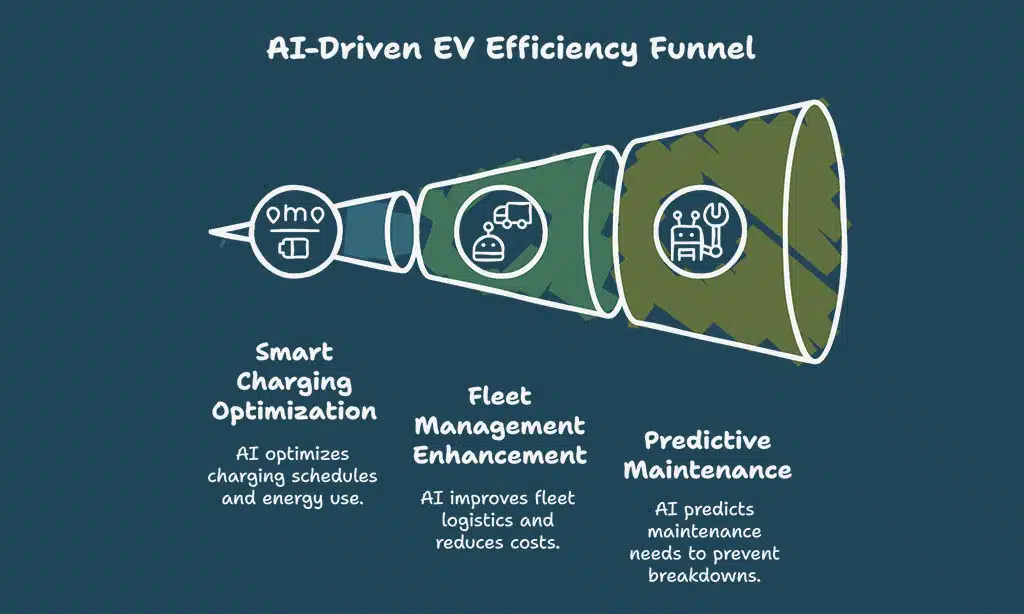
AI stretches beyond electric cars, making charging smarter, fleets run smoother, and predicting when an EV needs a tune-up. Curious how else AI is shaking things up? Keep reading.
AI in Smart Charging Solutions
Smart charging solutions powered by artificial intelligence change how electric vehicles get power efficiently without straining grids during peak hours. These systems analyze real-time electricity demand and adjust charging speeds automatically.
Some networks now prioritize renewable energy sources when available, reducing costs and boosting sustainability. Companies like ChargePoint use predictive algorithms that learn driver habits and optimize schedules based on individual routines.
This system cuts wait times at stations while balancing load distribution across cities. With smarter infrastructure, drivers spend less time charging yet leave with a full battery, making green mobility smoother than ever before.
AI in Fleet Optimization and Logistics
AI does not stop at smart charging. It transforms fleet operations by saving time and reducing costs. Companies like Ford and General Motors use AI to track vehicles, refine routes, and predict maintenance needs before breakdowns occur.
This efficiency keeps electric delivery vans, buses, and trucks operating with fewer delays. AI analyzes traffic patterns and battery performance in real time to help fleets reduce energy waste. ChargePoint and Proterra use these systems to manage large-scale EV networks effectively.
AI-driven logistics lower fuel expenses and help meet sustainability goals. Autonomous technology from Aurora Innovation and Waymo further automates entire fleets for maximum efficiency.
AI Enhancing EV Maintenance Predictions
Predictive maintenance powered by artificial intelligence keeps electric vehicles running longer without surprises. AI detects potential issues early by analyzing data from sensors, battery health checks, and driving patterns.
Alerts about worn brakes or fading batteries give owners time to fix problems and save money. Tesla uses similar technology; its cars learn driver habits while flagging issues automatically. Other automakers like Rivian apply predictive tools to support smooth ownership.
This technology makes owning an electric car more manageable. Imagine receiving a notification that battery service is needed next month rather than stalling mid-trip tomorrow. Smarter upkeep ensures EVs remain efficient, reduce costs, and keep drivers satisfied.
Challenges for Companies in AI and EV Integration
Building reliable charging networks is tough, and outdated power grids do not help. Companies also face strict rules that slow progress while they race to cut costs.
Infrastructure Limitations
The U.S. still lacks enough charging stations to support the rapid growth of EVs. Many areas, especially in rural regions, do not have reliable access to fast chargers. This shortage slows adoption for drivers concerned about running out of power on long trips.
Upgrading the grid is another hurdle. Older systems struggle to handle the extra demand from millions of EVs charging at once. Without significant investments, blackouts or slow charging may become common as more drivers switch to electric cars.
Companies like ChargePoint work on smart networks, but progress takes time and funding.
Regulatory Hurdles
Companies pushing into AI-driven electric mobility face strict rules that slow progress. Regulatory hurdles vary across states, making nationwide rollouts challenging. Some cities welcome self-driving cars while others ban them over safety concerns.
Battery recycling laws differ as well, adding costs. EV makers like Tesla must manage multiple standards. Fleet operators struggle without clear charging regulations. These delays hinder growth despite rising demand for sustainable transportation.
Balancing Cost and Innovation
Building affordable electric vehicles while advancing technology is challenging. Companies like Tesla and Rivian invest heavily in AI and battery research, yet high costs can slow progress. Cutting-edge features, such as solid-state batteries or autonomous driving, often come with steep price tags.
Mass adoption hinges on balancing affordability with innovation. Firms like GM and Ford focus on scaling production to lower costs. AI boosts efficiency in manufacturing and energy use. Regulatory challenges and outdated infrastructure add pressure as the industry races to combine smart tech with budget-friendly EVs.
Takeaways
The future of transportation is here, powered by AI and electric vehicles. Companies like Tesla, Rivian, and Waymo lead the charge with smart, sustainable solutions. These innovations make driving cleaner, safer, and more efficient.
From self-driving cars to ultra-fast charging, the technology keeps advancing. Stay curious, explore these advances, and join the movement. The road ahead is electric, and it is full of possibilities.
Disclosure: This content is based on public information and author research. No sponsored content is included.