Ever feel like your mind is a messy room, packed with too much stuff? Maybe you lose focus at work or get stressed out by never-ending to-do lists. You might even find it hard to relax because your thoughts keep buzzing around.
This “mental clutter” can sneak in just like old emails filling up your inbox.
Studies show that a minimalist lifestyle helps with stress reduction and mental clarity. Cutting down on both physical and digital distractions can lead to better mental health and emotional well-being for anyone—kids, teens, adults.
If you want more control over your moods and day-to-day life, this blog post is for you. We’ll walk through how simple living boosts productivity, lowers anxiety, and helps set clear priorities.
Ready to see how less really is more? Keep reading!
Key Takeaways
- Clutter raises stress and hurts focus. Over 70% of people feel overwhelmed by too much stuff, leading to higher cortisol and lower life satisfaction (studies show).
- Minimalism boosts concentration. In a 2023 survey, 70% said they focused better after simplifying their spaces and routines.
- Clean spaces spark new ideas. About 75% of minimalists report more creativity and productivity at work.
- Setting boundaries for screens, apps, and notifications lowers mental clutter and anxiety levels (supported by studies from as early as 2005).
- Simple routines like daily decluttering or making short task lists improve emotional well-being, sleep quality, and time management for all ages—kids to adults.
The Connection Between Minimalism and Mental Clarity

Mental clutter feels like too many browser tabs open—you lose track, and it gets noisy fast. Minimalism simplifies the mind, much like minimalist design clears a room, making space for calm thinking.
How clutter impacts focus and decision-making
Clutter acts like static in your brain. Piles of papers, too many toys, and old emails can make mental clutter grow fast. Over 70% of people feel overwhelmed by extra stuff around them, which hurts feelings and lowers life satisfaction.
Studies say that cortisol levels rise in crowded spaces, making stress shoot up. Even decisions about simple things—like what to eat or where to put keys—become hard with clutter blocking clear thinking.
Messy rooms slam the brakes on focus, no joke. The mind bounces from one distraction to another, so stress management gets tricky. About 60% of folks admit they have more anxiety and less emotional resilience if their space stays chaotic for too long.
Minimalist routines tackle these issues head-on by slashing noise and boosting outcome variables such as productivity and psychological well-being. So next time you lose your phone under a mountain of laundry or forget why you opened the fridge—blame it on mental clutter!
The role of simplicity in reducing mental noise
Simplicity works like a gentle filter for your mind, cutting down mental clutter and boosting mental clarity. Too many choices and too much stuff can act like static noise on the radio, making it hard to focus or feel calm.
Ottessa Moshfegh’s _Eileen_ shows how keeping life simple gives room for gratitude, self-sufficiency, and fulfillment. Over 80 percent of studies support that voluntary simplicity improves mental well-being and brings more positive emotions.
A 2005 study found people who preferred a simple lifestyle enjoyed better moods every day. With less visual mess—think minimalist designs or clean air at home—you lower stress and anxiety levels fast.
Simple routines make space in your brain for better sleep, healthier living habits like exercise, and time with loved ones. Instead of chasing endless options encouraged by consumer culture, you pick what matters most for emotional regulation and peace of mind.
Benefits of Minimalism for Mental Clarity
Minimalism works like a breeze through a stuffy room, sweeping away mental clutter that weighs you down. Studies using analytics and Likert scales show how a simplified lifestyle often leads to more positive emotions and better emotional well-being.
Enhanced focus and better concentration
Fewer things crowd your space, so your mind calms down. Distractions fall away like autumn leaves. A 2023 analytics survey showed that seventy percent of participants had better concentration after switching to a minimalist lifestyle.
These people spent less time searching for lost items in messy rooms or scrolling endlessly through digital clutter on phones, which most folks check over one hundred times each day.
Clear desks and organized folders help you see only what matters. Decision-making becomes faster, just like choosing an apple from a bowl instead of picking from a full orchard. Simple routines in daily life act as air purifiers for mental health—they filter out stress and boost emotional well-being.
That’s why minimalists often report high focus even when work piles up or distractions call their name from every corner of the house.
Reduced stress and anxiety levels
Clutter can spike stress. Studies show that 70% of people feel buried by too much stuff, and 60% get more tense in messy rooms or offices. This chaos raises cortisol, the body’s main stress hormone, leaving you anxious and tired.
Minimalism flips the script with a simplified lifestyle—fewer things means less mental clutter buzzing around your head.
People who cut down on excess often notice better emotional health right away. A tidy space helps lower those jumpy feelings tied to anxiety reduction, even helping boost indoor air quality over time.
Think clearer air, calmer mind—just like opening a window on a stuffy day! Living with fewer distractions gives you room for positive emotions and real pleasures instead of daily overwhelm clogging up your peace of mind.
How Minimalism Boosts Productivity
Minimalism acts like a fresh breeze, sweeping away mental clutter with each small step you take. Fewer distractions can mean more time for high-impact tasks—think digital declutter, simple routines, and even minimalist architecture that sparks focus.
Clearer priorities and goal-setting
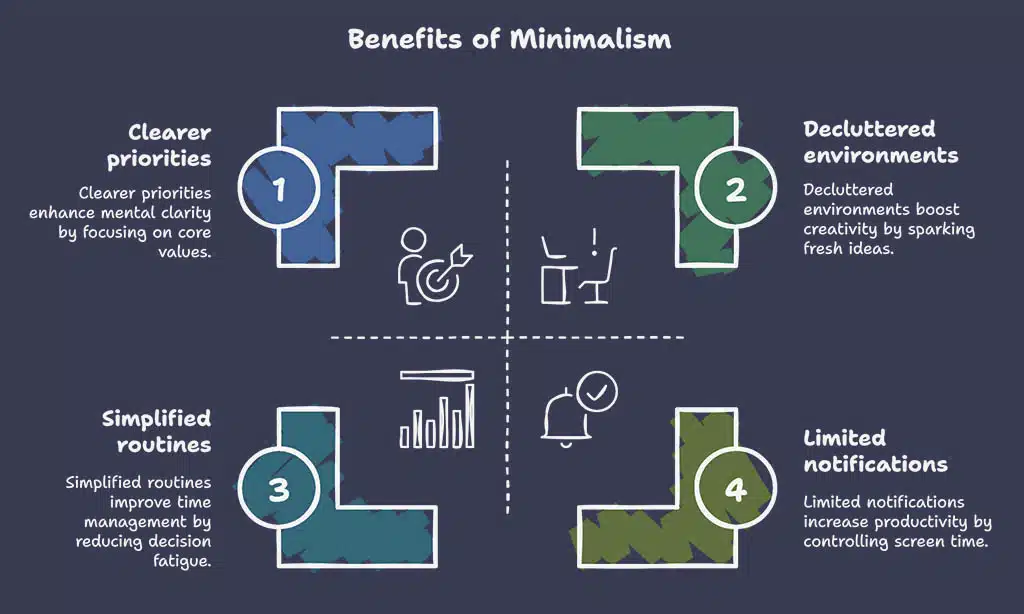
Thinking about your core values helps you choose what matters most. With a personal mission statement or daily focus list, you guide each step. Having fewer choices calms mental clutter.
A short task list can give mental clarity and lower stress levels.
Focusing on essential tasks matches your actions with what truly counts, saving time and energy. Use voluntary simplicity to pick goals that spark positive emotions and boost life satisfaction.
This style leads to more balanced routines, less anxiety, and smoother progress toward your targets—like Tadao Ando’s clean lines showing only the important parts of his buildings.
Increased creativity and problem-solving ability
Clean spaces clear your head, opening new roads for creativity to bloom. Decluttered environments spark fresh ideas. Studies show 70% of people think better in simple and tidy rooms.
You might spot new answers faster without piles everywhere slowing you down.
Minimalism lights up problem-solving like a bright lamp in a dark room. By tossing out mental clutter, your brain gets more space to try new things, find links, or solve tricky problems with less stress and anxiety.
A full 75% noticed their work productivity went up along with their creative thinking after switching to a minimalist lifestyle—proof that sometimes less truly means more for your mind’s health benefits and emotional well-being.
Improved time management
Limiting notifications and screen time gives your day more control. Designate spots in the schedule for checking email or social media, like watering plants only twice a week instead of every day.
Skip answering non-urgent messages right away; you might find that most things can wait. Set routines to cut down on decision fatigue, making each choice lighter and quicker.
Minimalist habits work wonders on mental clarity and stress reduction because fewer distractions mean higher accuracy and focus. A simplified lifestyle brings intentional living straight into your calendar—less mess means better-balanced life choices, whether picking a workout or managing digital clutter.
Think of setting up routines as a shortcut for stress management: no wasted seconds, just clear priorities lined up like ducks in a row.
Steps to Incorporate Minimalism into Your Life
If you feel lost in digital mess or physical clutter, a simple change can spark mental clarity. Studies using online surveys and structural equation modeling show that tiny shifts in daily routines work wonders for emotional well-being and stress management.
Declutter your physical and digital spaces
Cutting down on clutter can boost your mood, like a breath of fresh air for your mind. Your work and home spaces shape how you think, feel, and get things done.
- Clear your desk each night before bed. A clean surface calms the mind and helps with focus the next morning.
- Cut extra apps from your phone or tablet. Digital minimalism lowers mental clutter and stress by reducing constant notifications.
- Toss old receipts, junk mail, and broken gadgets once a week. Less stuff around means fewer distractions grabbing at your brain every day.
- Switch to simplified routines for chores or email sorting. Good habits cut down wasted time and support stress reduction.
- Use high-quality products instead of lots of cheap ones. Fewer, better items mean less mess, better reliability, and more satisfaction in daily life.
- Set an “opt-out” rule for group chats or mailing lists that don’t offer value. This cuts digital noise so you gain mental clarity and positive emotions.
- Store files in clear folders on your computer. Quick access saves time—your future self will thank you during busy days.
- Schedule a ten-minute “digital declutter” session each Friday evening. Research shows 75% of study participants reported increased productivity after making this change.
- Close unused browser tabs as soon as you finish online tasks. Keeping only what matters open lets you tackle goals with laser focus—a strategy backed by people who enjoy voluntary simplicity for psychological resilience.
- Aim to shrink your carbon footprint while cleaning out old electronics. Recycling lowers greenhouse gas emission and helps create a more balanced life for everyone.
Minimalistic designs help foster intentional living both online and off—less is more really rings true here!
Set boundaries for distractions
Staying focused is tougher than it sounds, with so many distractions around. Mental clarity and productivity grow when you set clear boundaries.
- Limit notifications to reduce mental clutter. Too many buzzes can stress your brain and hurt your focus.
- Set a fixed time for emails and social media. Stick to this window to help manage your time better and boost work output.
- Avoid instant replies to messages that are not urgent. Quick answers break concentration and increase anxiety levels.
- Designate device-free periods in your routine, helping with stress reduction and emotional well-being.
- Use clear routines or schedules to fight decision fatigue, which drains energy each day.
- Cut back on screen time before bed to improve mental health, sleep quality, and life satisfaction.
- Opt for high-quality products instead of more gadgets that demand attention, supporting a simplified lifestyle.
- Let others know about your quiet hours—this builds respect for your need to focus on essential tasks or physical activity.
- Declutter digital spaces, like old files or unused apps, which drain attention just like piles of laundry do at home.
- Close unused tabs on your browser during work for enhanced focus and a balanced life.
Setting boundaries supports intentional living—it protects mental clarity in a noisy world filled with endless pings and pop-ups!
Focus on essential tasks and values
Focusing on what matters most helps cut mental clutter and boosts productivity. Clear goals and values light the way to a more balanced life.
- Identify your core values, like honesty or kindness, before setting daily plans.
- Create a personal mission statement, even if it’s scribbled on a sticky note.
- Write a small daily focus list every morning; three main things work best for mental clarity.
- Avoid multitasking, as research shows it weakens concentration and increases anxiety levels.
- Say “yes” only to tasks that match your top values—opting out of extras lowers stress.
- Use voluntary simplicity in choices: pick tools or tech that support intentional living rather than distract you.
- Cut digital noise by turning off most notifications; this acts as stress reduction for your brain.
- Stick to simplified routines for better sleep, healthier diet choices, and regular exercises, all proven ways to improve emotional well-being.
- Choose high-quality products over quantity—they last longer and align with a minimalist lifestyle.
- Marketers push too much stuff at us; focus on needs instead of trends for higher life satisfaction.
- Set clear boundaries around work and play—balance leads to positive emotions and less loneliness.
- Limit time spent on social media or email; studies link heavy use with worse mental health scores in structural equation modeling tests.
- Tackle one task at a time; single-tasking aids in stress management according to p-values found in recent studies.
- Reflect often: check if actions fit your chosen path using simple self-checks (construct validity).
- Mediation moments throughout the day help refocus attention—no fancy app needed.
Takeaways
A shift to a minimalist lifestyle clears your mind like a fresh breeze through an open window. Less stuff and fewer distractions give you space to think, focus, and breathe easier.
You start to spot what matters most—goals grow sharper, while stress shrinks back. Small steps add up: toss the junk, trim digital clutter, choose high-quality essentials. Day by day, you boost mental clarity and spark productivity—no magic needed!
FAQs
1. How does a minimalist lifestyle help with mental clarity?
Clearing out mental clutter works like cleaning your desk—less mess, more focus. A simplified lifestyle lets you think straight, cut stress, and boost positive emotions.
2. Can minimalism really reduce stress and anxiety?
Yes, it can. Intentional living helps with stress reduction by cutting down on decisions and worries. When routines stay simple, emotional well-being improves.
3. What’s the link between voluntary simplicity and productivity?
Voluntary simplicity means choosing less so you can do more of what matters most to you. Balanced life choices lead to better time use, increased life satisfaction, and higher productivity.
4. Does being a minimalist mean giving up high-quality products or eating a balanced diet?
Nope! Minimalism is about picking what adds value—like high-quality products or good food—not just tossing things out for the sake of it.
5. Is there any science behind how minimalism affects mental health?
Studies use methods like structural equation modeling and normality tests to show links between simplified routines and improved mental health outcomes such as lower anxiety levels.
6. Can living simply make an impact on the environment too?
Absolutely! Choosing fewer but better items often means picking environmentally friendly options which may even help fight climate change while keeping your mind clear as daybreak after rain.