
Running a startup is not easy. Building a great team while managing costs can feel like walking a tightrope. Many startups focus on salaries but overlook something just as important—employee benefits like health insurance.
Did you know offering group health insurance can help retain top talent and boost productivity? In 2025, it’s more than just an expense—it’s an investment in your team and business growth.
This blog will show why group insurance plans are smart for startups, how they save money, and what features to look for.
Keep reading to learn how this helps your startup succeed!
Importance of Group Insurance Plans for Startups

Group insurance gives startups an edge in hiring skilled workers. It boosts team morale and keeps employees engaged.
Attracting and Retaining Top Talent
Offering employer-sponsored health insurance helps draw skilled workers. Employees value benefits like affordable health coverage and essential health benefits, making the job more appealing.
For startups, this could mean better recruitment and lower employee turnover.
Health insurance plans also improve retention by meeting workforce needs. Workers feel secure with access to medical care and preventive care benefits. A solid package with flexible coverage options boosts job satisfaction, leading to a loyal and productive team.
Job seekers rate health benefits as one of the top perks when choosing where to work.
Enhancing Employee Satisfaction and Productivity
Health insurance creates security for employees. It reduces stress over medical bills and fosters loyalty. A startup offering employer-sponsored health insurance can lower employee turnover and improve retention rates.
Workers often value such benefits as much as higher pay.
A healthy team works better. Access to preventive care boosts energy, focus, and productivity at work. Group health insurance helps cover essential health benefits like checkups or wellness programs.
This coverage shows employees they are valued—making them more engaged in their roles each day.
Financial Benefits of Group Insurance for Startups
Group insurance lowers health coverage costs for startups. It also offers tax breaks, reducing business expenses.
Cost Savings Through Tax Credits
Tax credits help startups save money on health coverage. The Small Business Health Care Tax Credit allows eligible businesses to recover up to 50% of their insurance premiums. This reduces the financial burden of offering employee benefits.
Offering employer-provided health insurance can also lower payroll taxes. Employer contributions for health coverage are tax-deductible, making it a smart business expense. These savings free up funds for other important areas like growth and hiring workers.
Startups offering health benefits unlock tax perks while supporting employees’ well-being.
Affordable Premium Rates Compared to Individual Plans
Group health insurance plans often come with lower health insurance premiums. Small businesses can access affordable rates because insurers spread the risk over many employees. This makes these policies much cheaper compared to individual coverage plans.
Employers may also qualify for the Small Business Health Care Tax Credit, helping cover premium costs. By offering employer-sponsored health insurance, startups reduce overhead while providing essential health benefits.
These savings free up funds for other business needs, making group plans a smart financial choice.
Key Features of Group Insurance Plans in 2025
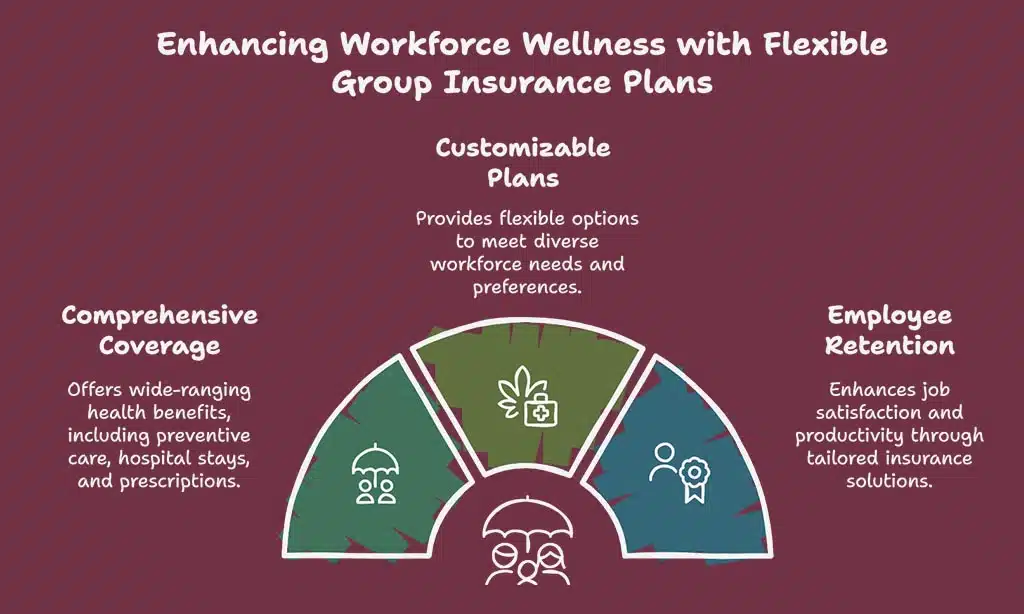
Group insurance plans in 2025 offer flexible choices to match different team needs. They also include broader health care options for better employee wellness.
Comprehensive Coverage Options
Group health insurance plans in 2025 offer wide coverage for employees. They include essential health benefits like preventive care, hospital stays, and prescriptions. Many plans also cover dependents, making them attractive to workers with families.
Employers can choose flexible options to fit workforce needs. Plans may include wellness programs or mental health support. Broader coverage reduces medical expenses for employees and boosts satisfaction.
This leads to better retention and higher productivity at work.
Customizable Plans for Diverse Workforce Needs
Startups can offer flexible health insurance options to match employee needs. Some workers may need family coverage or wellness benefits, while others want lower premiums with basic coverage.
Customizable plans allow businesses to adjust employer contributions, add health savings accounts [HSAs], or include preventive care benefits.
Employers can also use tools like individual coverage HRAs [ICHRA] to give tax-free allowances for personal policy purchases. These options help attract and retain top talent by addressing diverse healthcare demands.
A personalized plan reduces turnover and boosts satisfaction without overspending on unused benefits.
Compliance and Regulatory Advantages
Staying in line with insurance rules protects startups from fines. Group plans also help meet 2025 health coverage requirements easily.
Avoiding Penalties and Ensuring Legal Compliance
Employers with 50 or more full-time equivalent employees must offer health insurance. This is required under the Affordable Care Act [ACA]. Failing to comply can lead to costly IRS penalties.
For startups, it’s key to track workforce needs and ensure coverage is offered when needed.
Providing employer-sponsored health insurance helps meet legal standards. It also avoids fines and keeps your company safe from audits. Using payroll software or working with a professional employer organization can simplify compliance tasks like filings or tracking hours worked by employees.
Staying Updated with 2025 Health Insurance Requirements
Health insurance laws change often. Startups must stay informed to avoid fines and help employees.
- Check new Affordable Care Act [ACA] rules for 2025. These may affect employer-provided health insurance plans.
- Track state-specific regulations. Some states may have different health coverage requirements.
- Review IRS guidelines for small businesses. This ensures compliance with payroll deductions and tax filings.
- Learn about penalties for non-compliance. Applicable large employers can face heavy fines if they ignore federal requirements.
- Watch updates on the Small Business Health Options Program [SHOP] Marketplace. It offers affordable coverage options for small startups.
- Study health-related tax benefits, like the Small Business Health Care Tax Credit, for financial savings in 2025.
- Explore trends like Individual Coverage HRA [ICHRA]. This helps offer flexible benefits while meeting workforce healthcare needs.
- Monitor open enrollment periods each year to sign up or adjust group health insurance plans on time.
- Stay updated on essential health benefits required by ACA, including preventive care benefits and dependent coverage.
- Partner with a trusted insurance company or use HR and payroll software to manage employee health plans effectively and meet legal standards.
Takeaways
Offering group insurance plans can boost hiring and keep employees longer. It makes small businesses more appealing to top talent while cutting costs. These plans are often cheaper than individual coverage and offer tax-saving benefits.
They also improve worker health, leading to better productivity and satisfaction. Choosing smart employee benefits builds a stronger team for the future. Startups that invest in this step set themselves up for success in 2025 and beyond.
FAQs
1. What is group health insurance, and why should startups consider it?
Group health insurance provides a single plan covering multiple employees. Startups should consider it because it offers affordable health insurance options, boosts employee retention, and meets workforce healthcare needs.
2. How does offering employer-sponsored health insurance benefit startups?
Employer-sponsored health insurance improves employee satisfaction and productivity while reducing turnover. It also helps with recruitment by making the business more attractive to workers.
3. Are there tax benefits for startups that provide group health plans?
Yes, under the Affordable Care Act [ACA], small businesses may qualify for the Small Business Health Care Tax Credit or use pre-tax savings through programs like Health Reimbursement Arrangements [HRAs].
4. Can group plans include flexible coverage options for employees?
Yes, many plans offer flexible benefits like family coverage premiums, dependent coverage, wellness benefits, and preventive care tailored to workforce needs.
5. What are some alternatives if a startup cannot afford traditional group plans?
Startups can explore Individual Coverage HRAs [ICHRA], self-funded health insurance options, or provide a tax-free allowance as a stipend toward individual policies.
6. How do state-specific regulations impact small business health insurance choices?
State rules affect essential health benefits and in-network provider requirements within group plans or other offerings like Health Maintenance Organizations [HMOs] or Preferred Provider Organizations [PPOs].