Last-mile delivery is one of the most crucial aspects of logistics, directly affecting customer satisfaction and operational costs. Businesses that fail to optimize last-mile delivery efficiency often struggle with late deliveries, high transportation costs, and poor customer experiences. With e-commerce expanding rapidly, improving the last-mile process is no longer optional—it’s a necessity.
As customer expectations rise, companies must embrace innovative technologies, strategic planning, and data-driven decision-making to improve last-mile delivery efficiency.
This article explores the top 10 ways to enhance last-mile logistics, offering practical solutions, case studies, and key insights to help businesses streamline their operations and achieve cost savings while keeping customers happy.
What Is Last-Mile Delivery?
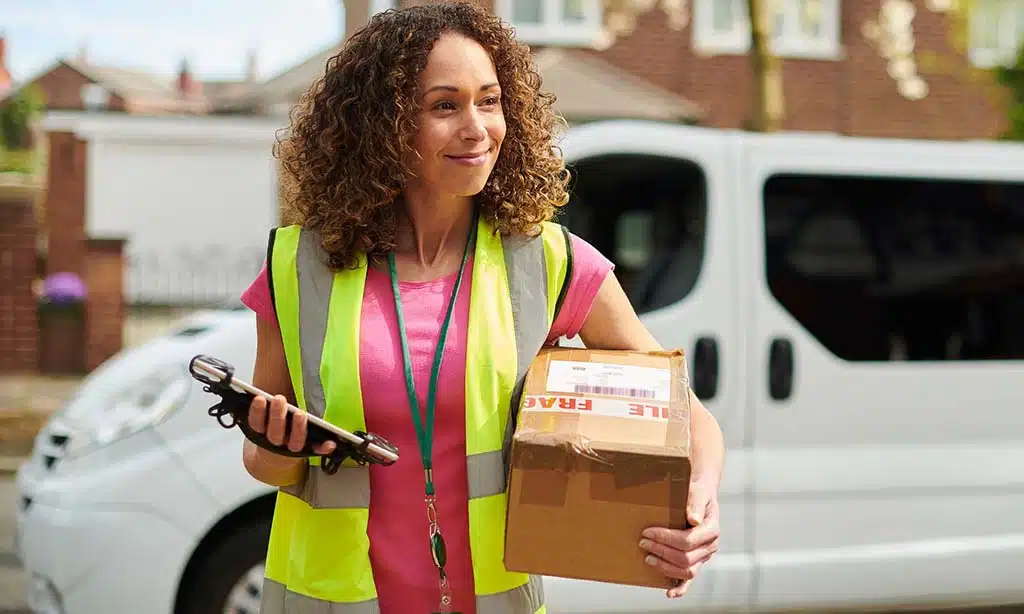
Last-mile delivery refers to the final step in the logistics process, where goods move from a transportation hub to the end consumer. It is often the most expensive and time-consuming part of the supply chain, accounting for up to 53% of total shipping costs.
Why Is Last-Mile Delivery Efficiency Important?
- Customer Satisfaction: Faster and reliable deliveries lead to positive customer experiences.
- Cost Reduction: Optimizing last-mile delivery helps lower fuel and labor costs.
- Competitive Advantage: Efficient logistics give businesses an edge in the market.
- Sustainability: Reducing fuel consumption and emissions through optimized routes and electric vehicles.
Key Metrics to Measure Last-Mile Delivery Performance
| Metric | Description |
| Delivery Speed | Time taken to complete deliveries |
| Cost per Delivery | Expenses incurred for each successful delivery |
| Customer Satisfaction | Feedback and ratings from customers |
| Delivery Success Rate | Percentage of successful deliveries on the first attempt |
| Fuel Efficiency | Optimization of fuel consumption for cost savings |
Top 10 Strategies to Improve Last-Mile Delivery Efficiency
The last-mile delivery process is often the most challenging and cost-intensive stage in logistics. With growing consumer expectations for faster deliveries, businesses must adopt strategic solutions to enhance efficiency.
From leveraging technology-driven route optimization to improving workforce productivity, implementing the right strategies can lead to significant cost savings and improved customer satisfaction.
The following ten strategies will help businesses streamline their last-mile operations, ensuring deliveries are timely, cost-effective, and customer-centric.
1. Optimize Route Planning with AI & GPS Technology
One of the most effective ways to improve last-mile delivery efficiency is through AI-driven route optimization tools that analyze traffic patterns, weather conditions, and delivery windows to suggest the best routes. These advanced systems leverage big data and predictive analytics to adapt dynamically to real-time conditions, minimizing delays and maximizing fuel efficiency.
By integrating these tools, businesses can achieve faster deliveries, reduced operational costs, and enhanced customer satisfaction. Furthermore, AI-driven route planning reduces driver stress and workload by optimizing travel times and simplifying navigation challenges.
| Tool | Key Features |
| Route4Me | AI-driven multi-stop route planning |
| OptimoRoute | Real-time adjustments and predictive analytics |
| Google Maps API | Traffic analysis and live updates |
Example: UPS uses ORION [On-Road Integrated Optimization and Navigation], an AI-powered route optimization system, to save 10 million gallons of fuel annually.
2. Implement Real-Time Delivery Tracking
Real-time delivery tracking is a critical tool for improving last-mile delivery efficiency by offering complete visibility to both businesses and customers. This system reduces uncertainties, enhances trust, and ensures better coordination among logistics teams.
Businesses that integrate real-time tracking solutions benefit from fewer customer complaints, improved delivery accuracy, and optimized resource management. Additionally, real-time data can help companies analyze delivery patterns and improve future logistics planning.
| Benefits | Description |
| Increased Visibility | Customers and businesses can track packages in real time. |
| Reduced Support Tickets | Fewer customer service inquiries about delivery status. |
| Better Resource Allocation | Allows businesses to re-route deliveries when necessary. |
| Enhanced Delivery Accuracy | Reduces misrouted packages and incorrect deliveries. |
Leading logistics companies like DHL and FedEx use AI-powered real-time tracking systems to minimize delivery delays and improve overall efficiency.
By integrating these technologies, businesses can ensure a smoother last-mile delivery process while keeping customers informed and satisfied.
- Real-time tracking enhances transparency for customers and businesses.
- Customers receive accurate ETAs, reducing complaints and inquiries.
- Tools like Onfleet, Circuit, and Shipwell provide live tracking updates.
| Benefits | Description |
| Increased Visibility | Customers and businesses can track packages in real time. |
| Reduced Support Tickets | Fewer customer service inquiries about delivery status. |
| Better Resource Allocation | Allows businesses to re-route deliveries when necessary. |
3. Use Automated Dispatching & Smart Scheduling
Automated dispatching and smart scheduling significantly enhance last-mile delivery efficiency by reducing delays and improving resource allocation. AI-powered systems analyze order volume, driver availability, traffic conditions, and delivery priorities to assign deliveries in the most efficient manner.
This automation helps reduce idle time, minimize fuel consumption, and ensure faster deliveries. Businesses leveraging predictive analytics can further optimize scheduling by anticipating demand fluctuations and adjusting routes dynamically.
| Feature | Benefit |
| Dynamic Scheduling | Adjusts in real-time based on delivery delays and road conditions. |
| Driver Optimization | Assigns deliveries based on driver location, workload, and efficiency. |
| Predictive Analytics | Anticipates demand spikes and optimizes routes accordingly. |
| Automated Order Prioritization | Ensures high-priority deliveries are completed first. |
Example: Amazon uses machine learning to predict peak delivery hours and allocate resources accordingly, ensuring seamless order fulfillment and reduced wait times for customers.
AI-powered dispatching systems analyze order volume, location, and traffic to assign deliveries to the most suitable drivers.
| Feature | Benefit |
| Dynamic Scheduling | Adjusts in real-time based on delivery delays. |
| Driver Optimization | Assigns deliveries based on driver availability and distance. |
Example: Amazon uses machine learning to predict peak delivery hours and allocate resources accordingly.
4. Leverage Micro-Fulfillment Centers
Micro-fulfillment centers [MFCs] are transforming last-mile delivery by positioning inventory closer to consumers, drastically reducing shipping times.
These small-scale warehouses integrate automation and AI-driven logistics to optimize inventory management and order fulfillment. Companies adopting MFCs benefit from faster order processing, lower transportation costs, and enhanced scalability.
As consumer demand for rapid deliveries continues to rise, micro-fulfillment centers are becoming a key solution for retailers and e-commerce businesses looking to enhance their last-mile strategies.
| Advantage | Impact |
| Faster Deliveries | Shortens the distance between inventory and customers, enabling same-day delivery. |
| Lower Shipping Costs | Reduces reliance on major distribution centers, decreasing overall logistics expenses. |
| Improved Inventory Management | Ensures that frequently ordered items are stored locally for quick access. |
| Automation & AI Integration | Enhances picking efficiency and reduces human error in order fulfillment. |
Companies like Walmart and Instacart have successfully integrated micro-fulfillment centers into their operations, offering rapid deliveries while minimizing costs. By leveraging MFCs, businesses can stay competitive in the fast-evolving e-commerce landscape while ensuring a seamless customer experience.
Micro-fulfillment centers [MFCs] are small, localized warehouses designed to reduce delivery time.
| Advantage | Impact |
| Faster Deliveries | Shortens the distance between inventory and customers. |
| Lower Shipping Costs | Reduces reliance on major distribution centers. |
| Improved Inventory Management | Helps businesses store frequently ordered items locally. |
5. Optimize Delivery Fleet & Use Electric Vehicles
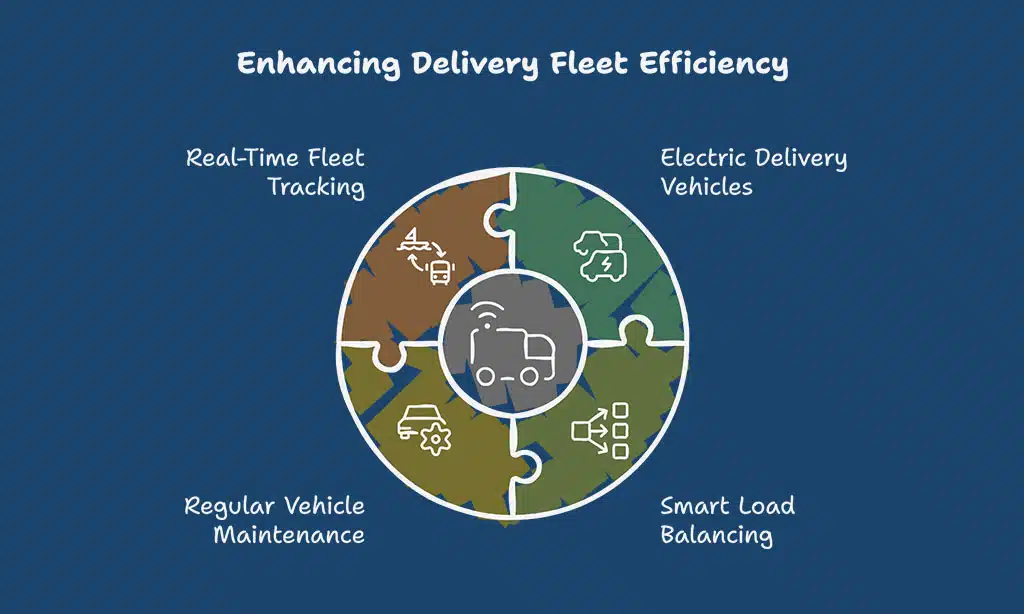
Optimizing the delivery fleet is essential to improving last-mile delivery efficiency, reducing operational costs, and ensuring sustainability. Businesses that invest in fleet management software, electric vehicles, and predictive maintenance can significantly enhance their logistics operations.
A well-maintained fleet minimizes delays, improves fuel efficiency, and reduces environmental impact. Additionally, leveraging real-time vehicle tracking helps companies make data-driven decisions to optimize routes and delivery schedules.
| Strategy | Benefit |
| Electric Delivery Vehicles | Lower fuel costs and reduced carbon emissions. |
| Smart Load Balancing | Maximizes efficiency per trip by optimizing package distribution. |
| Regular Vehicle Maintenance | Prevents breakdowns and minimizes unexpected delays. |
| Real-Time Fleet Tracking | Enhances route optimization and delivery coordination. |
Example: FedEx aims for carbon-neutral last-mile delivery by 2040 through electric and autonomous vehicles. Companies like Amazon and UPS are also expanding their EV fleets to minimize costs and improve environmental sustainability.
Fleet optimization minimizes fuel consumption and maximizes load capacity.
| Strategy | Benefit |
| Electric Delivery Vehicles | Lower fuel costs and reduced carbon emissions. |
| Smart Load Balancing | Maximizes efficiency per trip. |
| Regular Vehicle Maintenance | Prevents breakdowns and delays. |
Example: FedEx aims for carbon-neutral last-mile delivery by 2040 through electric and autonomous vehicles.
6. Offer Multiple Delivery Options for Customers
Offering multiple delivery options is a game-changer in last-mile logistics, catering to the diverse needs of modern consumers. Businesses that provide same-day, next-day, scheduled, and contactless deliveries can significantly enhance customer satisfaction and loyalty.
Providing flexibility not only meets consumer preferences but also helps optimize delivery efficiency by spreading out order volumes over manageable timeframes.
Companies leveraging technology to implement multiple delivery modes can balance costs, reduce delivery failures, and improve overall supply chain management.
| Delivery Option | Benefits |
| Same-Day Delivery | Ideal for urgent shipments, improving customer satisfaction. |
| Next-Day Delivery | Balances speed and cost-effectiveness for businesses. |
| Click & Collect | Reduces logistics costs and allows customers to pick up at their convenience. |
| Subscription-Based Delivery | Provides recurring deliveries, enhancing customer retention. |
By incorporating these flexible delivery solutions, businesses can meet customer expectations, reduce logistical bottlenecks, and improve operational efficiency.
- Same-day & next-day delivery cater to urgent needs.
- Pickup points & lockers offer convenient self-service collection.
- Subscription-based deliveries provide reliable recurring shipments.
7. Improve Communication & Customer Experience
Effective communication is key to ensuring a seamless last-mile delivery experience for customers. Businesses that provide timely updates and transparent communication gain a competitive advantage by reducing failed deliveries and enhancing customer satisfaction.
By leveraging automated notifications, chatbots, and customer feedback loops, companies can proactively manage expectations and address concerns before they escalate.
A well-designed communication strategy not only fosters trust but also improves overall efficiency and brand reputation.
| Communication Strategy | Benefit |
| Automated SMS & Email Updates | Keeps customers informed about their delivery status. |
| AI-Powered Chatbots | Provides instant responses to common customer inquiries. |
| Delivery Confirmation Calls | Reduces missed deliveries by verifying recipient availability. |
| Customer Feedback Collection | Helps businesses improve service quality based on real data. |
By integrating these communication strategies into their operations, companies can create a more reliable, efficient, and customer-centric last-mile delivery experience.
- Sending real-time updates via SMS, email, and mobile apps reduces uncertainty.
- AI-powered chatbots handle customer inquiries efficiently.
- Proactive communication reduces failed deliveries and refunds.
8. Enhance Last-Mile Delivery Workforce Productivity
A well-trained and motivated workforce is crucial for efficient last-mile delivery operations. Investing in driver training, performance monitoring, and smart workforce management solutions can significantly enhance delivery efficiency.
Companies that empower their workforce with the right tools and technology experience fewer delays, higher customer satisfaction, and optimized delivery routes.
Data-driven insights can further help in monitoring productivity, reducing idle time, and improving driver engagement.
| Workforce Strategy | Benefit |
| Driver Training Programs | Enhances efficiency and reduces delivery errors. |
| Wearable Technology | Improves real-time monitoring and communication. |
| Telematics & GPS Tracking | Provides insights on driving behavior and route optimization. |
| Performance-Based Incentives | Motivates workers to meet delivery targets effectively. |
By implementing these workforce strategies, businesses can ensure that their delivery personnel remain efficient, productive, and engaged, ultimately improving last-mile delivery efficiency.
- Training delivery drivers on best practices for efficiency.
- Using wearable technology [like smart glasses] improves performance.
- Telematics software monitors driver performance and provides real-time feedback.
9. Reduce Failed Deliveries with AI-Powered Predictive Analytics
Failed deliveries result in significant losses for businesses, causing unnecessary expenses, inefficient resource allocation, and poor customer experiences. Predictive analytics, powered by AI and machine learning, plays a crucial role in mitigating these issues by forecasting delivery risks and optimizing schedules.
Companies leveraging these technologies can enhance their delivery success rates by preemptively addressing potential challenges.
By analyzing customer behavior, past delivery patterns, and real-time factors like traffic congestion, AI enables businesses to take proactive measures that reduce the chances of failed deliveries.
| Challenge | AI Solution |
| Missed Deliveries | AI predicts optimal delivery time based on customer availability. |
| Traffic Congestion | Machine learning suggests alternate routes. |
| High Costs | AI streamlines routes to cut fuel costs. |
10. Adopt Drones & Autonomous Delivery Vehicles
Drones and autonomous robots enhance delivery efficiency in urban and rural areas by reducing delivery times, lowering operational costs, and providing an eco-friendly alternative to traditional delivery methods.
Companies like Wing, a subsidiary of Alphabet, have already launched drone delivery services in select locations, successfully delivering small packages within minutes.
Similarly, Starship Technologies’ autonomous robots have been widely adopted for food and parcel deliveries in urban settings, improving efficiency while minimizing human labor costs.
These technologies are expected to scale rapidly, transforming last-mile logistics into a faster, more cost-effective, and sustainable process.
| Innovation | Benefit |
| Drones | Faster and eco-friendly for lightweight packages. |
| Autonomous Vehicles | Ideal for reducing labor costs and streamlining urban deliveries. |
Example: Amazon Prime Air and Starship Technologies lead in drone-based and autonomous deliveries.
Takeaways
Improving last-mile delivery efficiency is essential for businesses aiming to stay competitive in the modern e-commerce landscape. By implementing AI-powered route planning, real-time tracking, fleet optimization, and automated dispatching, companies can enhance their logistics operations, reduce costs, and improve customer satisfaction.
Adopt these proven strategies today to streamline your last-mile delivery process, reduce costs, and gain a competitive edge in the market!
As consumer demand for rapid and flexible delivery services grows, organizations that invest in innovation and data-driven strategies will lead the industry. Adopt these proven strategies today to streamline your last-mile delivery process, reduce costs, and gain a competitive edge in the market!