In a landmark decision on his first day in office, President Donald Trump issued an executive order to delay a law banning TikTok in the United States. The law, officially known as the Protecting Americans from Foreign Adversary Controlled Applications Act (PAFACA), took effect on January 19, 2025, and would have required tech companies to remove TikTok from app stores and prohibit updates. The executive order introduces a 75-day pause, granting time to explore solutions to concerns about national security while keeping the app accessible for its 170 million U.S. users.
TikTok Ban Postponed Amid Concerns
The legislation was signed into law by former President Joe Biden in 2024 after being overwhelmingly passed by Congress. It was designed to address threats posed by applications controlled by foreign adversaries. TikTok, owned by Chinese parent company ByteDance, was a primary target due to fears that the Chinese government could exploit the platform to spy on Americans or influence public opinion by collecting user data and manipulating content.
Under the new law, companies like Apple and Google would face penalties of up to $5,000 per user if TikTok remained accessible or was updated on their platforms. Service providers such as Oracle, which hosts TikTok’s U.S. data, were similarly bound by the law. Enforcement of the ban required TikTok’s immediate removal from app stores and a cessation of all updates and services.
Temporary Shutdown Before Executive Action
In compliance with the law, TikTok ceased its operations in the United States late Saturday, January 18, leaving millions of users dismayed as the platform became inaccessible. This move marked the first time a widely popular social media app had been effectively banned across the U.S. TikTok users, many of whom had built businesses or followed trends on the platform, expressed their frustration and disappointment across other social media outlets.
However, President Trump’s swift executive order on Sunday, January 19, reversed this development, allowing TikTok to resume its operations. The restoration of services became possible when the order provided legal protections to tech companies and service providers that continue to host or update TikTok during the 75-day pause.
Trump’s Evolving Relationship with TikTok
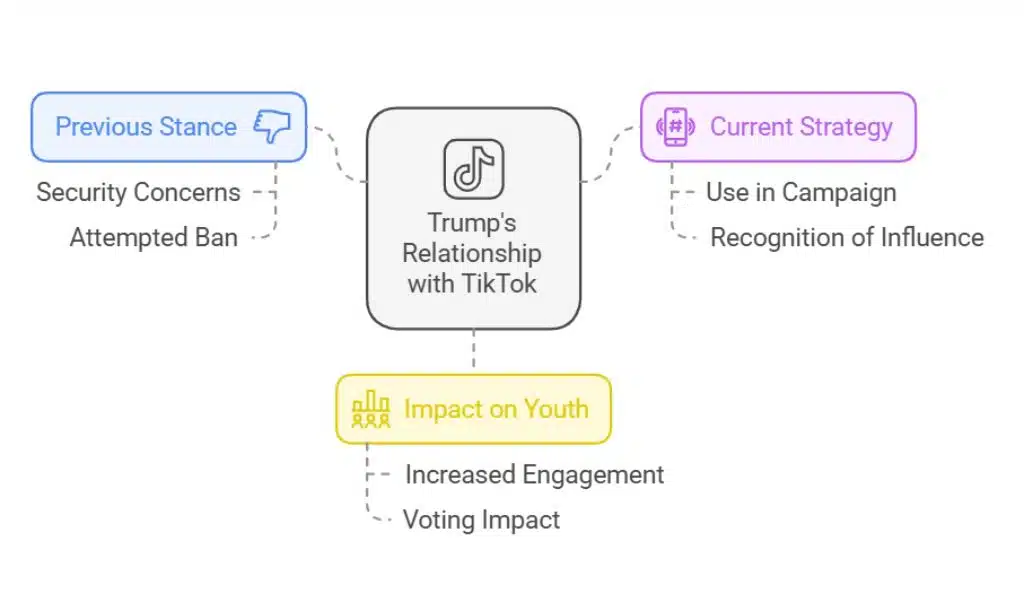
President Trump’s action represents a significant departure from his earlier stance on TikTok. During his previous term, he attempted to ban TikTok outright, citing similar security concerns. However, his recent presidential campaign saw a pivot as he used the app to reach younger voters. TikTok emerged as an unexpected platform for Trump to connect with youth audiences, which he credits for his success in securing their votes in the 2024 election.
Speaking at the signing of the executive order, Trump commented, “I guess I have a warm spot for TikTok that I didn’t have originally, but I went on TikTok and I won young people.” He acknowledged that the platform’s massive user base and influence are undeniable, making it a critical channel for modern political engagement.
Purpose of the 75-Day Delay
The 75-day delay was framed as a necessary step to allow for the exploration of potential resolutions that would address the national security concerns tied to TikTok’s Chinese ownership. The executive order stated that the pause is intended to “pursue a resolution that protects national security while saving a platform used by millions of Americans.” During this period, the administration aims to negotiate a deal that could include a forced sale of TikTok’s U.S. operations to an American company or a restructuring of its governance to ensure no undue influence from foreign entities.
Implications for Tech Companies and Users
The executive order is critical for tech companies like Apple and Google, which were preparing to enforce the ban. Without the pause, they faced severe penalties for hosting TikTok on their platforms. Similarly, Oracle, which manages TikTok’s U.S. servers, was under legal obligation to halt services. The 75-day grace period now provides these companies with legal clarity, ensuring they can continue operations without risking financial and reputational damage.
For TikTok users, the order has brought temporary relief. Content creators, influencers, and businesses that rely on the platform for their livelihoods now have a reprieve. Many are hopeful that the extended timeline will lead to a resolution that allows the app to remain in operation without interruption.
Next Steps and Challenges Ahead
Despite the delay, the future of TikTok in the U.S. remains uncertain. The executive order grants President Trump the authority to either approve a deal that would allow the app to continue operating under new ownership or to implement the ban if no acceptable resolution is reached. Trump commented, “I just gave myself the right to sell it or close it,” emphasizing the urgency of finding a viable solution.
Experts believe that negotiations will likely focus on addressing data security concerns. Potential options include transferring TikTok’s U.S. operations to a domestic company, ensuring that user data is stored within the country, and implementing safeguards to prevent any foreign interference. However, achieving a deal that satisfies both national security requirements and TikTok’s operational needs will be a complex process.
Broader Implications for U.S.-China Tech Relations
The TikTok saga underscores the broader tensions between the U.S. and China regarding technology and data security. The ban reflects growing concerns over the influence of Chinese technology companies in the U.S. and the potential risks associated with foreign control of sensitive user information. Analysts predict that TikTok’s case could set a precedent for how the U.S. government approaches other Chinese-owned applications and technologies in the future.
As the 75-day countdown begins, all eyes are on the Trump administration to see how it navigates this high-stakes issue. The resolution of the TikTok controversy will likely have lasting implications for the tech industry, international relations, and the millions of Americans who use the app daily.