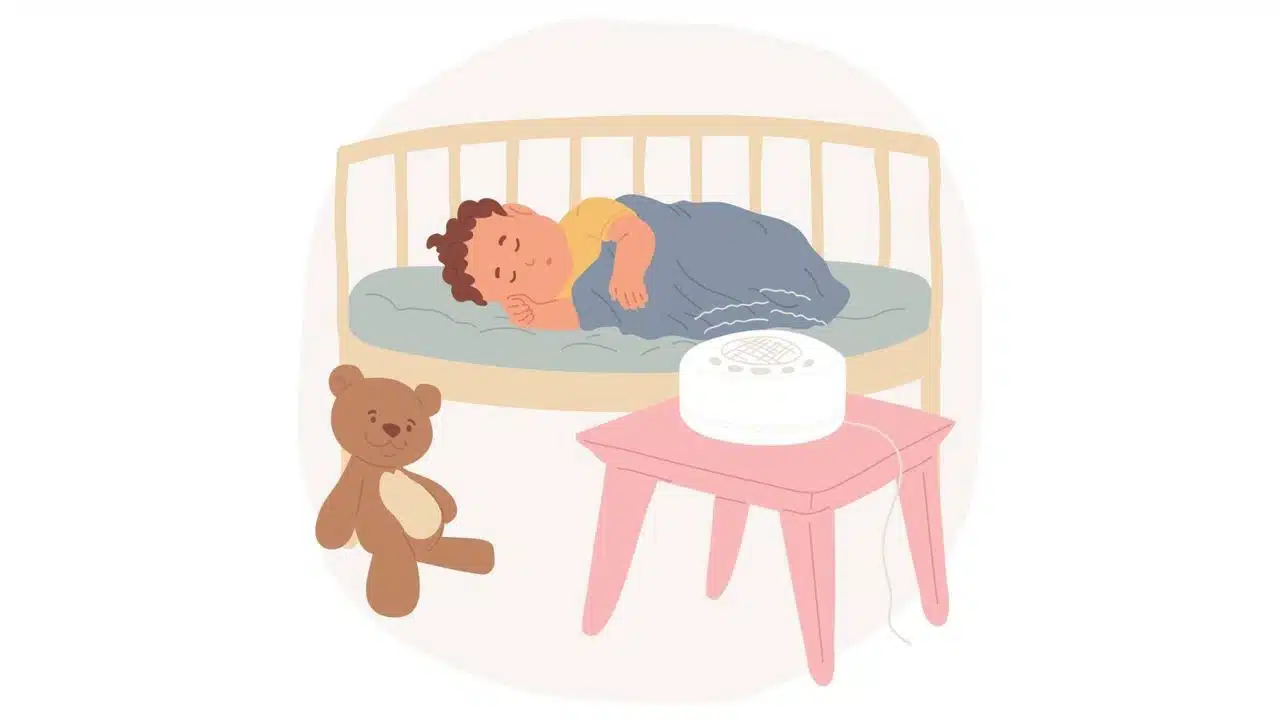
White noise machines are popular among parents seeking to soothe their infants and improve sleep patterns. However, a new study published in the journal Sleep Medicine has sparked significant concerns regarding the safety of these devices.
The research indicates that many white noise machines can emit sound levels far exceeding safe volumes, potentially putting infants at risk of hearing damage.
Investigation Findings: Excessive Noise Levels
The study, led by Dr. Isaac Erbele, a specialist in ear and skull surgeries at Brooke Army Medical Center in San Antonio, involved analyzing existing data on the sound levels produced by white noise machines.
The findings were alarming: not only do many devices produce sounds louder than what is recommended for adult workers, but they also surpass levels considered safe for the more delicate hearing of infants.
Dr. Erbele noted, “These devices exceeded what is appropriate for hearing health for any individual, just walking around and living their life,” underscoring the widespread misuse of these products.
Lack of Regulation and Clear Guidelines
One of the major issues highlighted by the study is the absence of federal regulation for white noise machines, combined with often unclear labeling of noise levels. This lack of oversight leaves parents without the necessary information to make informed decisions about the safety of these devices for their children.
The American Academy of Pediatrics (AAP) advises placing the machines as far away as possible from the infant, minimizing the volume, and limiting the duration of use.
However, specific decibel cutoffs are not provided, which can lead to confusion and potential misuse.
Study Methodology and Results
Dr. Erbele’s team reviewed 24 different white noise machines and 6 smartphone applications designed to simulate similar sounds.
Shockingly, all tested items produced sound levels higher than the 85-decibel limit set by the National Institute for Occupational Safety and Health (NIOSH) for an eight-hour exposure.
This standard is intended to prevent hearing loss among workers, suggesting that the safety threshold for infants should be significantly lower.
Proposed Safe Sound Levels
Based on the alarming data, Dr. Erbele and his colleagues recommend a maximum sound level of 60 decibels for white noise machines used around infants.
This recommendation is derived from a comprehensive review of available literature, aiming to provide a safer benchmark that takes into account the heightened sensitivity of infants’ auditory systems.
Practical Advice for Parents
For parents who wish to continue using white noise machines, there are ways to mitigate risks. Dr. Landon Duyka, an ear, nose, and throat specialist not involved in the study, suggests gradually reducing the machine’s volume over time, especially during naps, to wean children off dependency on the sound for sleep.
Additionally, Dr. Erbele recommends using the NIOSH “Sound Level Meter” app to accurately measure the noise output of devices in use.
Ongoing Monitoring and Healthcare Guidance
Both experts stress the importance of vigilant monitoring for signs of hearing impairment in children, such as a lack of response to loud sounds like a door slamming or a dog barking. Regular pediatric hearing assessments are advised to ensure any potential issues are identified and addressed promptly.
While white noise machines can indeed be a valuable tool for parents, the potential risks they pose cannot be overlooked. It is crucial for parents to be informed about the appropriate sound levels and to regularly monitor their child’s hearing health.
By implementing recommended practices and utilizing tools like sound level meters, parents can continue to use these devices effectively and safely, ensuring their infants’ comfort does not come at the expense of their hearing.
The information is taken from NBC News and Yahoo News