

Zero-waste cleaning is more than a trend; it’s a sustainable lifestyle choice that reduces environmental impact while saving money. By adopting a zero-waste cleaning routine with refillable bottles, you can minimize plastic waste and contribute to a healthier planet.
This guide will walk you through the process of setting up and maintaining an eco-friendly cleaning system that’s easy, effective, and rewarding. Along the way, you’ll discover practical tips, insightful data, and actionable steps to make this transition seamless and impactful.
What Is Zero-Waste Cleaning?
Zero-waste cleaning is a method that prioritizes reducing waste and reusing materials in your cleaning practices.
It’s about choosing products and habits that minimize your environmental footprint while maintaining a clean and healthy home.
This approach often involves using refillable bottles, biodegradable materials, and eco-friendly products.
Adopting a zero-waste cleaning routine with refillable bottles ensures you’re making a significant environmental difference.
Overview of Zero-Waste Principles:
| Principle | Description |
| Reduce | Limit unnecessary waste by choosing reusable or refillable options. |
| Reuse | Opt for products that can be reused multiple times to reduce consumption. |
| Recycle | Properly sort and recycle materials that can’t be reused. |
| Refuse | Avoid single-use items and non-essential packaging wherever possible. |
Real-Time Data: The Impact of Zero-Waste Cleaning
- According to a 2023 study by Sustainability Insights, adopting refillable bottles can reduce household plastic waste by up to 30% annually.
- The EPA reports that 91% of plastic waste is not recycled, making refillable solutions critical. This highlights why integrating a zero-waste cleaning routine with refillable bottles is a priority.
Benefits of Using Refillable Bottles
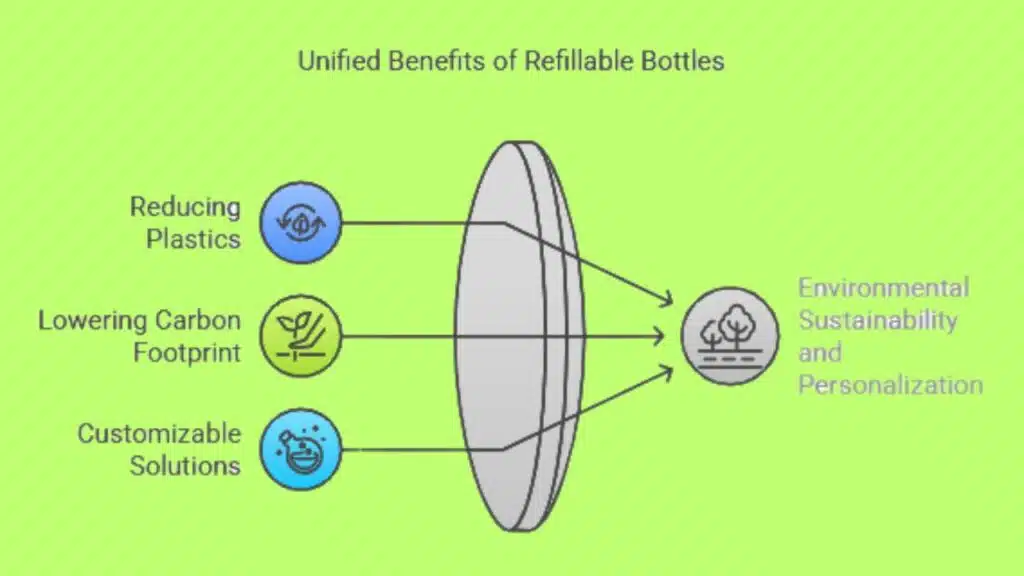
- Reducing Single-Use Plastics: Refillable bottles eliminate the need for disposable plastic containers, significantly reducing landfill waste.
- Lowering Carbon Footprint: Manufacturing fewer plastic products decreases greenhouse gas emissions.
- Customizable Cleaning Solutions: Refillable bottles allow you to mix and match cleaning agents tailored to your needs, giving you control over what’s in your products.
By committing to a zero-waste cleaning routine with refillable bottles, you’re not only helping the environment but also creating a healthier home.
Comparative Table: Refillable Bottles vs. Single-Use Bottles
| Feature | Refillable Bottles | Single-Use Bottles |
| Environmental Impact | Low | High |
| Cost Over Time | Economical | Expensive |
| Customization Options | High | Low |
| Durability | Long-lasting | Disposable |
Steps to Set Up Your Zero-Waste Cleaning Routine
Step 1: Audit Your Current Cleaning Supplies
Before transitioning to a zero-waste cleaning routine with refillable bottles, take stock of what you already have.
Identify items that are wasteful or contain harmful chemicals and note what needs replacing. This step ensures that your zero-waste cleaning routine with refillable bottles is both efficient and effective.
Checklist for Your Audit:
| Item Type | Replace With |
| Single-use spray bottles | Glass or stainless steel refillable bottles |
| Chemical-heavy cleaners | Eco-friendly, biodegradable alternatives |
| Disposable wipes | Reusable, washable cloths |
Case Study: Lisa’s Transition to Zero-Waste Cleaning
Lisa, a busy mom, conducted an audit of her cleaning supplies and discovered she was spending $50 monthly on disposable products.
By switching to refillable bottles and DIY solutions, she reduced her expenses by 40% and significantly cut down waste.
Her family’s garbage output decreased by 25% within six months. Lisa’s commitment to a zero-waste cleaning routine with refillable bottles made her household more sustainable and budget-friendly.
Step 2: Choose the Right Refillable Bottles
Selecting the appropriate bottles is crucial for a successful zero-waste cleaning routine with refillable bottles. Consider the following factors:
Materials to Look For:
- Glass: Durable and non-reactive, ideal for most cleaning solutions.
- Stainless Steel: Lightweight and resistant to corrosion.
- BPA-Free Plastic: A cost-effective option for less acidic solutions.
Size and Functionality:
| Bottle Type | Ideal Use | Example Features |
| Small Bottles | Travel or quick clean-ups | Compact and portable |
| Large Bottles | Bulk storage | Higher capacity |
| Spray Bottles | General cleaning tasks | Adjustable nozzles |
Step 3: Select Eco-Friendly Cleaning Products
Switching to eco-friendly cleaning products is a cornerstone of a zero-waste cleaning routine with refillable bottles.
Opt for products with minimal packaging and biodegradable ingredients. This ensures a safe and sustainable home environment.
Ingredients to Avoid:
| Harmful Ingredient | Reason to Avoid |
| Phthalates | Linked to health issues and endocrine disruption |
| Parabens | Harmful to aquatic life and potentially carcinogenic |
| Artificial Fragrances | Can trigger allergies and respiratory problems |
DIY Options:
Create your own cleaning solutions using simple, natural ingredients:
- All-Purpose Cleaner: Mix 1 cup of vinegar, 1 cup of water, and a few drops of essential oil.
- Glass Cleaner: Combine 2 cups of water, ½ cup of vinegar, and ¼ cup of rubbing alcohol.
- Bathroom Scrub: Blend baking soda with a few drops of dish soap to form a paste. These recipes integrate seamlessly into any zero-waste cleaning routine with refillable bottles.
Step 4: Organize Your Cleaning Routine
Streamline your tasks by developing an organized cleaning schedule. Assign specific refillable bottles for each cleaning task, such as kitchen, bathroom, and windows.
This approach ensures your zero-waste cleaning routine with refillable bottles remains structured and efficient.
Example Weekly Schedule:
| Day | Task | Suggested Supplies |
| Monday | Dusting and vacuuming | Microfiber cloth, duster |
| Wednesday | Bathroom cleaning | Vinegar-based cleaner |
| Friday | Kitchen deep cleaning | Baking soda, scrubber |
| Saturday | Windows and mirrors | Glass cleaner |
Tips for Maintaining a Sustainable Cleaning Routine
Refill and Reuse Regularly
Keep your cleaning routine sustainable by ensuring your bottles are refilled promptly. Locate local bulk stores or refill stations for eco-friendly products. Regular refilling is key to a successful zero-waste cleaning routine with refillable bottles.
How to Clean and Maintain Bottles:
| Step | Method |
| Daily Maintenance | Rinse thoroughly with warm water. |
| Weekly Cleaning | Wash with hot water and soap. |
| Monthly Deep Clean | Use a mixture of vinegar and baking soda. |
Minimize Waste Further
Adopting additional zero-waste practices can amplify your efforts:
- Use biodegradable cleaning cloths instead of disposable wipes.
- Repurpose old T-shirts or towels as cleaning rags.
- Opt for concentrated cleaning solutions to reduce packaging.
Quick Tips:
| Tip | Benefit |
| Label bottles clearly | Prevents accidental misuse |
| Use color-coded cloths | Simplifies task-specific cleaning |
| Store DIY cleaners properly | Extends shelf life and ensures safety |
Track Your Progress
Monitoring your progress can motivate you to stick with your zero-waste goals:
- Keep a journal of waste reduction achievements.
- Share milestones with friends or on social media to inspire others. Highlight your success with your zero-waste cleaning routine with refillable bottles.
Takeaways
Transitioning to a zero-waste cleaning routine with refillable bottles is a simple yet impactful way to reduce your environmental footprint.
By following the steps outlined above, you can create a sustainable cleaning system that aligns with your values and contributes to a healthier planet.
A zero-waste cleaning routine with refillable bottles not only benefits the environment but also promotes a cleaner and safer home for your family.
Ready to start your zero-waste journey? Share your experiences and tips in the comments below, and explore our recommended eco-friendly products to get started today!

























