

Online privacy is a growing concern. Many people worry about sharing personal data on blockchain networks. Businesses also fear losing sensitive information or falling short of privacy standards.
Zero-knowledge proofs (ZKPs) offer a smart solution. They let you prove something is true without revealing any details. This technology can boost data security and protect users’ identities.
In this blog, you’ll learn how ZKPs are reshaping Web3’s privacy rules. Keep reading to discover why this matters!
Key Features of Zero-Knowledge Proofs in Web3
Zero-knowledge proofs boost privacy and security in blockchain technology. They also make systems faster, safer, and more reliable for Web3 applications.
Privacy Preservation
Data privacy is vital in Web3. Zero-knowledge proofs (ZKPs) let users prove facts without sharing sensitive data. For example, you can confirm your age to access a platform without revealing your exact birthdate.
This keeps personal details safe.
These cryptographic methods balance transparency and secrecy. They allow systems like public blockchains to verify transactions while hiding private info. With ZKPs, trust grows, and risks of data breaches drop significantly.
Enhanced Security
Zero-knowledge proofs boost security by protecting sensitive details. They verify truths without revealing private data, like confirming age without sharing your birthdate. This makes them great for identity verification and keeping personal info safe in Web3 applications.
Hackers face a tough time with this tech. It uses advanced cryptographic techniques, such as zkSNARKs, to stop unauthorized access and tampering. Fraud risks drop since secrets stay hidden during transactions or smart contracts.
As threats grow online, zero-knowledge systems provide reliable shields for privacy and data integrity.
Privacy is not an option; it’s the key to safety.
Scalability Benefits
Scalability becomes key as Web3 grows. Zero-knowledge proofs (ZKPs) help blockchains handle more data without slowing down. They allow systems to verify transactions quickly, using less computing power.
This reduces costs and makes networks faster.
For example, scalable transparent arguments of knowledge (SNARKs) compress transaction data effectively. Developers can now build decentralized applications that process many actions at once.
This creates a smoother experience for users while supporting bigger networks efficiently.
Types of Zero-Knowledge Proofs
Zero-knowledge proofs come in different forms, each with its own way of working. These methods use cryptographic tricks to protect data while proving facts.
Interactive Zero-Knowledge Proofs (iZKP)
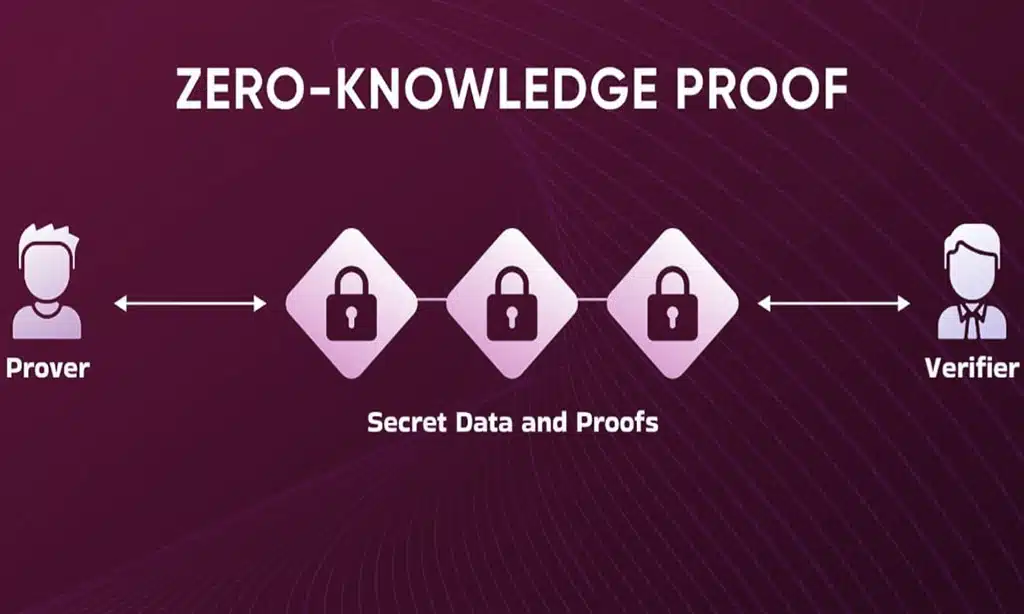
Interactive Zero-Knowledge Proofs (iZKP) require back-and-forth communication between two parties: the prover and the verifier. The prover shows they know a secret without sharing it, while the verifier checks their claim step by step.
This process adds more flexibility to systems like secure voting or digital identity verification.
A key strength of iZKP lies in its ability to prove knowledge interactively, boosting trust without exposing sensitive data.
These proofs rely on cryptographic techniques and random challenges to keep information safe. For example, a blockchain-based system can use iZKP for private transactions while ensuring transparency.
Though slower than other methods, its dynamic nature suits situations needing constant interaction.
Non-Interactive Zero-Knowledge Proofs (niZKP)
Non-Interactive Zero-Knowledge Proofs (niZKP) improve privacy. They allow one party to prove something without talking back and forth. This method is faster than interactive proofs.
It uses a single message with cryptographic techniques like hash functions or random oracles.
These proofs boost efficiency in decentralized systems like blockchain. Developers use them for secure identity verification and private transactions on a private blockchain. niZKPs often rely on trusted setup processes, such as the Fiat-Shamir heuristic, to generate proof systems that don’t compromise data privacy or security.
Their scalability makes them ideal for Web3 applications needing both speed and strong information security.
Popular Zero-Knowledge Proof Systems
Some zk proofs stand out for their speed and flexibility. Others shine by handling more users or keeping costs low.
SNARKs and Their Applications
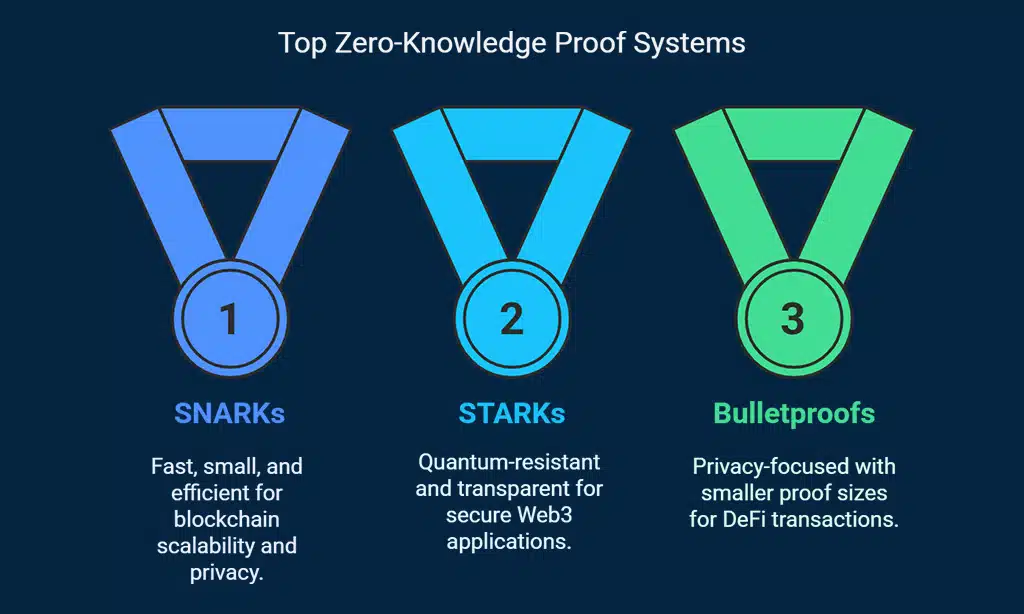
SNARKs, or Succinct Non-Interactive Arguments of Knowledge, allow proof without revealing data. They are fast, small in size, and need less computing power. This makes them useful for blockchain scalability and privacy-enhancing technologies.
Digital identity verification can use SNARKs to protect personal information while proving authenticity.
Blockchain projects like zkSync employ SNARKs for private transactions. These proofs also support decentralized finance (DeFi) by keeping operations transparent but private. Developers value their efficiency in securing data integrity and meeting compliance standards like GDPR without exposing sensitive details.
STARKs and Their Advantages
STARKs (Scalable Transparent Argument of Knowledge) offer high privacy without a trusted setup. They use simple math to verify data securely. This cuts the need for extra steps, making them faster and safer than many options.
STARKs are quantum-resistant, which means they can stand against future threats from advanced computers. These proofs boost blockchain scalability while keeping things private.
They shine in Web3 applications like secure voting systems or supply chain tracking. By preserving data integrity, STARKs help protect sensitive details such as medical records and biometric data.
Developers also like their efficiency since less computing power is needed compared to other cryptographic techniques. Their transparency ensures fairness while keeping information safe from prying eyes.
Bulletproofs for Privacy and Efficiency
Bulletproofs improve privacy in Web3 transactions. They allow users to verify data without exposing it. Unlike SNARKs, bulletproofs don’t need a trusted setup. This makes them simpler and safer for decentralized systems.
They also reduce proof sizes, which saves storage space on blockchain networks.
These proofs are fast and scalable. Their smaller size helps cut costs while increasing speed in decentralized finance (DeFi) applications. Developers use bulletproofs to secure private transactions and manage sensitive information like digital identity verification.
Efficient cryptographic techniques make them a strong tool for modern data security needs in blockchain scalability and beyond.
Use Cases of Zero-Knowledge Proofs in Web3
Zero-knowledge proofs empower blockchain with privacy, bringing secure identity checks and private transactions—read on to explore their impact.
Private Transactions on Blockchain
Private transactions hide sensitive data on blockchain. They verify details without sharing them. Zero-knowledge proofs (zkps) make this possible by proving facts without revealing secrets.
For example, a user can prove they have enough tokens for a transfer but keep their balance private.
These cryptographic techniques protect privacy while keeping trust in decentralized systems strong. Private transactions improve security in decentralized finance (DeFi) and meet strict regulations like GDPR compliance.
By limiting data exposure, they reduce risks of hacking or misuse, creating safer digital spaces for all users.
Secure Identity Verification
Zero-knowledge proofs protect digital identity. They confirm you are who you claim without showing personal data. For example, someone can verify their age without sharing their birthdate.
This keeps sensitive data safe.
These techniques make Web3 secure and private. Systems use cryptographic methods to check facts while hiding details from others. Zero-knowledge proofs help fight fraud and meet privacy laws like GDPR compliance.
Decentralized Finance (DeFi) Privacy
DeFi platforms handle huge amounts of data. This includes financial transactions, smart contracts, and personal information. Zero-knowledge proofs help keep this data private. They allow users to prove transaction validity without showing details.
For example, someone can show they have enough funds for a trade without revealing their account balance.
This technology boosts privacy while maintaining trust in decentralized systems. It also helps with gdpr compliance by protecting user identities. Developers use zero-knowledge proof systems like SNARKs or STARKs to secure DeFi apps against unwanted access.
These cryptographic techniques are changing how financial data is secured in Web3 spaces today.
Takeaways
Zero-knowledge proofs are transforming Web3 privacy. They verify data without exposing it, keeping information safe and sound. This method means stronger security and better trust online.
Developers can now create private and scalable solutions with ease. These tools pave the way for safer digital spaces for everyone. Privacy in Web3 is no longer a future goal—it’s happening right now!
FAQs
1. What are zero-knowledge proofs?
Zero-knowledge proofs (ZKPs) are cryptographic techniques that let one party prove something to another without revealing extra data. They help protect privacy and ensure data security.
2. How do ZKPs improve Web3 privacy standards?
ZKPs enhance Web3 by securing digital identity, enabling anonymous credentials, and supporting decentralized systems like smart contracts or decentralized finance (DeFi).
3. Can zero-knowledge proofs support secure voting systems?
Yes, ZKPs allow for verifiable computation in secure voting while keeping voter identities private. This ensures both accuracy and anonymity.
4. Are zero-knowledge proofs useful for blockchain scalability?
Absolutely! ZKPs reduce the amount of information shared on-chain, improving blockchain scalability while maintaining data integrity.
5. Do ZKPs comply with regulations like GDPR?
Yes, they align with GDPR compliance by protecting sensitive user data during processes like authentication or digital identity verification.
6. Where else can zero-knowledge proofs be applied beyond finance?
ZKPs have uses in healthcare privacy, IoT security, cloud services encryption, and even quantum-resistant applications for future-proofing systems against advanced threats.





















