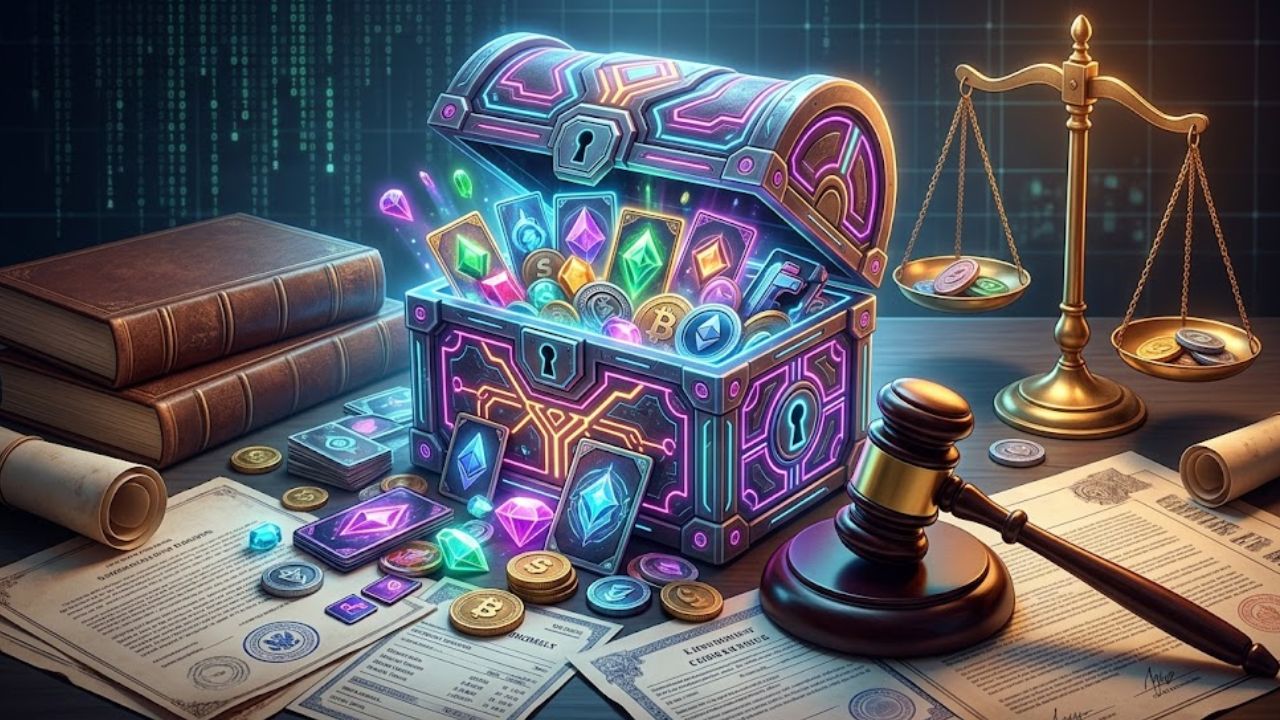
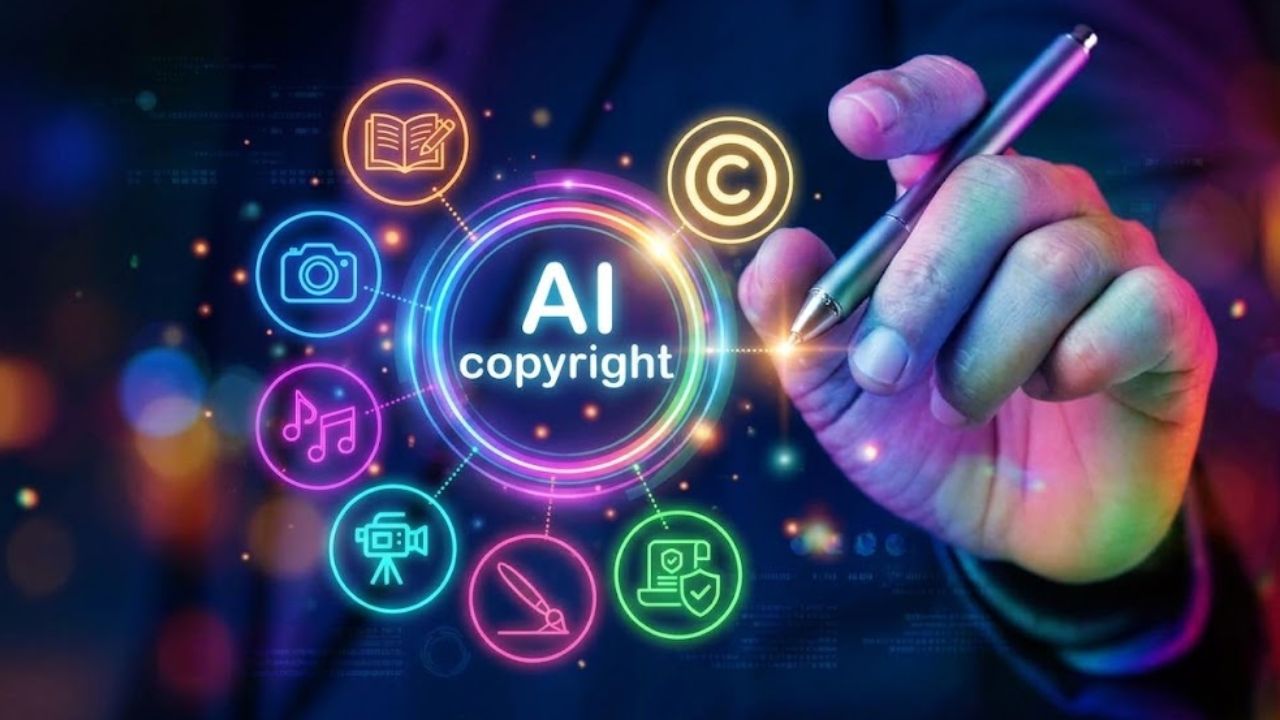
Who owns AI-generated content? There is no universal answer. An AI tool’s terms may let you use an image, song, video or article, but that does not automatically give you copyright or exclusive rights.
Copyright laws differ by country, and protection may depend on how much creative work a person contributed. Other rights may also apply if the output resembles existing work or uses someone’s name, likeness or voice. Before publishing or selling AI-generated material, check the tool’s terms, review the final work and consider the laws where you plan to use it.
Permission to use is not the same as copyright
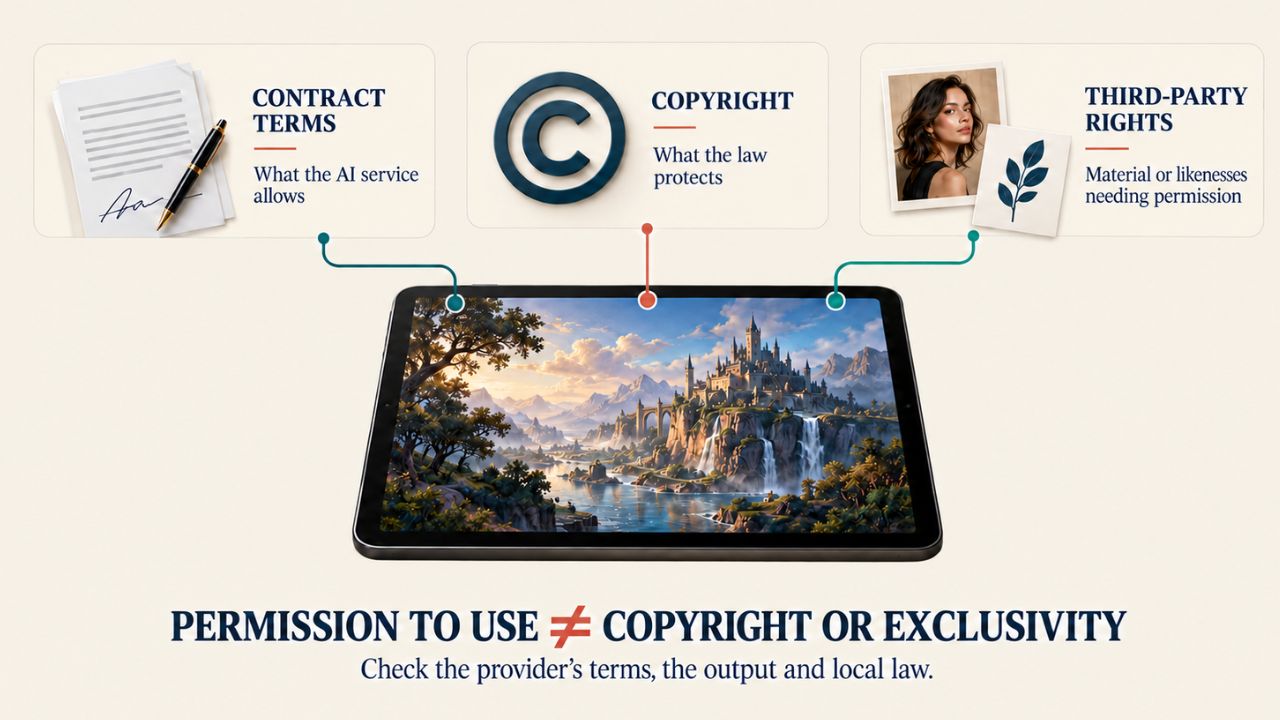
“Ownership” can mean a few different things:
- Contractual rights: What the AI service lets you do with its output.
- Copyright: Whether the law protects the work and recognizes an owner.
- Rights held by others: Whether the result uses protected material, a person’s likeness or other content that needs permission.
OpenAI’s current Terms of Use, for example, say that, as between OpenAI and the user and to the extent permitted by law, the user owns the output and OpenAI assigns any rights it may have in it. The terms also say that outputs may not be unique and that users are responsible for their content, including having the rights and permissions needed for their inputs. That is one provider’s contract; other services may set different rules
Even under those terms, “you own the output” does not guarantee that copyright law will protect every part of it. Nor does it mean you can stop other people from using a similar result.
Copyright rules vary by country
There is no single global rule for AI-generated work. Many copyright systems look for human creative authorship, but their laws and tests differ.
In the United States, the Copyright Office’s 2025 report says copyright can protect human-authored expression in a work made with AI. That may include original material a person contributes, creative selection or arrangement, and sufficiently creative modifications. The Office says prompts alone, based on current generally available technology, do not usually give a user enough control over the output’s expressive elements. The assessment is case by case.
In the European Union, Court of Justice case law describes a protected work as an author’s own intellectual creation, reflecting free and creative choices. The EU has no specific copyright protection for computer-generated works without a human author. For AI-assisted work, the question is whether a person’s creative choices are expressed in the finished result.
The United Kingdom has a distinct provision. Section 9(3) of its Copyright, Designs and Patents Act says that, for certain computer-generated literary, dramatic, musical or artistic works with no human author, the author is taken to be the person who made the arrangements necessary for the work’s creation. That provision remains in the law. In March 2026, however, the UK government proposed removing this special protection, saying there was little evidence of its use or impact. The proposal is not itself a change to the law.
These examples are not a substitute for checking local law. If a contract, commercial release or licensing decision depends on copyright ownership, get advice from a qualified lawyer in the relevant jurisdiction.
A detailed prompt can specify a subject, mood, setting or style. But the AI system still makes many expressive choices: the exact composition, wording, notes or visual details.
That distinction matters. In the United States, for example, the Copyright Office says a prompt alone does not usually give the user sufficient control over the output’s expressive elements. The user’s contribution may be clearer when they write original passages, make substantial edits, or select and arrange generated elements in a creative way. Whether those choices qualify for copyright still depends on the work and applicable law.
If you expect to claim rights in a finished work, keep drafts, source files and records of your edits. They can help show what you contributed if authorship is later questioned.
Images, videos, music and articles raise different questions
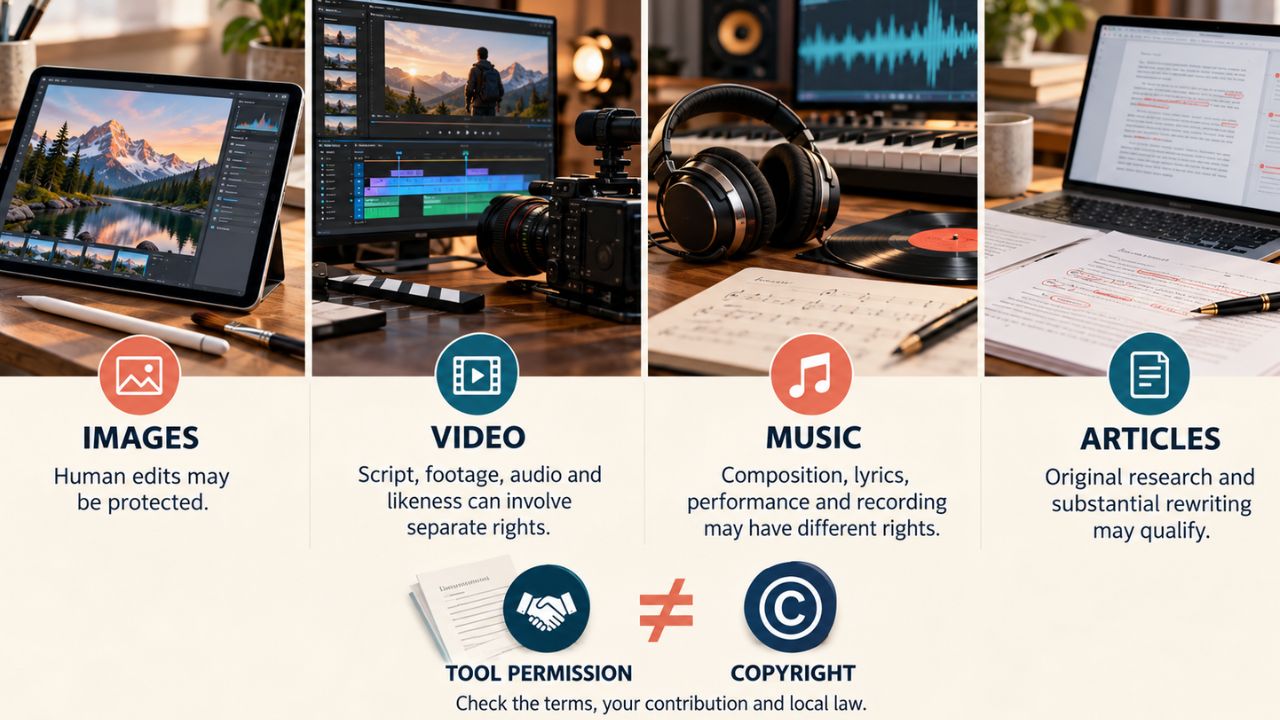
AI-generated images
A prompt may describe the image you want, but the model decides many of its visual details. In a country that requires human authorship, an unedited image may receive little or no copyright protection attributable to the user.
A designer who paints over the result, combines it with original illustrations or makes expressive changes may have rights in those human-created parts. Including generated elements in a new design does not automatically make those elements exclusively yours.
AI-generated videos
A video can contain moving images, a script, music, voices and editing. A person may have rights in original footage, writing or edits while the generated parts raise separate questions. Rights in one element do not settle the status of the whole video.
Before publication, check both the AI provider’s terms and the destination platform’s rules. If the video depicts a real person or imitates a recognizable voice, consider rights beyond copyright; the rules vary by country and context.
AI-generated music
A track can involve a musical composition, lyrics, arrangement, performance and sound recording. These may involve different rights and contributors. If you write the lyrics, play an instrument or make creative production choices, those contributions may be treated differently from material generated by the tool.
Do not assume that permission from an AI service settles every question about samples, imitation or rights in the recording. Review the provider’s terms and the requirements of the distributor or platform where you plan to release the track.
AI-written articles
A prompt-generated draft with only light corrections may have limited or uncertain copyright protection in some countries. Original research, argument, structure, passages and substantial rewriting may be protectable as human-authored expression, depending on the law and the finished article.
There is also an editorial responsibility that ownership language cannot solve: check the facts, originality and suitability of the text before publication. Correcting grammar does not automatically make every generated sentence your copyrightable work.
Commercial permission does not promise exclusivity
A provider may let you use an output in commercial work or assign it to a client. That does not necessarily let you prevent someone else from using a similar result. OpenAI’s terms, for example, explicitly warn that other users may receive similar output.
Check the terms that apply to your account, plan and feature; provisions can differ between services. For client work, describe what rights the client receives and identify AI-generated elements where relevant. Avoid promising full exclusivity unless you have a sound legal basis for it.
Other people’s rights still matter
A tool’s permission to use an output does not necessarily clear it for every purpose. The result might reproduce or closely resemble protected material, include a brand name or logo, or depict or imitate a real person. Depending on the country and circumstances, those uses may raise copyright, trademark, privacy, publicity or other legal issues.
These concerns are more serious for work that will represent a brand, appear in a paid product or carry a claim of exclusivity. A quick review is sensible for low-stakes use; high-value work deserves closer legal and editorial review.
Before you publish or sell an AI-assisted work
A few checks can catch problems before a launch or client handoff:
- Read the provider’s current terms: Check commercial use, ownership language, restrictions and any differences between plans or features.
- Keep a record of your contribution: Save drafts, prompts, edits, source files and project history.
- Review the output for recognizable material: Look for text, characters, artwork, brands, voices or likenesses that may belong to someone else.
- Check the destination’s rules: Publishers, marketplaces, distributors and advertising platforms may have their own requirements.
- Set accurate expectations with clients: Permission to use an output does not necessarily mean exclusive copyright ownership.
- Get local advice when the stakes are high: Do this when a contract, release or investment depends on who owns the work.
Final Thoughts
There is no universal answer to who owns AI-generated content. A provider’s terms may permit use, while copyright law protects only the human-authored parts—or may treat a computer-generated work differently. Similar outputs and other people’s rights can also limit what you can claim.
Before using AI-generated material in a business or client project, check the terms, review the result and keep a record of your creative contribution. If exclusivity or ownership is central to the deal, do not rely on the tool’s terms alone; check the relevant law and get qualified advice.