

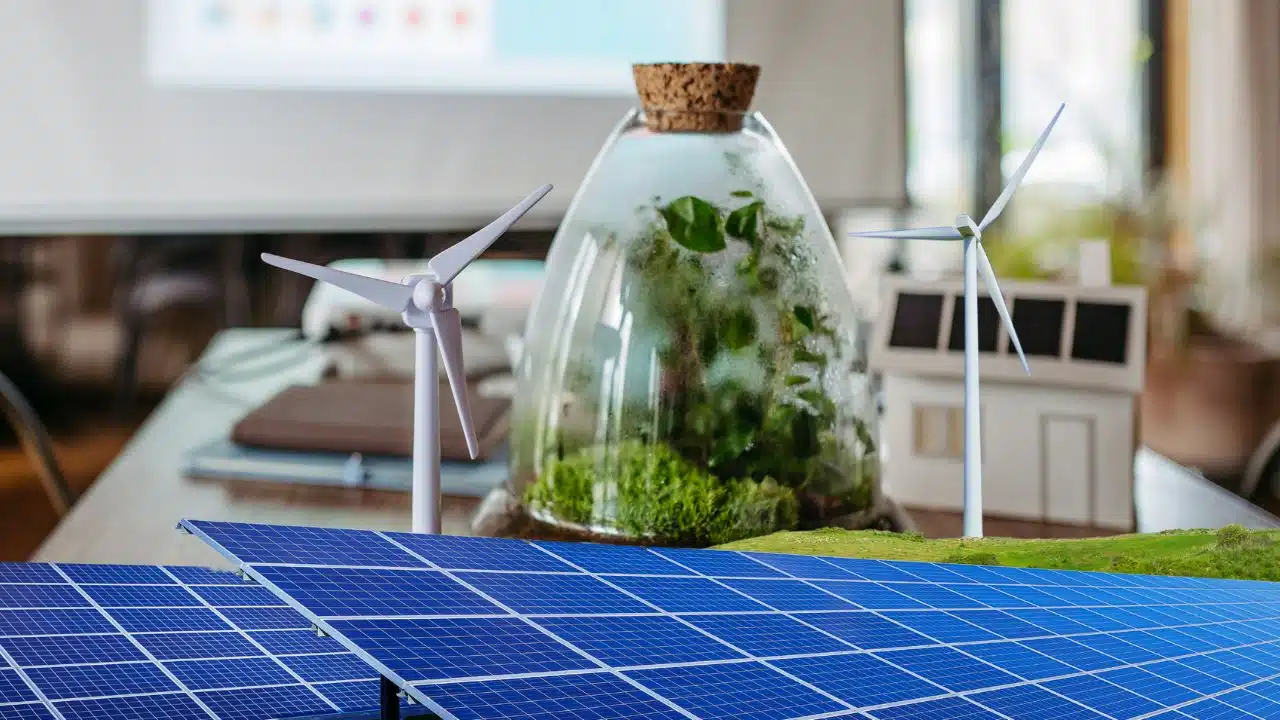
What is green energy solutions? Green energy solutions refer to renewable and environmentally friendly energy sources and technologies that aim to reduce our dependence on fossil fuels.
These solutions prioritize sustainability by harnessing energy from natural resources such as sunlight, wind, water, and geothermal heat. By integrating green energy solutions, individuals and businesses can significantly lower their carbon footprints and contribute to a cleaner planet.
What is Green Energy Solutions?
Green energy solutions offer a path to a more sustainable and environmentally friendly energy future. These technologies harness natural resources like sunlight, wind, water, and biomass to generate clean electricity and fuel, reducing our dependence on fossil fuels and mitigating climate change impacts.
The Rise of Green Energy
The adoption of green energy solutions has accelerated rapidly in recent years. In 2023, renewable energy capacity grew by an unprecedented 510 gigawatts globally, marking a 50% increase from the previous year. Solar energy led this growth, accounting for three-quarters of new capacity additions. Wind power also saw significant expansion, with global capacity increasing by 17% annually.
This surge in renewable energy deployment is driven by several factors:
- Declining costs of renewable technologies
- Supportive government policies and incentives
- Growing corporate and consumer demand for clean energy
- Urgent need to address climate change
As a result, the share of renewables in global electricity generation reached nearly 30% in 2023, up from just 20% in 2013. The International Energy Agency (IEA) projects that renewables could represent 60% of the global power mix by 2030 if current growth trends continue.
Types of Green Energy Solutions
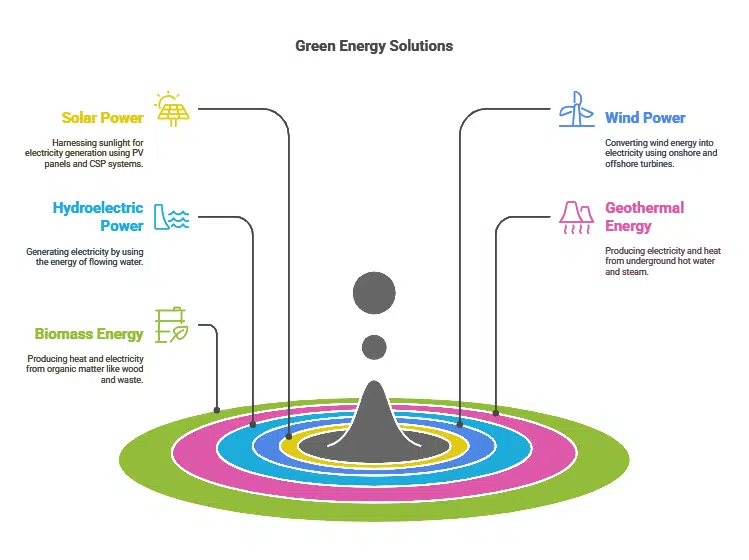
Solar Power
Solar energy harnesses the power of sunlight to generate electricity through photovoltaic (PV) panels or concentrated solar power (CSP) systems. Key facts about solar energy:
- Global solar PV capacity reached 1,016 GW in 2025.
- Solar costs have fallen by 82% since 2010.
- The US added a record 24 GW of solar capacity in 2023.
Wind Power
Wind turbines convert the kinetic energy in wind into electricity. There are two main types:
- Onshore wind farms on land
- Offshore wind farms in bodies of water
Wind energy facts:
- Global wind power capacity was 906 GW in 2022.
- Offshore wind is growing rapidly, with capacity set to increase 15-fold by 2030.
- Wind now generates over 8% of global electricity.
Hydroelectric Power
Hydropower uses the energy of flowing water to spin turbines and generate electricity. It is currently the largest source of renewable electricity globally.
- Global hydropower capacity reached 1,360 GW in 2022
- Hydropower generated 15.3% of global electricity in 2022.
- Small-scale hydropower is growing as a distributed energy solution
Geothermal Energy
Geothermal power plants tap into underground reservoirs of hot water and steam to produce electricity and heat. While geographically limited, geothermal provides reliable baseload power.
- Global geothermal power capacity was 16 GW in 2022.
- The US is the world leader in geothermal electricity generation.
- Enhanced geothermal systems could expand potential globally
Biomass Energy
Biomass energy uses organic matter like wood, crop waste, and municipal solid waste to produce heat and electricity. When sourced sustainably, it can be carbon-neutral.
- Bioenergy provided 9.4% of global primary energy supply in 2022.
- Modern bioenergy use is growing for heat, power, and transport fuels
- Innovations in biogas and biomethane production are expanding
Benefits of Green Energy Solutions
The transition to green energy solutions offers numerous environmental, economic, and social benefits:
Environmental Benefits
- Reduced greenhouse gas emissions and air pollution
- Conservation of water resources compared to fossil fuels
- Preservation of ecosystems and biodiversity
Economic Benefits
- Job creation in the renewable energy sector
- Reduced energy costs as technologies improve
- Energy security and reduced reliance on fuel imports
Social Benefits
- Improved public health due to reduced air and water pollution
- Energy access for remote and underserved communities
- Resilience to climate change impacts
Challenges and Innovations
While green energy solutions have made tremendous progress, challenges remain in scaling up deployment to meet global energy needs. Key areas of focus include:
Energy Storage
Intermittent renewables like solar and wind require effective energy storage to provide reliable power. Innovations in this space include:
- Advanced lithium-ion batteries
- Flow batteries for grid-scale storage
- Thermal and mechanical storage systems
- Green hydrogen as a long-term storage medium
Grid Integration
Modernizing electricity grids to accommodate high levels of variable renewable energy is crucial. Smart grid technologies and improved forecasting are helping address integration challenges.
Sustainable Materials
Ensuring the sustainability of renewable energy supply chains is an emerging priority. Innovations in recycling, circular economy approaches, and alternative materials are advancing rapidly.
The Future of Green Energy Solutions
The outlook for green energy solutions is highly promising. The IEA projects that renewable energy capacity will expand by 2,400 GW between 2022 and 2027, equivalent to the entire power capacity of China today. This growth is expected to be driven by:
- Continued cost reductions and performance improvements
- Supportive policies like the US Inflation Reduction Act
- Corporate commitments to 100% renewable energy
- Growing investment in emerging markets
Emerging technologies like floating offshore wind, next-generation solar cells, and advanced geothermal systems could further accelerate the energy transition. Additionally, sector coupling—linking electricity, heating, and transport—will be key to decarbonizing the entire energy system.
Green Energy Solutions by Region
The adoption of green energy solutions varies significantly across regions:
| Region | Share of Renewables in Electricity (2022) | Leading Technologies |
| Europe | 43% | Wind, Solar, Biomass |
| China | 31% | Hydropower, Solar, Wind |
| United States | 22% | Wind, Solar, Hydropower |
| India | 22% | Solar, Wind, Biomass |
| Africa | 20% | Hydropower, Geothermal, Solar |
Europe leads in renewable energy adoption, with countries like Denmark generating over 50% of electricity from wind and solar. China is the world’s largest market for solar PV and wind power.
The US is seeing rapid growth in utility-scale solar and offshore wind development. India aims to reach 500 GW of renewable capacity by 2030. Africa has vast untapped potential for solar, wind, and geothermal power.
Takeaways
What is green energy solutions? Green energy solutions are the key to a sustainable and cleaner future. By integrating these solutions into daily life, individuals, businesses, and governments can work together to combat climate change, reduce reliance on fossil fuels, and build a more resilient energy system.
The shift to green energy solutions is not just an environmental necessity but also an economic and social opportunity that benefits everyone.






















