

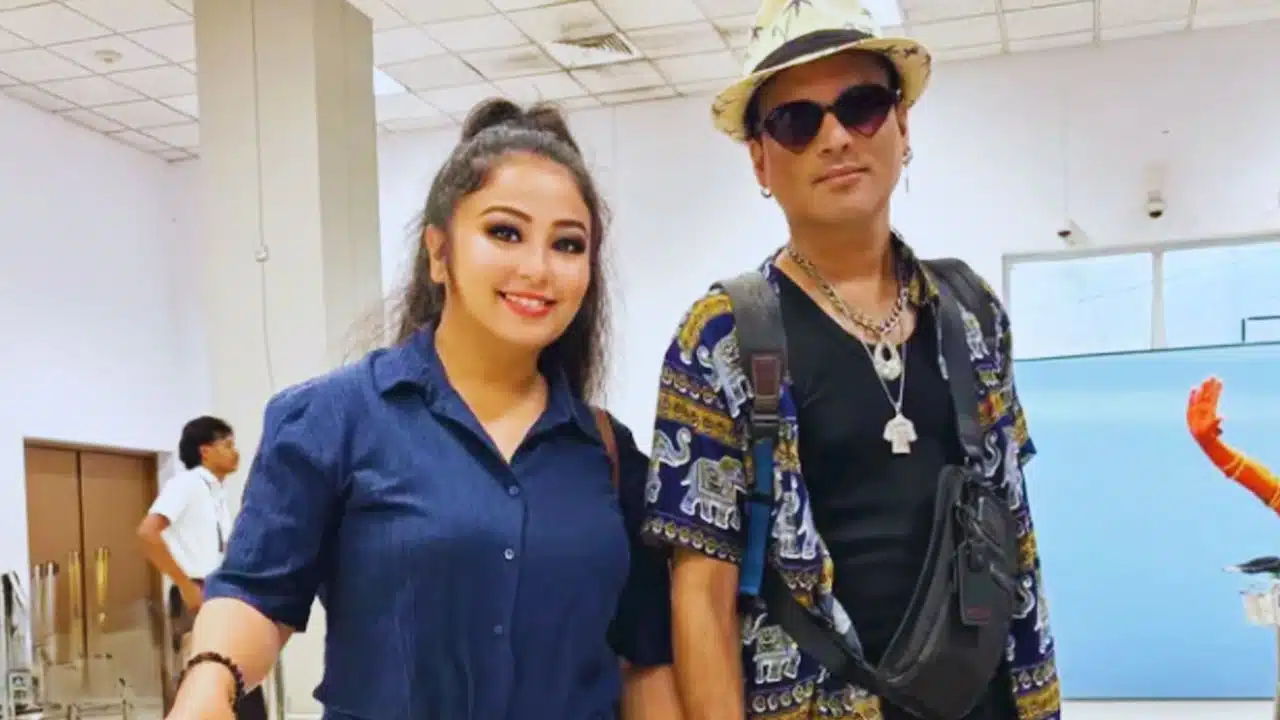
Renowned Assamese singer and cultural icon Zubeen Garg passed away on 19 September 2025 in Singapore at the age of 52. He had traveled there to serve as the Cultural Brand Ambassador at the 4th North East India Festival, scheduled at Suntec City.
According to multiple reports, Garg and a group of companions went to Lazarus Island by yacht. All members wore life jackets during their outing. After initially swimming and returning to the yacht, Garg decided to swim again. During this second swim, he suffered a seizure—a condition he had experienced on previous occasions.
His companions noticed his distress, pulled him out of the water, and administered first aid. He was rushed to Singapore General Hospital, where doctors placed him in the ICU. Despite efforts to stabilize him, he was pronounced dead around 2:30 PM IST.
Early statements from festival organisers had suggested that he faced breathing difficulties during a scuba-diving activity. However, his family clarified that it was not a diving mishap but a seizure while swimming that led to his death. His wife, Garima Saikia Garg, confirmed that diving equipment was not involved.
Clarifications on the Cause of Death
The clarification was significant, as rumors had already started to spread on social media and in some press reports. Garg had a documented medical history of seizures, and those who were present on Lazarus Island witnessed the episode firsthand. Despite their quick action and the hospital’s intervention, his life could not be saved.
This tragic end highlighted how a chronic medical condition, often manageable under normal circumstances, can become fatal in unexpected environments. Friends and family emphasized that it was a medical emergency rather than negligence or misadventure that claimed his life.
Early Life and Family Roots
Zubeen Garg was born on 18 November 1972 in Tura, Meghalaya. His birth name was Zubeen Borthakur, but he later adopted the surname Garg, drawn from his family’s gotra. He grew up in a family deeply connected to the arts and culture of Assam.
His father, Mohini Mohon Borthakur, also known as Kapil Thakur, was not only a magistrate but also a lyricist and poet who enriched Assamese literature. His mother, Ily Borthakur, was a well-regarded singer who instilled in him the first seeds of musical appreciation. Surrounded by creativity and discipline, Garg found himself naturally drawn to the world of music and performance.
Education and Early Choices
-
He completed his matriculation at Tamulpur Higher Secondary School.
-
He pursued his Higher Secondary education at Karimganj College.
-
Later, he enrolled at B. Borooah College in Guwahati for a Bachelor of Science degree.
However, his passion for music proved stronger than his academic interests, and he left formal studies midway to pursue a full-time career in the arts. This decision, though unconventional at the time, laid the foundation for a legendary musical journey.
Musical Journey and Career Highlights
Zubeen Garg began his professional music career in 1992. From the start, he distinguished himself through versatility and linguistic diversity. He sang in Assamese, Bengali, Hindi, and more than 40 other languages and dialects, including tribal languages such as Karbi, Mising, and Tiwa, as well as other Indian regional tongues.
He was a multi-instrumentalist, reportedly proficient in as many as 12 instruments, including tabla, guitar, drums, harmonium, dotara, dhol, mandolin, and harmonica. This rare ability allowed him to craft unique compositions and connect with audiences across cultural and linguistic boundaries.
His big break at the national level came in 2006 with the Bollywood film Gangster, which featured his iconic song “Ya Ali.” The track became a nationwide sensation, topping charts and introducing Garg’s powerful voice to millions outside the Northeast. From there, his popularity soared, and he became a household name across India.
Contributions Beyond Singing
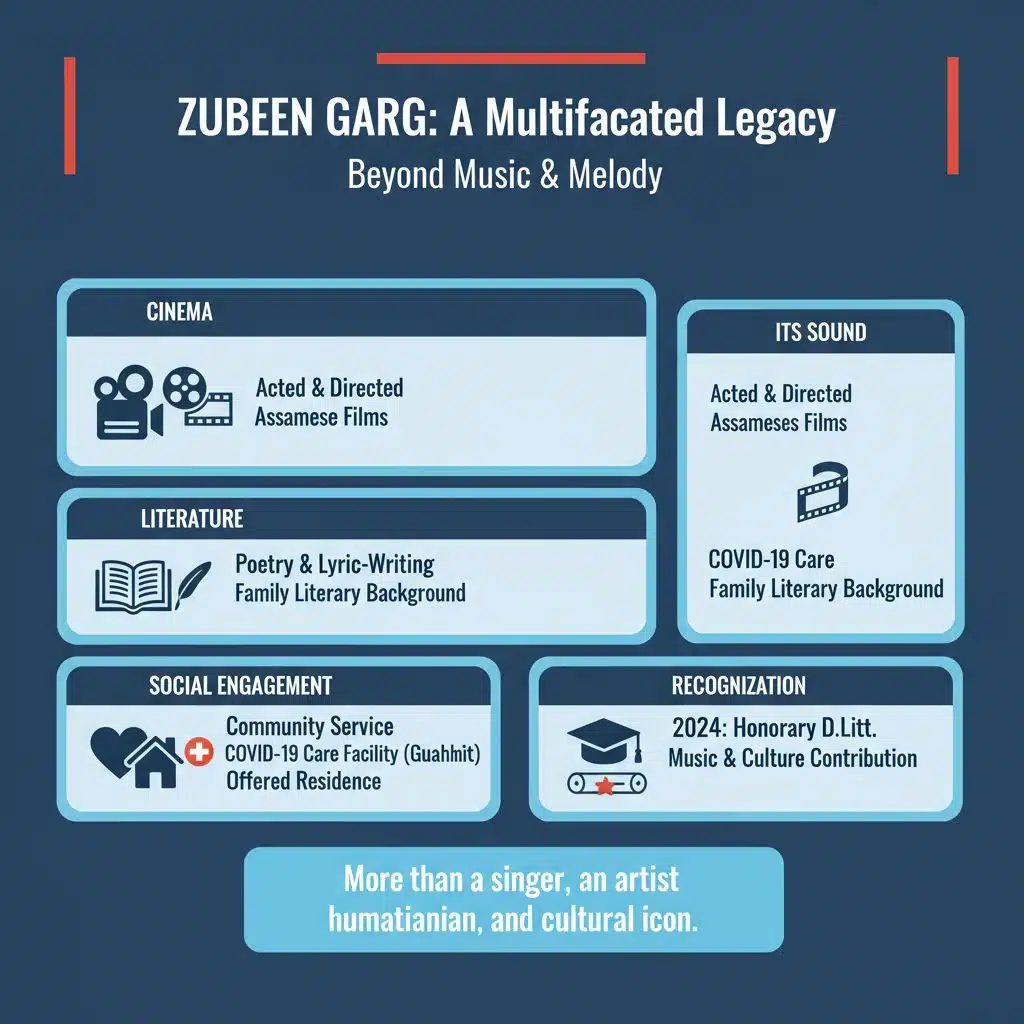
Zubeen Garg’s artistic pursuits extended far beyond playback singing:
-
Cinema: He acted in and directed several Assamese films, contributing to the growth of regional cinema.
-
Literature: He explored poetry and lyric-writing, drawing from his family’s literary background.
-
Social Engagement: He was deeply committed to community service. During the COVID-19 pandemic, he offered his residence in Guwahati as a care facility to support those in need.
-
Recognition: In 2024, the University of Science and Technology, Meghalaya, honored him with an honorary Doctor of Literature (D.Litt.) degree for his contribution to music and culture.
Public Reaction and Outpouring of Grief
The news of Garg’s death spread quickly across India and abroad, especially among the Assamese diaspora. His passing triggered an outpouring of grief from political leaders, artists, fans, and cultural organisations.
For many in Assam, Garg represented more than an artist—he embodied the pride and aspirations of the region. His career proved that local and regional traditions could achieve recognition on a national and even global stage.
Social media platforms were flooded with tributes, and public figures across political and cultural lines remembered him as a bridge between regional identity and mainstream recognition.
Legacy of a Cultural Ambassador
Zubeen Garg is survived by his wife, Garima Saikia Garg, but his influence continues through his vast body of work.
His legacy can be summarised in several dimensions:
-
Musical Diversity: By singing in dozens of languages, he proved that music transcends boundaries.
-
Cultural Representation: He became a voice of Assam and the Northeast, ensuring the region’s cultural traditions found a place in the Indian mainstream.
-
Social Responsibility: His involvement in public causes, relief efforts, and cultural advocacy showed that artists could be deeply engaged citizens.
-
Artistic Multiplicity: He excelled not only as a singer but also as an instrumentalist, actor, director, and poet.
For millions of admirers, his songs, films, and writings remain living testaments to his talent. His death marks the end of an era in Assamese and Indian music, but his contributions will continue to inspire future generations.
























