

In today’s digital-first world, building a personal brand is no longer optional—it’s essential for standing out, establishing credibility, and creating lasting influence.
Whether you’re an entrepreneur, a freelancer, or someone working in a corporate environment, content marketing is one of the most powerful tools to amplify your personal brand.
This comprehensive guide will explore 7 actionable and effective ways to use content marketing to build your personal brand. These strategies are designed to help you position yourself as an expert, connect authentically with your audience, and maximize your online presence.
The Power of Content Marketing for Personal Branding
Content marketing plays a crucial role in shaping how you’re perceived by your audience. It’s more than just writing blog posts or making videos—content marketing is about communicating your values, expertise, and uniqueness consistently across different platforms.
A well-executed content marketing strategy helps you attract and engage your target audience, establishing trust and loyalty over time.
Why is content marketing essential for personal branding?
Through content marketing, you can showcase your knowledge, experience, and personality in ways that resonate deeply with your audience. It allows you to create a long-term, authentic connection with potential clients, customers, and followers, and position yourself as a thought leader in your field.
Whether you are trying to increase visibility, grow your audience, or establish authority, content marketing helps you achieve all of these goals effectively.
1. Create High-Quality, Engaging Content
Creating high-quality, engaging content is the foundation of any strong personal brand. Quality content not only educates and informs but also entertains and inspires, ensuring your audience connects with your message. The more value you provide, the more likely your audience will return, share your content, and recommend you to others.
Importance of Quality Over Quantity in Content
It’s tempting to produce as much content as possible to stay visible, but in the world of content marketing, quality is far more important than quantity. A single, well-researched blog post or a thoughtful, high-value video can perform far better than several mediocre pieces of content. By focusing on delivering value in every piece of content, you’ll establish a stronger connection with your audience, and it will reflect in your personal brand’s growth.
Types of Content to Focus On (Blogs, Videos, Podcasts, etc.)
Different content formats appeal to different types of audiences. While blog posts are excellent for in-depth analysis, videos can help you connect with your audience on an emotional level. Podcasts, on the other hand, are perfect for offering insights during commutes or workout sessions. By diversifying the content types you produce, you’ll be able to engage your audience across multiple touchpoints.
Here’s an overview of some of the most common content formats used in personal branding:
| Content Type | Benefits | Best for |
| Blog Posts | Great for providing in-depth insights, SEO optimization, and long-form content. | Professionals who want to showcase expertise and knowledge. |
| Videos | Visual content builds personal connection, easy to share, and great for explaining complex topics. | Personal branding through platforms like YouTube, Instagram, and LinkedIn. |
| Podcasts | Perfect for thought leadership and discussing topics in detail while on the go. | Thought leaders and professionals looking to build a loyal community. |
| Social Media Posts | Quick, digestible content to maintain consistent engagement and boost interaction. | Influencers or individuals with a wide audience who want to keep followers engaged. |
Tips for Crafting Compelling Content
- Write with Your Audience in Mind: Always tailor your content to address the specific pain points, interests, and needs of your target audience. A deep understanding of your audience will help you create content they’ll resonate with.
- Use Engaging Headlines: Your headline is the first interaction a reader has with your content. Make it count! Use numbers, ask questions, or evoke curiosity to make your audience want to click and read more.
- Incorporate Visuals and Media: Break up the text and keep your audience engaged by adding images, charts, infographics, or videos that illustrate your points. Visual content can significantly increase engagement.
2. Establish Consistency Across Platforms

To build a strong personal brand, consistency is key. Whether it’s your brand voice, message, or visual identity, being consistent across multiple platforms ensures that your audience can recognize you no matter where they encounter you. Consistency builds trust and credibility, which are vital elements in personal branding.
Aligning Your Voice and Message
Your voice and message should remain consistent across all platforms, including your website, social media, and in-person interactions. Whether you’re posting on LinkedIn, Instagram, or Twitter, your audience should be able to recognize your brand from your tone and values.
For example, Gary Vaynerchuk, a popular entrepreneur and social media expert, is known for his candid, no-nonsense approach across all his content. This consistency has helped him build a loyal following and establish himself as a thought leader.
Scheduling Content for Regular Posting
Consistency doesn’t just apply to your tone but also to how often you post. Regular posting keeps your brand in front of your audience, which can be key to staying relevant. Use tools like Buffer or Hootsuite to automate your content calendar, ensuring you post regularly without burning out.
Tools for Streamlining Content Scheduling
To maintain consistency, use these tools to schedule content across platforms and optimize your time:
| Tool | Feature | Best For |
| Buffer | Schedule social media posts, track engagement, and analyze performance. | Professionals managing multiple social media accounts. |
| Trello | Content calendar management, idea generation, and team collaboration. | Organizing long-term content strategies. |
| Hootsuite | Social media scheduling, monitoring, and analytics. | Individuals and teams handling content distribution on social media. |
3. Leverage Social Media to Amplify Your Message
Social media is a crucial tool for growing your personal brand. With billions of active users across platforms like Facebook, Instagram, LinkedIn, and Twitter, social media enables you to engage directly with your audience and amplify your message on a global scale. The goal is to use social media as a platform to nurture relationships, share insights, and offer value consistently.
Choosing the Right Platforms for Your Personal Brand
It’s important to pick the right platforms that align with your personal brand and audience. Not all platforms are suited for every brand. For example, LinkedIn is ideal for professional content, while Instagram thrives on more personal, behind-the-scenes posts. The key is to focus on the platforms where your audience spends the most time and tailor your content accordingly.
| Platform | Best For | Content Strategy |
| Professional development, industry news, networking | Share articles, case studies, and professional insights. | |
| Visual storytelling, personal branding | Share images, videos, and stories to showcase your personality and expertise. | |
| Real-time engagement, short-form content | Share thoughts, opinions, and engage in industry-related discussions. | |
| TikTok | Creative content, trending topics | Short-form videos that are fun, engaging, and often viral. |
Engaging with Your Audience on Social Media
Social media isn’t just a broadcasting tool; it’s about creating two-way conversations with your followers. Respond to comments, engage with others’ content, and encourage your followers to share their own stories. This will help you build a deeper, more personal connection with your community.
Example: Pat Flynn, a well-known entrepreneur, uses social media to engage with his followers by responding to questions and sharing insights on business. This active engagement builds trust and fosters loyalty among his audience.
4. Build Authority with Expert Content
Becoming an authority in your niche is one of the best ways to solidify your personal brand. When people see you as an expert, they are more likely to turn to you for advice, solutions, or collaboration opportunities. Expert content can be delivered through blogs, guest posts, podcasts, webinars, and more.
How to Establish Yourself as an Authority
Building authority requires consistency, credibility, and a deep understanding of your field. One way to do this is by creating expert-level content that offers real value to your audience. Over time, this will lead to recognition as a trusted authority in your niche.
Guest Blogging and Thought Leadership Opportunities
Guest blogging is one of the most effective ways to establish authority. By writing for reputable publications or websites in your industry, you’ll expose your expertise to a wider audience while gaining credibility.
Case Study: Neil Patel, a leading digital marketing expert, has written for platforms like Forbes and The Huffington Post. His guest posts on various high-traffic websites helped him establish authority in the digital marketing space.
5. Use SEO Strategies to Enhance Visibility
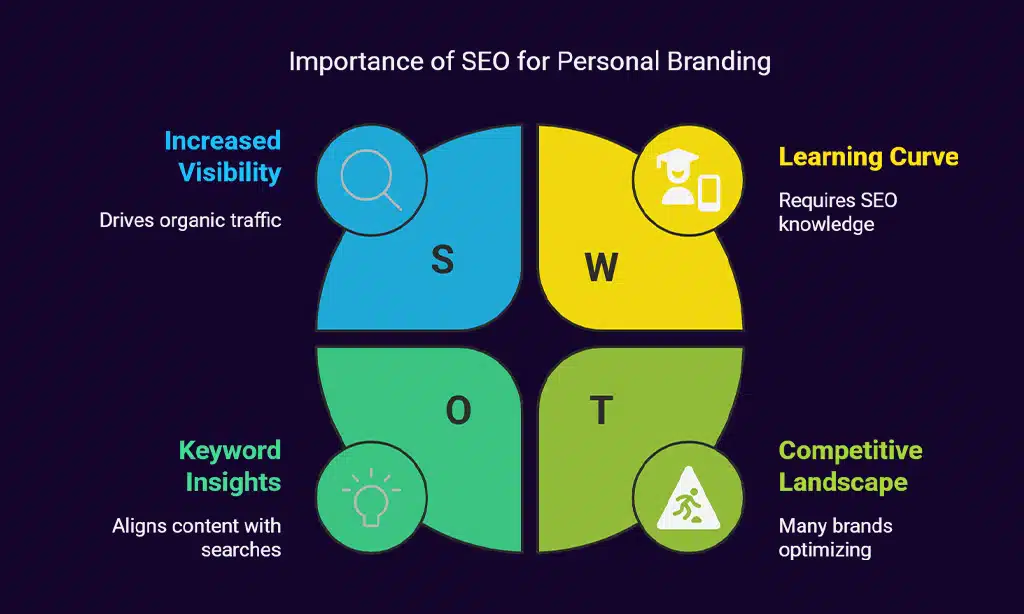
In today’s competitive online space, it’s not enough to create great content; you need to ensure that your content is discoverable. SEO (Search Engine Optimization) plays a key role in improving the visibility of your content in search engine results, driving organic traffic to your personal brand.
Importance of SEO for Personal Branding
SEO helps ensure your content gets seen by the right people. By using SEO strategies, you can increase your visibility and reach a wider audience, positioning yourself as an expert in your field.
Strategic Keyword Research
Effective keyword research helps you understand what your target audience is searching for online. Using tools like Google Keyword Planner, Ahrefs, and SEMrush, you can identify keywords that align with your brand and create content around those terms.
| Keyword Tool | Feature | Best For |
| Google Keyword Planner | Find keyword ideas and search volume data | Beginners starting with SEO |
| Ahrefs | Backlink analysis, keyword research, and competitive analysis | Advanced users looking for in-depth SEO insights |
| SEMrush | Keyword research, site audit, competitor analysis | Professionals optimizing and tracking SEO performance |
6. Engage with Your Audience and Build Relationships
Building relationships is at the core of any successful personal brand. Content marketing allows you to engage with your audience directly and create meaningful connections that go beyond just selling a product or service.
Responding to Comments and Feedback
When your audience engages with your content, respond thoughtfully. Whether it’s a comment, a question, or feedback, engaging with your audience in a timely and respectful manner helps you build relationships and shows that you value their input.
Hosting Interactive Content (Surveys, Q&A)
Interactive content like surveys, polls, and Q&A sessions allows your audience to actively participate in your content, helping you to create a more personalized and engaging experience.
7. Monitor and Analyze Your Content Performance
Finally, to ensure your content marketing strategy is working, you need to track your performance. This means understanding what content is resonating with your audience and what needs to be improved.
Key Metrics to Track (Engagement, Traffic, Conversions)
Key performance indicators (KPIs) include:
- Engagement: Comments, likes, shares, and time spent on content.
- Traffic: Organic traffic to your website or blog.
- Conversions: Leads generated, sales made, or actions taken by your audience.
Using Analytics Tools for Insights
Use tools like Google Analytics, Facebook Insights, and Twitter Analytics to track how your content is performing and make necessary adjustments.
Wrap Up: Stay Committed to Building Your Personal Brand
Building a personal brand through content marketing requires time, effort, and strategy. But with consistency, quality content, and meaningful engagement, you can elevate your brand, establish authority, and connect with your audience on a deeper level.
Start applying these 7 ways to use content marketing to build your personal brand today, and watch your influence grow over time.






















