Hey there, are you worried about keeping your team safe in the fast-paced world of warehouses? It’s a real challenge, with heavy gear like forklifts zooming around and stacks of goods on pallet racking that could topple if not handled right.
Did you know that fatalities in warehousing have jumped over 100% since 2019? That’s a scary wake-up call, showing just how vital workplace safety is in distribution centers across the U.S. But don’t fret, we’ve got your back with some solid safety tips.
This post will walk you through five easy ways to boost warehouse safety, from smart training to keeping spaces tidy for accident prevention. Stick with us to learn more!
Key Takeaways
- Train all workers on OSHA rules to keep nearly 1 million U.S. warehouse workers safe.
- Use PPE like helmets and safety boots to shield against warehouse dangers.
- Do regular safety audits and maintain forklifts to prevent 87 deaths and 95,000 injuries yearly.
- Set up emergency plans with drills for fire safety and chemical spills.
- Use tech like EHS software and sensors to spot risks and boost warehouse safety.
Conduct Comprehensive Safety Training
Safety in warehousing starts with solid training. Let’s chat about how to make it top-notch for everyone on the team.
- First off, roll out training for all workers, sticking to OSHA rules. This means covering the basics for nearly one million folks in the U.S. warehousing industry. Make sure every new hire gets a full rundown on safety protocols right from day one.
- Next up, plan regular refreshers each year. Annual sessions keep hazard prevention fresh in everyone’s mind. They help workers stay sharp on accident prevention and ready for any risks in material handling.
- Also, set up extra lessons after any incident. If something goes wrong, post-incident training can stop it from happening again. Focus on what went off track and fix it with clear safety guidelines.
- Don’t skip updates for new tools or methods. When fresh equipment or processes come in, train the crew right away. This keeps industrial safety tight and avoids mishaps with unfamiliar gear like forklifts.
- Tackle barriers head-on by pinpointing needed courses. Figuring out who needs what training can be a puzzle, but solve it by matching the right safety tips to the right people in your warehouse.
- Keep tabs on who’s done their lessons. Monitoring completion is key to staying on top of workplace safety. Use a learning management system to track progress and make sure no one slips through the cracks.
- Finally, tap into online options with over 400 industry-compliant courses. These cover OSHA, EPA, and DOT standards, making regulatory compliance a breeze. They’re a handy way to boost risk management without breaking a sweat.
Enforce Proper Use of Personal Protective Equipment (PPE)
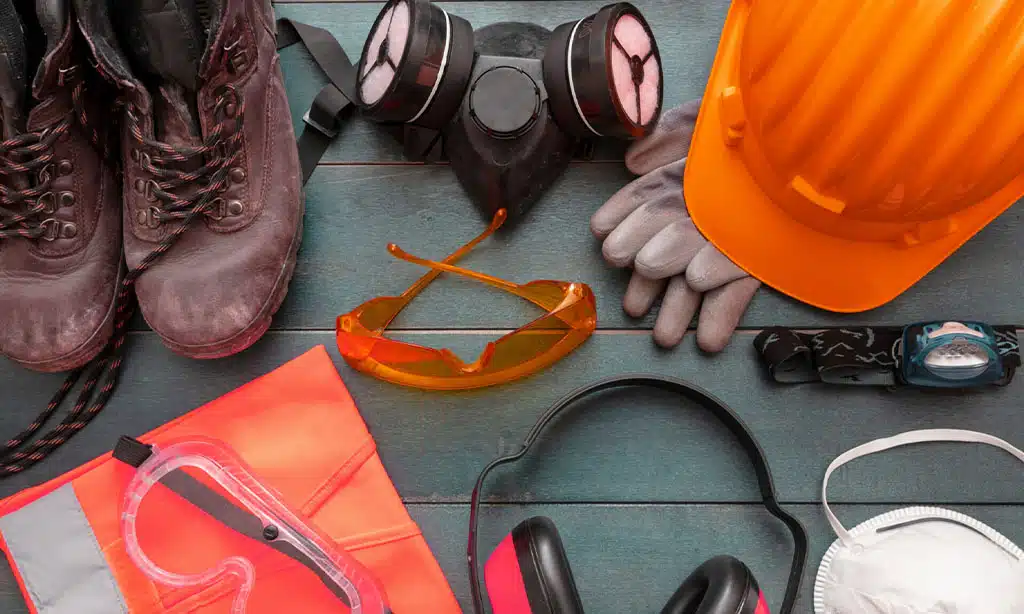
Hey there, folks, let’s talk about staying safe in the warehouse with the right gear. Enforcing the use of Personal Protective Equipment, or PPE, is essential for workplace safety.
Consider it your shield against everyday dangers. Helmets protect your head from falling objects. Safety footwear safeguards your toes from heavy loads. High-visibility clothing ensures everyone notices you, even in poorly lit areas.
And gloves? They protect your hands from cuts and scratches.
Now, imagine you wouldn’t walk into a storm without a raincoat, right? So, make PPE mandatory for everyone, without exception. It’s a vital part of preventing hazards and adhering to safety standards.
Ignore this, and you’re inviting problems. Equip yourself with the proper tools like durable hard hats and slip-resistant boots. Follow this practice, and you’ll avoid many dangers in the hectic warehouse environment.
Let’s prioritize accident prevention, okay?
Maintain Clear and Organized Workspaces
Keeping your warehouse tidy is a big deal for safety. Cluttered spaces can trip you up, literally. Poor setups, like congested aisles, dim lighting, or bad air flow, crank up the risk of accidents.
So, take a minute to clear those pathways. Make sure nothing blocks the way to cut down on slips, trips, and even fire hazards. It’s like keeping your home neat; a little effort saves a lot of trouble.
Congested aisles slow down movement and bump up the chance of mishaps. Grab a broom or move those boxes to keep things open. Regularly clear obstacles from walkways to dodge those sneaky hazards.
Think of it as a daily game, beat the clutter before it beats you. With clear spaces, warehouse safety jumps up, and everyone moves smoother. Stick to these safety tips, and watch how hazard prevention becomes second nature.
Implement Regular Inspections and Equipment Maintenance
Hey there, let’s talk about keeping your warehouse safe. Regular checks and upkeep of gear can save lives and stop accidents before they happen.
- First off, set up routine safety audits to spot dangers early. These checks help catch issues like worn-out parts or risky setups in your workspace. By doing this often, you follow key warehouse safety rules and cut down on surprises. Think of it as a treasure hunt, except you’re hunting for hazards instead of gold.
- Next, focus on equipment maintenance to keep everything running smooth. Forklifts, for instance, are involved in about 87 deaths and 95,000 injuries each year. Staying on top of repairs stops these Powered Industrial Trucks from turning into death traps. It’s like giving your car a tune-up so it doesn’t break down on the highway.
- Also, use tech tools like Machine Learning and AI for extra help. These smart systems predict when gear might fail, letting you fix it before a breakdown. This kind of risk management is a game-changer for industrial safety. Imagine having a crystal ball that warns you about trouble ahead, pretty neat, right?
- Don’t forget to reinforce forklift safety with steady inspections. Check brakes, horns, and lights on these machines every single day if you can. A quick look-over prevents big mishaps and keeps everyone on their toes. It’s as simple as checking your shoelaces before a race to avoid a nasty fall.
- Lastly, train your crew to report problems during their shifts. If they see a shaky rack or a sputtering machine, they gotta speak up fast. Building this habit ties into solid safety protocols and keeps the whole team safe. Picture yourself as the goalie, always ready to block a bad play in the game of workplace safety.
Establish Emergency Preparedness Plans
Let’s talk about keeping safe in a warehouse. Emergencies can strike fast, so planning ahead is key for workplace safety.
- First off, create a solid plan that covers fire safety and chemical spills, two big risks in warehousing. Map out escape routes and make sure everyone knows where to go if alarms blare. Post signs everywhere, so no one’s left scratching their head during a crisis.
- Next, run regular drills to keep everyone sharp. Practice evacuations and spill responses at least quarterly, making it second nature. This builds confidence and cuts panic when real trouble hits.
- Also, train your team on specific dangers like chemical leaks or smoke inhalation. Use clear guides and hands-on sessions to show how to handle these messes. This ties straight into strong safety protocols for accident prevention.
- Another point is to keep emergency gear ready, like fire extinguishers and spill kits. Check these tools monthly to make sure they’re good to go. A broken extinguisher won’t help when flames are licking the walls.
- Finally, bring in training tech, such as 3D animated content or eLearning platforms. These tools make learning about industrial safety stick, helping workers picture real scenarios. They’re a game-changer for risk management in any warehouse.
Promote Safe Equipment Handling Practices
Safe equipment handling is a big deal in warehousing, folks. Think of it like playing a game with high stakes, one wrong move and you’re in trouble. Stick to the rules, and everyone stays safe.
Limit manual lifting as much as possible. Use proper techniques or grab tools like dollies to move heavy stuff. I’m confident your back will appreciate avoiding that strain.
Now, imagine this situation with forklifts. Only certified operators should run these machines, no exceptions. It’s not just a guideline; it’s a must for warehouse safety. Keep accident prevention in mind by following safety protocols.
If you’re unsure about a lift or load, speak up. Better safe than sorry, right?
Leverage Technology for Safety Monitoring
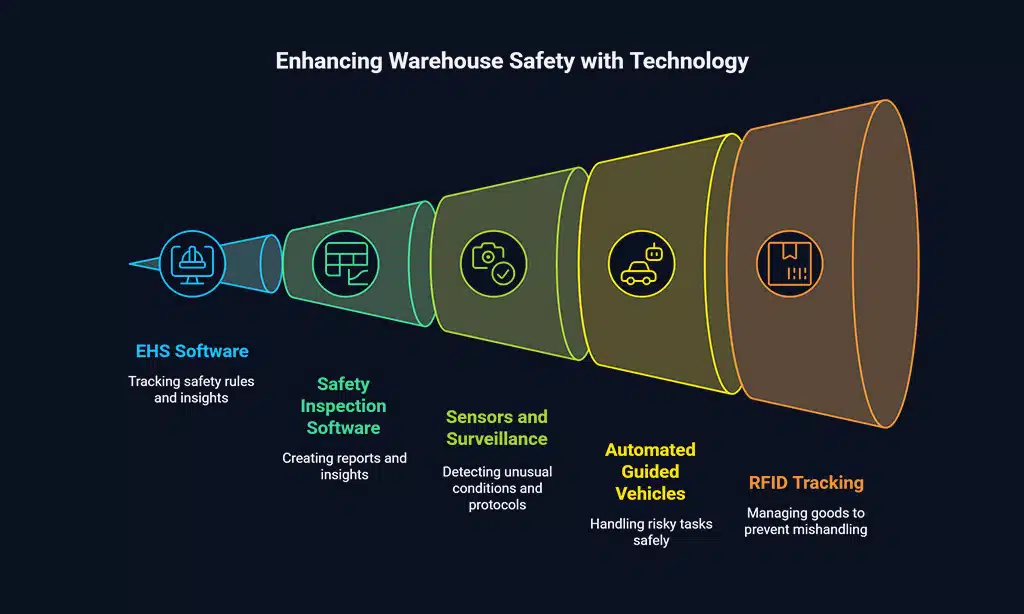
Hey there, let’s chat about making warehouses safer with cool tech tools. Imagine having gadgets that watch over your workplace like a hawk, catching risks before they turn into trouble.
Tools like EHS software and Safety Inspection Software help track safety rules, create reports, and give clear insights on what needs fixing. That’s a game-changer for warehouse safety, don’t you think?
Now, picture sensors spotting weird conditions fast, or video surveillance keeping an eye on whether everyone follows safety protocols. Add in Automated Guided Vehicles, or AGVs, to handle risky tasks, cutting down on accidents.
Plus, Radio Frequency Identification, known as RFID, tracks goods to avoid mishandling messes. These tech tricks can truly step up your accident prevention game.
Encourage Open Communication About Safety Concerns
Open up, folks, about safety in the warehouse! Talking freely with your team can stop accidents before they happen. Got a worry about a wobbly shelf or a slippery spot? Speak out, don’t hold back.
Your voice matters, and sharing concerns helps everyone stay safe. Think of it like a team huddle, where every player’s input keeps the game smooth.
Also, let’s chat about feedback for better workplace safety. Your bosses should ask for ideas on hazards, how often they pop up, and how bad they could be. Mix in past data to spot risks.
Keep horseplay out of the picture, stay sharp, and act professional. Plus, updating training materials often keeps safety protocols fresh. So, pipe up with your thoughts on safety guidelines, and let’s build a stronger, safer space together.
Takeaways
Wrapping up, let’s keep warehouse safety at the top of our list, folks. Think of it as a sturdy helmet in a game of hard knocks; it saves lives. With risks like forklift mishaps and fire hazards lurking, every step counts.
So, put these five tips to work, and watch your team stay safe. Got concerns? Speak up, because a safer workspace starts with you!
FAQs on Ways to Improve Worker Safety in Warehousing
1. Hey, what’s the first step to boost warehouse safety for my team?
Let me tell you, start with proper training. Show your crew the right way to lift heavy boxes and dodge hazards, making warehouse safety a daily habit.
2. Yo, how can I cut down on slips and trips in my storage space?
Simple, keep those floors clean and clear. Clutter is a sneaky foe, so sweep up spills and organize gear to nail down those safety tips.
3. So, what’s a clever trick to keep my workers safe around big machines?
Listen up, set up clear warning signs and barriers near forklifts or conveyors. It’s like putting a “keep out” sign on a dragon’s lair; it saves lives by boosting warehouse safety. Plus, chat with your team often about staying alert near equipment.
4. Alright, how do I make sure my gang stays injury-free while stacking goods?
Just double-check that shelves are sturdy before loading them up. A wobbly rack is a disaster waiting to happen, so use solid gear and follow safety tips to keep everyone out of harm’s way.