Fire hazards and incidents can occur within any workplace, business, or organization, which could result in potential health risks in terms of damage to property, life, other severe injuries, or legal and financial claims.
Employers must take into consideration appropriate measures and actions before the situation gets worse and provide necessary guidance and training to their staff to control and mitigate fire hazards.
Fire extinguishers in this regard play a significant role in overcoming such incidents at work. For the work premises to meet the current fire safety regulations, employers must have the right type of fire extinguishers to ensure that their premises are protected and secured in an event of a fire hazard.
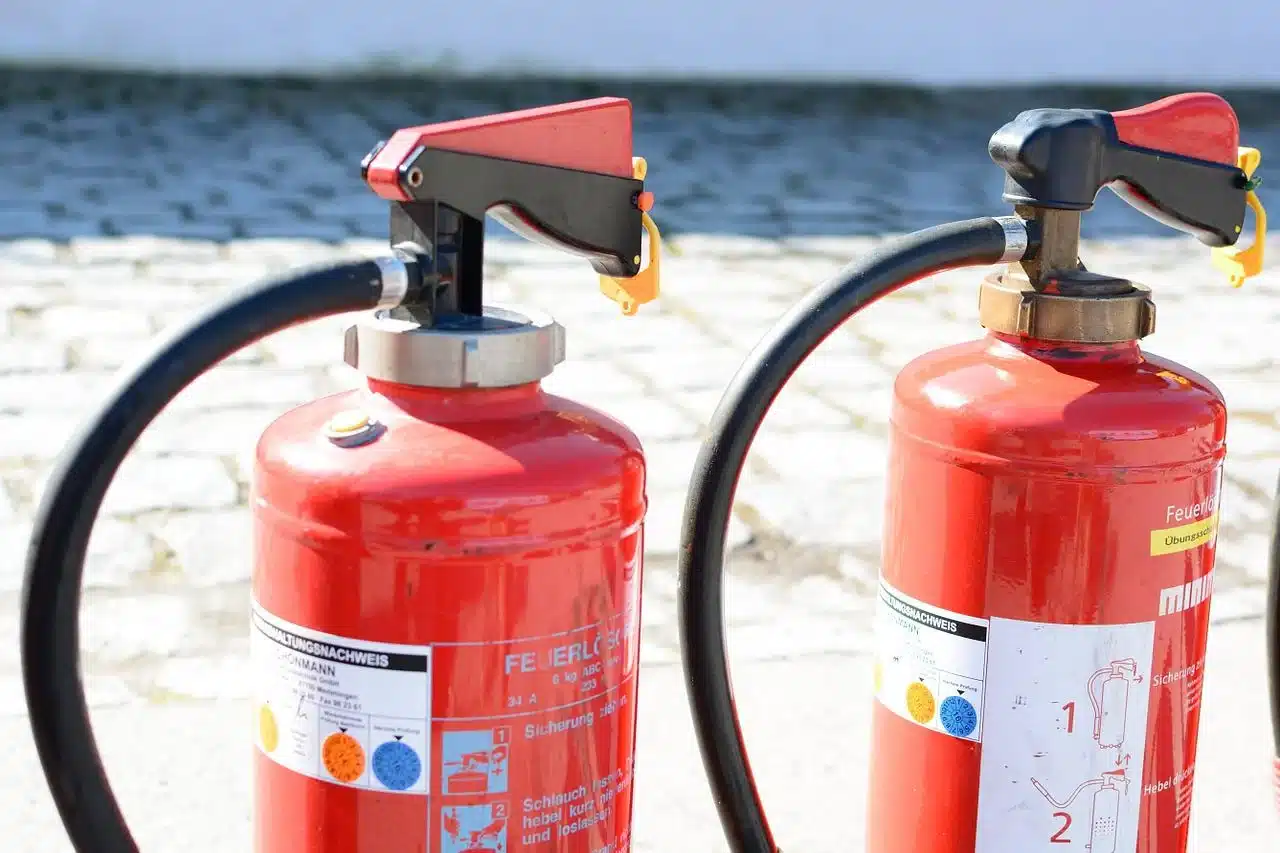
There are numerous classes of fire and each fire extinguisher type is designed to tackle them. A type of fire is usually known as a Class of Fire and the relevant fire extinguisher types are identifiable by a uniformed colour-coding system.
Some of the common types of fire extinguishers are:
1. Carbon Dioxide (CO2) – Black
2. Foam – Cream
3. Powder – Blue
4. Water (Including water mist) – Red
5. Wet Chemical (Yellow)
Classes of Fire Extinguisher Classes
Class A Fires – Fire including flammable solids like wood, paper, and textiles.This is one of the most common types of fires because solids are the most common types of fuels and one that is hard to eradicate. The only type of fire extinguisher one should use on a class A fire is the water extinguisher. Class A fire is the most popular type that can handle most fires involving solids.
Class B Fires – Fires involving flammable liquids such as petrol, paints, or spirits.
Many of the fluids, liquids, or chemicals used in the workplaces can be flammable or explosive. Such as cleaning agents, solvents, or adhesives. Foam or powder are the best types of extinguishers to attack this class of fire.
Class C Fires – Fires involving flammable gasses such as propane and butane.
This could also be natural gas or other types of gasses foaming a flammable or explosive atmosphere. The only safe way to attack this class of fire is to shut off the gas supply completely.
The best type of extinguisher to cut off this class of fire is a dry powder extinguisher.
Class D Fires – Fires include flammable chemicals and metals such as magnesium, potassium, or lithium.
It is classified as the presence of burning metals. Only certain metals are flammable such as sodium, uranium, and calcium.
Electrical Fires – Fires consisting electrical equipment like laptops. This class of fire does not have a specific classification. They are considered electrical risks.
Class F Fires – Fires involving cooking fats and oils, typically a chip-pan fire. Deep fat frying or spillages of flammable oils near heat sources can result in class F fires. The only type of fire extinguisher approved for cutting this type of fire off is the wet chemical extinguisher. A fire blanket can also be used to control such a class of fire.
Types of Fire Extinguishers & Colors
After discussing different classes of fires, let us now take a look at different types of fire extinguishers with their color codes.
1. Carbon Dioxide (CO2) – Black
Carbon dioxide (CO2) fire extinguishers are ideal for class B or electrical equipment. This type is suitable for high and low-voltage electrical fires. CO2 fires are primarily for the use of fires, being non-toxic and leaving no residue, carbon dioxide does not harm machinery or electrical equipment.
A CO2 fire extinguisher works by suffocating the fire by displacing the oxygen needed with carbon dioxide. For it to be effective, CO2 must be placed close to the source of the fire.
2. Foam – Cream
This is another common type of fire extinguisher and is designed for class A and class B fires. Foam extinguishers produce a cooling blanket effect. Nevertheless, it is recommended for fires associated with flammable liquids.
This type of fire extinguisher works by forming a blanket over the burning surface that cools the burning material and by removing the oxygen.
3. Powder – Blue
Powder fire extinguishers are appropriate for use on class A, B, and C fires making them perfect to use in environments containing multiple fire dangers. They are highly effective against liquids like petrol. Best car fire extinguishers are essential for ensuring safety on the road, providing quick and efficient means to control unexpected fires.
This type of extinguishers works by covering the fuel with a thin layer of dust. This separates the fuel from the oxygen, which is why they are effective in controlling fires.
4. Water (Including water mist) – Red
Water mist fire extinguishers are commonly used for class A and class F fires. This type works by spraying a jet of H2O at the fire. It attains this by extinguishing the fire at the location by spraying a jet of H2O.
5. Wet Chemical (Yellow)
Wet chemical fire extinguishers are designed for use in class F (cooking fats & oils) as well as involving kitchen appliances. They are also suitable for class A fires (wood, paper). This type often comes with a long spear that helps position the foam securely. It stops oxygen from reacting with fire and starves the flame.
Summary
This post is a thorough explanation of the classes and types of fire extinguishers along with the color codes to give users a better idea of what type of fire extinguisher is best for them. It explains the fire classes and how one can distinguish between each material according to the class. It also describes how each fire extinguisher can help control the fire hazards within the workplace.
Employers must take into consideration adequate steps to prevent fire hazards at work and provide adequate fire extinguisher training to their staff to work competently in emergency situations.