

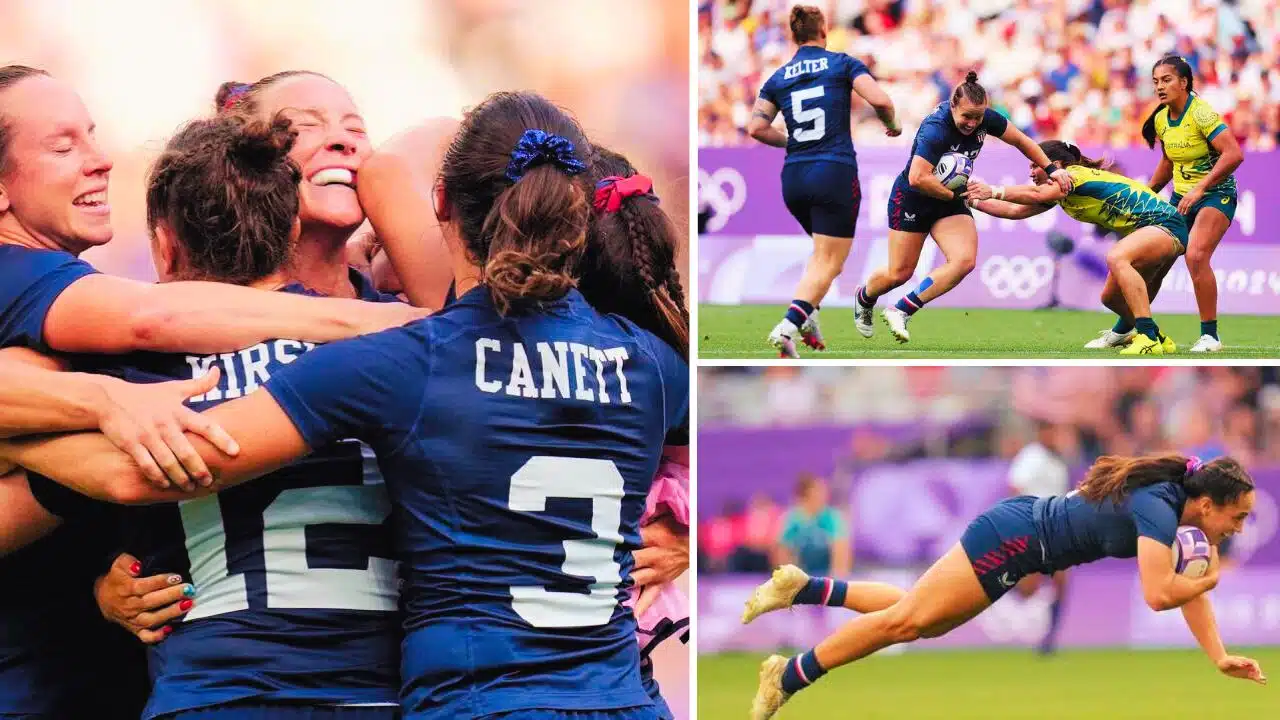
The American women’s rugby team achieved a historic victory, defeating Australia in a dramatic 14-12 win to claim the bronze medal at the Olympic Games. This win marks the best finish for the U.S. women’s team in Olympic rugby, surpassing their previous sixth-place finish in Tokyo and fifth in Rio. The victory is a significant milestone, representing years of hard work, dedication, and perseverance.
A Last-Second Triumph
In a match filled with tension and excitement, the U.S. women emerged victorious in the very last play. Alex Sedrick made a remarkable stiff-arm move to break through Australia’s defense, sprinting almost the entire field to score the game-tying try. Under immense pressure, Sedrick then successfully converted her own kick, securing the win for the Americans.
Sedrick’s performance was nothing short of heroic. As she received the ball deep in American territory, the clock was ticking, and the stakes were incredibly high. Her powerful run, characterized by speed, agility, and sheer determination, left the Australian defense scrambling. Sedrick’s stiff-arm move was particularly impressive, showcasing her physical strength and tactical acumen. The moment she crossed the try line, the stadium erupted in cheers, marking a historic moment for U.S. women’s rugby.
Emotions Run High
After the match, U.S. player Ilona Maher expressed her disbelief and exhaustion. “It hasn’t sunk in yet. I’m so tired but so excited. I don’t think it will sink in until we get those medals. We worked really hard for this, not just for ourselves but for our families. It’s been a tough few years, but we did it.”
Maher’s comments reflect the emotional and physical toll the journey to the bronze medal has taken on the team. The path to this achievement was fraught with challenges, including rigorous training sessions, intense matches, and the added pressures brought on by the global pandemic. The team’s resilience and unwavering commitment to their goal are truly commendable.
Early Lead for Australia
The game started with Australia’s Maddison Levi scoring her 13th try of the Paris Games, giving her team a 7-0 lead. This marked the most tries scored in a single Olympic Games, setting a new record and showcasing Levi’s exceptional talent and consistency. Her early try put the U.S. team on the back foot, adding pressure to their performance.
Levi’s try was a result of a well-coordinated team effort, highlighting the speed and efficiency of Australia’s offense. The U.S. defense had to quickly regroup and strategize to counter the aggressive play style of their opponents.
Key Moments in the First Half
During a critical phase, Australia’s Teagan Levi received a yellow card for a high tackle, giving the Americans a man advantage. Although Kayla Canett nearly scored, she was tackled into touch by Faith Nathan. However, Canett soon redeemed herself with a powerful tackle in the try zone, winning the ball back for the U.S. On the following scrum, veteran player Alev Kelter powered her way through Australia’s defense to score and convert the try, tying the game at 7-7 as the first half ended.
The yellow card against Teagan Levi was a turning point in the match, providing the U.S. with a crucial opportunity. Canett’s near-try and subsequent defensive play demonstrated her versatility and determination. Alev Kelter’s experience and skill were evident as she navigated through the Australian defense, her try and conversion a testament to her leadership and capability under pressure.
Defensive Masterclass
In the second half, Australia threatened early on with another run by Maddison Levi, but the U.S. defense held strong. Despite their efforts, a scrum penalty gave Australia the ball with less than 90 seconds left, allowing the Levi sisters to capitalize. Maddison Levi scored her 14th try of the tournament, putting Australia ahead 12-7.
The U.S. defense’s performance in the second half was exceptional. Their ability to contain Australia’s fast-paced offense and limit scoring opportunities was crucial. The coordination and communication among the U.S. players were evident, with each member playing a vital role in maintaining their defensive structure.
The Comeback
With time running out, Australia opted for a deep kickoff. Ariana Ramsey set up Alex Sedrick to receive the ball deep in American territory. Sedrick made a spectacular run, stiff-arming Teagan Levi and covering the entire length of the field to score the tying try. She then successfully converted her own try, securing a 14-12 victory for the U.S.
Sedrick’s run will be remembered as one of the most thrilling moments in Olympic rugby history. Her ability to maintain composure under extreme pressure and execute the play flawlessly was remarkable. The successful conversion added to the drama, as the victory hinged on her precise kick.
Historic Achievement
This win marks the first Olympic medal in rugby sevens for the U.S. women’s team and the first medal in rugby (15s or 7s) for the U.S. since 1924 when the men’s team won gold. Head coach Emilie Bydwell also made history as the first female rugby head coach to lead a team to an Olympic medal.
The significance of this achievement cannot be overstated. It represents a breakthrough for women’s rugby in the U.S., highlighting the progress and potential of the sport. Coach Bydwell’s leadership and strategic vision played a crucial role in the team’s success, making her a trailblazer in the rugby community.
Looking Ahead to 2028
As the focus shifts to the 2028 Olympic Games in Los Angeles, Ilona Maher hopes this victory will boost the profile of American rugby. “I hope it means we get more games in stadiums like this, that we get more money and funding for the women’s game. We deserve it. We need more girls in the U.S. trying rugby and seeing what it can do for them.”
Maher’s vision for the future reflects a broader goal of increasing participation and support for women’s rugby in the U.S. The team’s success at the Olympics serves as an inspiration, demonstrating the possibilities for future generations of players. Increased funding and visibility could lead to more opportunities, better training facilities, and a stronger domestic league, ultimately elevating the sport to new heights.
This remarkable achievement not only highlights the skill and determination of the U.S. women’s rugby team but also sets the stage for future successes in American rugby. The bronze medal win is a testament to the hard work, resilience, and talent of the players and coaching staff, promising a bright future for the sport in the U.S.
























