
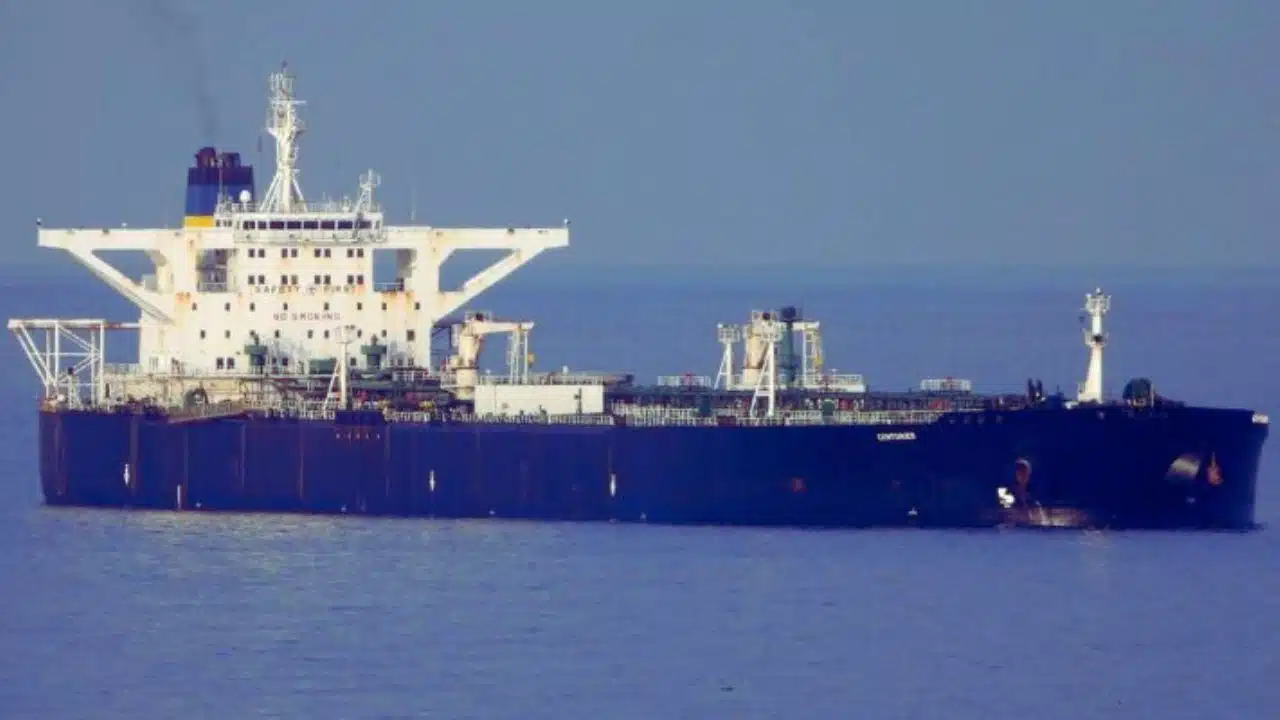
The US has boarded or moved to interdict a third oil tanker linked to Venezuela in recent days, escalating President Donald Trump’s newly announced “blockade” targeting sanctioned vessels and alleged sanctions-evasion networks in Caribbean waters.
What happened at sea
US forces have recently carried out a string of maritime actions—starting with a Dec. 10 seizure of the tanker Skipper, followed by a Dec. 20 boarding of the tanker Centuries, and then the interdiction/pursuit of a third tanker identified in multiple reports as Bella 1.
US officials have described the campaign as aimed at “sanctioned” tankers and so‑called “dark fleet” or “shadow fleet” practices such as false flagging and opaque ownership designed to move restricted crude.
In reporting around the third vessel, Bella 1 was described as a Panama-flagged tanker linked to US sanctions activity and approached while it was heading toward Venezuela, in what appeared to be an effort to stop a load before it could move through an evasive trading chain.
Separately, accounts of the Centuries operation indicate the ship was Panama‑flagged and boarded in the Caribbean, with some reporting describing the action as a “consented boarding” supported by US government departments beyond the Coast Guard.
Timeline of recent tanker actions
| Date (2025) | Vessel | Reported action | Key details widely cited |
| Dec. 10 | Skipper | Seized/controlled by US forces | Reported use of false flagging concerns and a seizure warrant tied to sanctions enforcement narratives. |
| Dec. 20 | Centuries | Boarded/intercepted | Described as Panama‑flagged; boarding east of Barbados was reported by multiple outlets; some accounts disputed whether the vessel itself was sanctioned. |
| Dec. 21 | Bella 1 | Boarded/pursued/interdicted (reports vary) | Identified as Panama‑flagged and linked to sanctions activity; reports described US pursuit near Venezuela to prevent sanctions evasion. |
Trump’s “blockade” order and the policy shift
Trump publicly announced a “total and complete blockade” aimed at sanctioned oil tankers traveling into and out of Venezuela, framing the measure as a pressure tool against Nicolás Maduro’s government.
The announcement quickly raised questions about the practical and legal scope of enforcement, because traditional “blockade” language is typically associated with armed conflict—even as the administration describes these actions as sanctions and law-enforcement-driven interdictions at sea.
Venezuelan officials have condemned the operations as unlawful, while US officials have cast them as legitimate steps to disrupt illicit oil revenue flows and sanctions evasion methods used by networks moving crude through intermediaries.
The unfolding pattern—multiple boardings over less than two weeks—signals a sharper posture than earlier approaches that leaned more on financial sanctions, licensing limits, and civil or criminal enforcement against specific entities.
Why tankers and flags matter
A central feature of the crackdown is the US focus on maritime “workarounds” used to move restricted oil—such as changing flags, obscuring beneficial ownership, and manipulating tracking signals—commonly associated with “dark fleet” operations.
Some reporting around the Skipper case also highlighted concerns tied to improper flag use, reflecting how “flag state” control and documentation can become pivotal in interdiction decisions.
For the Bella 1, US Treasury sanctions materials from prior actions show the name “BELLA 1” connected to broader illicit shipping sanction designations, illustrating why vessel identity and ownership trails become central in enforcement narratives even when voyages and cargo plans shift quickly.
In the Centuries case, shipping-industry reporting described it as not appearing on sanctions lists at the time of interception, underscoring how enforcement may also rely on cargo origin, trade patterns, and cooperation with flag states rather than sanctions status alone.
Key actors and enforcement tools (as described publicly)
| Area | Who is involved | What they can do (high level) |
| Maritime interdiction | US Coast Guard with other US departments’ support | Stop, board, inspect, and potentially redirect vessels under specific authorities and conditions described in public statements and reporting. |
| Sanctions policy | US Treasury (OFAC) | Designate vessels/entities, freeze property interests under US jurisdiction, and restrict dealings by US persons (and create secondary-risk exposure for others). |
| Legal debate | Legal analysts and policy institutions | Assess legality under international law concepts such as flag-state consent, statelessness claims, and “right of visit” arguments discussed publicly. |
Market and geopolitical stakes
Venezuela remains a major oil-reserve holder, and its exports—often routed through complex reseller pathways—make tanker interdictions potentially impactful far beyond a single voyage, especially if shippers fear delays, detention, or higher insurance costs.
Some reporting indicated that at least some vessels began diverting away from Venezuela after the blockade announcement, suggesting near-term trade disruption even before a fully consistent enforcement pattern is established.
At the same time, the risk of miscalculation rises when naval or coast-guard operations occur near sensitive maritime zones, particularly if Venezuela increases military escort activity around departing tankers as suggested in reporting.
The approach also puts pressure on flag registries and international maritime intermediaries—insurers, ship managers, and traders—who may face higher compliance burdens when a route is treated as high-risk for sanctions enforcement.
Final thoughts
The boarding of a third tanker near Venezuela marks a clear escalation from messaging to action, with the US testing how far it can push maritime interdictions as a sanctions-enforcement lever.
What happens next will likely depend on whether more vessels are intercepted, how flag states respond to boarding requests, and whether Venezuela chooses to challenge the campaign through diplomatic or operational means at sea.
For shippers and traders, the immediate signal is higher legal, logistical, and insurance risk around Venezuelan-linked crude movements—especially where ownership, documentation, or AIS behavior raises red flags.