


The rise of Web3 is transforming how applications function, bringing decentralization, enhanced security, and transparency to the digital world.
Web3 applications, or dApps (decentralized applications), operate on blockchain technology and smart contracts, eliminating the need for centralized intermediaries. These applications offer improved data privacy, user autonomy, and secure transactions, making them the future of the digital landscape.
Developers need reliable tools to create robust and scalable Web3 applications. In this article, we explore the top 10 tools for building Web3 applications, providing insights into their functionalities, use cases, and benefits.
These tools streamline smart contract development, decentralized storage, blockchain data querying, and Web3 infrastructure, making it easier to build high-performance dApps.
Key Factors to Consider When Choosing Web3 Development Tools
Before diving into the top 10 tools for building Web3 applications, it’s essential to understand what makes a tool effective for Web3 development. Here are key factors to consider:
Security and Smart Contract Auditing
- Web3 applications rely on smart contracts, which, once deployed, cannot be altered easily.
- Security vulnerabilities can lead to severe exploits, such as hacks and fund losses.
- Tools with built-in security auditing and testing frameworks help prevent smart contract vulnerabilities.
Scalability and Performance Optimization
- Blockchain networks often face congestion, leading to slow transaction speeds and high gas fees.
- The right tools ensure optimal performance and help scale Web3 applications efficiently.
Developer-Friendliness and Documentation
- Comprehensive documentation and ease of use significantly impact development efficiency.
- Web3 tools should offer SDKs, APIs, and tutorials to support developers in the building process.
Community Support and Ecosystem Growth
- A strong developer community indicates long-term tool viability and consistent updates.
- Open-source tools with active contributors generally provide better support and innovation.
Top 10 Tools for Building Web3 Applications
Here are the best tools that can help developers create robust Web3 applications efficiently:
1. Hardhat – The Best Smart Contract Development Framework

Hardhat is a popular Ethereum development framework that simplifies smart contract development, testing, and debugging.
It provides a local blockchain environment that enables developers to deploy, debug, and run tests on smart contracts efficiently.
Hardhat’s extensive plugin support allows seamless integration with various Web3 tools and libraries, making it highly versatile for Ethereum-based projects.
Key Features:
- Local Ethereum network for testing.
- Debugging and error handling.
- Solidity stack traces and console.log for smart contract development.
- Seamless integration with plugins like Ethers.js and Waffle.
Best For:
- Ethereum-based dApp developers who need robust debugging tools.
| Feature | Benefit |
| Local testing environment | Reduces deployment costs and risks |
| Stack traces & error handling | Helps debug smart contracts efficiently |
| Plugin support | Enhances development flexibility |
2. Truffle Suite – Comprehensive Smart Contract Lifecycle Management
Truffle Suite is an all-in-one Ethereum development framework that simplifies smart contract development, testing, and deployment.
It is widely used by developers to manage and deploy Solidity smart contracts with ease. Truffle’s extensive suite of tools, including Truffle Boxes, makes it a go-to choice for full-stack dApp development.
Key Features:
- Smart contract testing, deployment, and management.
- Built-in support for automated testing.
- Truffle Boxes provide pre-configured dApp templates.
Best For:
- Developers looking for a structured, full-stack Ethereum development framework.
| Feature | Benefit |
| Pre-configured templates | Accelerates dApp development |
| Automated testing | Ensures contract reliability |
| Seamless deployment tools | Reduces development complexity |
3. Remix IDE – Browser-Based Smart Contract Development
Remix IDE is a web-based Solidity development environment designed for writing, testing, and deploying smart contracts directly from a browser.
It is beginner-friendly and allows developers to experiment with Solidity without setting up a local environment.
Key Features:
- Instant Solidity compilation.
- In-browser testing and debugging.
- Plugin-based architecture for enhanced functionality.
Best For:
- Quick prototyping and learning Solidity development.
| Feature | Benefit |
| Web-based IDE | No installation required |
| Interactive debugging | Enhances smart contract security |
| Supports plugins | Extends functionality |
4. Infura – Reliable Blockchain API and Infrastructure
Infura provides developers with scalable and reliable Ethereum and IPFS access, eliminating the need for self-hosted nodes.
With Infura, developers can access blockchain data and deploy applications without maintaining their own infrastructure.
Key Features:
- Access to Ethereum, IPFS, and L2 solutions like Polygon and Arbitrum.
- Reliable blockchain infrastructure with minimal downtime.
- WebSockets and RPC endpoints for seamless dApp interaction.
Best For:
- dApp developers who need a robust and scalable blockchain backend.
| Feature | Benefit |
| Scalable API | Handles high traffic loads |
| Reliable infrastructure | Ensures minimal downtime |
| Multi-chain support | Expands development possibilities |
5. Alchemy – Powerful Web3 Development Platform
Alchemy is an advanced Web3 development platform that provides scalable APIs and blockchain analytics to enhance dApp performance.
It is widely adopted by major blockchain projects for its efficiency and reliability.
Key Features:
- Blockchain data analytics and insights.
- Auto-scaling APIs for handling high-traffic dApps.
- Advanced debugging and error reporting.
Best For:
- High-performance Web3 applications requiring scalability.
| Feature | Benefit |
| Auto-scaling API | Manages large traffic seamlessly |
| Built-in analytics | Enhances blockchain insights |
| Enterprise-grade security | Ensures secure transactions |
6. Moralis – Web3 Backend for DApp Development
Moralis is a Web3 development platform that simplifies backend management for dApps, offering pre-built authentication, real-time database syncing, and seamless blockchain integration.
By abstracting complex backend operations, Moralis helps developers build, launch, and scale their applications efficiently.
Key Features:
- One-click authentication for wallets.
- Real-time blockchain data retrieval.
- Cross-chain compatibility with Ethereum, BNB Chain, and Solana.
- Cloud functions for automating Web3 logic.
Best For:
- Developers looking to build Web3 applications without managing complex backend infrastructure.
| Feature | Benefit |
| Wallet authentication | Simplifies user onboarding |
| Real-time database | Reduces backend complexity |
| Multi-chain support | Expands app compatibility |
7. The Graph – Decentralized Query Protocol for Blockchain Data
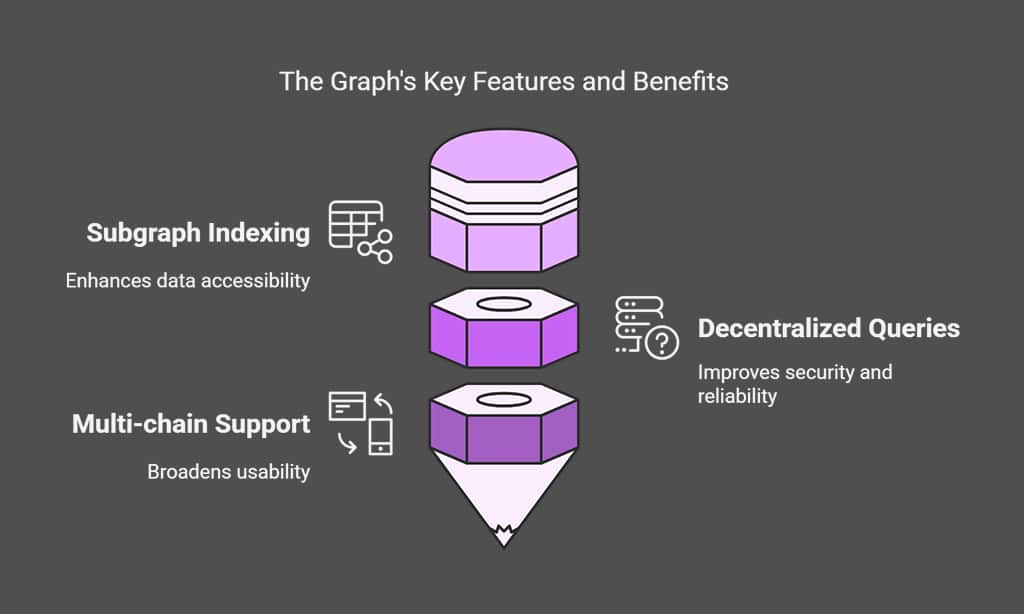
The Graph is a blockchain indexing protocol that allows developers to query blockchain data efficiently.
Instead of relying on centralized APIs, developers can use The Graph to retrieve structured blockchain data via subgraphs.
Key Features:
- Allows subgraph creation for indexing blockchain data.
- Reduces the need for centralized APIs.
- Supports Ethereum, Polygon, Avalanche, and more.
- Efficient and decentralized data retrieval.
Best For:
- Data-intensive dApps requiring seamless blockchain data access.
| Feature | Benefit |
| Subgraph indexing | Enhances data accessibility |
| Decentralized queries | Improves security and reliability |
| Multi-chain support | Broadens usability |
8. OpenZeppelin – Security and Auditing for Smart Contracts
OpenZeppelin offers reusable, secure Solidity smart contract libraries. With built-in security mechanisms, OpenZeppelin helps developers create standardized and secure smart contracts with less risk of vulnerabilities.
Key Features:
- Pre-built smart contract templates for ERC-20, ERC-721, and governance contracts.
- Continuous security updates.
- Integration with Hardhat and Truffle.
Best For:
- Developers who prioritize security in smart contract development.
| Feature | Benefit |
| Pre-audited contracts | Reduces vulnerability risks |
| Standardized libraries | Simplifies contract development |
| Regular updates | Ensures security compliance |
9. IPFS – Decentralized Storage Solution for Web3
IPFS (InterPlanetary File System) is a peer-to-peer storage protocol designed for decentralized applications.
It allows developers to store and retrieve data in a decentralized manner, enhancing security and efficiency.
Key Features:
- Content-based addressing for permanent file storage.
- Enhanced privacy and censorship resistance.
- Works seamlessly with NFT storage solutions.
Best For:
- Web3 applications that require decentralized file storage.
| Feature | Benefit |
| Content-addressed storage | Ensures data integrity |
| Censorship-resistant | Increases security |
| Peer-to-peer network | Eliminates reliance on centralized servers |
10. Chainlink – Decentralized Oracle Network
Chainlink connects smart contracts with real-world data, enabling external data integration.
It is widely used in DeFi applications, enabling secure price feeds and external data access.
Key Features:
- Secure and reliable off-chain data feeds.
- Trusted oracle networks for price feeds, weather data, and more.
- High adoption among DeFi applications.
Best For:
- Smart contracts requiring real-world data feeds.
| Feature | Benefit |
| Decentralized oracles | Reduces reliance on single data sources |
| Secure price feeds | Ensures accuracy in DeFi transactions |
| Wide industry adoption | Enhances compatibility |
Takeaways
Choosing the right tools is crucial for building successful Web3 applications. The top 10 tools for building Web3 applications listed in this guide provide everything needed to streamline development, enhance security, and optimize scalability.
Whether you’re developing a dApp, managing smart contracts, or integrating decentralized storage, these tools will significantly boost your productivity.
By leveraging these cutting-edge Web3 tools, developers can create innovative and future-ready applications that thrive in the decentralized digital landscape.

























