

Cryptocurrencies have become one of the most talked-about innovations in modern finance and technology. For newcomers in 2025, understanding the landscape of cryptocurrencies can feel overwhelming, but it doesn’t have to be.
This article will demystify the Top 10 Cryptocurrencies Explained for Newbies in a detailed and approachable manner.
By the end of this guide, you’ll have a firm grasp of the leading cryptocurrencies, their unique features, and their role in the financial ecosystem.
What Are Cryptocurrencies?
Cryptocurrencies are digital or virtual currencies secured by cryptography, making them nearly impossible to counterfeit or double-spend. Built on decentralized networks powered by blockchain technology, they offer a transparent and secure way to transfer value.
The journey of cryptocurrencies began in 2009 with Bitcoin, but since then, the ecosystem has expanded to include thousands of digital currencies, each with unique applications and use cases. They are not just financial tools but also the backbone of transformative technologies like decentralized finance (DeFi) and non-fungible tokens (NFTs).
Why Cryptocurrencies Matter in 2025
In 2025, cryptocurrencies have evolved far beyond their initial purpose as a digital alternative to traditional money. They are integral to innovations like decentralized finance (DeFi), non-fungible tokens (NFTs), and cross-border payment solutions. Increasing global adoption, institutional investment, and regulatory frameworks are driving their relevance. Understanding these digital assets is crucial for financial literacy and future-proofing investment strategies.
Beginner’s Guide to Cryptocurrency Basics
To navigate the cryptocurrency landscape effectively, beginners should familiarize themselves with key concepts:
- Blockchain Technology: The foundation of cryptocurrencies, ensuring security and transparency.
- Wallets: Digital tools used to store and manage cryptocurrencies securely, including hot wallets (online) and cold wallets (offline).
- Transactions: How value is transferred across blockchain networks, emphasizing transparency and immutability.
- Key Terms: Understanding phrases like altcoins, market cap, decentralized apps (dApps), and staking.
The Top 10 Cryptocurrencies in 2025
Let’s get straight into it!
Methodology for Ranking
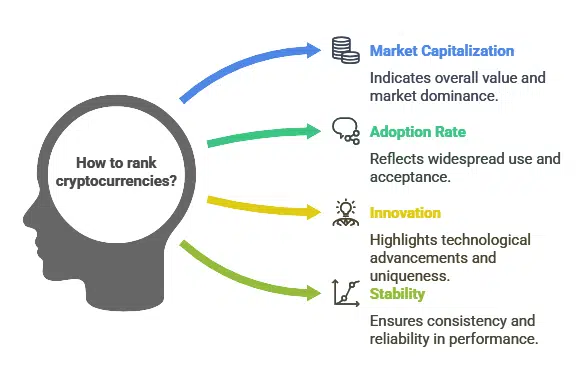
To identify the Top 10 Cryptocurrencies Explained for Newbies, we considered the following factors:
- Market Capitalization: A measure of a cryptocurrency’s overall value.
- Adoption Rate: How widely a cryptocurrency is used.
- Innovation: Technological advancements and unique features.
- Stability: Consistency in market performance and reliability.
1. Bitcoin (BTC) – The Pioneer
Bitcoin remains the most recognized and widely adopted cryptocurrency. As the first cryptocurrency, it paved the way for the blockchain revolution. Key aspects include:
- Dominance: Holds the largest market cap in the industry, often referred to as “digital gold.
- Use Cases: Digital gold, store of value, and a hedge against inflation.
- Recent Developments: Adoption by major institutions, integration of the Lightning Network for faster transactions, and increased use as a payment method.
Key Stats:
| Metric | Value |
| Market Cap (2025) | $1.2 Trillion |
| Transaction Speed | ~7 TPS |
| Total Supply | 21 Million BTC |
2. Ethereum (ETH) – The Smart Contract Leader
Ethereum revolutionized blockchain by introducing smart contracts, enabling decentralized applications (dApps). Key highlights include:
- Ecosystem Growth: The backbone of DeFi and NFTs, hosting thousands of projects.
- Ethereum 2.0: Transition to a proof-of-stake consensus mechanism, enhancing scalability and energy efficiency.
- Versatility: Supports a wide range of applications, from gaming to decentralized finance.
Key Stats:
| Metric | Value |
| Market Cap (2025) | $500 Billion |
| Transaction Speed | ~30 TPS |
| Key Applications | DeFi, NFTs |
3. Binance Coin (BNB) – Powering a Thriving Ecosystem
Binance Coin is the native cryptocurrency of the Binance Exchange, the world’s largest crypto trading platform. Its strengths include:
- Utility: Reduced transaction fees and access to various Binance services.
- Ecosystem Role: Powers Binance Smart Chain (BSC), supporting DeFi, NFTs, and token launches.
- Adoption: Used widely in payments and as collateral in lending platforms.
Key Stats:
| Metric | Value |
| Market Cap (2025) | $100 Billion |
| Network Activity | Over 10M daily txs |
| Key Feature | BSC Integration |
4. Cardano (ADA) – A Focus on Sustainability
Cardano is renowned for its scientific approach to blockchain technology. Its key features are:
- Sustainability: Focus on energy-efficient consensus mechanisms.
- Research-Driven: Peer-reviewed development processes ensure reliability.
- Partnerships: Collaborations with governments and educational institutions to promote blockchain adoption.
Key Stats:
| Metric | Value |
| Market Cap (2025) | $50 Billion |
| Transactions per Second | ~250 TPS |
| Energy Efficiency | High |
5. Solana (SOL) – High-Speed Blockchain Innovation
Solana stands out for its high transaction speeds and low costs. Highlights include:
- Scalability: Processes over 65,000 transactions per second with minimal fees.
- Use Cases: DeFi, gaming, and NFTs.
- Recent Milestones: Integration with leading dApps and partnerships with major brands.
Key Stats:
| Metric | Value |
| Market Cap (2025) | $60 Billion |
| Transaction Speed | 65,000+ TPS |
| Avg Transaction Cost | <$0.01 |
6. Ripple (XRP) – Bridging Traditional Finance
Ripple aims to simplify cross-border payments by bridging traditional finance and blockchain technology. Key points include:
- Adoption: Used by financial institutions worldwide for its speed and low costs.
- Regulatory Progress: Ongoing developments in legal clarity post-2024.
- Efficiency: Transactions settle in seconds with minimal fees.
Key Stats:
| Metric | Value |
| Market Cap (2025) | $40 Billion |
| Transaction Speed | ~3-5 Seconds |
| Cost per Transaction | ~$0.0002 |
7. Polkadot (DOT) – Enabling Interoperability
Polkadot’s mission is to connect multiple blockchains into a unified network. Its strengths are:
- Interoperability: Seamlessly connects diverse blockchains.
- Scalability: Efficient handling of multiple transactions simultaneously.
- Community Growth: Expanding ecosystem of parachains and projects.
Key Stats:
| Metric | Value |
| Market Cap (2025) | $35 Billion |
| Parachains Supported | 100+ |
| Avg Transaction Cost | <$0.02 |
8. Avalanche (AVAX) – Competing in Scalability
Avalanche is designed for high throughput and fast finality. Features include:
- Enterprise Solutions: Adoption in finance and supply chain sectors.
- Ecosystem Expansion: Growth in DeFi and gaming applications.
- Innovation: Modular architecture for flexibility.
Key Stats:
| Metric | Value |
| Market Cap (2025) | $30 Billion |
| Transaction Finality | ~2 Seconds |
| Validators | 1,000+ |
9. Chainlink (LINK) – The Oracle Network
Chainlink provides reliable off-chain data to blockchain applications. Key features include:
- Decentralization: Ensures data integrity.
- Adoption: Integrated with numerous DeFi platforms for price feeds and more.
- Use Cases: Pricing feeds, weather data, and more.
Key Stats:
| Metric | Value |
| Market Cap (2025) | $25 Billion |
| Oracles Active | 500+ |
| Supported Networks | 50+ |
1.0 Dogecoin (DOGE) – The Memecoin That Endures
Dogecoin started as a joke but has built a loyal community. Key aspects are:
- Community-Driven: Powered by a passionate user base.
- Adoption: Used for tips, donations, and microtransactions.
- Resilience: Survived market volatility due to strong support.
Key Stats:
| Metric | Value |
| Market Cap (2025) | $20 Billion |
| Transaction Speed | ~1 Minute |
| Use Cases | Tipping, Donations |
Comparing the Top Cryptocurrencies
A Quick Comparison Table
| Cryptocurrency | Market Cap (2025) | Key Use Case | Notable Features |
| Bitcoin | $1.2 Trillion | Digital Gold | Decentralization |
| Ethereum | $500 Billion | Smart Contracts | Ecosystem Growth |
| Binance Coin | $100 Billion | Exchange Utility | Ecosystem Integration |
| Cardano | $50 Billion | Sustainable Finance | Research-Driven Approach |
| Solana | $60 Billion | High-Speed dApps | Scalability and Speed |
| Ripple | $40 Billion | Cross-Border Payments | Institutional Partnerships |
| Polkadot | $35 Billion | Blockchain Network | Interoperability |
| Avalanche | $30 Billion | Scalable Solutions | Modular Architecture |
| Chainlink | $25 Billion | Data Integration | Oracle Technology |
| Dogecoin | $20 Billion | Community Transactions | Loyal Community |
Key Trends in Cryptocurrency Rankings
- Sustained Growth: Bitcoin and Ethereum continue to dominate due to strong network effects.
- Emerging Players: Polkadot, Solana, and Avalanche are rapidly gaining traction.
- Innovation-Driven: Focus on scalability, sustainability, and interoperability.
How to Choose the Right Cryptocurrency to Invest In?
Factors to Consider
When selecting a cryptocurrency to invest in, consider:
- Risk Tolerance: Assess your comfort level with market volatility.
- Investment Goals: Identify whether you’re looking for long-term growth or short-term gains.
- Project Fundamentals: Research the team, roadmap, and use cases.
Tips for Beginners
- Start Small: Invest only what you can afford to lose.
- Diversify: Spread your investment across multiple cryptocurrencies.
- Stay Informed: Keep up with market trends and updates.
Final Thoughts
Recap of Key Points
Understanding the Top 10 Cryptocurrencies Explained for Newbies provides a solid foundation for exploring the world of digital assets. From Bitcoin’s dominance to the rise of innovative platforms like Polkadot and Solana, the crypto space in 2025 offers immense potential.
Next Steps for Newbies
- Learn More: Utilize resources like blogs, podcasts, and online courses.
- Join Communities: Engage with forums, social media groups, and local meetups.
- Take Action: Start your crypto journey with small, calculated steps.
By diving into the Top 10 Cryptocurrencies Explained for Newbies, you’re equipped to navigate the exciting and ever-evolving cryptocurrency landscape with confidence.






















