


Belgium’s real estate market offers incredible opportunities for buyers, thanks to its central European location, rich cultural heritage, and stable economy. Whether you’re a first-time homebuyer, an investor seeking rental property, or someone considering a second home, Belgium’s property market presents an appealing range of choices.
However, navigating through the intricacies of purchasing real estate in a foreign country requires more than just enthusiasm.
Understanding the key factors that influence the Belgian market, legal obligations, and financing options is critical to making a well-informed investment.
In this article, we’ll walk you through the 10 essential things you must know before buying property in Belgium.
10 Things to Know Before Buying Property in Belgium
we’ll walk you through 10 crucial things you need to know before buying property in Belgium, from market trends and legal considerations to financing options and post-purchase planning.
By being well-informed, you’ll be better positioned to make sound decisions and avoid common pitfalls when navigating Belgium’s real estate landscape.
1. Why Belgium is a Great Place to Buy Property
Belgium is one of Europe’s most attractive destinations for real estate investment. Its combination of historical significance, modern infrastructure, and strong economic foundation makes it ideal for both personal and business property purchases.
High Quality of Life and Stability
Belgium is renowned for its excellent healthcare system, top-tier education facilities, and strong social security structure. Cities like Brussels, Antwerp, and Ghent offer the perfect mix of modern living and rich cultural experiences, making them desirable for both expatriates and locals.
The country also has a relatively low crime rate, a well-developed transportation system, and a high standard of living, which consistently ranks high on global quality-of-life indexes.
Strategic Location in Europe
As a heart of the European Union, Belgium is strategically placed for both personal and business interests. It shares borders with major economic powers like France, Germany, the Netherlands, and Luxembourg, making it an ideal hub for international business, travel, and tourism.
Furthermore, the country has strong rail and air connections, providing easy access to the rest of Europe.
Key Takeaway: Belgium’s robust infrastructure, high quality of life, and strategic location make it a prime choice for international buyers.
Key Reasons Why Belgium is a Great Place to Buy Property
| Factor | Description | Impact for Buyers |
| High Quality of Life | Excellent healthcare, top-notch education, strong social security | Attractive for long-term residents and expatriates |
| Economic Stability | Strong economy, part of the European Union, well-regulated market | Confidence for investors and long-term stability |
| Cultural Heritage | Rich cultural history, with modern amenities and a vibrant lifestyle | Great for both local residents and those seeking cultural immersion |
| Strategic Location | Central position in Europe, with strong international rail and air links | Ideal for international business, ease of travel, and tourism |
| Affordable Housing Market | Competitive property prices compared to other major EU cities | Attractive investment potential, particularly in major cities like Brussels and Antwerp |
2. Understanding the Belgian Real Estate Market
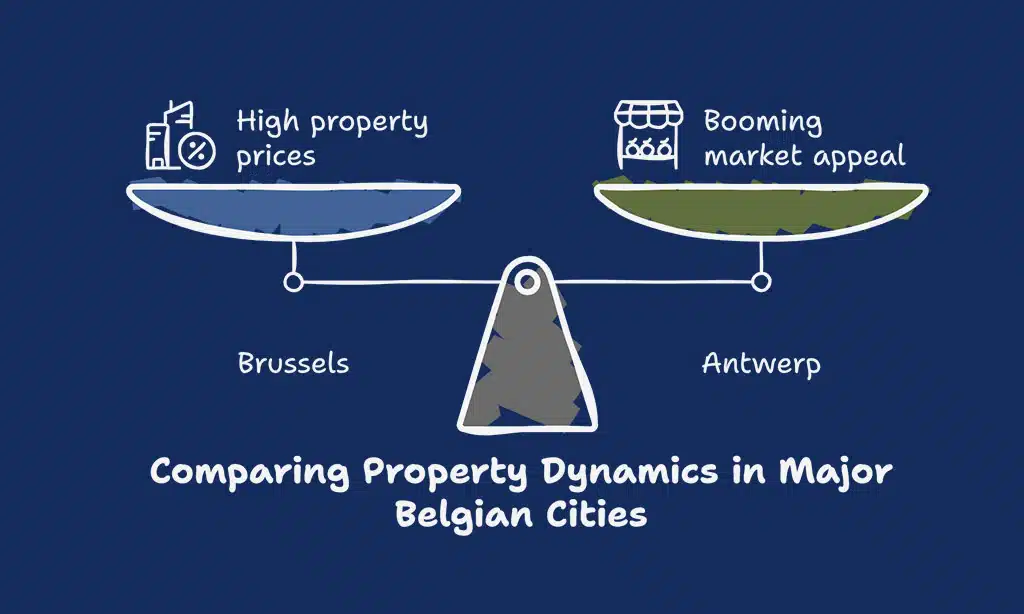
Before making a decision to buy property in Belgium, it’s essential to understand the market dynamics. Prices and demand can differ greatly between regions, and being informed will ensure you’re investing wisely.
Market Trends and Pricing
The Belgian property market has seen consistent growth, particularly in larger cities and areas near business districts.
According to recent data from the Belgian Real Estate Institute (BIV), the average property price in Belgium rose by 4% in 2023. However, the pace of price increases is slowing down, with experts predicting a more stable market moving forward.
- Brussels: As the political and economic capital of Belgium, Brussels has some of the highest property prices in the country. However, demand is high, and property values continue to increase steadily.
- Antwerp: Known for its port and cultural scene, Antwerp’s property market is booming. It attracts both young professionals and investors due to its vibrant economy and strong rental market.
- Ghent: Ghent has become increasingly popular in recent years due to its student population, burgeoning tech scene, and affordable living costs relative to Brussels and Antwerp.
Regional Property Differences in Belgium
Belgium is divided into three main regions: Flanders (Dutch-speaking), Wallonia (French-speaking), and Brussels-Capital (bilingual).
Each of these regions offers distinct property characteristics, and pricing varies significantly depending on location.
Table: Average Property Prices by Region
| Region | Average Property Price (2023) | Notes |
| Brussels | €3,000 – €5,000 per m² | Capital city with high demand and premium properties. |
| Antwerp | €2,500 – €3,800 per m² | Popular for its cultural significance and economic growth. |
| Ghent | €2,200 – €3,500 per m² | Growing student and tech scene, with rising property values. |
| Wallonia | €1,500 – €2,500 per m² | More affordable compared to the other regions. |
3. Legal Considerations When Buying Property in Belgium
Belgium’s legal framework for property purchases is well-defined, but foreign buyers must understand the various obligations to ensure a smooth transaction.
Understanding Belgian Property Law
Foreigners are allowed to buy property in Belgium without restrictions. However, there are specific rules to follow when it comes to property transactions. The Belgian Civil Code outlines the rights and responsibilities of property owners, including rules about leases, property taxes, and inheritance laws.
One of the most important legal concepts to understand is that property transactions must be conducted in writing, and the sales contract (compromis de vente) must be signed by both parties.
Notary’s Role in Property Transactions
A notary (notaire in French) is a legal professional who ensures that property transactions comply with Belgian laws.
Notaries are responsible for preparing the deed of sale, ensuring that all taxes are paid, and registering the property with the local authorities.
It’s important to work closely with a notary throughout the process, as they will guide you through every legal step.
Notary Costs and Responsibilities
| Notary Responsibility | Cost Estimate |
| Preparing and verifying the contract | 1% – 2% of the property price |
| Registering the property title | Included in notary fees |
| Managing taxes and legal formalities | Varies depending on the transaction |
Taxes and Fees Involved in Property Purchase
Property buyers in Belgium must account for several taxes and fees, which can add up quickly. The most notable of these is the registration tax, which ranges from 10% to 12.5% of the property purchase price, depending on the region.
There are also notary fees (1% – 2.5%) and VAT for newly built properties (21%).
Typical Taxes and Fees for Buying Property in Belgium
| Type of Tax/Fee | Amount |
| Registration Tax (for existing properties) | 10% – 12.5% of the purchase price |
| Notary Fees | 1% – 2.5% of the purchase price |
| VAT on New Properties | 21% |
| Property Inspection Fees | €300 – €1,000 |
4. Financing Your Property Purchase in Belgium
Securing financing is one of the most crucial aspects of buying property, especially for foreigners. Understanding how mortgages work in Belgium will help you navigate this part of the process more efficiently.
Mortgage Options for Foreign Buyers
Belgian banks offer mortgage options to foreign buyers, but securing a loan may be slightly more difficult for those without Belgian residency or a history of credit in Belgium.
Typically, banks require a down payment of 10% to 20%, and they may offer loans that cover up to 80% of the property value.
The interest rates for mortgages in Belgium are quite competitive compared to other European countries. According to recent reports, the average mortgage interest rate in Belgium in 2023 was around 2.2% for a 10-year fixed-rate mortgage.
Down Payment and Loan Terms
Mortgage terms in Belgium are generally between 20 to 30 years. While foreign buyers may face slightly higher interest rates than locals, the terms of the loan are flexible.
It’s important to assess your long-term financial situation before deciding on the loan term, as longer terms may offer lower monthly payments but higher overall interest costs.
Currency and Transfer Fees
If you’re purchasing property from abroad, currency exchange and international transfer fees can add up. Depending on the currency you’re transferring, the exchange rate might impact your total cost.
Use a reputable international money transfer service to minimize transfer fees and ensure that your funds reach Belgium quickly.
Typical Mortgage Terms and Interest Rates
| Term Length | Interest Rate (2023) | Down Payment (Required) |
| 10-year Fixed Rate | 2.2% | 10% – 20% of purchase price |
| 20-year Fixed Rate | 2.5% | 10% – 20% of purchase price |
| 30-year Fixed Rate | 2.8% | 10% – 20% of purchase price |
5. Steps to Take Before Making an Offer
Making an offer on a property is a significant decision that requires careful consideration. Before you commit, make sure to do thorough research and due diligence.
Researching the Neighborhood
It’s crucial to understand the area where you plan to buy property. Factors such as public transportation, school proximity, crime rates, and available amenities all influence the desirability and long-term value of a property.
Tools like Google Maps, local property websites, and expat forums can provide valuable insights into the neighborhood.
Inspecting the Property
Before making an offer, always get a professional property inspection. This will help you uncover any potential issues with the property, such as structural damage, plumbing issues, or outdated electrical systems.
An inspector will also help you estimate repair costs, which could influence your decision on whether the property is worth the asking price.
Verifying Property Ownership
To avoid legal issues, verify that the seller is the legitimate owner of the property. This can be done by checking the Belgian land registry or having your notary handle this verification. Ensure that the property is free from any liens or debts.
Common Property Inspection Areas
| Area | Potential Issues |
| Structural Integrity | Cracks, damp, foundation problems |
| Plumbing and Electrical Systems | Outdated wiring, leaks, or drainage issues |
| Roof and Exterior | Damage from weather, leaks, or wear |
| Windows and Doors | Drafts, poor insulation, or broken seals |
6. The Buying Process in Belgium

Understanding the Belgian buying process will make your transaction smoother and prevent you from missing any critical steps.
Signing the Compromise Sale Agreement
Once you’ve found a property, the next step is to sign the compromis de vente (preliminary sale agreement). This legally binding document outlines the terms of the sale, including the purchase price, timeline, and any contingencies.
At this point, you will typically pay a deposit (10% of the purchase price).
Finalizing the Sale at the Notary’s Office
Once all conditions are met, you’ll finalize the purchase at the notary’s office. The notary will ensure all taxes are paid, verify the property’s legal status, and transfer ownership to you. It is important to read and understand all documents before signing, as these agreements are legally binding.
Transferring Ownership and Registration
The notary will handle the registration of the property in the land registry. This official act finalizes the transfer of ownership and ensures that the property is legally in your name.
7. Common Pitfalls to Avoid When Buying Property in Belgium
Avoiding common mistakes can save you time and money in the long run. Here are some pitfalls to watch out for when buying property in Belgium.
Overlooking Additional Costs
While the purchase price of the property is the most significant cost, don’t forget about additional costs such as notary fees, registration taxes, and inspection costs. These can add up quickly and significantly impact your budget.
Ignoring Building Regulations
Make sure to check the local building regulations before purchasing, especially if you plan to renovate the property. Different regions in Belgium have specific zoning laws, and failure to comply with them can result in hefty fines.
Neglecting Long-Term Property Value
Consider the long-term investment potential of your property. Factors such as upcoming developments in the area, proximity to transport links, and local economic growth can all affect property values over time.
8. The Cost of Living and Maintenance in Belgium
When buying property, it’s crucial to factor in not just the upfront cost but also the ongoing costs of living and maintaining the property.
Belgium’s property market might have enticing prices, but long-term financial planning is key to avoid any surprises.
Property Taxes and Utility Costs
In Belgium, property owners are subject to two main taxes: property tax (onroerende voorheffing) and municipal taxes. These taxes vary depending on the region and the property’s assessed value.
- Property Tax: The rate depends on the value of the property and can range from 1.25% to 3.3% of the property’s cadastral income.
- Municipal Taxes: These taxes are applied by the local municipality and can vary widely across regions.
In addition to taxes, there are the usual utility costs, including water, electricity, heating, and waste collection.
The cost of utilities will depend on the size of your home, usage, and the energy efficiency of the property.
Home Insurance and Maintenance
Home insurance is mandatory in Belgium. It covers damage to your property and liability for any accidents that occur within your home. Property maintenance can vary greatly, depending on the age and type of the property.
Older homes may require more frequent repairs, while newer homes may have lower maintenance costs.
Typical Ongoing Costs of Property Ownership in Belgium
| Expense Type | Average Cost/Range | Notes |
| Property Tax | 1.25% – 3.3% of cadastral income | Depends on the region and property value |
| Municipal Taxes | Varies by municipality | Each municipality sets its own rates |
| Home Insurance | €150 – €400 per year | Varies based on coverage and property size |
| Utility Bills (Electricity, Gas, etc.) | €100 – €300 per month | Depending on the property’s energy efficiency and usage |
| Maintenance Costs | €500 – €2,000 per year | Higher for older properties |
Key Takeaway: Be aware of the total ongoing costs, including taxes, insurance, utilities, and maintenance, to ensure your property remains a financially sound investment.
9. Understanding the Belgian Rental Market
If you’re considering buying property as an investment, understanding the rental market in Belgium is crucial. Rental yields can vary greatly depending on the location and type of property.
Rental Yields and Demand
The rental market in Belgium is generally stable, with increasing demand for rental properties in cities like Brussels, Antwerp, and Ghent.
Rental prices have seen moderate growth in recent years, and with the large student population, especially in cities like Leuven and Ghent, there’s a significant demand for smaller, affordable properties.
- Brussels: The capital’s rental market is driven by a constant influx of expatriates, government employees, and international organizations. A typical 1- or 2-bedroom apartment in central Brussels can fetch €900 to €1,500 per month.
- Antwerp and Ghent: These cities are increasingly becoming hotspots for both young professionals and students, leading to strong demand for apartments and student housing. Rent in these areas typically ranges between €800 and €1,200 for 1-bedroom apartments in prime locations.
Long-Term Rental vs. Short-Term Rental
In Belgium, long-term rentals are typically more stable, offering consistent monthly income, while short-term rentals (e.g., through platforms like Airbnb) can be more profitable in high-demand areas like Brussels, but they come with additional regulations.
Some municipalities in Belgium impose strict rules on short-term rentals, such as limits on the number of nights a property can be rented out per year.
Average Rental Prices in Key Belgian Cities (2023)
| City | 1-Bedroom Rent (City Center) | 2-Bedroom Rent (City Center) | Rental Yield (Annual) |
| Brussels | €900 – €1,500 | €1,200 – €2,000 | 3% – 4% |
| Antwerp | €800 – €1,200 | €1,100 – €1,800 | 3.5% – 4.5% |
| Ghent | €750 – €1,200 | €1,000 – €1,700 | 3% – 4% |
| Wallonia | €600 – €900 | €800 – €1,200 | 4% – 5% |
Key Takeaway: Research rental yields and the demand for rental properties in your chosen location to make an informed decision if you’re buying property for investment purposes.
10. Post-Purchase Considerations and Property Resale Potential
After purchasing your property in Belgium, it’s important to think about the long-term potential of your investment. Factors such as property appreciation, resale potential, and market trends can influence the overall value of your property.
Property Appreciation
Belgium’s property market has historically shown steady appreciation, particularly in major cities like Brussels and Antwerp. However, property values in some rural areas of Wallonia may not appreciate as quickly.
Investors should keep an eye on urban regeneration projects and infrastructure developments, as these can significantly impact property values.
- Brussels and Antwerp: The continuous growth of these cities means that property values are likely to increase over the long term, making them excellent options for investors.
- Wallonia and Smaller Towns: While more affordable upfront, properties in these areas may experience slower growth in value, though they offer lower entry costs and higher rental yields in some cases.
Resale Potential
The resale potential of your property will depend on several factors, including its location, condition, and the overall state of the real estate market. Properties in central locations with easy access to public transport, schools, and amenities tend to sell faster.
Additionally, if you plan on renovating or upgrading your property, this can significantly improve its resale value.
Factors Affecting Property Resale Value in Belgium
| Factor | Impact on Resale Value |
| Location | High demand in cities like Brussels, Antwerp, and Ghent increases resale value |
| Condition of the Property | Well-maintained or newly renovated properties have a higher resale value |
| Proximity to Public Transport | Properties near metro, train, or bus stations sell faster and for higher prices |
| Nearby Amenities | Proximity to schools, parks, and shops increases a property’s attractiveness |
| Market Trends | Strong demand in urban centers leads to higher appreciation |
Key Takeaway: When buying property in Belgium, consider the long-term potential for resale, particularly if you’re looking for an investment property. Key factors like location, condition, and proximity to amenities will influence your property’s value.
Takeaways
Buying property in Belgium can be an exciting and rewarding endeavor if you take the time to understand the process, legal requirements, and financial obligations involved.
By following the 10 things to know before buying property in Belgium, you’ll be well-equipped to make an informed decision and ensure your investment is secure.
With proper research, the right guidance from legal professionals, and a clear understanding of the costs and benefits, your property purchase in Belgium can be a success.





















