

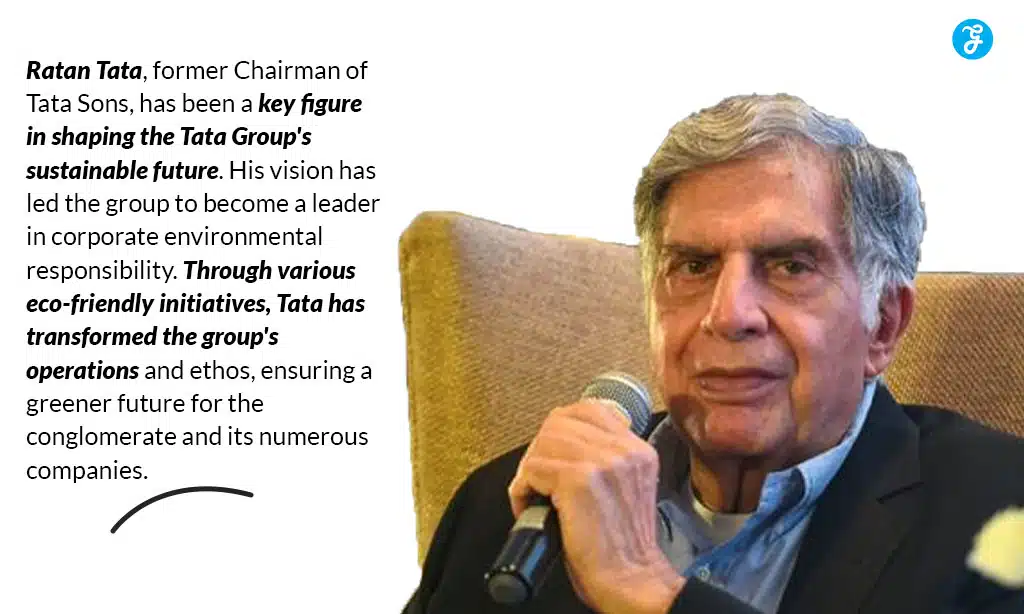
In the realm of Indian business, few names carry as much weight as Ratan Tata. As the former Chairman of Tata Sons, the holding company of the Tata Group, Ratan Tata has been instrumental in shaping one of India’s largest and most respected conglomerates. However, beyond his business acumen, Tata’s vision for a sustainable future has left an indelible mark on the group’s operations and ethos.
In an era where sustainability has become a critical concern for businesses worldwide, Ratan Tata’s foresight and commitment to eco-friendly initiatives have positioned the Tata Group as a leader in corporate environmental responsibility.
This narrative explores how the green legacy of Ratan Tata has transformed the Tata Group, driving sustainability and eco-friendly initiatives across its diverse portfolio of companies.
Early Foundations of Sustainability
Ratan Tata’s commitment to sustainability is deeply rooted in his personal beliefs and values. Growing up under the influence of his predecessor and grand-uncle, JRD Tata, Ratan was exposed to the idea that businesses should serve a higher purpose beyond profit.
JRD Tata’s philosophy that “what comes from the people must go back to the people” laid the groundwork for the group’s future sustainability efforts. In the 1990s and early 2000s, as Ratan Tata took the helm of the Tata Group, he began to incorporate environmental considerations into the company’s operations.
This period saw the introduction of various initiatives aimed at reducing the group’s environmental footprint. For instance, Tata Steel implemented energy conservation measures and began exploring cleaner production technologies.
These early efforts, while significant, were just the beginning of what would become a comprehensive sustainability strategy under Ratan Tata’s leadership. His vision was to create a business model that balanced economic growth with environmental stewardship, setting the stage for more ambitious initiatives in the years to come.
The Tata Climate Change Policy
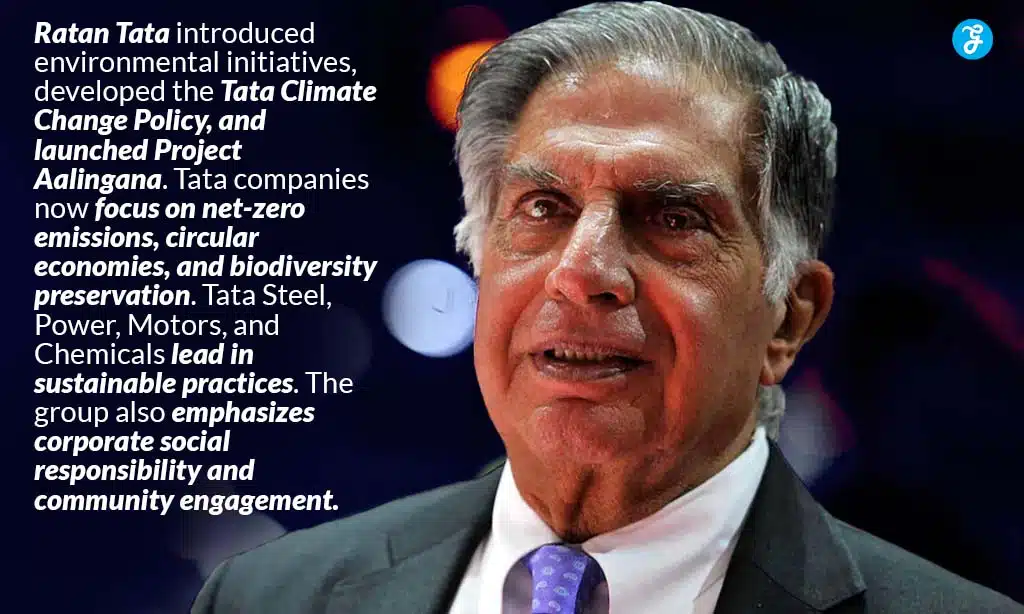
A pivotal moment in the Tata Group’s sustainability journey came in 2009 with the adoption of the Tata Climate Change Policy. This comprehensive policy, developed under Ratan Tata’s guidance, demonstrated the group’s commitment to addressing climate change and environmental issues across all its operations. The policy outlined several key components and goals:
- Reducing the carbon footprint of Tata companies
- Developing products and services that help mitigate climate change
- Engaging with stakeholders on climate change issues
- Promoting climate change awareness among employees and communities
The impact of this policy was far-reaching, influencing decision-making processes and operational strategies across all Tata Group companies. It set the tone for future sustainability efforts and positioned the group as a leader in corporate environmental responsibility in India.
Project Aalingana: Embracing the Future
The Tata Group launched Project Aalingana in 2021 after laying the groundwork for it with the Climate Change Policy. This ambitious initiative, whose name means “embrace” in Sanskrit, represents a holistic approach to sustainability that goes beyond mere carbon reduction. Project Aalingana is built on three interconnected pillars:
- Driving Net Zero: This pillar focuses on reducing greenhouse gas emissions across all Tata companies, with the ultimate goal of achieving net-zero emissions.
- Pioneering Circular Economies: This aspect emphasizes the need to minimize waste and maximize resource efficiency through innovative business models and technologies.
- Preserving Nature & Biodiversity: This pillar recognizes the importance of protecting and restoring natural ecosystems as part of the group’s sustainability efforts.
Under Project Aalingana, Tata companies have set ambitious commitments and targets. For example, Tata Steel aims to reduce its CO2 emissions to less than 2 tonnes per tonne of crude steel by 2025, while Tata Power plans to increase its clean energy portfolio to 80% by 2030.
The Green Legacy of Ratan Tata Across Tata Companies
Ratan Tata’s green vision has spurred innovation across the Tata Group, with various companies developing cutting-edge technologies and solutions to address environmental challenges. Tata Steel has been at the forefront of sustainable steel production. The company has invested in HIsarna technology, a revolutionary ironmaking process that significantly reduces CO2 emissions.
Additionally, Tata Steel is exploring carbon capture and utilization technologies to further minimize its environmental impact. Tata Power has made substantial investments in renewable energy. The company has rapidly expanded its solar and wind power capacity, becoming one of India’s largest renewable energy producers.
In 2021, Tata Power announced plans to phase out coal-based capacity and increase its clean energy portfolio to 80% by 2030. Tata Motors has been a pioneer in electric vehicle (EV) technology in India. The company launched the Nexon EV, one of India’s best-selling electric cars, and continues to expand its EV lineup.
Tata Motors has also set ambitious targets for electrification, aiming to have 25% of its sales come from EVs by 2025. Tata Chemicals has developed innovative carbon capture and reuse technology. The company’s pilot plant in the UK demonstrates the potential for capturing CO2 emissions and converting them into useful products like sodium bicarbonate.
Other Tata companies have also embraced sustainability in their operations. For instance, Tata Consultancy Services (TCS) has implemented energy-efficient data centers and promotes sustainable IT practices, while Tata Consumer Products focuses on sustainable sourcing and packaging.
Corporate Social Responsibility and Community Engagement
Ratan Tata’s vision for sustainability extends beyond environmental concerns to encompass social responsibility and community engagement. The Tata Group’s approach to corporate social responsibility (CSR) is deeply ingrained in its business philosophy, reflecting Ratan Tata’s belief that businesses should contribute positively to society.
Many of the group’s sustainability initiatives have a strong community focus. For example, Tata Power’s Club Enerji program educates school children about energy conservation and climate change, fostering a new generation of environmentally conscious citizens.
Similarly, Tata Steel’s Green School Project promotes environmental awareness and sustainable practices in schools near its operational areas. The group also engages in larger-scale community projects. The Tata Trusts, under Ratan Tata’s guidance, have supported various environmental conservation efforts, including projects to protect biodiversity and promote sustainable agriculture.
Challenges and Obstacles
While the Tata Group’s sustainability journey under Ratan Tata’s vision has been impressive, it has not been without challenges. One of the primary obstacles has been balancing profitability with sustainability goals, especially in industries like steel and power generation that traditionally have high environmental impacts.
Technological limitations have also posed challenges. For instance, while Tata Steel has made significant strides in reducing emissions, achieving net zero in steel production remains a complex technological challenge that requires continued innovation and investment.
Regulatory challenges have also played a role. While India has made commitments to reduce its carbon emissions, the regulatory landscape for sustainability initiatives is still evolving. This can sometimes create uncertainty for businesses investing in long-term sustainability projects.
Despite these challenges, the Tata Group’s commitment to Ratan Tata’s green vision has remained steadfast, with the company continually seeking innovative solutions to overcome these obstacles.
Global Recognition and Leadership
The Tata Group’s sustainability efforts, driven by Ratan Tata’s vision, have garnered global recognition. Various Tata companies have received awards and accolades for their environmental initiatives. For instance, Tata Steel has been recognized as a sustainability champion by the World Steel Association for multiple years.
Beyond awards, the Tata Group has played a significant role in shaping global sustainability agendas. The group has been actively involved in international forums on climate change and sustainable development, sharing its experiences and best practices with the global business community.
The group has also formed partnerships with international organizations to further its sustainability goals. For example, Tata Consultancy Services has collaborated with the World Economic Forum on initiatives related to the Fourth Industrial Revolution and its implications for sustainability.
The Future of Sustainability in the Tata Group
As the Tata Group looks to the future, sustainability remains a core focus. Ongoing initiatives and future plans across Tata companies demonstrate a continued commitment to Ratan Tata’s green vision. For instance, Tata Power’s ambitious renewable energy targets and Tata Motors’ push towards electric mobility are set to shape the future of these industries in India and beyond.
While Ratan Tata has stepped down from his role as Chairman, his influence as Chairman Emeritus continues to guide the group’s sustainability efforts. The next generation of leadership, including current Chairman N. Chandrasekaran, has reaffirmed the group’s commitment to sustainability, ensuring that Ratan Tata’s green vision will continue to shape the Tata Group’s future.
Takeaways
Ratan Tata’s impact on sustainability within the Tata Group has been profound and far-reaching. His vision has transformed the group from a traditional conglomerate into a leader in corporate sustainability, influencing not just the Tata companies but setting a benchmark for the entire Indian corporate sector.
The lasting legacy of Ratan Tata’s green vision is evident in the group’s comprehensive approach to sustainability, from its climate change policy to innovative technologies and community engagement initiatives. This legacy continues to guide the Tata Group as it navigates the challenges of the 21st century, balancing business growth with environmental responsibility.
As the world grapples with the urgent need to address climate change and environmental degradation, the importance of continued commitment to sustainability in business cannot be overstated. Ratan Tata’s green vision for the Tata Group serves as a powerful example of how businesses can be a force for positive change, demonstrating that economic success and environmental stewardship can go hand in hand.
The journey that began under Ratan Tata’s leadership continues, with the Tata Group poised to play a crucial role in shaping a more sustainable future for India and the world. As we look ahead, the green vision that Ratan Tata instilled in the Tata Group stands as a testament to the power of visionary leadership in driving meaningful change in the business world.