

Sustainable livestock farming is no longer just a choice; it has become a necessity. As global populations rise and environmental challenges intensify, farmers, policymakers, and consumers are increasingly looking for ways to make livestock farming more eco-friendly and efficient. In 2025, we expect a range of innovative trends to transform the industry, focusing on reducing environmental footprints while meeting the world’s growing demand for food.
This article explores the top 12 trends shaping sustainable livestock farming in 2025. These trends reflect a shift towards smarter practices, advanced technologies, and ethical considerations. Whether you’re a farmer, an industry expert, or simply curious about the future of farming, this guide will provide actionable insights into the changes ahead.
The Growing Need for Sustainable Livestock Farming
Why Sustainability is Critical in 2025
The livestock industry is a significant contributor to greenhouse gas emissions, water consumption, and land degradation. Traditional farming methods have pushed natural resources to their limits, making sustainability an urgent priority. Additionally, consumer preferences are shifting towards ethically sourced and eco-friendly products, prompting farmers to rethink their practices.
Key Challenges
- Climate Change: Rising temperatures and unpredictable weather affect livestock health and productivity.
- Resource Scarcity: Water and arable land are becoming scarce commodities.
- Ethical Concerns: Animal welfare is under greater scrutiny, pushing for humane farming practices.
Why Sustainability Matters
Sustainable livestock farming not only benefits the planet but also improves farm efficiency, boosts profitability, and meets consumer expectations for ethical and sustainable food sources.
Overview of 2025 Trends in Sustainable Livestock Farming
Sustainability in livestock farming is about balancing economic viability, environmental health, and social responsibility. Below, we outline the top 12 trends that will shape the industry in 2025.
The 12 Trends in Sustainable Livestock Farming
1. Precision Livestock Farming Technologies
Precision livestock farming (PLF) uses sensors, IoT devices, and advanced data analytics to monitor and manage livestock more effectively. These technologies enable real-time tracking of animal health, feed intake, and productivity.
| Benefits | Examples |
| Improved animal health | Wearable sensors for detecting illnesses |
| Reduced resource wastage | Automated feeding systems |
| Enhanced productivity | AI tools for predicting optimal breeding times |
Pros:
- Reduces costs by optimizing resource use.
- Enhances decision-making with accurate data.
- Early disease detection improves animal welfare.
Cons:
- High initial investment costs.
- Requires technical expertise for operation.
- Potential data privacy issues.
2. Alternative Protein Sources for Animal Feed
The traditional livestock feed industry is shifting towards sustainable protein sources like insects, algae, and food waste. These alternatives are not only eco-friendly but also highly nutritious.
| Protein Source | Benefits |
| Insects | High protein content, low resource use |
| Algae | Fast-growing, nutrient-rich |
| Food Waste | Reduces landfill waste, affordable |
Pros:
- Reduces dependence on traditional feed sources.
- Minimizes environmental impact.
- Cost-effective over the long term.
Cons:
- Limited acceptance in some markets.
- Regulatory challenges for new feed types.
- Potential for contamination if not processed properly.
3. Carbon-Neutral Livestock Operations
Achieving carbon neutrality involves implementing practices like methane capture, renewable energy usage, and carbon offsetting. Many farms are setting ambitious goals to minimize greenhouse gas emissions.
| Strategy | Impact |
| Methane capture | Reduces emissions from manure |
| Renewable energy | Powers farms sustainably |
| Carbon offset programs | Balances unavoidable emissions |
Pros:
- Contributes to climate change mitigation.
- Improves farm’s reputation and marketability.
- Reduces long-term energy costs.
Cons:
- High upfront costs for technology adoption.
- Complexity in achieving full carbon neutrality.
- Limited access to renewable energy in remote areas.
4. Regenerative Grazing Practices
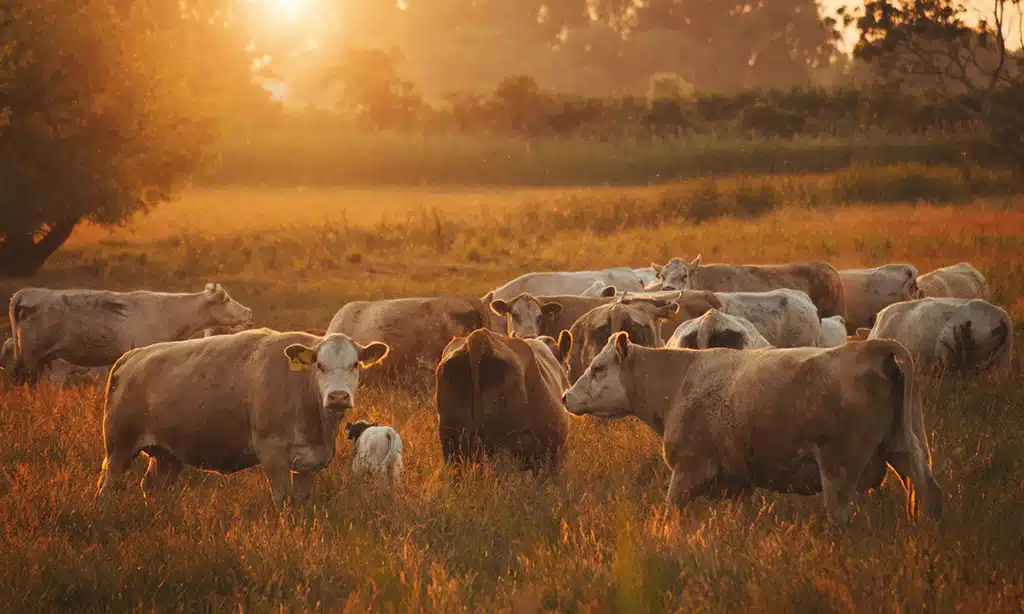
Regenerative grazing focuses on improving soil health, increasing biodiversity, and enhancing carbon sequestration through rotational grazing techniques.
| Benefits | Practices |
| Improved soil fertility | Rotational grazing |
| Carbon sequestration | Allowing grass to recover before re-grazing |
| Increased biodiversity | Encouraging diverse forage species growth |
Pros:
- Enhances ecosystem resilience.
- Improves livestock health through diverse forage.
- Reduces need for synthetic fertilizers.
Cons:
- Requires detailed planning and monitoring.
- Initial transition can be labor-intensive.
- Results may take time to become visible.
5. Vertical Integration of Supply Chains
Farmers are increasingly adopting vertical integration to control every aspect of production, from feed to retail, ensuring sustainable practices throughout.
| Benefits | Examples |
| Greater efficiency | On-site feed production |
| Improved quality control | Direct-to-consumer sales models |
| Reduced transportation | Localized processing facilities |
Pros:
- Improves profit margins by eliminating intermediaries.
- Ensures consistent product quality.
- Reduces environmental impact of transport.
Cons:
- Significant capital investment required.
- Increased operational complexity.
- Risk of market fluctuations affecting profitability.
6. Blockchain for Traceability
Blockchain technology ensures transparency and traceability in livestock farming. Consumers can track their food’s journey from farm to table, boosting trust in sustainable practices.
| Application | Benefits |
| Food traceability | Ensures ethical sourcing |
| Fraud prevention | Reduces counterfeit products |
| Consumer trust | Builds brand loyalty through transparency |
Pros:
- Increases consumer confidence.
- Prevents fraud in food supply chains.
- Enhances operational efficiency.
Cons:
- Complex implementation process.
- Requires digital literacy among farmers.
- Blockchain technology can be costly.
7. Use of Artificial Intelligence in Herd Management
AI is revolutionizing herd management by predicting disease outbreaks, optimizing feeding schedules, and improving breeding programs.
| AI Application | Impact |
| Predictive analytics | Early disease detection |
| Feed optimization | Reduces waste |
| Breeding improvements | Enhances genetic traits |
Pros:
- Saves time and improves accuracy in herd management.
- Reduces costs associated with disease outbreaks.
- Enhances overall productivity.
Cons:
- Requires significant investment in AI systems.
- Dependence on reliable internet and power supply.
- Ethical concerns around data ownership.
8. Climate-Resilient Breeds and Genetics
Selective breeding and genetic research are producing livestock better suited to withstand extreme climates, ensuring productivity and resilience.
| Trait | Benefit |
| Heat tolerance | Maintains productivity in hot climates |
| Disease resistance | Reduces need for antibiotics |
| Faster growth rates | Increases efficiency |
Pros:
- Reduces losses from climate extremes.
- Enhances overall livestock performance.
- Aligns with sustainable farming goals.
Cons:
- Ethical concerns about genetic modification.
- High research and development costs.
- Limited genetic diversity risks long-term resilience.
9. Smart Water Management in Farms
Efficient water use is a cornerstone of sustainable farming. Technologies like automated irrigation and water recycling systems are gaining popularity.
| Technology | Benefit |
| Automated irrigation | Reduces water wastage |
| Water recycling systems | Reuses wastewater efficiently |
| Rainwater harvesting | Provides sustainable water sources |
Pros:
- Reduces water costs and wastage.
- Enhances sustainability of farm operations.
- Adapts to water-scarce regions effectively.
Cons:
- High initial setup costs for technology.
- Requires regular maintenance.
- Limited adoption in areas lacking infrastructure.
10. Public-Private Partnerships in Sustainable Initiatives
Collaborations between governments, NGOs, and private entities are driving innovation and investment in sustainable livestock farming.
| Example | Outcome |
| Subsidies for technologies | Encourages adoption of eco-friendly tools |
| Research funding | Accelerates development of solutions |
| Farmer training programs | Increases awareness and implementation |
Pros:
- Brings funding and expertise to farmers.
- Accelerates adoption of sustainable practices.
- Creates long-term collaborations.
Cons:
- Complex coordination between stakeholders.
- Bureaucratic delays in project execution.
- Unequal access to resources for smaller farms.
11. Circular Economy Principles in Waste Management

Adopting circular economy practices, such as turning manure into biogas or compost, minimizes waste and creates additional revenue streams.
| Practice | Benefit |
| Manure to biogas | Provides renewable energy |
| Compost production | Enhances soil health |
| Feed recycling | Reduces input costs |
Pros:
- Reduces waste and environmental impact.
- Generates additional income for farmers.
- Improves resource efficiency.
Cons:
- Requires significant investment in infrastructure.
- Limited awareness among small-scale farmers.
- Operational challenges in waste conversion processes.
12. Increasing Focus on Animal Welfare and Ethics
Consumers are demanding higher standards for animal welfare. Farmers are adopting practices like free-range systems and humane handling.
| Practice | Impact |
| Free-range farming | Promotes natural behavior |
| Stress-reducing designs | Improves animal health |
| Certification programs | Builds consumer trust |
Pros:
- Enhances brand reputation and consumer trust.
- Improves livestock productivity and health.
- Meets regulatory and ethical standards.
Cons:
- Higher operational costs for humane systems.
- Space requirements may limit scalability.
- Consumer willingness to pay premium prices is uncertain.
Key Benefits of Adopting These Trends
Economic Benefits
- Higher productivity and efficiency.
- New revenue streams from waste management and renewable energy.
Environmental Benefits
- Reduced greenhouse gas emissions.
- Improved soil and water health.
Social Benefits
- Ethical farming practices foster consumer trust.
- Improved working conditions for farmers.
Challenges and Solutions
Barriers to Adoption
- High initial costs for technologies.
- Resistance to change among traditional farmers.
- Knowledge gaps in sustainable practices.
Proposed Solutions
- Government subsidies and tax incentives.
- Training programs and workshops for farmers.
- Partnerships with technology providers to reduce costs.
Takeaways
The future of livestock farming lies in sustainability. By adopting these 12 trends, farmers can improve productivity, reduce their environmental impact, and meet consumer demands for ethical and sustainable practices. Whether you’re a farmer or a stakeholder in the industry, embracing these innovations will help ensure a thriving and sustainable future.






















