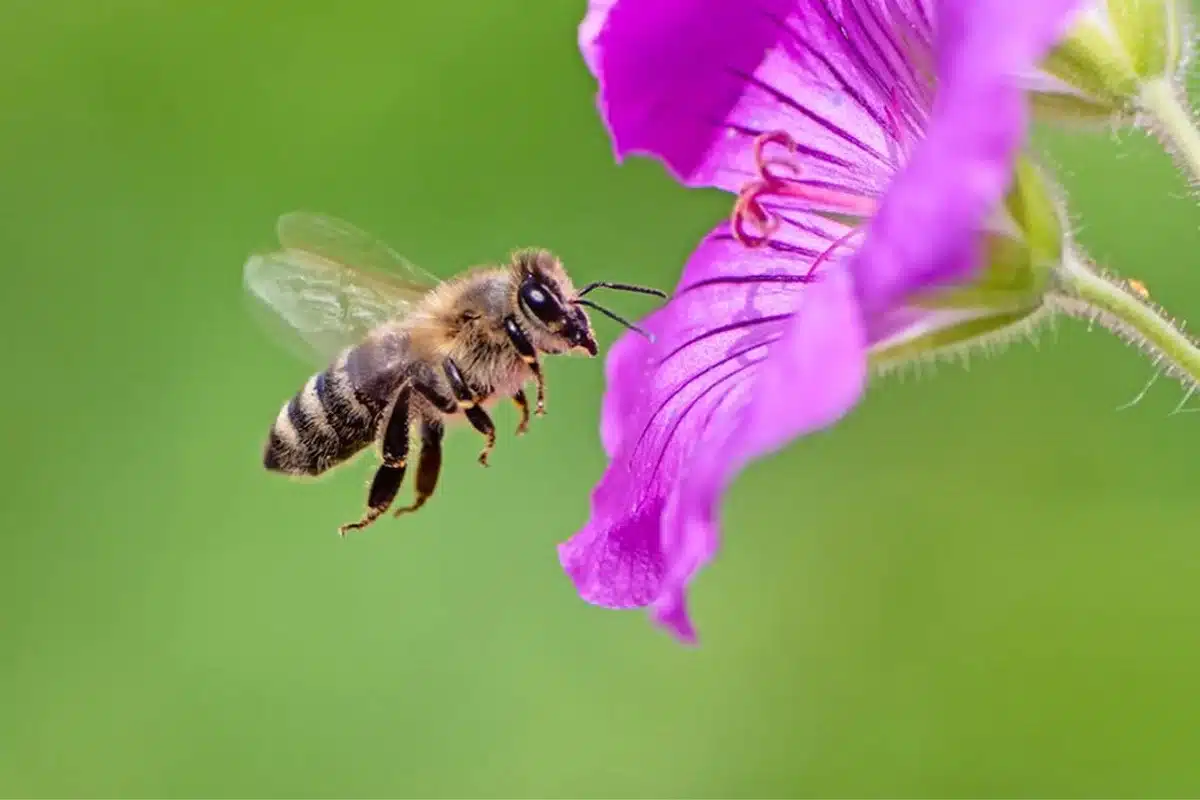
They are important for growing many of our favorite and healthiest foods because they move pollen from plant to plant, pollinating more than 100 fruits and veggies like strawberries, potatoes, and apples.
Many species of bees are in danger because of changes in land use, pesticides, intensive farming, and climate change. However, there are things you can do to help them grow.
In honor of World Bee Day on May 20, here are 10 surprising things about Bees on World Bee Day nature’s hardest-working workers that you might not know.
It’s no secret that we adore bees, but did you know how important they are to our ecosystem? Honeybees pollinate one-third of the world’s food supply; many plants, including food crops, would perish without them. Humans rely on bees more than any other insect.
We adore our little companions and believe that if you got to know them, you would also adore them. Check out the infographic below for 10 Surprising things about Bees, and prepare to be astounded by nature’s smartest, smallest, and hardest-working civilizations.
1. Bees Like to ‘Waggle Dance’
By swaying, bees can communicate and make decisions. When a honeybee inspects and investigates a new nest, it performs a waggle dance to promote and debate its merits. The longer and harder the insect dances, the better the location. If another bee runs into a dancing bee, she will inspect the area, and if she enjoys it, she will also begin to wiggle.
2. Bees Can Use Tools
Giant hornets that eat honeybees are a threat in Vietnam and other parts of Asia. They attack bee colonies, killing the adults protecting the nest and eating the young bees. In particular, the hungry Vespa soror hornet species can destroy the hive in just a few hours.
Bees have been seen getting fresh animal poop and smearing it around the door to their hive to keep animals from coming in. Researchers published their results in late 2020. They called it “fecal spotting.” The study team thinks that the poop keeps predatory hornets, like murder hornets, away from the nest by making it harder for the hornets to get in.
“Spotting feces is unusual for more than one reason,” the paper said. “This is the first time anyone has heard of honey bees or other species looking for things that don’t come from plants or liquids. It’s also the first clear example of the nature of honey bees using a tool. Honeybees also make a chilling sound to warn of an impending attack.
3. Bee Poop Nearly Caused a Cold War Confrontation
In the 1980s, small yellow spots on wild plants in Laos and Cambodia were called “yellow rain” and were thought to be the remains of chemical weapons. Refugees said the yellow rain made people sick and killed them. Because of these claims, the United States said the Soviet Union and its partners were using chemical weapons.
Experts on bees later discovered that the yellow dots were waste left behind by huge groups of wild honeybees.
4. Bees are Known to Raid other Hives and Steal Honey
Bees “steal” honey from other bees when they don’t have enough food or when honey from another hive is available, like when a farmer leaves a hive open. But if a guard bee from the robbed hive catches an invader and smells something strange, the two will fight to the death, stinging each other. If the thief gets into the hive without being seen, she will get used to the smell of the hive and learn how to get in and out without being seen as an invader.
5. Bumblebees Get Hungry
Plants make beautiful, nectar-filled flowers to attract pollinators. But what should a hungry, anxious bumblebee do when those flowers haven’t opened?
Scientists in Switzerland and France found that when pollen is scarce, bumblebees chewed on the leaves of tomato and mustard plants in a unique way that caused the plants to bloom up to 30 days earlier than plants that weren’t bitten on.
6. For Bees, the Pollen is a Protein Source they Need to Raise their Young
However, due to the climate issue, bees wake up early after hibernating for the winter to find that the flowers they require for sustenance have not yet flowered. Flowering time, dependent on light exposure, is less affected by climate change. This causes a mismatch, which might leave bees hungry early in the spring.
7. Humans have been Exploiting Honeybees for Thousands of Years
A human harvesting honey from a ladder is seen in an 8,000-year-old cave painting in Spain. Traces of beeswax on pottery also imply that bees were kept by early farmers 9,000 years ago. Honey has also been discovered in Egyptian tombs.
Honey was most likely an uncommon delicacy in an ancient diet devoid of sweet foods, and it may have had healing properties. Beeswax could have been used to waterproof pots or as glue.
Honey may now provide new hope in the fight against antibiotic resistance. It includes natural antibiotics that aid the body in fighting infection. Scientists are developing methods to make the sticky substance easier to apply to wounds, and it might be used in surgery, combat zones, and even our homes.
Honey and pollen comprise the basis of a bee’s diet. Honey provides pollinators with energy-rich carbohydrates, whereas pollen’s protein provides essential amino acids. However, the Queen’s diet is more abundant in honey, which gives her fecundity.
The queen’s main source of nutrition is a concoction of honey and pollen known as “royal jelly.” The larval diet consumed by worker and drone bees, larval jelly, contains less pollen and honey than royal jelly. Without the added carbohydrates in royal jelly, the queen bee would be infertile and indistinguishable from worker bees.
9. Some Bees Eat Meat
Most bees consume pollen and nectar, but certain species have evolved to consume meat, substituting animal carcasses for floral meadows.
Scientists at the University of California, Riverside, Columbia University, and Cornell University discovered in 2021 that vulture wasps in Costa Rica have abundant acid-loving bacteria similar to those found in hyenas and other carrion-eating animals.
For their study, they hung 16 traps containing 50 grams (1.8 ounces) of uncooked chicken from branches 1.5 meters (4.9 feet) above the ground. Researchers found that even though vulture beekeepers feed on flesh, their honey is still sweet and edible.
10. Bees Heat and Cool their Hive
They heat and cool the hive to keep the temperature between 93 and 95 degrees annually. Bees have cold blood, so they have to keep the temperature of their home the same. When it’s cold outside, bees keep the hive warm by buzzing together to heat their bodies and using propolis to seal cracks in the hive.
When it’s hot, the bees gather water and form a circle around the door to the hive. The bees stir the water with their wings so it evaporates into the air. The bees then use fans to move the cool air around the hive. This is a kind of central air conditioning.
Final Thoughts
Bees are needed to grow fruits and veggies, but they are in danger because of how land is used, pesticides, farming, and climate change.
Giant hornets threaten honeybees in Vietnam and other parts of Asia. Bees have been seen getting fresh animal poop and smearing it around the door to their hive to keep these animals away. This is the first time honey bees have been seen looking for things that don’t come from plants or liquids.
Frequently Asked Questions (FAQs) about 10 Surprising Things About Bees
Check out some commonly asked questions about bees and their surprising things.
What are Manuka honey bees?
New Zealand is where manuka honey comes from. Honey bees go to the native Manuka tree, an evergreen tree with small, sweet white and pink flowers that honey bees love.
What is an interesting fact about honey bees?
The only bug that makes food that people eat is the honey bee.
Do honey bees have 5 eyes?
There are five eyes on a honey bee. In the middle of its head are two big complex eyes and three small ocelli eyes.