
History is rarely a quiet progression of days; more often, it is a roaring tapestry of events that shape the very fabric of our modern world. May 29 stands out as a particularly resonant date on the calendar, acting as a crossroads where empires fell, human endurance broke previously insurmountable barriers, and legendary figures took their first or final breaths. Whether you are looking at the shifting power dynamics of the Indian subcontinent, the dizzying heights of the Himalayas, or the halls of American politics, this date has consistently delivered moments of profound global consequence.
To help you navigate this rich historical landscape, we have broken down the most significant events of May 29. We will explore everything from regional triumphs in the Bangalee sphere to major international milestones, providing a clear, at-a-glance understanding alongside deep, narrative context.
The Bangalee Sphere and the Subcontinent
The Indian subcontinent possesses a long, complex, and incredibly diverse history. Events that unfold here often send ripples across the globe, impacting trade, culture, and geopolitics. On May 29, this region witnessed pivotal battles that reshaped empires and the birth of modern prodigies who redefined intellectual dominance.
Before we dive into the deep narrative of these historical shifts, here is a quick reference table detailing the major milestones in the Bangalee and greater subcontinent sphere for May 29.
| Year | Category | Event / Figure | Significance |
| 1658 | Historical Event | Battle of Samugarh | Aurangzeb defeats Dara Shikoh, securing the Mughal throne. |
| 1807 | Famous Birth | John Russell Colvin | British administrator in India; born in Calcutta. |
| 1987 | Famous Death | Chaudhary Charan Singh | 5th Prime Minister of India, champion of agrarian reform. |
| 2004 | Famous Death | Anjuman Ara Begum | Ekushey Padak-winning Bangladeshi playback singer. |
| 2006 | Famous Birth | Gukesh Dommaraju | Indian chess grandmaster and World Chess Champion. |
The Battle of Samugarh (1658)
The searing summer heat of May 29, 1658, served as the backdrop for one of the most consequential military clashes in the history of the Indian subcontinent: the Battle of Samugarh. This was the definitive turning point in the bitter Mughal war of succession, pitting the orthodox Aurangzeb against his older, liberal-minded brother, Dara Shikoh. Dara was the chosen heir of their father, Shah Jahan, and was celebrated for his syncretic worldview, famously translating the Hindu Upanishads into Persian to find common ground between Islam and Hinduism.
However, Dara’s philosophical brilliance did not translate to military strategy. Aurangzeb, a battle-hardened commander, outmaneuvered Dara’s larger but less disciplined forces. The defeat was absolute. Dara fled, eventually facing betrayal and execution, while Aurangzeb imprisoned his own father and claimed the Peacock Throne. This victory shifted the Mughal Empire away from the pluralistic policies established by Akbar the Great, steering the subcontinent toward a more orthodox administrative and religious trajectory that would ultimately shape the conditions leading up to British colonial rule.
The Birth of Gukesh Dommaraju (2006)
Centuries later, the subcontinent’s battles shifted from dusty plains to 64 squares. Born on this day in Chennai, Gukesh Dommaraju emerged as a vanguard of the new, formidable wave of Indian intellectual dominance on the global stage. Chennai had already established itself as the beating heart of Indian chess, largely thanks to the pioneering legacy of Viswanathan Anand, but Gukesh pushed those boundaries even further.
His rise was nothing short of meteoric. By the time he was a teenager, he was shattering records that had stood for decades. Becoming the youngest undisputed world chess champion and the youngest player to surpass a staggering 2750 FIDE rating, Gukesh proved that India’s robust chess infrastructure and mentorship programs were capable of producing generational talents. His birthday is a celebration not just of an individual prodigy, but of a massive cultural shift that relocated the center of gravity in the chess world firmly to the East.
The Passing of Chaudhary Charan Singh (1987)
While May 29 is celebrated for births and victories, it is also a day of solemn remembrance across northern India’s agrarian communities. Chaudhary Charan Singh, who served briefly as the fifth Prime Minister of India, passed away on this date in 1987. However, his lasting legacy was not forged in the Prime Minister’s office, but in the fields of Uttar Pradesh.
Singh was a fierce, unrelenting advocate for rural farmers and the chief architect of sweeping agricultural reforms. He was instrumental in dismantling the oppressive zamindari system—a deeply entrenched feudal structure that kept tenant farmers trapped in cycles of poverty. By redistributing land rights directly back to the tillers, Singh fundamentally altered the socioeconomic landscape of rural India. Today, his death anniversary is quietly but deeply observed by millions of farmers who recognize that their economic independence is directly tied to his political courage.
International Observances & Holidays
Beyond the borders of specific nations, May 29 serves as a day of global unity and awareness. The international community uses this date to reflect on peace, health, and human achievement, binding disparate nations together under shared causes.
To understand how the world comes together on this day, review the following table outlining the major global observances held annually on May 29.
| Observance | Established By / Region | Core Focus |
| International Day of UN Peacekeepers | United Nations | Honoring the sacrifices of peacekeeping forces globally. |
| Mount Everest Day | Nepal / International | Celebrating the first successful ascent of Everest in 1953. |
| World Digestive Health Day | World Gastroenterology Org. | Raising awareness for gastrointestinal diseases and health. |
| Oak Apple Day | United Kingdom | Historical observance of the English Restoration (1660). |
International Day of UN Peacekeepers
Established by the United Nations General Assembly, this day honors the more than two million uniformed and civilian personnel who have served under the UN flag since 1948. The date itself is highly symbolic: it marks the exact anniversary of the deployment of the first UN peacekeeping mission, the UN Truce Supervision Organization (UNTSO), which was sent to monitor the Armistice Agreement in the Middle East following the 1948 Arab-Israeli War.
Today, this observance is a somber reminder of the extreme dangers faced by the “Blue Helmets.” Peacekeepers are routinely deployed to the world’s most volatile conflict zones, tasked with protecting civilians, disarming combatants, and stabilizing fractured societies. On May 29, wreaths are laid at UN headquarters globally to mourn the thousands of peacekeepers who have lost their lives in the line of duty, emphasizing that the pursuit of global stability carries a heavy human cost.
Mount Everest Day
A day of massive national pride for Nepal and international celebration for the mountaineering community, Mount Everest Day immortalizes May 29, 1953—the exact day humanity finally stood at the highest point on Earth. This holiday honors the resilience, teamwork, and sheer willpower required to conquer the 29,032-foot peak.
However, as the decades have passed, the tone of Mount Everest Day has evolved. While it remains a celebration of human endurance, it has also transformed into an urgent call for environmental conservation. The mountain faces severe ecological degradation due to commercial climbing, overcrowding, and waste left behind in the “Death Zone.” Therefore, modern observances heavily emphasize sustainable climbing practices and honor the indispensable Sherpa communities whose labor and expertise make high-altitude mountaineering possible.
Global History
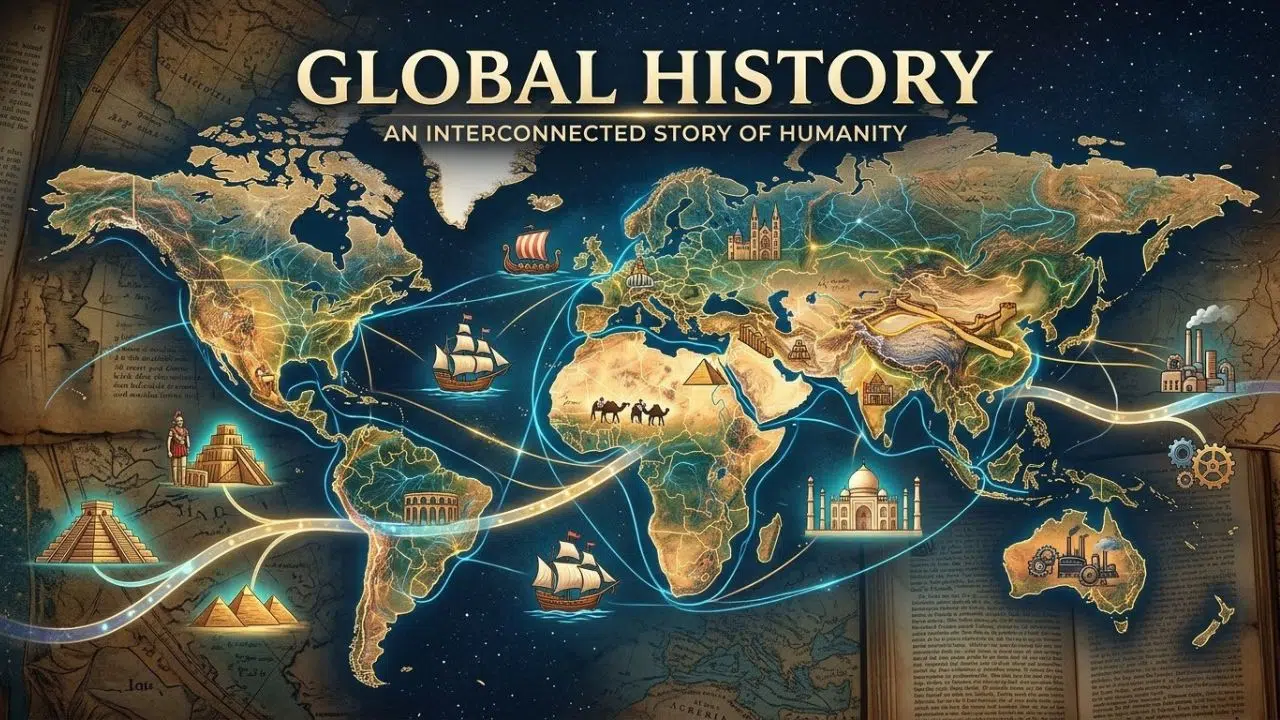
When we pull back the lens to view the broader global stage, May 29 is heavily dotted with events that altered borders, redefined science, and shifted cultural paradigms.
The table below categorizes the most seismic global historical events that occurred on this date, spanning from ancient sieges to modern space exploration.
| Year | Region | Event | Historical Impact |
| 1453 | Europe / Asia | Fall of Constantinople | The end of the Byzantine Empire and the Middle Ages. |
| 1660 | United Kingdom | The English Restoration | Charles II returns, restoring the British monarchy. |
| 1790 | United States | Rhode Island Ratification | The final original colony ratifies the US Constitution. |
| 1913 | Europe (France) | Premiere of The Rite of Spring | A monumental shift in avant-garde music and ballet. |
| 1919 | Global / Science | Eddington’s Eclipse Expedition | Provided the first proof of Einstein’s Theory of Relativity. |
| 1953 | Asia (Nepal) | Summit of Mount Everest | Tenzing Norgay and Edmund Hillary reach the top of the world. |
| 1999 | Russia / USA | ISS Docking | The Space Shuttle Discovery docks with the ISS for the first time. |
The Fall of Constantinople (1453)
It is incredibly rare that historians can point to a single day and officially declare the end of an era, but May 29, 1453, is universally recognized as the conclusion of the Middle Ages. After a grueling 53-day siege characterized by relentless artillery bombardment from massive cannons designed by the engineer Orban, the armies of Ottoman Sultan Mehmed II breached the legendary Theodosian Walls. The Byzantine Emperor, Constantine XI, reportedly stripped off his royal regalia and died fighting alongside his men in the streets.
The capture of Constantinople did more than extinguish the 1,000-year-old Byzantine Empire (the final surviving remnant of the ancient Roman Empire). It profoundly shocked Christian Europe and permanently altered global geopolitics. The Ottomans now controlled the vital overland trade routes connecting Europe to Asia. This economic strangulation inadvertently forced European powers to seek new maritime routes to the East, thereby accelerating the Age of Discovery and forever changing the map of the world.
Arthur Eddington’s Eclipse Expedition (1919)
On May 29, 1919, a British astronomer stood on the remote African island of Príncipe, waiting for the sky to go dark. Arthur Eddington was there to photograph a total solar eclipse to test a radical new idea: Albert Einstein’s General Theory of Relativity. Einstein proposed that massive objects like the sun warp the fabric of space-time, meaning that the light from distant stars should visibly bend as it passes the sun.
When Eddington developed his photographic plates, the measurements perfectly matched Einstein’s predictions. Beyond the monumental scientific breakthrough—which fundamentally moved humanity past Newtonian physics—the event had a profound cultural impact. Just months after the horrific slaughter of World War I, a British scientist had traveled across the globe to prove the theory of a German-born physicist. The resulting headlines catapulted Einstein to global superstardom overnight and proved that the pursuit of scientific truth could bridge the deepest of national divides.
The Conquest of Mount Everest (1953)
The news that Edmund Hillary, a New Zealand beekeeper, and Tenzing Norgay, a highly experienced Sherpa, had reached the summit of Mount Everest on May 29, 1953, broke precisely on the morning of Queen Elizabeth II’s coronation. It was a moment of supreme triumph that captivated a post-WWII world hungry for uplifting news.
The 1953 British expedition, led by John Hunt, was a massive logistical undertaking resembling a military campaign. But the final push relied entirely on the physiological endurance and partnership of Hillary and Norgay. Navigating the treacherous 40-foot rock face now known as the “Hillary Step,” they spent just 15 minutes at the summit, burying a few sweets and a small cross in the snow. Their success redefined the limits of human capability and permanently intertwined their names in the annals of exploration.
Notable Births & Deaths (Global)
History is ultimately driven by people. The individuals born or lost on May 29 have left indelible marks on politics, entertainment, and culture.
Below is a categorized table of the highly influential figures whose lives began or ended on this significant date.
| Name | Year | Event | Nationality | Profession / Legacy |
| Patrick Henry | 1736 | Birth | American | Founding Father, famous for “Give me liberty, or give me death!” |
| John F. Kennedy | 1917 | Birth | American | 35th U.S. President, led during the Cold War and Space Race. |
| Noel Gallagher | 1967 | Birth | British | Lead guitarist and songwriter for the iconic band Oasis. |
| Carmelo Anthony | 1984 | Birth | American | 10-time NBA All-Star and prolific basketball scorer. |
| John Barrymore | 1942 | Death | American | Legendary stage and screen actor of the early 20th century. |
| Mary Pickford | 1979 | Death | Canadian-American | Silent film actress and co-founder of United Artists. |
| Romy Schneider | 1982 | Death | German-French | Acclaimed actress, famous for the Sissi film trilogy. |
| Jeff Buckley | 1997 | Death | American | Singer-songwriter, remembered for his ethereal voice and tragic passing. |
The Birth of John F. Kennedy (1917)
Born into a prominent political dynasty in Massachusetts, John Fitzgerald Kennedy would grow up to become the 35th President of the United States. His youth, charisma, and soaring rhetoric defined the era often romanticized as “Camelot.” However, beneath the glamorous surface, Kennedy’s administration navigated some of the most perilous moments in modern history.
From the terrifying brinksmanship of the Cuban Missile Crisis to the escalating tensions of the Cold War and the burgeoning Civil Rights Movement at home, his presidency was marked by intense pressure. Kennedy was also a master of using geopolitical stakes to drive technological progress; his audacious pledge to put a man on the moon before the end of the 1960s accelerated the Apollo program and solidified American dominance in space exploration.
The Legacy of Mary Pickford (1979)
When Mary Pickford passed away on May 29, 1979, the world lost a woman who had fundamentally built the modern film industry. Known during the silent era as “America’s Sweetheart,” her on-screen persona belied a fierce, ruthless, and brilliant business acumen. Pickford was not content to simply be an employee of the powerful studio bosses who tightly controlled early Hollywood.
In 1919, Pickford rebelled. Alongside Charlie Chaplin, D.W. Griffith, and her future husband Douglas Fairbanks, she co-founded United Artists. This groundbreaking move allowed independent producers to distribute their own films, breaking the monopolistic control of the major studios. By establishing United Artists, Pickford secured unprecedented creative and financial independence, setting a standard for artists’ rights that completely transformed the entertainment business.
The Tragic Loss of Jeff Buckley (1997)
The music world suffered a devastating and sudden loss on May 29, 1997, when singer-songwriter Jeff Buckley accidentally drowned in the Wolf River in Memphis, Tennessee, at the age of 30. Despite releasing only one complete studio album during his lifetime—the masterpiece Grace (1994)—Buckley’s impact on alternative rock and vocal performance was monumental.
Possessing a multi-octave vocal range that could shift instantly from a delicate whisper to a soaring wail, Buckley combined elements of jazz, blues, and grunge into something entirely his own. His legacy is permanently anchored by his definitive, haunting cover of Leonard Cohen’s “Hallelujah,” which remains one of the most celebrated and emotionally devastating vocal performances in recorded history. His sudden death left behind an enduring “what if” in the landscape of 1990s music.
The Echoes of May 29
When we step back and view May 29 in its totality, a fascinating pattern emerges. It is a day characterized by bold leaps into the unknown and the shattering of old paradigms. Whether it is Tenzing Norgay stepping onto the roof of the world, Arthur Eddington pointing his lens at a darkened sun to rewrite the laws of physics, or Mehmed II breaching the seemingly impenetrable walls of Constantinople, this date proves that history turns on moments of immense pressure.
By understanding the breadth and depth of what happened on this day, we gain a much clearer picture of how our modern political borders, scientific truths, and cultural touchstones were forged in the fires of history.